Rover Marine dual-pontoon guide
Two pontoons, one high-pressure deck, and a different ride
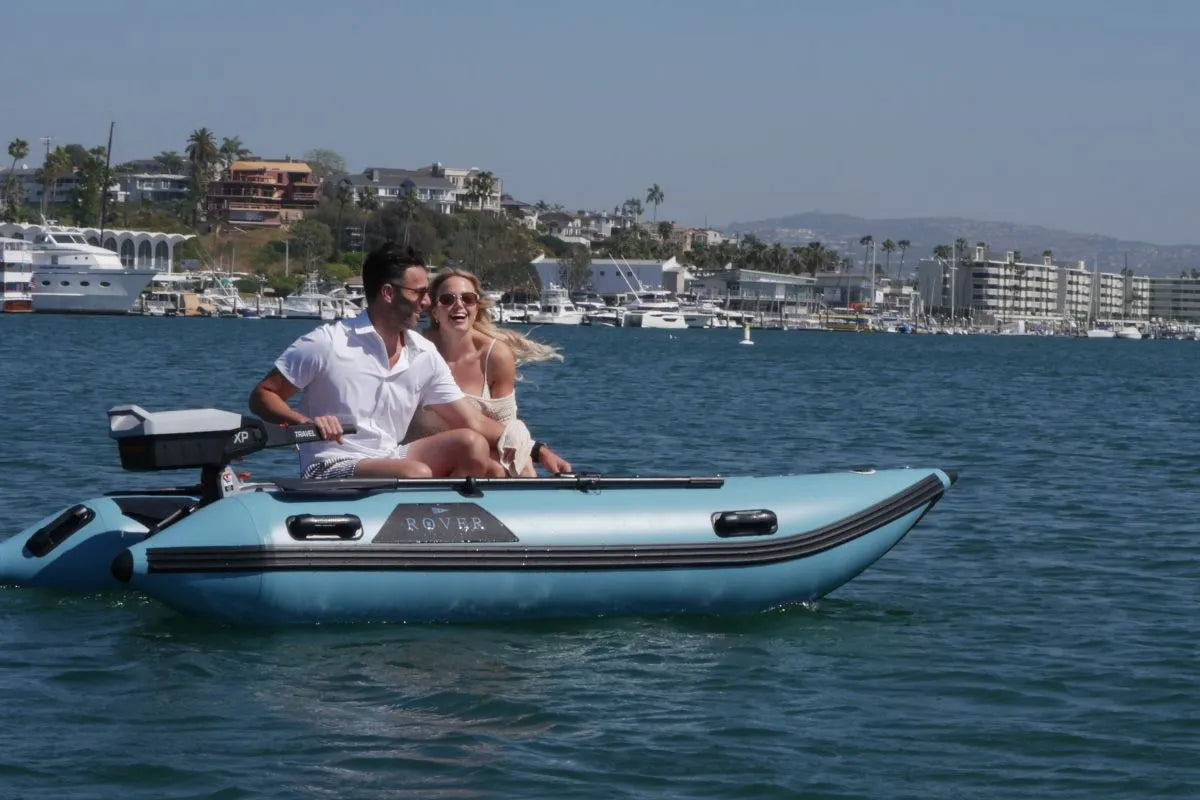
An inflatable catamaran is an inflatable boat built around two parallel inflatable pontoons joined by a deck or high-pressure floor. Instead of one continuous tube wrapped around a traditional inflatable hull, the buoyancy is split into two separated hulls. That wider stance is the reason a catamaran-style inflatable can feel more settled when people board, stand, fish, dive, or move gear.

That is the basic definition. In real use, the design matters because it changes where the boat carries weight, how it resists side-to-side roll, how it tracks, and how the deck feels when people shift around.
Rover Marine builds both formats. The Battle Boat is the traditional inflatable hull. The Battle Cat is the inflatable catamaran with dual pontoons. Both pack down, both use 3.5 PSI tubes and a 10 PSI drop-stitch floor, and both are designed for short-shaft outboards with a 15 inch transom.
Quick answer: choose the inflatable catamaran when stability, boarding, standing room, fishing, diving, family movement, or electric-outboard control matters most. Choose the traditional inflatable hull when you want the familiar dinghy layout and do not need the wider catamaran stance.
How a dual-pontoon hull differs from a traditional inflatable and a RIB
Inflatable boats are often grouped together, but these designs behave differently.
Inflatable catamaran
- Hull formatTwo parallel inflatable pontoons joined by a high-pressure deck or floor.
- Stability feelWide stance gives strong resistance to side-to-side roll.
- TrackingThe two pontoons can help the boat hold a straighter line than a rounder single-hull inflatable.
- StorageStill deflates and packs down by size.
- Best fitFishing, diving, dogs, boarding, family use, electric motors, and active tender duty.
Traditional inflatable
- Hull formatA more familiar inflatable dinghy shape with a continuous tube layout and high-pressure floor.
- Stability feelStable for normal tender and lake use, but usually less lateral stance than a catamaran design.
- TrackingGood for general use, with more correction sometimes needed at slow speeds or in wind.
- StorageDeflates and packs down by size.
- Best fitCalm to moderate water, tender work, lake days, beach runs, and simple dinghy utility.
Rigid inflatable boat
- Hull formatA fixed fiberglass, aluminum, or composite hull with inflatable tubes around the sides.
- Stability feelDepends on hull design, beam, tube position, and load.
- TrackingOften strong at speed because of the fixed hull shape.
- StorageDoes not deflate like a fully inflatable boat, so storage and carriage needs are different.
- Best fitOwners with davits, a trailer, chocks, or fixed storage who want fixed-hull handling.
For a deeper comparison of fixed-hull RIBs and soft inflatable catamarans, read the inflatable catamaran vs RIB guide.
Why two separated pontoons feel more stable
Stability is not only about how much air a boat carries. It is also about where that buoyancy sits. A catamaran-style inflatable places buoyancy farther from the centerline, which gives the boat a wider support base.
Think about standing with your feet together, then standing with your feet apart. You did not get heavier. Your base got wider. A dual-pontoon inflatable uses the same basic idea on the water.
Less side-to-side roll
When someone steps aboard from a dock, swim platform, beach, or ladder, the wider pontoon stance can feel more settled than a narrower single-hull layout.
More useful deck stance
The dual-pontoon layout gives people a wider working platform for casting, netting fish, loading dive gear, helping dogs, or moving around carefully.
A planted feel in turns
The outside pontoon helps resist roll as the boat turns. Load, speed, trim, water state, and operator input still decide the real feel.
Different impact pattern
The two-pontoon layout can split water contact differently than a single broad surface. It does not turn the boat into a deep-V hull, but it can change the ride feel in protected chop.
Tracking and electric outboard use
Two long pontoons running fore and aft can act like shallow tracking surfaces. That can help the boat resist wandering at low speed, especially when compared with a rounder traditional inflatable shape.
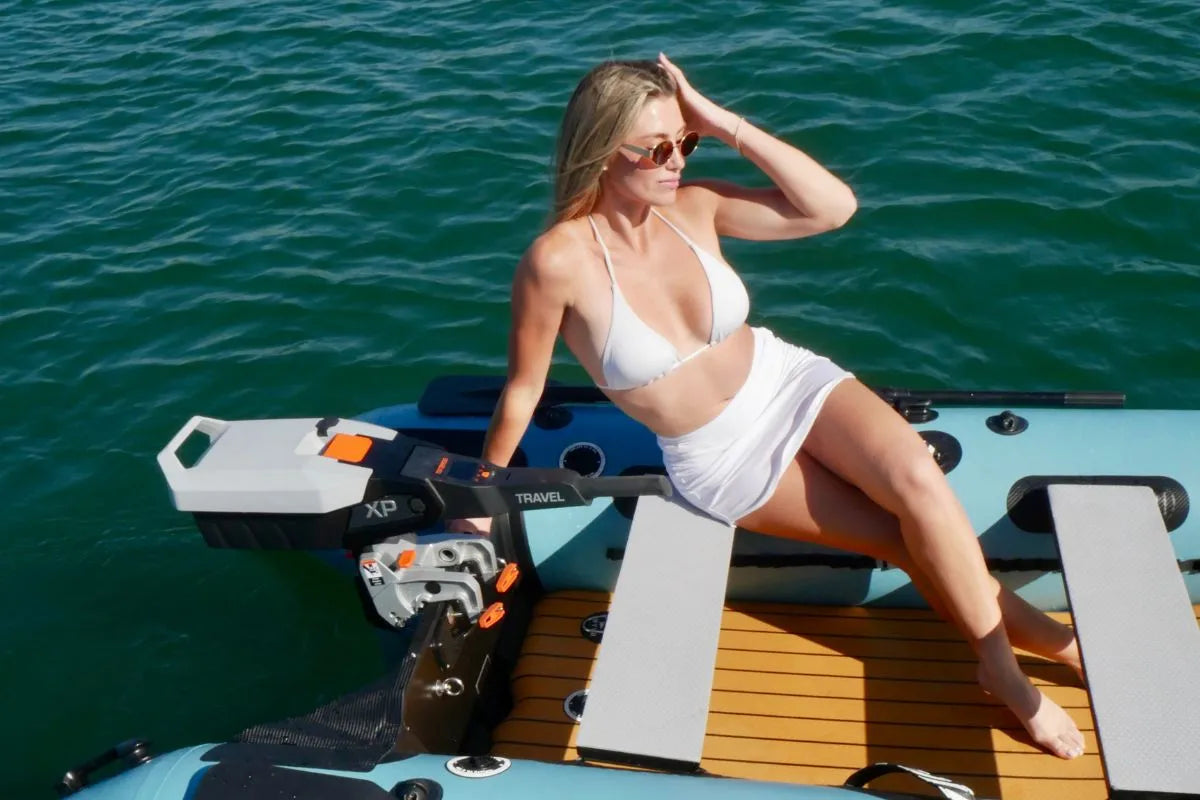
This matters with electric outboards because many owners use electric power for quiet harbor cruising, marina runs, short tender trips, and slow fishing approaches. A boat that feels settled and tracks cleanly can make the electric setup easier to use, but speed and range still depend on load, trim, battery, current, wind, propeller, pressure, and water state.
Every current Battle Boat and Battle Cat uses a 15 inch transom. Short-shaft electric options include the ePropulsion Spirit 1.0 Plus Short Shaft and Torqeedo Travel 1103 S Short Shaft. Confirm fit, shaft length, battery setup, power rating, and weight before purchase.

Battle Cat specs by size
Use specs to choose the right boat, not just the category name. Current Battle Cat specs list three sizes, each with the same 15 inch transom, 3.5 PSI tubes, 10 PSI floor, and 4 + 1 chamber layout.
8 ft Battle Cat
Weight84 lb
Capacity2 people / 600 lb
Recommended powerUp to 6 hp
Deflated size38 x 24 x 15 in
10 ft Battle Cat
Weight98 lb
Capacity4 people / 1000 lb
Recommended powerUp to 10 hp
Deflated size45 x 28 x 18 in
12 ft Battle Cat
Weight130 lb
Capacity4 people / 1200 lb
Recommended powerUp to 20 hp
Deflated size48 x 32 x 20 in
Do not size only by length. Add people, motor, fuel or battery, anchor, safety gear, dogs, fishing gear, dive gear, provisions, and everything else aboard before choosing the boat.
Where an inflatable catamaran is the right answer
An inflatable catamaran makes the most sense when the wider stance solves a real use case.
Standing and casting
The wider stance helps when casting, netting fish, organizing tackle, or moving around carefully in protected water.
Gear and re-boarding
Dive gear is heavy and wet. A stable platform helps with loading, ladder use, and controlled movement around the deck.
Boarding from a yacht
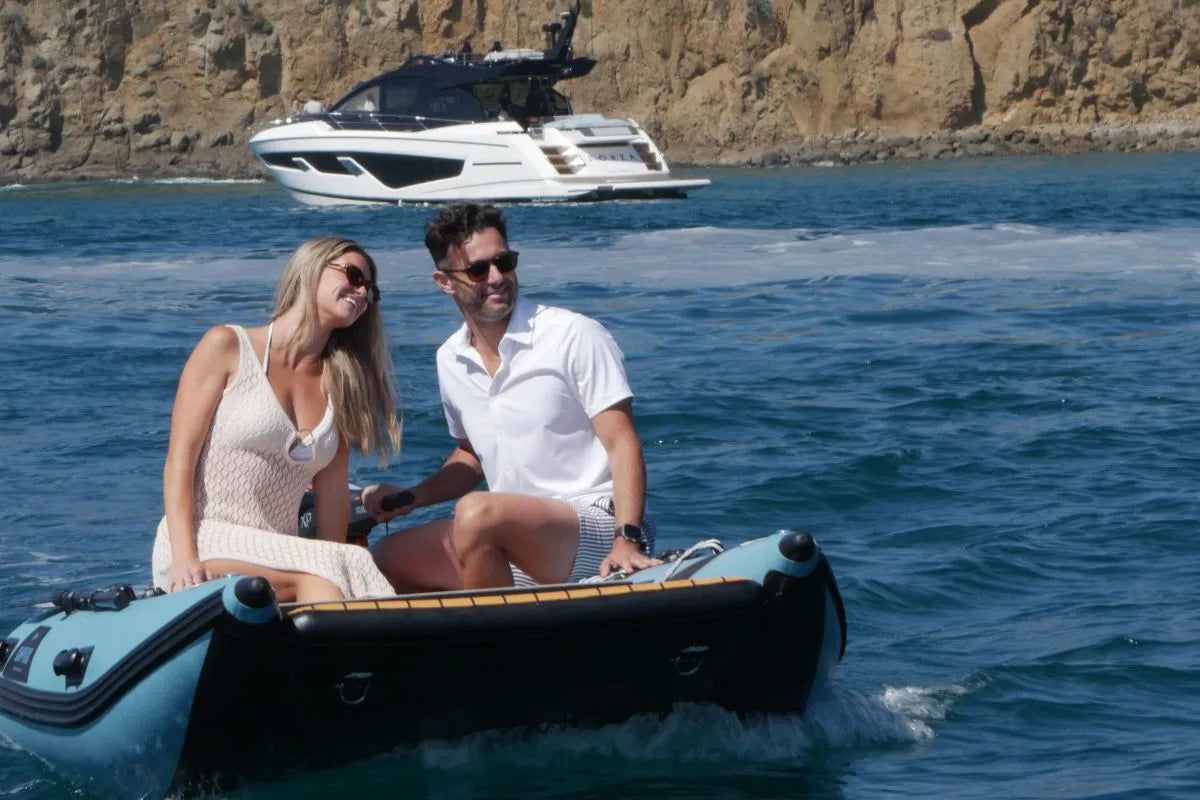
The catamaran stance can feel more settled when people step from a swim platform, dock, or ladder into the boat.
Movement without panic
Kids, dogs, and guests move around. A wider stance can make the boat feel calmer when weight shifts.
Where a catamaran hull may not be the right answer
A catamaran-style inflatable is not automatically the best boat for every owner. The traditional inflatable hull still makes sense when the use case is simple.
- Simple calm-water tender work: if the job is two people going from mooring to dock in protected water, the traditional Battle Boat may be the cleaner fit.
- Familiar layout preference: some owners simply prefer the way a traditional dinghy looks, loads, and handles.
- Fixed-hull rough-water priorities: if you need a non-deflatable fixed hull for faster exposed-water runs and have the trailer, davits, or storage, a true RIB may be more appropriate.
- Long high-speed routes: match the boat to the route, weather, waterbody, and motor rating. Do not choose a portable inflatable for jobs outside its intended use.
There is no shame in choosing the simpler boat. The right answer is the hull that fits your water, storage, crew, motor, and real use.
How to evaluate an inflatable catamaran before buying
Ask about construction and specs, not just adjectives.
Fabric and coating
Rover Marine describes its inflatables as using reinforced PVC construction. Treat material terms as specifications, not magic words.
Seams and chambers
Ask how the seams are built and how the air chambers are laid out. The Battle Cat uses a 4 + 1 chamber layout across all sizes.
Floor pressure
A 10 PSI drop-stitch floor is part of what makes the boat feel like a working deck instead of a soft raft floor. Learn more in What Is Drop-Stitch?
Transom and motor fit
Current Rover Marine Battle Boat and Battle Cat sizes use a 15 inch transom. Match the outboard shaft length, power, and weight to the exact model.
Capacity and weight
Compare the full load, not only passenger count. Add the motor, fuel or battery, anchor, safety gear, dogs, coolers, fishing gear, and everything else aboard.
Warranty terms
Read coverage and exclusions before purchase. Rover Marine's warranty page lists coverage for the hull, tubes and seams, and accessories, plus exclusions for use, care, punctures, abrasion, and storage issues.
Battle Boat or Battle Cat?
Both are portable Rover Marine inflatables. The difference is the hull format and the feel on the water.
Choose Battle Boat if
You want the traditional inflatable dinghy layout, familiar handling, compact tender utility, and a straightforward boat for calm to moderate water.
Choose Battle Cat if
You want the dual-pontoon stance, a more settled deck feel, improved tracking, and a platform suited for active use, boarding, fishing, dogs, diving, or electric power.
For tender-specific sizing, read the yacht tender buying guide.
Inflatable catamaran questions
What is an inflatable catamaran?
An inflatable catamaran is an inflatable boat built around two parallel inflatable pontoons joined by a deck or high-pressure floor. The separated pontoons create a wider support base than a traditional single-hull inflatable layout.
Is an inflatable catamaran more stable than a regular inflatable boat?
It can feel more laterally stable, especially at rest, while boarding, or when people move around. The two pontoons place buoyancy farther from the centerline. Final stability still depends on size, load, pressure, water conditions, and how people move aboard.
How much does an inflatable catamaran weigh?
Rover Marine's Battle Cat weighs 84 lb at 8 ft, 98 lb at 10 ft, and 130 lb at 12 ft. The traditional Battle Boat weighs 86 lb, 100 lb, and 135 lb in the same sizes.
Can you use an electric outboard on an inflatable catamaran?
Yes, when the electric outboard matches the boat's shaft length, power rating, weight, and setup requirements. Current Rover Marine boats use a 15 inch transom, which matches short-shaft options such as the ePropulsion Spirit 1.0 Plus and Torqeedo Travel 1103 S.
Is an inflatable catamaran worth it over a single-hull dinghy?
It can be worth it if you value a wider stance for fishing, boarding, diving, dogs, family movement, electric control, or active tender use. A traditional single-hull dinghy may be the better choice for simple calm-water tender duty and familiar handling.

Leave a comment
This site is protected by hCaptcha and the hCaptcha Privacy Policy and Terms of Service apply.