Rover Marine marsh and backwater guide
The useful duck boat is the one that reaches the water you hunt
An inflatable boat can solve access, storage, and noise problems in protected marshes, potholes, sloughs, and flooded timber. It does not turn rough open water into safe water, and it does not replace a legal and load-specific hunt plan.

Why hunters consider an inflatable boat
The best duck water is not always beside a ramp. Backwater sloughs, sheltered potholes, beaver ponds, and flooded timber can require a boat that stores compactly and launches from a limited access point. That is where an inflatable boat for duck hunting can make sense.
Portable storage
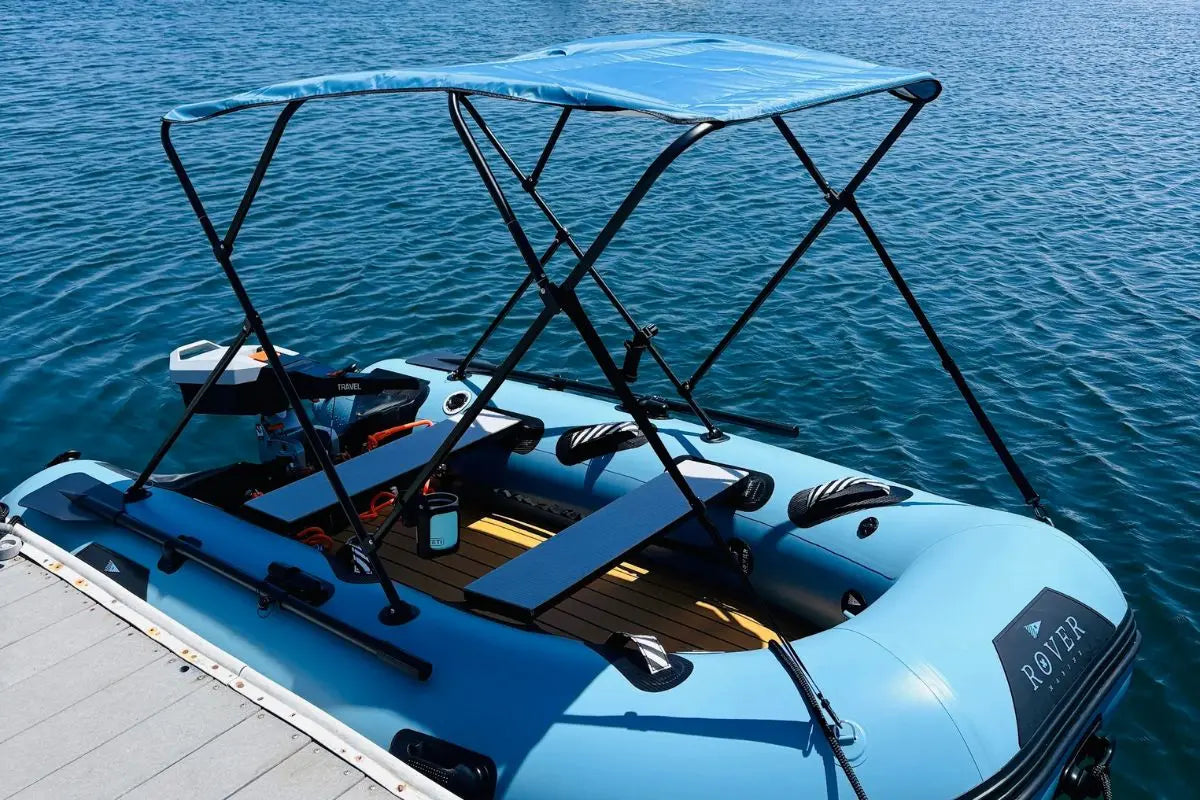
Rover Marine boats deflate into compact packages. They still weigh 84 to 135 lb before the motor and gear, so transport must be planned rather than treated like backpacking.
Shallow-water utility
The inflatable hull has no rigid deep-V keel. Actual draft still changes with the model, total load, trim, motor position, current, and bottom conditions.
Quieter contact surfaces
PVC tubes do not ring like an aluminum gunwale when touched by a paddle or loose gear. Hunters still need to secure shells, decoys, anchors, and metal equipment.
Firm working deck
The drop-stitch floor inflates to 10 PSI, creating a firmer surface for organized gear and careful movement than a low-pressure raft floor.
No published static-draft number is available for these boats. Do not advertise a specific number of inches. Evaluate shallow-water access with the exact load and motor, and remember that the propeller or lower unit may become the limiting point.
Battle Boat or Battle Cat for the marsh?

Battle Boat
The traditional inflatable dinghy profile suits protected water, seated travel, compact tender use, and hunters who prefer a familiar interior layout.
Battle Cat
The fully inflatable dual-pontoon layout places buoyancy farther from the centerline and provides a wider stance. That can feel more settled during careful weight shifts, but it is not tip-proof.
Neither model is a layout boat, a hard-sided surface-drive mud boat, or a substitute for a big-water hunting boat. Choose the hull for the protected water and access problem you actually have.
Size the complete hunting load
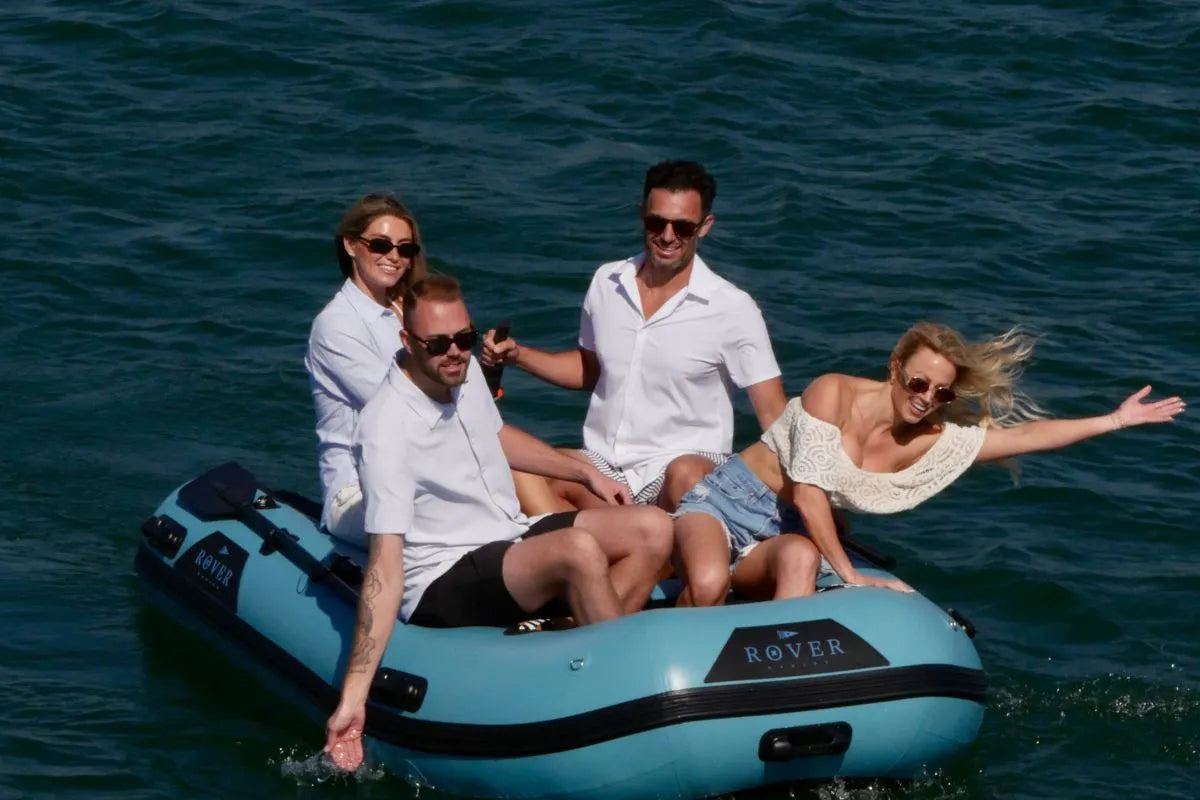
People are only part of the load. Add the motor, battery or fuel, dog, decoys, blind material, anchors, guns in protected cases, ammunition, safety gear, clothing, and every dry bag before selecting a size.
8 ft
Boat weightBattle Boat 86 lb
Battle Cat 84 lb
Rated capacity2 people / 600 lb
Recommended powerUp to 6 hp
Deflated size38 x 24 x 15 in
10 ft
Boat weightBattle Boat 100 lb
Battle Cat 98 lb
Rated capacity4 people / 1000 lb
Recommended powerUp to 10 hp
Deflated size45 x 28 x 18 in
12 ft
Boat weightBattle Boat 135 lb
Battle Cat 130 lb
Rated capacity4 people / 1200 lb
Recommended powerUp to 20 hp
Deflated size48 x 32 x 20 in
Do not size by passenger count alone. Two hunters, heavy wet clothing, a retriever, motor, battery, and decoys can consume capacity quickly. Stay within both the person and total load limits on the label for the exact boat.
Motor choice for shallow, protected water
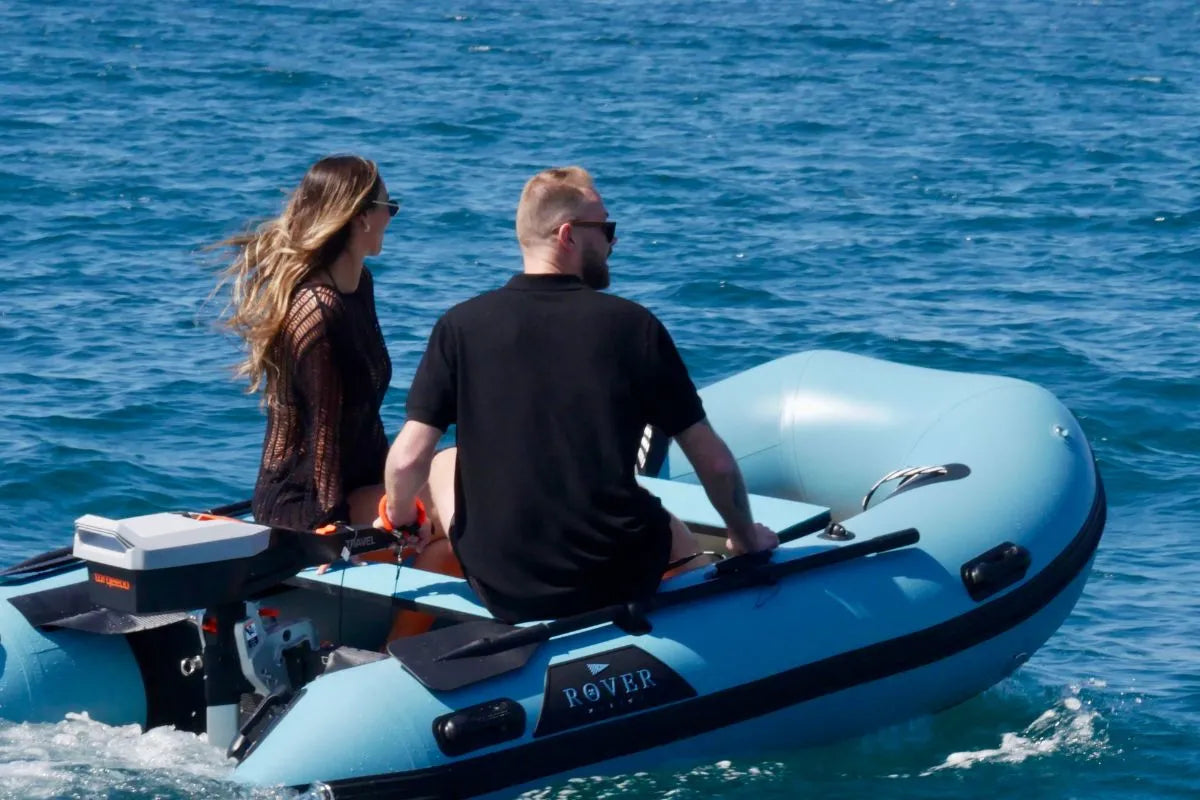
All current Battle Boat and Battle Cat sizes use a 15-inch transom. Match the shaft length and installation to the motor manufacturer's instructions and confirm the propeller has safe clearance throughout steering and tilt.
An electric outboard can reduce engine noise and avoids storing gasoline, but range changes with load, speed, wind, cold, current, battery condition, and repeated starts. Use a conservative return reserve. A gas outboard can support longer running and faster refueling, but it adds fuel handling, fumes, and maintenance.
Compare Rover Marine electric outboards and verify fit before purchase.
Build concealment without damaging the boat
Rover Marine does not currently list a factory camo colorway or a purpose-built duck blind. Concealment must be removable and must not compromise the hull or required visibility.
- Never drill or screw into a tube, floor, or transom. Do not assume a general accessory is rated to support a blind frame.
- Use only compatible, load-rated hardware. Follow the hardware manufacturer's installation limits and Rover Marine guidance.
- Keep controls and safety items clear. Do not block the tiller, kill-switch lanyard, valves, registration numbers, navigation lights, ventilation, or boarding route.
- Control loose material. Grass, fabric, and webbing must not reach the propeller, hot components, or moving motor parts.
- Protect the tubes. Remove sharp cut stems, wire ends, hooks, and abrasive fasteners before anything touches the PVC.
Cold water changes the safety plan
Duck hunters launch in darkness, wear bulky clothing, handle dogs and guns, and operate when the water may be dangerously cold. A fall overboard can immediately affect breathing, grip, and movement.
For the broader equipment list, read the inflatable boat safety checklist.
Dog handling requires practice, not assumptions
A wet retriever entering from the side creates a sudden off-center load. Fit the dog with an appropriate canine flotation device, create a controlled entry point, keep sharp nails and debris away from the tubes, and practice in calm water before hunting season.
Use the flotation handle to guide the dog while supporting its body as needed. Do not promise that a soft tube makes re-boarding easy for every dog. Size, age, training, cold, current, and the handler's ability all matter. See the full boating-with-dogs guide.
Know the hunting rules before opening day
Federal migratory bird rules prohibit taking migratory game birds from a motorboat or other craft with a motor attached unless the motor is completely shut off and the craft's progress from it has ceased. State rules can add requirements for seasons, shooting hours, boat use, access, hunter education, registration, and wildlife areas.
- Review the current U.S. Fish and Wildlife Service migratory bird regulations.
- Read 50 CFR 20.21 for federal prohibited hunting methods.
- Verify the selected season and property rules with the state wildlife agency.
- Confirm boat registration and operator requirements with the state boating agency.
Rules change and exceptions can be narrow. This article is general planning information, not a substitute for the current federal, state, and property-specific regulations.
Where an inflatable is the wrong duck boat
- Exposed open water in deteriorating weather: use a boat designed, powered, and equipped for those conditions, or stay ashore.
- Long, high-speed runs: Rover Marine's maximum recommended power is 6 hp at 8 ft, 10 hp at 10 ft, and 20 hp at 12 ft. A maximum is not a required or automatically suitable motor.
- Purpose-built layout hunting: a Rover Marine inflatable is not a sinkbox or a layout boat. Federal and state hunting-method rules still apply.
- Abrasive or sharp launch sites: exposed metal, cut brush, oyster shells, sharp rock, ice edges, and submerged debris can damage an inflatable.
- An overloaded hunt: if the full crew and equipment do not fit comfortably within the labeled limits, use a larger or different boat.
Inflatable duck boat questions
Is an inflatable boat good for duck hunting?
It can be a practical choice for protected marshes, flooded timber, sloughs, and limited-access ponds when the load, motor, weather, bottom, and regulations fit. It is not the right choice for every open-water or cold-weather hunt.
How shallow will a Rover Marine boat run?
Rover Marine does not publish a static-draft figure for these models. Draft varies with hull, total load, trim, motor, speed, and conditions. The motor's lower unit may limit access before the inflatable hull does.
Can I mount a duck blind?
Use only a removable system and hardware confirmed compatible and load-rated for the intended use. Never drill into the tubes, floor, or transom, and never block required lights, numbers, controls, valves, or the boarding route.
Can I hunt while the motor is running?
Federal migratory bird rules generally require the motor to be completely shut off and the craft's progress from it to have ceased before taking birds. Read the current federal rule and all applicable state and property rules.
What size is appropriate for two hunters, a dog, and decoys?
There is no universal answer. Add the measured weight of every person, the dog, motor, battery or fuel, decoys, blind material, safety gear, clothing, and all other cargo. Stay within both the person and total load limits for the exact model, with room to operate safely.

Leave a comment
This site is protected by hCaptcha and the hCaptcha Privacy Policy and Terms of Service apply.