Rover Marine skinny-water guide
Shallow water starts with the loaded rig
Most people looking for a shallow water boat start with a category: flats skiff, jon boat, kayak, bay boat, or inflatable. Category helps, but it does not tell the whole story. The useful question is how the complete loaded rig behaves as depth decreases, including the hull, motor, propeller, trim, people, and gear.

The word behind most skinny-water decisions is draft. Draft affects whether you can drift a bar, approach a beach, cross a shallow flat, or avoid damaging the propeller, skeg, lower unit, hull, or tubes.
Here is the part many brochures skip: draft is not a fixed promise for every day and every load. It changes with every person, cooler, anchor, battery, motor, dog, fuel tank, fishing bag, and seat position. This guide teaches you to think in draft, load, motor clearance, and bottom conditions before choosing the boat.
What draft actually means
Draft is the vertical distance from the waterline to the lowest point of the boat or rig. The definition is simple, but shoppers often miss that there are two practical versions to consider.
Floating or drifting
Static draft is what the boat needs while sitting still with the real load aboard. It matters when drifting over a bar, poling, approaching a beach, or floating with the motor tilted.
Motor down and moving
Running draft includes the motor, lower unit, propeller, skeg, trim angle, and how the boat sits under power. On many small outboard rigs, the motor is the deepest part of the setup.
Two things follow. If you intend to run thin water, motor choice and motor position matter as much as hull choice. And any shallow-water boat generally needs less clearance when the motor is shut off and tilted up than it does while running with the lower unit down.
Why a soft hull with a short shaft can help
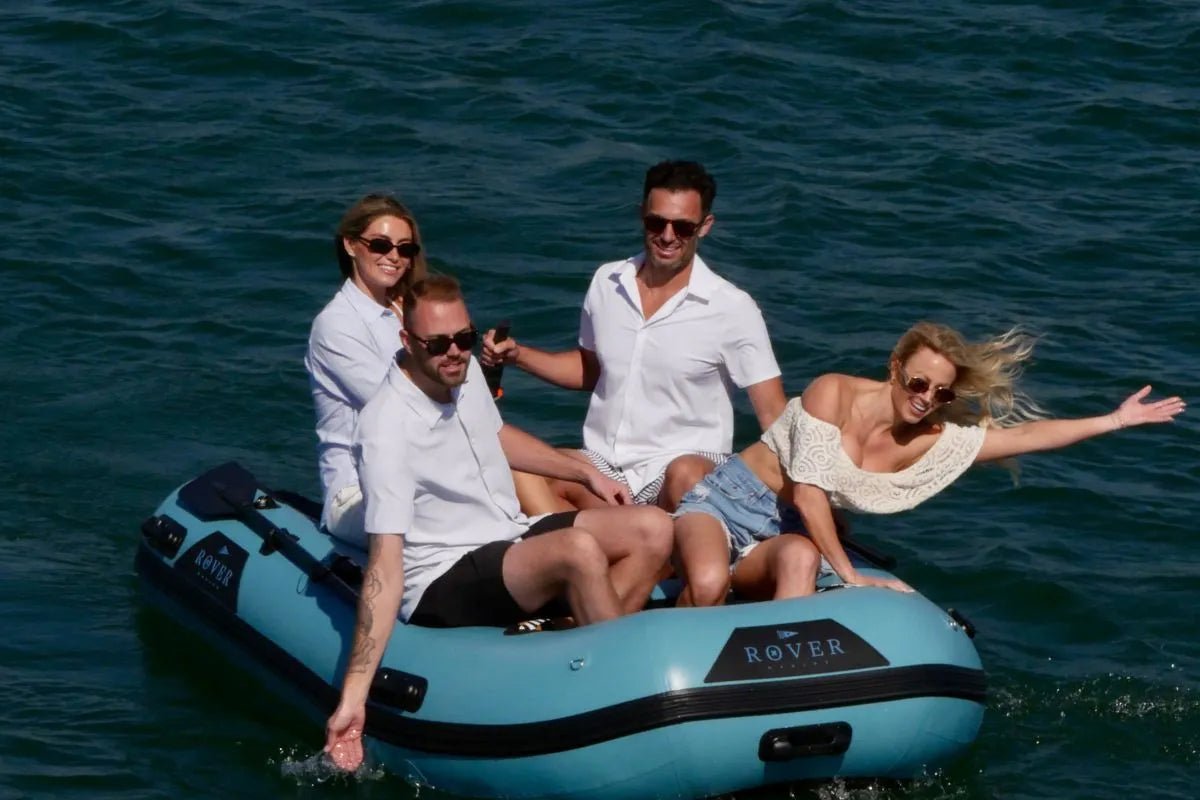
Inflatables can make sense in shallow water because they spread weight over a wide footprint and can be paired with short-shaft outboards when the transom is built for it. That does not create a fixed draft guarantee, but it can help the complete rig sit higher than a narrower, heavier setup with the same load.
Wide, flat displacement
A broad inflatable footprint spreads load across more water. Crew placement, gear weight, motor weight, and trim still decide how the boat actually sits.
15 inch transom
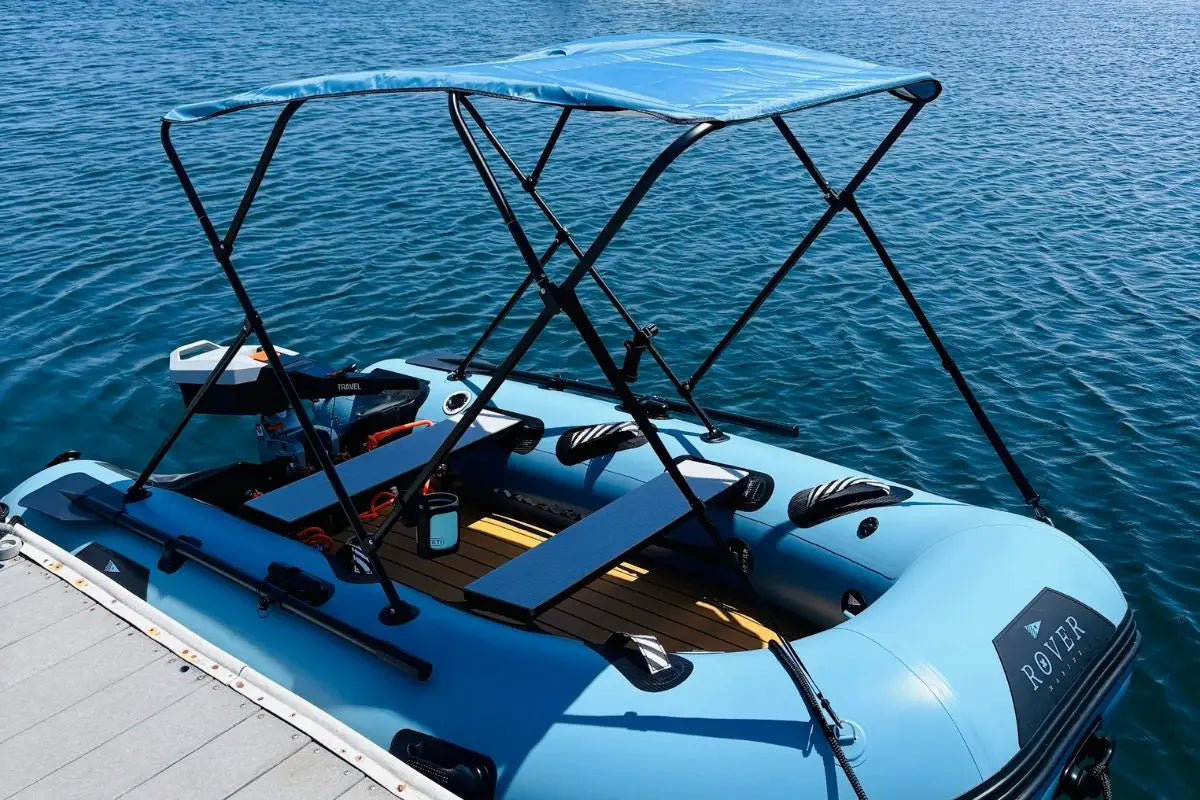
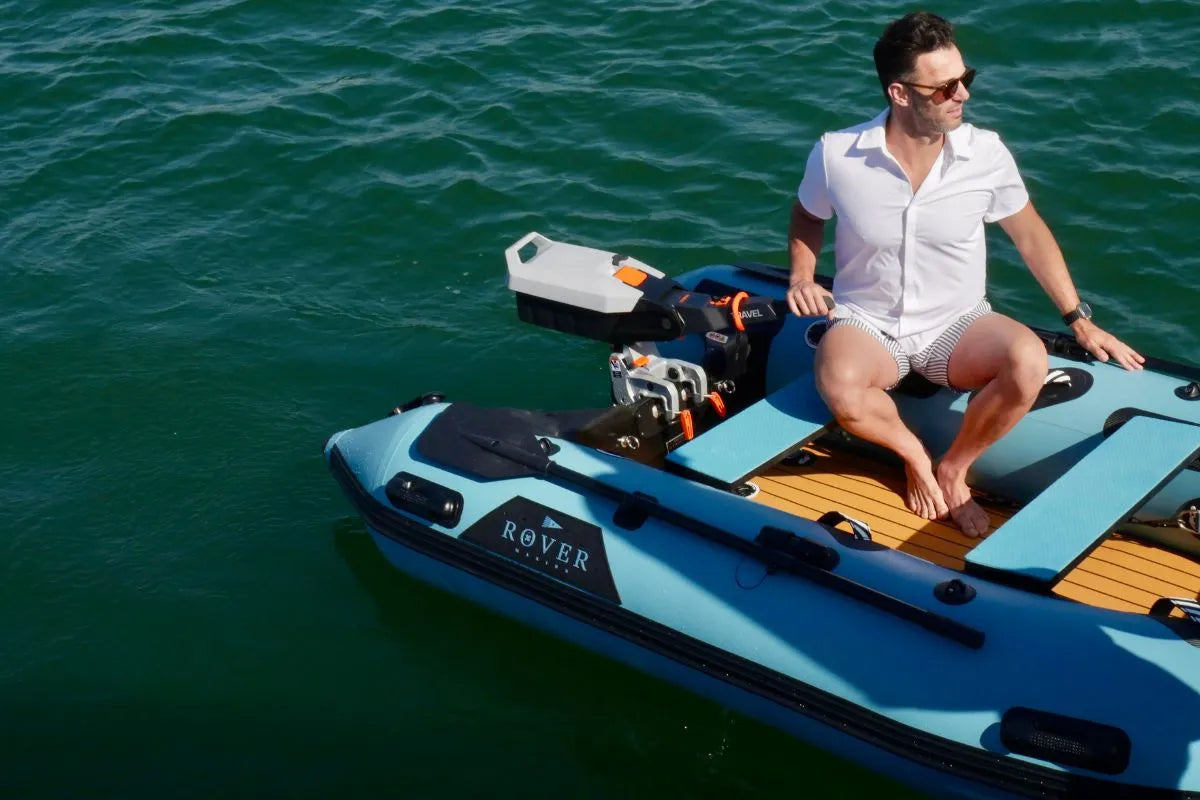
Every current Battle Boat and Battle Cat uses a 15 inch transom, which matches short-shaft outboards. A short-shaft motor can keep the lower unit higher than a long-shaft setup when installed correctly.
Electric motor fit
Electric outboards can be useful for quiet shallow-water approaches. Shop from the Rover Marine electric outboard collection and confirm the shaft length, power rating, battery weight, and fit before purchase.
Load still decides
A light hull helps, but the complete load is what matters. Current Rover Marine boats list capacities from 600 lb to 1200 lb by size, and every pound affects freeboard, trim, and clearance.
For more on matching power to the hull, read the best outboard motors for inflatable dinghies.

Do the load math before you believe any draft number
Rated capacity is not the same thing as a target operating load. Rover Marine lists 600 lb at 8 ft, 1000 lb at 10 ft, and 1200 lb at 12 ft. Every pound added changes freeboard, trim, and how much clearance remains at the hull and motor.
Example 10 ft day load
Two adults380 lb example
Outboard plus battery or fuel70 lb example
Cooler, water, tackle, rods60 lb example
Anchor, rode, PFDs, pump, dry bag40 lb example
Total aboard550 lb of a 1000 lb listed capacity
What the math tells you
It is not a draft claimThis example does not establish a published static draft.
It is a planning checkIt shows how quickly gear and power add to the real load.
Margin mattersLeave room for people moving, changing weather, extra gear, and return trips.
Trim mattersWhere weight sits can matter as much as the total number.
Practical rule: calculate the complete load and avoid treating the maximum rating as the goal. A larger hull may provide more capacity, but only if its dimensions, power limits, storage needs, and intended water suit the mission. For more on size tradeoffs, read how size impacts inflatable dinghy performance.
Hull types compared in skinny water
This section replaces the wide table from the draft with responsive cards so the comparison stays readable on desktop and mobile.
Inflatable boat
- DraftNo published Rover static-draft figure. It is load-dependent.
- Damage riskSharp or abrasive contact can puncture, scuff, or wear inflatable material.
- CapacityRover Marine lists 600 to 1200 lb by size.
- PortabilityDeflates and packs down by model size.
- Best fitPortable shallow-water access when load, motor, weather, and bottom conditions match.
Jon boat
- DraftOften shallow, but varies by hull, motor, width, and load.
- Damage riskDents, rivets, welds, seams, and bottom wear depend on construction.
- CapacityVaries widely by model.
- PortabilityOften trailer, truck bed, rack, or dedicated storage.
- Best fitWorkboat simplicity, protected water, and utility use.
Flats skiff
- DraftCan be very shallow when purpose-built and correctly loaded.
- Damage riskGelcoat, laminate, hardware, skeg, and prop damage are possible on hard bottom.
- CapacityVaries by model and layout.
- PortabilityUsually requires trailer, storage, and ramp planning.
- Best fitDedicated sight fishing, poling, and flats programs.
Aluminum V-hull
- DraftUsually deeper than flatter small-boat designs of similar size.
- Damage riskDents, welds, rivets, skeg, and propeller can all matter.
- CapacityOften good for size, but model-specific.
- PortabilityUsually trailer-based.
- Best fitMore chop, cooler water, and general utility where depth is less tight.
Kayak
- DraftOften very shallow with a light load.
- Damage riskMaterial depends on the kayak. Dragging, oyster, rock, and UV still matter.
- CapacityUsually lower than a small powered boat.
- PortabilityRoof rack, truck bed, cart, or hand carry.
- Best fitSolo shallow access when capacity and power are not the priority.
Bay boat
- DraftDepends heavily on hull, motor, jack plate, load, and design.
- Damage riskHard-hull and lower-unit damage can become expensive.
- CapacityOften higher than the smaller options here.
- PortabilityTrailer, ramp, storage, and tow vehicle required.
- Best fitLonger runs, more open water, and mixed inshore use.
Read this as tradeoffs, not a scoreboard. A kayak may reach very shallow areas but carries less. A flats skiff is built for skinny water but needs trailer and storage infrastructure. A portable inflatable can combine useful capacity, shallow-water access, and packable storage, but it is not the answer for every bottom, speed, or route.
What a bump can do to each hull
Bottom contact is about material, speed, angle, and bottom type. Sand is not oyster. Mud is not rock. Light contact at idle is not the same as dragging or striking a sharp object under power.
A gelcoat hull can chip, scratch, or crack on hard bottom. Aluminum can dent, scrape, or stress welds and rivets depending on construction. A pressurized inflatable tube can flex during light contact, but oyster, rock, metal, barnacles, and debris can still puncture or abrade the material.
The honest rule is simple: do not use hull flexibility as permission to hit things. Slow down, read the bottom, tilt the motor before the lower unit reaches bottom, rinse shell grit and sand after saltwater use, and inspect contact points. For soft-hull and rigid-hull tradeoffs, read the rigid vs soft inflatable boat comparison.
Running skinny: trim, quiet, and knowing when to stop
Move weight forward when needed
Weight aft can squat the stern and deepen running clearance where the lower unit already sits low. In thin water, move gear carefully, keep the crew balanced, and trim within the motor's safe operating guidance.
Quiet approaches help
Shallow-water fish can react to hull slap, dropped tools, gear movement, and motor noise. Electric propulsion can be useful for slow approaches when range, battery weight, current, wind, and return reserve are planned correctly.
Shut off before it gets too thin
The safest shallow-water technique is often the oldest one: shut off the motor, tilt it, and cover the last stretch with a paddle or push pole where conditions allow.
Match the bottom
Sand, mud, grass, current, and wind all change anchoring. Read the inflatable boat anchoring guide before relying on one anchor setup everywhere.
Where an inflatable is not the answer
A portable inflatable is not a dedicated poling skiff with a raised platform and sight-fishing tower. If your entire program is elevated sight fishing on flats, a purpose-built flats skiff may fit better.
It is also not a long-run speed boat. Current Rover Marine recommended power limits are up to 6 hp at 8 ft, up to 10 hp at 10 ft, and up to 20 hp at 12 ft. Choose the route, weather window, and waterbody around the boat's intended use.
What an inflatable can combine is compact storage, useful capacity, a broad load-bearing footprint, and access without a dedicated trailer in many situations. The right shallow-water boat is the one that fits the complete load and operating conditions while preserving safe clearance for the hull and motor.
Battle Boat or Battle Cat for shallow water?
Both Rover Marine models use a 15 inch transom, 3.5 PSI tubes, a 10 PSI drop-stitch floor, and size-specific recommended power limits. The choice is less about one model being "the shallow boat" and more about load, deck layout, stance, handling, and storage.
Battle Boat
The Battle Boat uses a traditional inflatable hull layout. Choose it if you want classic dinghy handling, compact tender utility, and a familiar single-hull feel.
Battle Cat
The Battle Cat uses a dual-pontoon layout with a wider internal stance and a more settled feel when people, dogs, or gear shift around the deck.
Shallow water boat questions
What is the best shallow water boat for fishing?
The best shallow water boat is the one that has enough clearance with your actual load aboard. Compare hull shape, total weight, motor depth, trim, propeller clearance, bottom type, and how much gear you carry. Category alone does not decide it.
How shallow can a Rover Marine inflatable run?
Rover Marine does not publish a static-draft figure for these models. Draft and motor clearance depend on hull size, total load, trim, motor, speed, water conditions, and bottom conditions. Use the published capacity, motor rating, and transom specs as planning inputs, not as a fixed shallow-water promise.
Will an inflatable boat get damaged on oyster or rock?
It can. A pressurized tube can flex during light contact, but oyster, rock, metal, barnacles, and debris can puncture or abrade inflatable material. Avoid contact, slow down, tilt the motor before the lower unit reaches bottom, and rinse grit after saltwater use.
Do I need a short-shaft or long-shaft motor for shallow water?
Current Rover Marine Battle Boat and Battle Cat models use 15 inch transoms, which match short-shaft outboards. Confirm the exact shaft length, installation, propeller clearance, and motor fit before purchase.
Is an inflatable a real flats boat alternative?
It can be an access alternative for some shallow protected water use, especially when storage and transport matter. It is not a dedicated poling skiff, tower skiff, or long-run high-speed flats boat. Compare the complete loaded rig and intended water before choosing.

Leave a comment
This site is protected by hCaptcha and the hCaptcha Privacy Policy and Terms of Service apply.