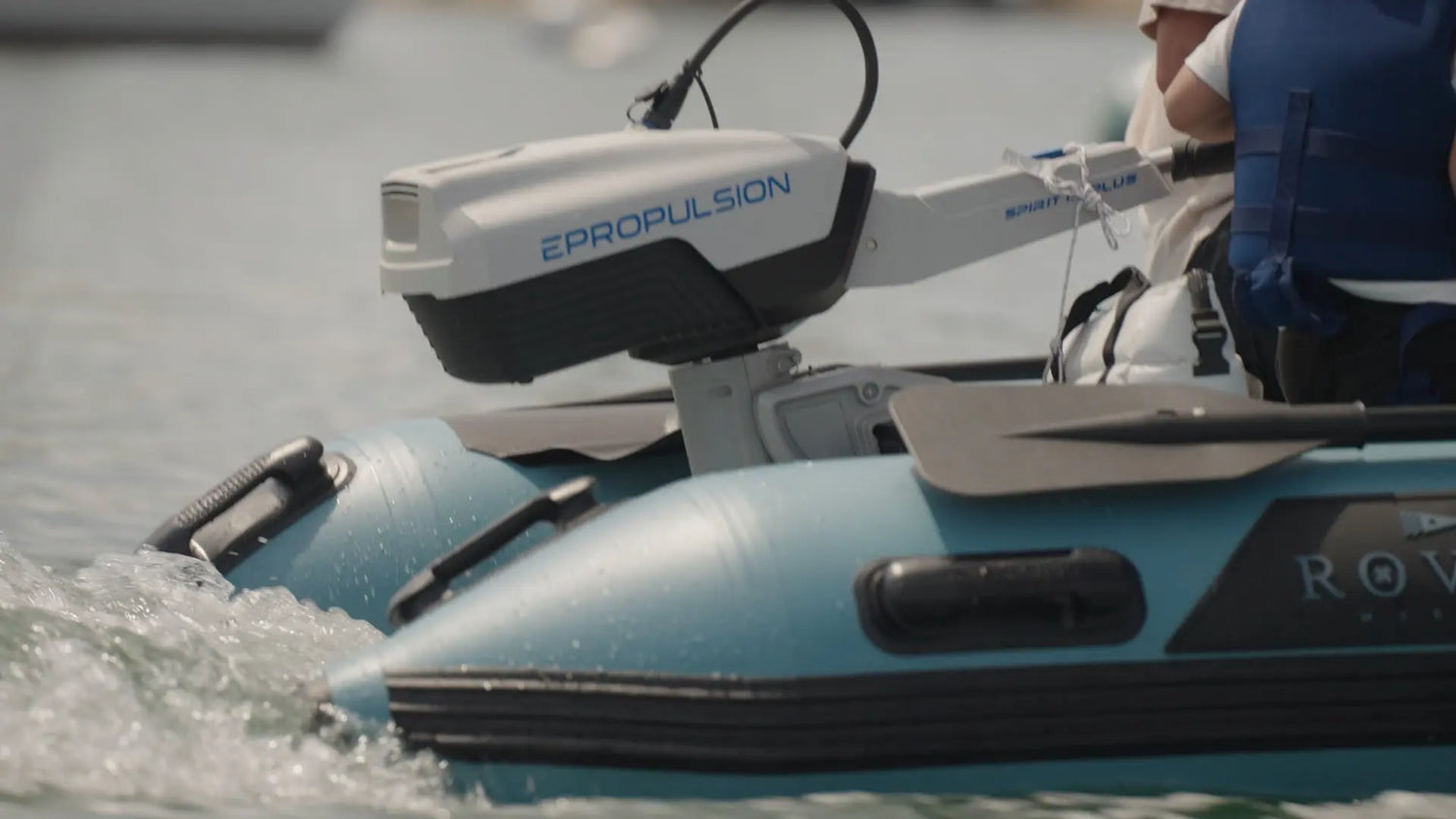
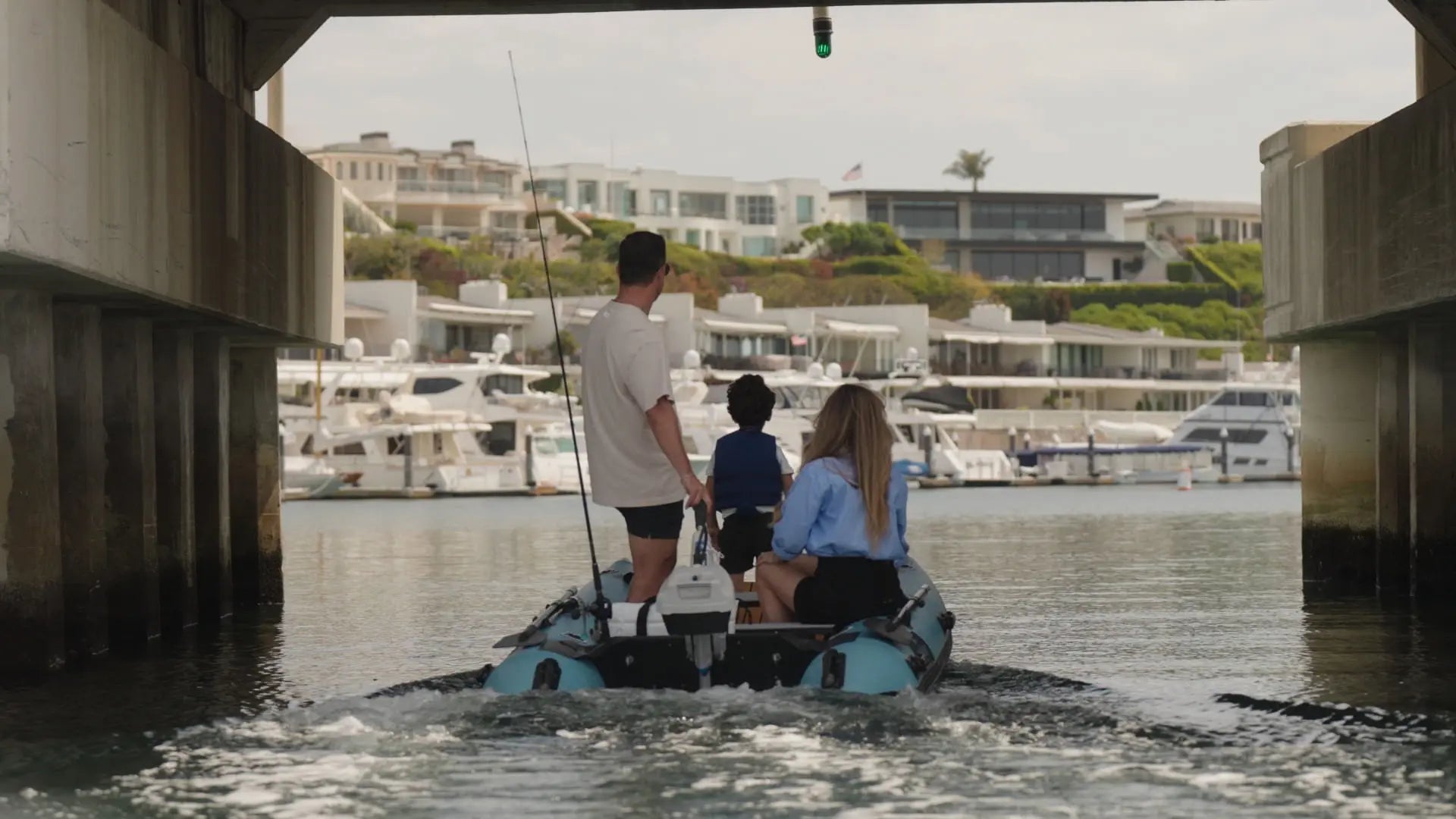
The best outboard motor for an inflatable dinghy is not a universal model or the largest motor the transom accepts. It is the motor that fits the exact transom, stays within the boat’s rating, balances installed weight, supports the normal route with reserve, and can be charged, fueled, lifted, stored, and serviced by the owner.
For Rover Marine boats, the current starting facts are simple: 15-inch transoms, short-shaft compatibility, and maximum limits of 6, 10, and 20 HP across the 8, 10, and 12 ft sizes.
What makes an outboard “best” for a dinghy?
Tender priority
Low-speed control, manageable lifting, clean storage, and a reliable return reserve.
Fishing priority
Quiet control may matter, but gear load, route length, battery or fuel placement, and propeller risk also matter.
Family priority
Predictable controls, conservative route planning, correct PFDs, balanced seating, and simple support matter more than top speed.
Match the motor to the current hull rating
| Size | Inflated dimensions | Capacity | Maximum motor | Battle Boat / Cat weight |
|---|---|---|---|---|
| 8 ft | 8 x 4 x 15 in | 2 people / 600 lb | Up to 6 HP | 86 / 84 lb |
| 10 ft | 10 x 5 x 18 in | 4 people / 1,000 lb | Up to 10 HP | 100 / 98 lb |
| 12 ft | 12 x 5.5 x 20 in | 4 people / 1,200 lb | Up to 20 HP | 135 / 130 lb |
The old guide’s 5 to 15 HP range for a 12 ft Rover model is obsolete because the current ceiling is up to 20 HP. That correction does not turn 20 HP into a recommendation. Select only the power needed for the normal duty.
All current models use a 15-inch transom. Confirm the motor maker’s definition of short shaft, clamp range, propeller depth, tilt clearance, and mounting instructions. Similar horsepower does not override a shaft or weight mismatch.
Electric, portable gas, and larger gas categories
Portable electric
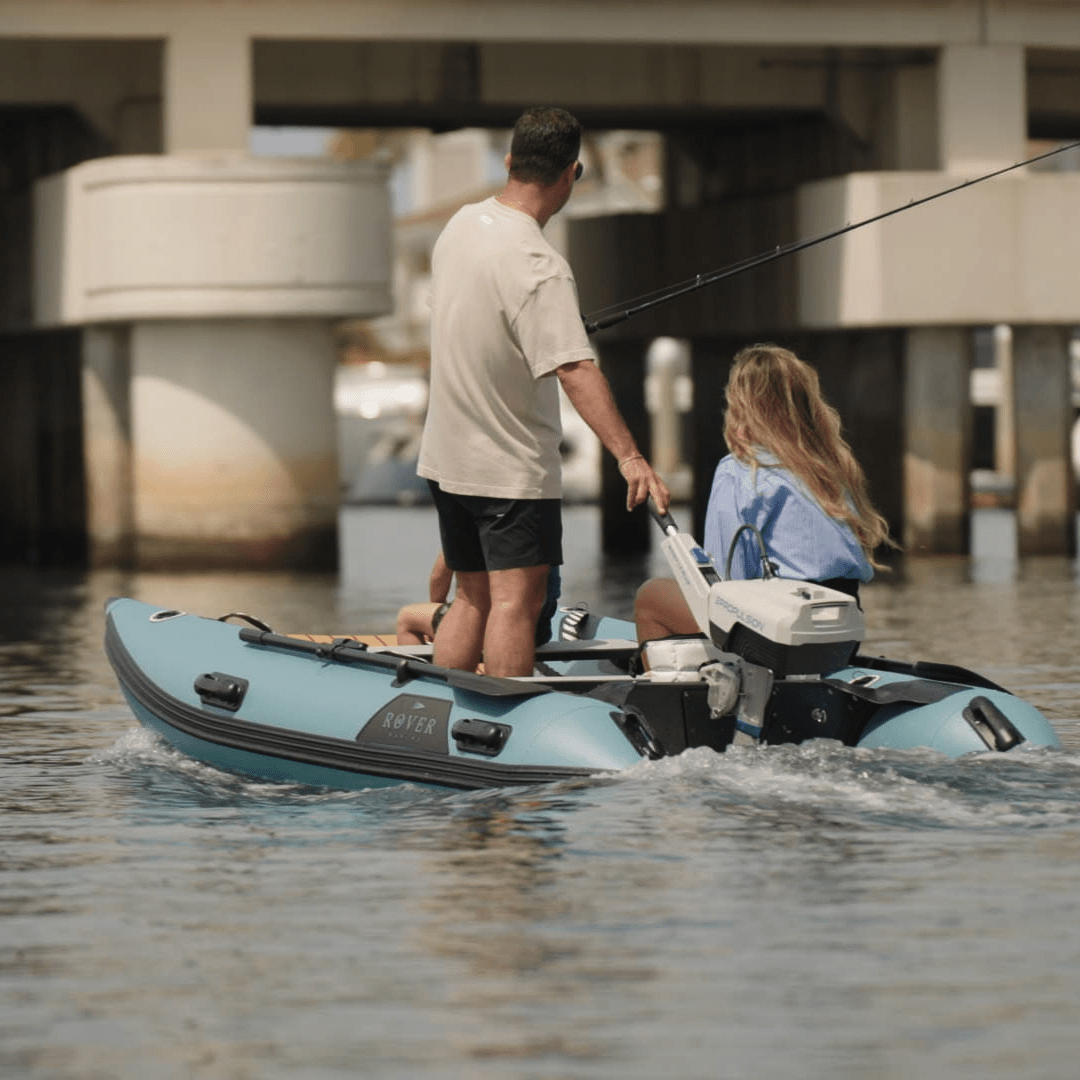
Strong fit for quiet tender work, harbor cruising, fishing, and routes with reliable charging. Range changes quickly with throttle.
Small portable gas
Useful where rapid refueling and established service matter. Adds fuel handling, fumes, noise, and combustion maintenance.
Higher-power gas
May suit heavier duty within the hull ceiling, but adds stern weight, lifting difficulty, and greater fuel-system needs.
Do not use the word offshore as a casual motor recommendation. Boat, crew, weather, route, communications, local rules, and manufacturer suitability must all support the trip.
Two current electric families to compare
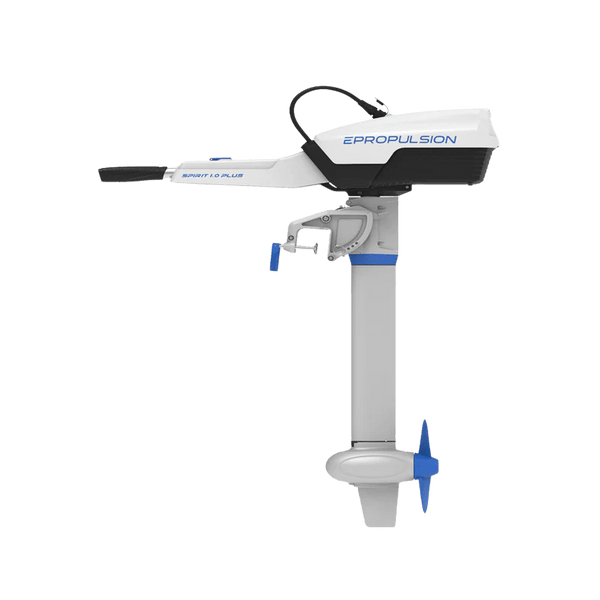

ePropulsion Spirit 1.0 Plus short shaft
The live ePropulsion listing describes a 1 kW, 3 HP equivalent class motor in a short-shaft configuration. The exact battery and charger arrangement must be confirmed on the live package. Do not reuse the old article’s one-hour or multi-hour runtime promises.
Torqeedo Travel 1103 S packages
The Essential package and Extended Range package use the short-shaft Travel platform and differ in battery package. Compare what is included, complete weight, charging, display information, and how the battery will be carried. Equivalent HP does not promise gas-identical behavior.
Outboard selection matrix
| Factor | Question | Why it matters |
|---|---|---|
| Shaft | Does it match a 15-inch transom? | Incorrect immersion can affect control, drag, and mounting. |
| Power | Is it within 6, 10, or 20 HP? | The rating is a hard ceiling. |
| Weight | Can the crew lift and store the complete system? | Motor and energy weight affect trim and launch effort. |
| Endurance | Does the route work with a return reserve? | Published examples are not guarantees for your load. |
| Energy | Where will you charge or refuel safely? | Convenience depends on the actual ownership routine. |
| Support | Who services the exact motor locally? | Parts, diagnostics, and battery support affect downtime. |
Before the first powered trip
- Verify hull pressure, capacity, transom, and current motor ceiling.
- Inventory the complete motor package, not only the drive unit.
- Mount and retain the motor exactly as instructed.
- Secure the battery or fuel system and protect lines from chafe.
- Balance the full crew and gear with the motor installed.
- Test controls, cutoff device, reverse, tilt, and cooling where applicable.
- Record consumption on a protected-water test before planning a longer route.
Use properly fitted life jackets and confirm the current requirements for the exact craft, motor, operating area, and activity. The U.S. Coast Guard provides current life jacket guidance.
What owner reviews can and cannot tell you
Reviews can reveal whether owners value the setup experience, support, or quiet operation. They cannot determine your required shaft, legal equipment, range, or capacity. Compare the reviewer’s size and activity with your own before treating the experience as relevant.
How to shortlist and test outboard candidates
Create a three-column shortlist rather than declaring one universal winner. Column one is the lightest compatible system that can complete the normal mission. Column two favors the easiest replenishment and service. Column three favors the best lifting and storage routine. List the full package, not only the motor head.
Ask each seller for shaft length, total ready-to-run weight, battery or tank requirements, mounting instructions, warranty administrator, nearby service options, replacement-parts availability, and the exact published performance conditions behind any range statement. If an answer is not documented, treat it as unresolved.
Protected-water test protocol
- Set correct boat pressure and inspect the transom and mount.
- Load the normal crew and secure all gear.
- Confirm steering, reverse, cutoff device, tilt, and cooling where applicable.
- Run several practical throttle settings and record time, energy or fuel use, conditions, and remaining reserve.
- Repeat with the heaviest normal load before planning a longer route.
The “best” motor is the candidate that passes the exact hull limits and this ownership test with the fewest compromises. A higher horsepower number or a longer advertised range is not a substitute for compatibility.
Frequently asked questions
What is the best outboard for an 8 ft Rover Marine boat?
A compatible short-shaft motor up to 6 HP that fits the normal load, route, and lifting plan.
What is the best outboard for a 10 ft model?
Choose within the 10 HP ceiling. The best choice depends on load, route, weight, and charging or refueling.
Can a 12 ft Rover Marine boat use 20 HP?
The current ceiling is up to 20 HP. That is not a recommendation that every owner use the maximum.
Are current Rover motors short shaft?
The current recommended electric models include short-shaft configurations for the 15-inch transom.
Is Torqeedo better than ePropulsion?
Neither is universally better. Compare package contents, battery system, weight, controls, charging, support, and route.
Does 3 HP equivalent equal a 3 HP gas motor?
It is a comparison class, not a guarantee of identical acceleration, speed, planing, or endurance.
Are electric motors silent?
They are quieter than small gas outboards, but the complete boat still produces propeller, water, and mechanical sound.
How do I compare range?
Use exact battery energy, realistic throttle and load, route conditions, and a conservative return reserve.
Should I carry a spare battery?
Only if it is approved for the motor, stored safely, and part of a realistic weight and route plan.
Can I use a long-shaft motor?
Current Rover Marine boats list 15-inch transoms, so short shaft is the normal fit. Do not improvise without written approval.
What maintenance does electric require?
Follow the manufacturer for battery storage, charging, connectors, propeller, corrosion, software, and inspections.
Where should I verify package contents?
Use the live Rover Marine motor page and contact support before checkout if any battery or charger detail is unclear.
Choose the motor by the complete mission
Compare current short-shaft electric packages, then verify hull size, load, route, and service support.

Leave a comment
This site is protected by hCaptcha and the hCaptcha Privacy Policy and Terms of Service apply.