electric outboard motor

Affordable Inflatable Boats With Engines: What to Know

Affordable Inflatable Boats With Engines: What to Know

Discover Rover Marine's compact, engine-ready inflatable boats, meticulously designed for easy transport, lasting durability, and practical power for coastal trips, tender duties, and leisurely outings across the U.S. This guide breaks down what makes a Rover Marine inflatable boat with an electric or gas motor a smart budget choice, how your propulsion selection impacts performance and ownership costs, and which features truly matter when buying a boat and motor package. Many budget-conscious buyers get bogged down by material trade-offs, motor compatibility questions, and the real long-term costs of electric versus gas power. We cut through the confusion with clear advice and comparison tools, showcasing how Rover Marine delivers performance beyond typical budget inflatables with triple-layer 1100D PVC, rigid drop-stitch floors, and engine compatibility up to 20 HP. You'll learn about specific Rover Marine model considerations, engine options and their practical trade-offs, step-by-step buying checklists, essential maintenance for both electric and gas motors, and cost comparisons that include battery lifecycles and running expenses. The following sections cover recommended affordable models and materials, engine types with specific electric motor comparisons, a straightforward budget-buying checklist, maintenance essentials, ideal activities for portable inflatables, and quantified cost insights to help you make a confident decision.

Explore Rover Marine's Top Affordable Inflatable Boats with Motors

Rover Marine's affordable inflatable boats with motors strike a perfect balance between tough materials, a strong transom for mounting outboards, and easy portability for transport and storage. These boats work by combining robust inflatable tubes for buoyancy with reinforced transoms and rigid drop-stitch floors that can handle electric or gas outboards up to 20 HP, offering the key advantage of versatile, engine-ready small craft for fishing, as tenders, and for leisure cruises. Evaluating models based on our superior material quality, generous load capacity, and intended use helps you pinpoint the best value options. Below, we offer a focused look at representative Rover Marine models and durable construction choices to guide your selection before you dive into specific specs or dealer listings.

Why the Rover Marine Battle Boat is Your Go-To for Versatile Adventures

The Rover Marine Battle Boat shines as a versatile inflatable dinghy thanks to its purpose-built transom, robust triple-layer 1100D PVC tube construction, and portability that’s perfect for short coastal trips, tender duties, and fishing excursions across U.S. waterways like the Florida Keys or the Pacific Coast. Its design is intentionally set up to accommodate both electric and gas outboard motors up to 20 HP, giving you flexibility in propulsion based on your range needs and maintenance preferences. Practical advantages include effortless deployment from shore or a larger vessel, and a build that prioritizes durability for frequent use in various conditions. For shoppers seeking a budget-friendly, engine-ready inflatable that delivers lasting value, the Battle Boat is a prime example of how smart design choices support multiple uses and simplify motor pairing.

Experience Unmatched Stability with the Rover Marine Battle Cat

The Rover Marine Battle Cat utilizes a catamaran hull design to provide superior initial stability and predictable handling, making it an an excellent choice for anglers, calm-water island hopping, and tender work where load balance is crucial, whether you're on the Great Lakes or exploring coastal inlets. Its stability comes from dual hull sections and a wider stance, which minimizes roll and makes standing or managing gear easier for fishing and boarding. Performance might involve a slightly lower top speed in some situations compared to a narrow dinghy hull, but the stability gains often make up for it for users who prioritize load capacity and a steady platform. When deciding between a catamaran and a dinghy style, consider whether a stable fishing platform and secure boarding are more important than outright speed – the Battle Cat delivers on stability and capacity.

What Materials Ensure Durability in Rover Marine Inflatable Boats?

At Rover Marine, durability isn't a compromise – it's standard. Our boats feature robust triple-layer 1100D PVC, a material renowned for its exceptional puncture resistance and longevity, far surpassing typical budget options. Paired with our rigid drop-stitch floors, these boats maintain their shape and provide a stable platform even with powerful outboards up to 20 HP. This military-grade PVC provides excellent puncture resistance and is easy to repair, while our premium construction ensures a longer service life. Our drop-stitch flooring adds stiffness and abrasion resistance, maintaining the hull's shape under engine thrust. This material choice affects how often you'll need maintenance, how compact the boat packs down, and its realistic lifespan. Therefore, prioritize construction elements that match how intensely you plan to use the boat and where you'll store it. Understanding these material advantages will prepare you to evaluate warranty details and expected lifecycle in practical terms.

Boat Model Construction Focus Best Use Case
Rover Marine Battle Boat Triple-layer 1100D PVC, rigid drop-stitch floor, engine-ready transom (up to 20HP) Coastal runs, tenders, general leisure, fishing
Rover Marine Battle Cat Catamaran-style hull for superior stability, triple-layer 1100D PVC, rigid drop-stitch floor (up to 20HP) Fishing, calm-water island runs, heavy-duty tender duties
Typical Budget Inflatable Basic PVC tubes, roll-up or slatted floor Entry-level boating, short-range use, limited load capacity

These comparisons highlight how Rover Marine's construction choices align with real-world applications, helping you match boat features to your primary activities and your constraints for transport and storage.

Which Engine Options Are Best for Rover Marine Inflatable Boats?

Engine options for Rover Marine inflatable boats primarily fall into two categories: electric outboard motors and gas outboard motors, each offering distinct operating principles and advantages. Electric outboards provide quiet, low-maintenance propulsion, ideal for short-range tender duties and coastal cruising. Gas outboards, on the other hand, excel at delivering higher sustained power and longer range, but require more maintenance and fuel management. Matching the engine type to your Rover Marine boat's size, shaft length, and your intended use ensures the best performance and ownership experience. The following sections detail the benefits of electric motors, compare two popular electric models, and contrast electric versus gas power in straightforward terms.

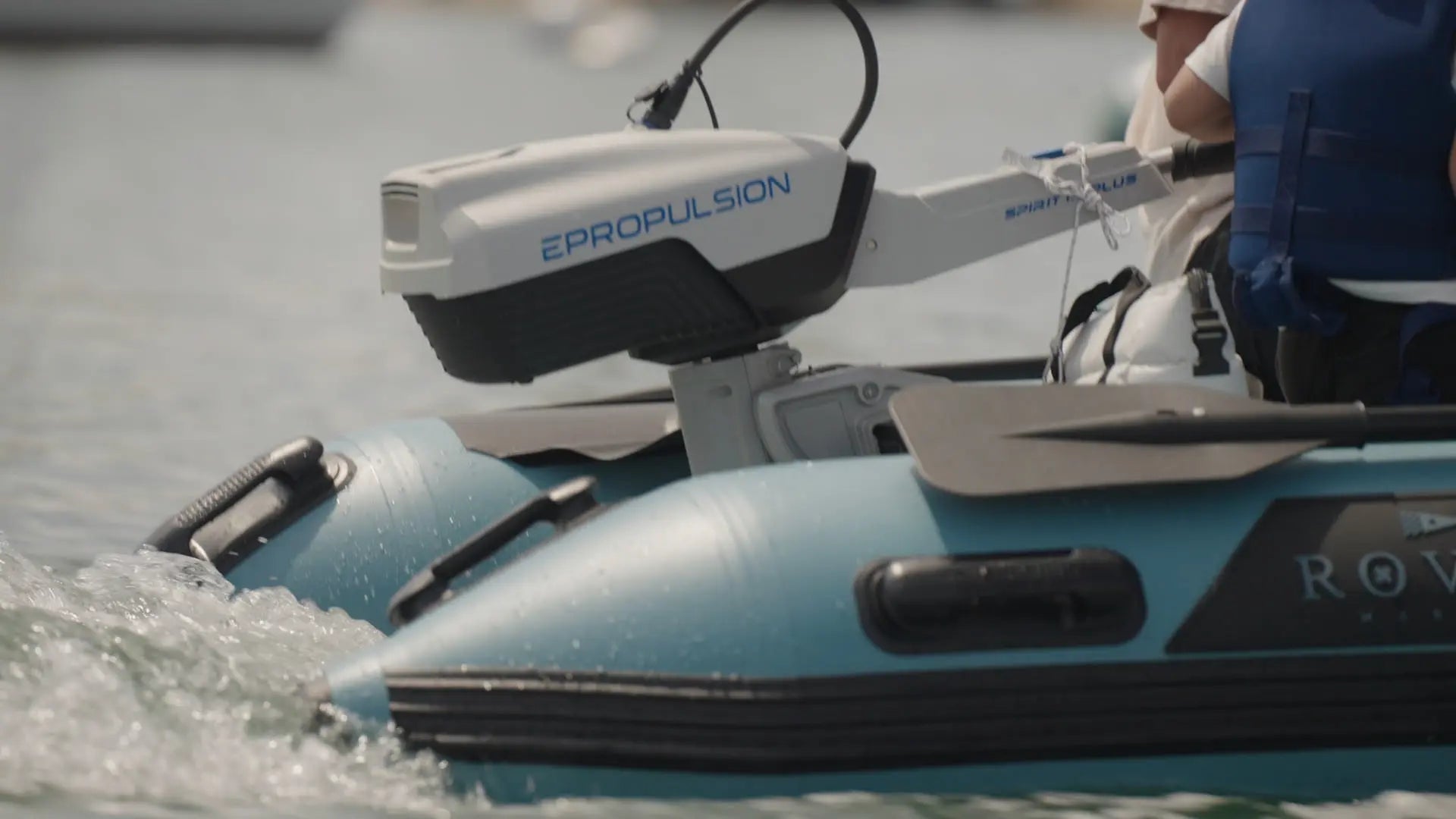
For those seeking a truly transformative boating experience, pairing your Rover Marine inflatable with a premium electric outboard like the Torqeedo Travel 1103 S or ePropulsion Spirit 1.0 Plus is a game-changer. These motors deliver quiet, efficient power, making weekend cruising, tendering, and fishing incredibly enjoyable. Imagine gliding silently across a Florida bay or a calm Great Lake, with no fumes and minimal maintenance – that's the freedom these electric options provide, perfectly complementing the robust design of your Battle Boat or Battle Cat.

What Are the Benefits of Electric Outboard Motors for Inflatable Boats?

Electric outboard motors enhance inflatable boats by offering quiet operation, simplified maintenance, and eliminating the need for on-board fuel handling, which boosts comfort and reduces operational complexity for short trips and tender work. Mechanically, electric motors do away with carburetors and many moving parts, cutting down on routine servicing and helping to lower overall ownership costs for users who favor shorter runs and frequent starts. Environmentally, electric propulsion produces no local emissions and reduces noise disturbance—significant advantages for marina and island environments. These features make electric outboards particularly appealing for weekend anglers and yacht tenders where convenience and minimal upkeep are prioritized over extended range.

  • Electric outboards offer quiet, low-maintenance propulsion perfect for short coastal excursions.
  • They rely on battery management instead of fuel logistics, simplifying operations for many users.
  • They appeal to those who value reduced noise and local emissions while tendering or fishing.

These advantages make electric options highly attractive, unless your range requirements push you toward gas alternatives.

How Do the ePropulsion Spirit 1.0 Plus and Torqeedo Travel 1103 S Compare?

Comparing electric models helps clarify their suitability for Rover Marine inflatables. Both the ePropulsion Spirit 1.0 Plus and the Torqeedo Travel 1103 S are presented as efficient, quiet alternatives to gasoline engines, featuring user-friendly designs for small boats. Key attributes include power equivalents suitable for tenders, integrated digital displays, and safety features like magnetic kill switches. Short shaft options make both models a practical fit for many inflatables. Below is a concise comparison focusing on user-centric features rather than technical specifications.

Epropulsion Spirit 1.0 Plus electric outboard motor side view with propeller.

Motor Model User-Facing Attributes Practical Fit
ePropulsion Spirit 1.0 Plus Efficient, quiet, with digital display and electric start Well-suited for short-range coastal and tender use
Torqeedo Travel 1103 S Compact, quiet, features digital feedback and safety kill-switch Good for lightweight inflatables and easy transport
Typical Small Electric Outboard Clean operation, low maintenance, short-shaft options Best for short trips and low-noise environments

This comparison shows that both named models emphasize quiet efficiency and user-friendly displays, making them practical electric choices for Rover Marine packages that prioritize convenience and minimal upkeep.

What Are the Differences Between Electric and Gas Outboard Motors?

Electric and gas outboard motors differ significantly in upfront cost, ongoing operating expenses, maintenance requirements, and range capabilities, creating distinct ownership scenarios for budget buyers. Electric systems typically have a higher initial cost for the motor and battery, but lower routine servicing and no fuel expenses. Gas engines often cost less upfront but require fuel management, more frequent mechanical maintenance, and winterization. In terms of performance, gas engines can offer longer continuous range and higher top-end power for extended coastal journeys, while electric motors provide instant torque and quieter operation for shorter distances. Evaluating these trade-offs against your planned usage will help you determine whether an electric-first or gas-first approach offers the best total cost of ownership.

How Does Horsepower Affect Inflatable Boat Performance?

Horsepower influences speed, the ability to plane, and handling characteristics. Higher horsepower increases potential top speed and the capacity to plane with heavier loads, but also raises fuel or battery consumption and weight considerations. For Rover Marine inflatables, there are practical horsepower ranges that match the boat's length and load capacity, with compatibility up to 20 HP. Staying within manufacturer recommendations ensures safety and preserves transom integrity. Selecting the right horsepower balances your desired cruising speed with fuel/electric efficiency and stability under load, making careful matching essential for predictable performance and longevity.

What Is the Typical Range and Battery Life for Electric Motors?

Typical electric outboard range varies based on speed, load, and battery capacity. Cruising at slower speeds extends mileage per charge, while higher speeds significantly reduce run-time. Battery life is also affected by discharge depth, charging habits, and ambient conditions. Choosing a battery with a conservative size and a buffer margin helps prevent range anxiety. For practical planning, always factor in the worst-case sea state and full-load scenarios when selecting battery capacity to ensure you have enough margin for return trips and unexpected situations.

How to Choose the Right Rover Marine Boat and Motor Package on a Budget

Selecting the right Rover Marine inflatable boat and motor package on a budget requires a prioritized checklist that aligns transom compatibility, shaft length, required power, and realistic battery or fuel planning with your intended activities. The process is straightforward: define your primary use case, choose a Rover Marine boat construction and floor type that support that use, and match motor characteristics—shaft length and power—to the boat to ensure optimal performance and safety. Below is a practical, step-by-step checklist to guide budget buyers through the decision process, followed by considerations for purchasing channels.

  • **Define Your Adventure:** What will you primarily use your Rover Marine boat for? Fishing, tendering, island hopping, or coastal cruising?
  • **Choose Your Rover Marine Model:** Select between the versatile Battle Boat or the ultra-stable Battle Cat, considering your load and stability needs.
  • **Match Your Motor:** Ensure the motor's shaft length and horsepower (up to 20 HP) are compatible with your Rover Marine boat's transom rating.
  • **Power Your Journey:** Decide between electric (for quiet, low-maintenance, shorter runs) or gas (for extended range and higher speeds), and budget for the appropriate battery or fuel system.
  • **Accessorize Smartly:** Plan for essential accessories like a pump, repair kit, safety gear, and a quality storage bag.

This checklist helps buyers avoid costly mismatches and ensures the selected Rover Marine boat and motor combination performs reliably in real-world conditions.

What Should You Look for in Affordable Inflatable Boat and Motor Combos?

When evaluating combos, first check for transom compatibility, the correct shaft length options, and clear specifications linking motor power to boat length and maximum load. Rover Marine packages are designed for seamless compatibility, ensuring you get a balanced system. Essential accessories—battery type and capacity for electric setups, or fuel handling equipment for gas—should be included or clearly itemized to avoid unexpected costs. Confirming warranty coverage and return policies minimizes risk, especially for online purchases where you can't inspect the item in person. Prioritizing these checklist items reduces the chance of buying a mismatched package that underperforms or leads to unforeseen expenses.

Are New or Used Inflatable Boats Better for Budget Buyers?

New boats come with warranty protection and a known condition, while used boats can offer immediate savings if thoroughly inspected for seam integrity, valve condition, and flooring wear. A comprehensive inspection checklist for used purchases includes a close examination of seams and valves, pressure retention tests, and verification of floor stiffness under load. For budget buyers who are comfortable with hands-on inspection and potentially minor repairs, used inflatables can be a great value. Otherwise, investing in a new package often provides better long-term predictability and support.

Where Can You Buy Affordable Inflatable Boats With Engines?

For U.S. boaters, Rover Marine is your direct source for high-quality, engine-ready inflatable boats. Our e-commerce platform and authorized dealer network specialize in durable, portable inflatables like the Battle Boat and Battle Cat, along with compatible electric outboards such as the ePropulsion Spirit 1.0 Plus and Torqeedo Travel 1103 S. We provide full specification sheets, clear return policies, and expert support to ensure you get a package that delivers on performance and lasting value. Checking seller reputation and documented compatibility notes helps ensure the package meets both performance and warranty expectations.

What Are the Maintenance Tips for Rover Marine Inflatable Boats and Their Engines?

Routine maintenance for Rover Marine inflatable boats is key to preserving material integrity and engine performance. The core approach involves scheduled inspections, proper cleaning, and storage practices that protect against UV damage and mildew. The secret to a long lifespan is simple: regular visual checks catch seam or valve issues early, proper rinsing removes corrosive salt and debris, and correct battery/fuel care extends motor life. The following sections cover electric outboard care, gas engine best practices, and guidelines for cleaning and storing your boat to maximize uptime and minimize ownership costs.

  • Regularly inspect seams, valves, and floor attachment points for any signs of wear or leaks.
  • Rinse the boat and motor with fresh water after use in saltwater environments to prevent corrosion.
  • Follow manufacturer guidelines for battery storage and periodic charging to maintain battery health.

These routine actions reduce the risk of sudden failures and simplify long-term ownership management.

How Do You Maintain Electric Outboard Motors?

Maintaining electric outboards primarily involves battery care, preventing corrosion on connectors, and staying updated on software/firmware for models with digital displays. Charge batteries according to manufacturer recommendations regarding depth of discharge, store them in a cool, dry place at the recommended charge level, and inspect connectors for salt or debris after every saltwater outing. Periodic firmware updates and display checks ensure control systems function reliably. Rinsing the motor exterior with fresh water, while avoiding electrical connectors, helps reduce corrosion risk. Consistent battery management and basic rinsing routines lead to a long service life and predictable performance.

What Are the Best Practices for Gas Outboard Motor Maintenance?

Gas outboard maintenance requires fuel stabilization, routine mechanical inspections, and proper winterization to prevent carburetor and fuel-line issues. Use fuel stabilizers for engines that will be stored, replace spark plugs as recommended, and regularly inspect fuel hoses and clamps for cracks or corrosion. Winterization steps include draining carburetors or using fogging oils where applicable, and storing the engine in a dry environment. Corrosion prevention measures and timely service intervals protect your investment and ensure reliable starting and performance. Regular professional servicing at recommended intervals ensures critical components receive attention beyond basic owner checks.

How Should You Clean and Store Your Rover Marine Inflatable Boat?

Cleaning and storage protect the triple-layer 1100D PVC fabric and rigid drop-stitch floor systems from UV degradation and mildew. Use mild marine detergents and ensure thorough drying before packing to prevent mold growth. After rinsing, dry the tubes and floor completely, preferably in the shade, then deflate according to manufacturer instructions. Store the boat in a climate-controlled space away from direct sunlight and sharp objects. Maintain recommended inflation pressures during storage and avoid overstressing valves. Periodically airing out the boat during long-term storage helps preserve material elasticity. These practices maintain its appearance and structural integrity while reducing the need for long-term repairs.

Why Rover Marine Inflatable Boats with Outboard Engines Are Ideal for U.S. Water Activities

Rover Marine's Battle Boat and Battle Cat are engineered to maximize your time on the water, combining effortless transport, rapid setup, and versatile propulsion options that adapt to fishing, diving, tendering, and island excursions across diverse U.S. waterways, from the Great Lakes to the Pacific Coast. The mechanism by which portability enhances boating is simple: lighter, deflatable craft reduce storage and trailering challenges, leading to more frequent use and access to remote launch sites. Their versatility allows recreational users to pair hull types and motor choices specifically for their primary activities, ensuring a perfect fit for your lifestyle.

How Do Portability and Durability Enhance Boating Experiences?

Portability minimizes the logistical hurdles of boating by allowing owners to store their Rover Marine craft compactly and launch from various locations without needing large trailers. Durability, ensured by our triple-layer 1100D PVC and reinforced transoms, ensures resilience during repeated handling, beaching, and motor use. These tough materials and rigid drop-stitch floors enable more demanding usage and simplify transport routines, encouraging more frequent outings and a wider range of activity options. Together, portability and durability expand the practical possibilities for small boat owners, enabling weekend anglers and waterfront property owners to access more waterways with less hassle.

What Water Activities Are Best Suited for Rover Marine Inflatable Boats With Motors?

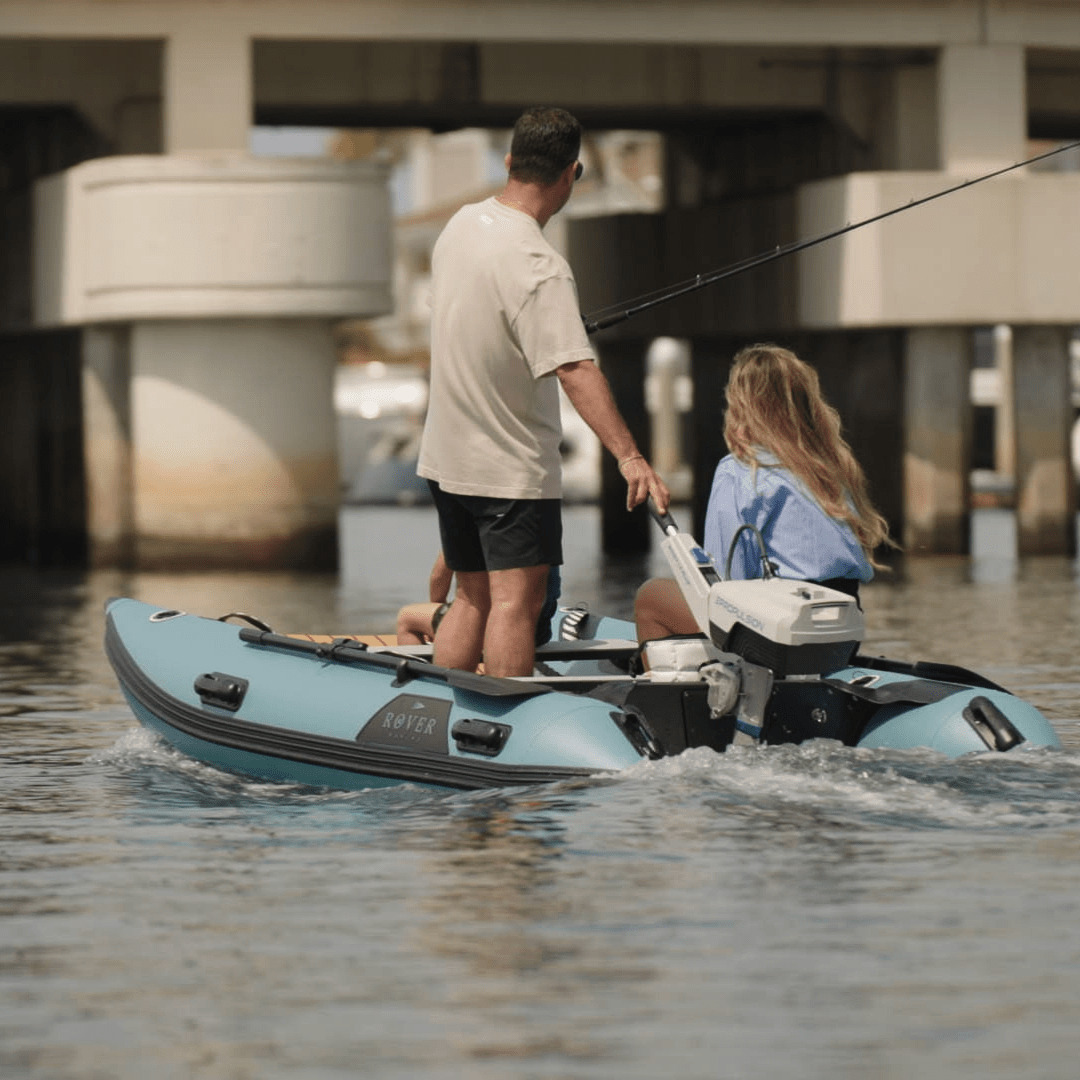
Rover Marine inflatable boats with motors are well-suited for a wide array of activities, including calm-water fishing, serving as tenders for larger vessels, short island hops, and light-water exploration where easy transport and quiet operation are priorities. Our Battle Cat, with its exceptional stability, is a favorite for anglers and family outings, while the nimble Battle Boat excels at coastal exploration and tender duties. Activity-specific motor pairings might favor electric outboards for tenders and low-noise fishing, and gas outboards when extended range or higher sustained speed is necessary for adventures on the Great Lakes or along the Gulf Coast.

  • **Fishing:** Prioritize stability and deck space with the Battle Cat, often paired with moderate power motors.
  • **Tendering:** The Battle Boat offers easy boarding, transom strength, and quiet starts, especially with electric outboards.
  • **Island Runs and Exploration:** Both models provide reliable propulsion and range, perfect for exploring hidden coves.

These pairings help buyers match hull form and propulsion to their primary use, enhancing satisfaction and safety.

How Do Rover Marine Inflatable Boats Serve as Yacht Tenders and Island Runners?

As yacht tenders and island runners, Rover Marine inflatables must balance load capacity, easy boarding, and reliable motor compatibility, with quiet operation increasingly valued in marina and anchorage settings. Key tender features include sturdy rub rails, robust drop-stitch floor systems for safe boarding, and motors that deliver smooth, low-vibration thrust for passenger comfort. Quiet electric options are appealing where noise and emissions are concerns, while gas options are suitable for longer transfer distances. Selecting the right combination ensures tender utility without compromising durability or safety, making Rover Marine boats a trusted choice for discerning boaters.

What Are the Cost Considerations for Rover Marine Electric Inflatable Boats?

Cost considerations for Rover Marine electric inflatable boats involve weighing the upfront expense of the motor and batteries against lower long-term operating and maintenance costs. The ownership model typically requires a higher initial investment for battery systems but results in reduced fuel and mechanical service outlays. Evaluating upfront cost, annual operating expenses, maintenance demands, and typical range helps buyers calculate break-even points and long-term value. The table below summarizes these fuel-type trade-offs and supports straightforward return on investment (ROI) thinking for budget-conscious buyers.

Propulsion Type Upfront Cost Operating Cost Maintenance Typical Range Notes
Electric Higher motor + battery upfront Lower per-hour energy cost Lower mechanical maintenance; battery replacement over years Best for short to moderate range with buffer sizing
Gas Lower motor upfront, fuel ongoing Higher fuel cost and handling More frequent mechanical service and winterization Better for extended continuous range and high-speed use
Hybrid / Mixed Approach Variable Balanced fuel/electric costs Maintenance depends on system complexity Offers flexibility but adds complexity and cost

How Much Does an Electric Inflatable Boat Cost Compared to Gas Models?

Electric inflatable setups tend to have higher upfront totals when including battery capacity and charging equipment, whereas gas setups often have lower initial purchase prices but incur ongoing fuel and maintenance expenses. Cost drivers include battery size, motor brand, and construction materials. Prioritizing core features—a sturdy transom, the correct motor shaft length, and sufficient battery capacity—yields the most predictable results for budget buyers. On a tight budget, focus on the minimal configuration that meets your range and load requirements rather than simply the lowest sticker price, ensuring you get the lasting value of a Rover Marine boat.

Torqeedo Travel electric outboard motor with orange propeller and integrated tiller handle, side view.

What Are the Long-Term Savings of Electric Outboard Motors?

Long-term savings from electric outboards stem from reduced routine servicing, the absence of fuel purchases, and simplified pre- and post-season maintenance. However, battery replacement cycles introduce periodic capital expenses. Annualized comparisons should include estimated electricity costs per charge cycle, the expected battery lifespan based on your discharge patterns, and reduced service bills compared to gas engines. Non-monetary savings, such as lower noise levels, zero local emissions, and simplified storage, also add value that can accelerate the practical break-even point for tender and short-run users, making them an excellent complement to your Rover Marine inflatable.

How Do Affordable Packages Balance Price and Performance?

Rover Marine's affordable packages achieve balance by prioritizing essential structural elements—our triple-layer 1100D PVC material quality, transom strength, and correct shaft selection—while allowing for compromises on accessories or premium finishes. Our sample budget builds pair a durable inflatable platform designed for engine mounting with a compact electric outboard and an appropriately sized battery, delivering useful range for common tendering and fishing trips at a manageable upfront cost. Warranty terms and seller support are critical value drivers. Prioritize sellers who clearly document compatibility and include essential accessories to avoid hidden expenses, ensuring you get the best value from your Rover Marine investment.

What Are Common Questions About Affordable Inflatable Boats With Engines?

Buyers frequently ask direct, practical questions about price, speed, motor suitability, and whether electric outboards are a sensible choice. Clear answers help capture buyer intent and guide immediate next steps. This section provides concise responses that clarify typical trade-offs and point readers toward specific actions—measure your transom, confirm shaft length, and match power to load—so they can proceed with confidence when evaluating listings or speaking with sellers. The short Q&A items below address common buyer concerns with clear, actionable advice.

What Is the Cheapest Inflatable Boat With a Motor?

While the cheapest inflatable boat with a motor is typically an entry-level dinghy bundled with a low-power outboard, the lowest sticker price often overlooks higher lifetime costs associated with repairs, limited durability, and underpowered performance. At Rover Marine, we believe in lasting value. Buyers should consider transom strength, our rigid drop-stitch floor quality, and compatibility with recommended motor power (up to 20 HP) when pursuing options to avoid early replacement costs. Investing slightly more in a purpose-built, engine-ready Rover Marine inflatable usually offers better long-term value and a superior boating experience.

How Fast Can an Inflatable Boat With a 5hp Motor Go?

A 5hp motor can typically propel small 8–10ft inflatables, like the Rover Marine Battle Boat, to modest planing speeds suitable for short coastal hops and calm-water cruising. The actual top speed will heavily depend on the total load, hull type, and sea conditions. Factors that reduce achievable speed include heavy passenger loads, increased drag from accessories, and choppy water. Conversely, a light load and a clean hull will increase speed and efficiency. Use manufacturer guidance and real-world reports to set realistic speed expectations for specific boat models.

Are Electric Outboards Worth It for Inflatable Boats?

Yes—electric outboards are absolutely worth it when your typical use involves short runs, tender work, or situations where quiet operation and low maintenance are top priorities. They are less suitable when you require extended continuous range or frequent high-speed runs without access to charging infrastructure. Consider your primary use case and plan your battery sizing with a buffer to decide if the convenience and low upkeep of electric propulsion align with your boating habits, especially when paired with a robust Rover Marine inflatable.

What Size Motor Do I Need for a 10ft Inflatable Boat?

For a 10ft inflatable boat, such as the Rover Marine Battle Boat, a moderate motor within the lower power range recommended by the manufacturer typically provides balanced performance and safety, taking into account passenger load and desired speed. If you plan to operate mostly with two or more adults and gear, opt for a motor toward the higher end of the recommended range (up to 20 HP for Rover Marine models). For solo use and light loads, a smaller motor will improve efficiency and reduce weight. Always confirm transom rating and shaft length compatibility to ensure proper mounting and handling.

For buyers ready to explore specific packages, Rover Marine offers purpose-built inflatable models like the Battle Boat and Battle Cat, and compatible motors including the ePropulsion Spirit 1.0 Plus and Torqeedo Travel 1103 S. Choose the right size, power option, and motor pairing for your lifestyle — and see why Rover Marine’s Battle Boat and Battle Cat offer the best value in U.S. waters.

Frequently Asked Questions

What Are the Key Considerations When Buying a Used Inflatable Boat?

When purchasing a used inflatable boat, it's essential to inspect the condition of seams, valves, and flooring for wear or leaks. Look for signs of UV damage, punctures, or repairs that may indicate previous issues. Additionally, check the boat's pressure retention by inflating it and observing if it holds air over time. Understanding the boat's history, including how it was stored and maintained, can also provide insights into its longevity. A thorough inspection can help ensure you make a sound investment.

How Do I Properly Store My Inflatable Boat During Off-Season?

To store your Rover Marine inflatable boat during the off-season, first clean it thoroughly with mild marine detergent and rinse it with fresh water to remove salt and debris. Ensure the boat is completely dry before deflating to prevent mildew. Store it in a cool, dry place away from direct sunlight and sharp objects. Use the recommended inflation pressures for storage and periodically check the boat for any signs of wear or damage. Proper storage extends the life of your Rover Marine inflatable boat significantly.

What Accessories Should I Consider for My Inflatable Boat?

Essential accessories for Rover Marine inflatable boats include a suitable battery and charger for electric motors, a fuel tank and lines for gas engines, and safety equipment such as life jackets and a first aid kit. Additionally, consider a pump for easy inflation and deflation, a repair kit for minor damages, and a storage bag for transport. Depending on your activities, you might also want to add fishing gear, a cooler, or a canopy for sun protection. These accessories enhance your boating experience and ensure safety.

Can I Use My Inflatable Boat in Rough Waters?

While Rover Marine inflatable boats are designed for versatility, using them in rough waters requires caution. Factors such as hull design, size, and the boat's load capacity play significant roles in performance. Boats with a catamaran-style hull, like the Rover Marine Battle Cat, offer better stability in choppy conditions. However, always check weather conditions and avoid exceeding the manufacturer's recommendations for safe operation. If you plan to navigate rough waters frequently, consider investing in a more robust Rover Marine model designed for such environments.

What Maintenance Is Required for Electric Outboard Motors?

Maintaining electric outboard motors involves regular battery care, including following manufacturer guidelines for charging and storage. Inspect connectors for corrosion, especially after saltwater use, and rinse the motor with fresh water to prevent buildup. Periodically check for software updates if your motor has digital features. Unlike gas engines, electric motors require less mechanical maintenance, but ensuring the battery is in good condition is crucial for optimal performance. Regular checks can help extend the lifespan of your electric outboard, ensuring it pairs perfectly with your Rover Marine inflatable.

How Do I Choose the Right Size Battery for My Electric Outboard?

Choosing the right size battery for your electric outboard involves considering the motor's power requirements and your intended usage. Look for the motor's voltage and amp-hour ratings to determine compatibility. A larger amp-hour rating generally provides longer run times, but also increases weight. Factor in your typical cruising speed and distance to ensure the battery can support your needs without running out of charge. It's wise to select a battery with a bit of extra capacity to account for unexpected conditions or longer trips, ensuring reliable power for your Rover Marine adventures.

What Are the Environmental Benefits of Using Electric Outboard Motors?

Electric outboard motors offer significant environmental benefits, primarily by producing zero local emissions during operation. This reduces air and water pollution, making them ideal for use in sensitive marine environments. Additionally, electric motors operate quietly, minimizing noise pollution that can disturb wildlife. Their lower maintenance needs also mean fewer hazardous materials are used in repairs and servicing. By choosing electric propulsion for your Rover Marine inflatable, boaters can enjoy their activities while contributing to the preservation of aquatic ecosystems and promoting sustainable boating practices.

Reading next

Best Outboard Motors for Inflatable Dinghies
Rigid vs. Soft Inflatable Boat: Key Differences