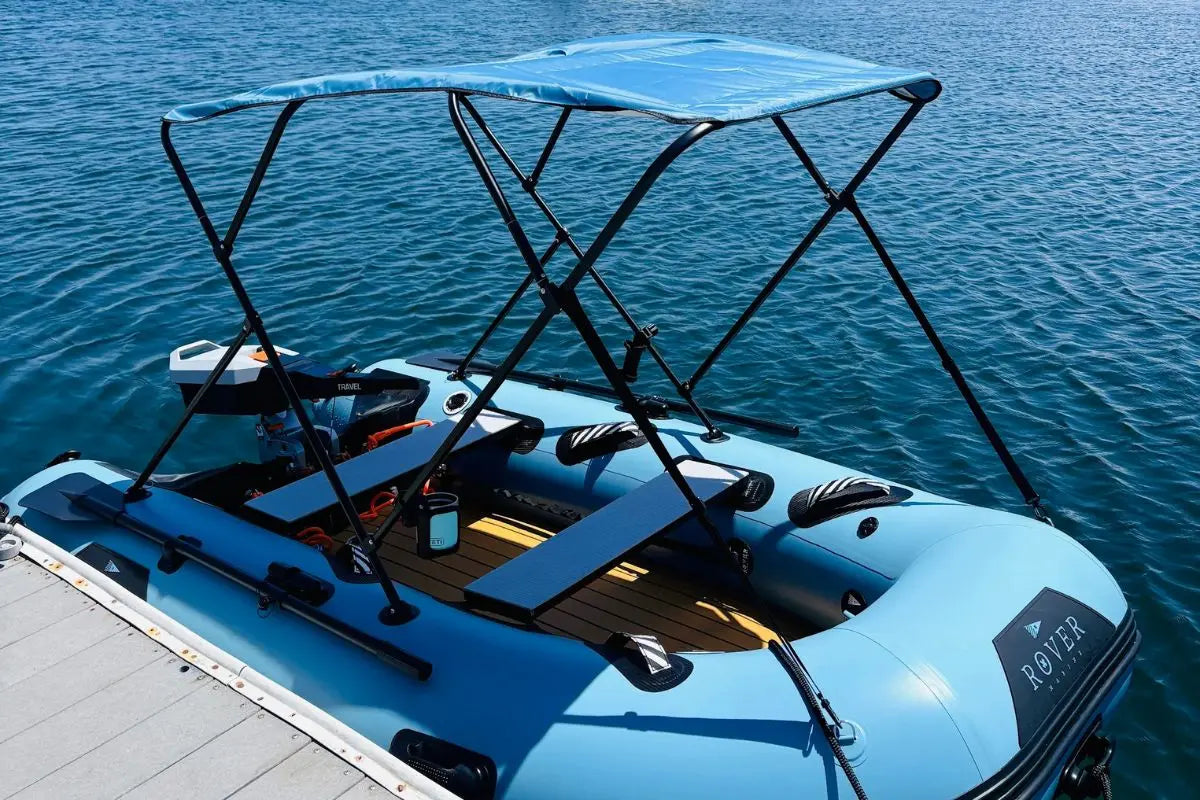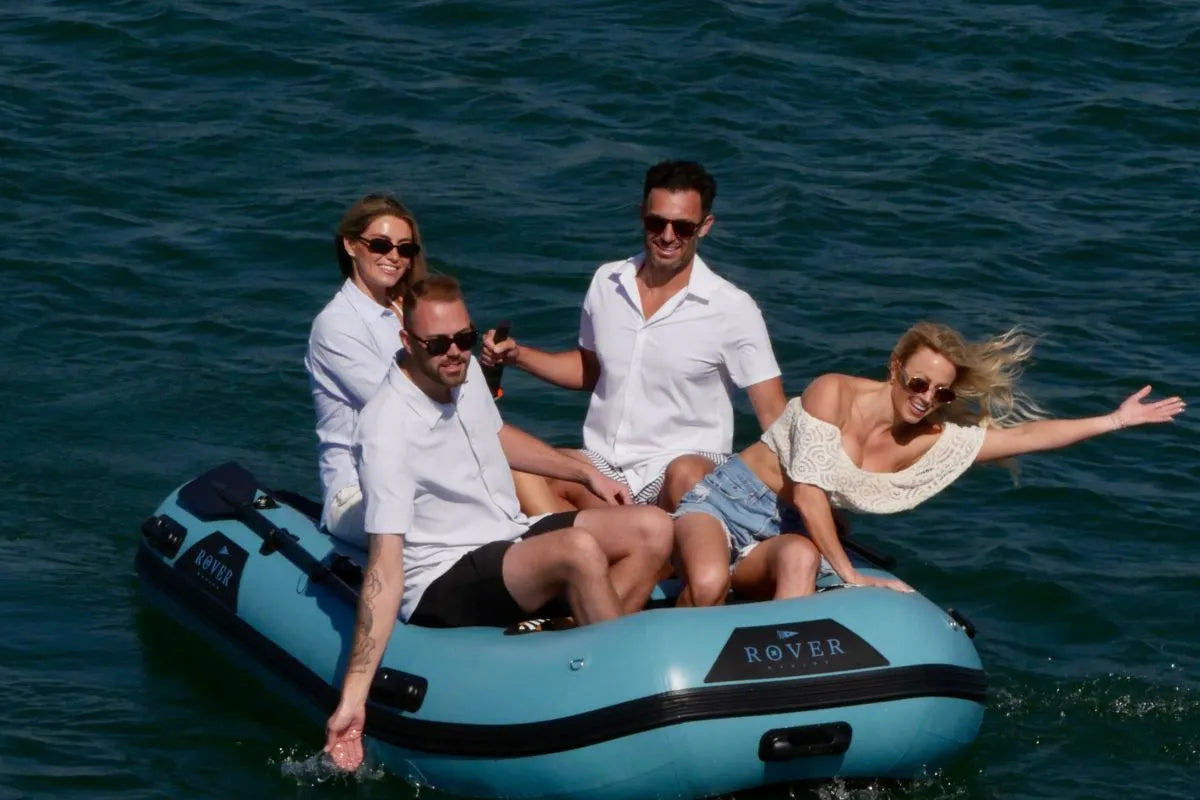
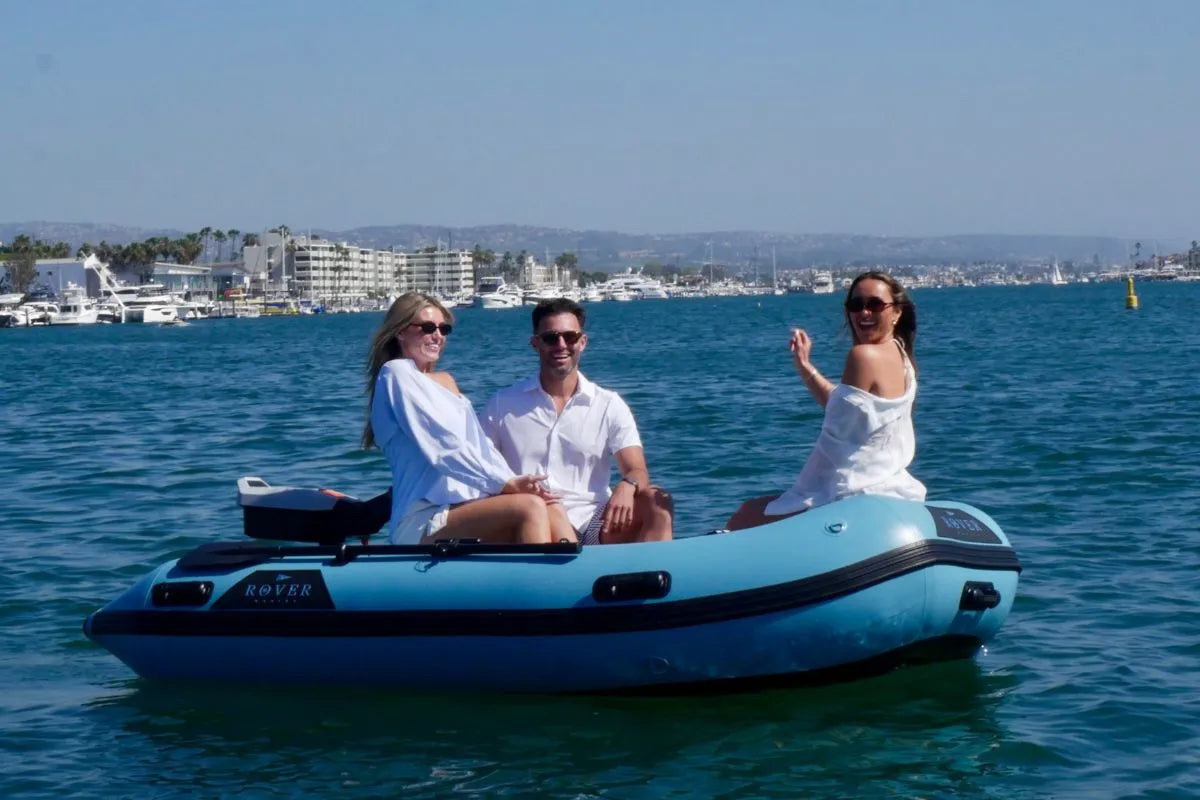
A packable inflatable boat may fit in your trunk, but it is still a recreational vessel. This checklist covers the safety gear the law expects, the smart items experienced boaters add, and the quick pre-launch scan every Battle Boat or Battle Cat owner should run before leaving the dock.
Small boat, same rules
Here is a dock myth worth killing: because an inflatable packs into a trunk, it somehow plays by different rules than a real boat. It does not. A motorized Battle Boat inflatable dinghy or Battle Cat inflatable catamaran is still a recreational vessel, and the same safety mindset applies.
The good news is that the core list is simple. Most of the required and recommended gear fits in one dry bag. The better news is that when you rig it once and check it every trip, safety becomes routine instead of stressful.
This guide is built in two parts: the items federal rules commonly require for small recreational boats, then the extra gear smart inflatable boat owners carry because water days rarely go exactly to plan.
Quick note: Federal rules set the floor. Your state can require more, including registration rules, education cards, kill switch rules, local lighting rules, or fire extinguisher requirements. Always check your state boating agency before launching.
The legally required gear for boats under 16 ft
Think of this as the minimum safety baseline. It is not the full smart-boater kit, but it is where every small boat owner should begin.
A life jacket for every person aboard
Carry one U.S. Coast Guard-approved wearable PFD for each person on board. Each PFD should be in serviceable condition, properly sized for the wearer, and easy to reach. Do not bury them under bags or sealed storage.
Rover tip: on a boat this size, easy to reach is not enough for kids, weak swimmers, or anyone nervous around water. Have them wear it while underway.
A sound signaling device
Recreational vessels need a way to make sound signals in certain meeting, crossing, anchoring, and reduced visibility situations. A mouth-powered marine whistle is simple, reliable, and does not need batteries.
The MTI Signal Whistle is a small item that belongs on a PFD, in a dry bag, or clipped somewhere the operator can grab it fast.
Navigation lights for low light use
Recreational vessels are required to display navigation lights between sunset and sunrise and during periods of restricted visibility like fog, rain, or haze.
For inflatables, a battery-powered clip-on set makes more sense than permanent wiring. The LED Navigation Safety Lights 4 Pack gives you a practical red, green, and white visibility setup for low light boating.
Situational safety gear you need to understand
These items depend on where you boat, how you power the boat, and how your setup is rigged.
Visual distress signals
On U.S. coastal waters, the Great Lakes, territorial seas, and certain connected waters, vessels may need U.S. Coast Guard-approved visual distress signals. Recreational boats under 16 ft are not required to carry day signals in those areas, but they must carry night signals when operating from sunset to sunrise.
If you only run inland lakes, your requirements may be different. If you operate around bays, inlets, coastal waters, or after dark, check the full requirement before you assume you are clear.
Fire extinguisher
A U.S. Coast Guard-approved marine fire extinguisher is required when a fire hazard could be expected from the engine or fuel system. The rules specifically matter when a boat has conditions like closed compartments where portable fuel tanks may be stored, closed stowage spaces with flammable materials, or permanently installed fuel tanks.
Many simple electric outboard setups avoid gasoline aboard entirely. Gas setups can change the answer fast, so treat your exact motor, fuel tank, and storage layout as the deciding factor.
Registration and capacity
Registration rules vary by state, especially once an inflatable boat is motorized. If your state requires registration, display the numbers and validation sticker correctly. Also stay within your boat capacity. Rover Marine lists Battle Boat capacity from 2 people and 600 lb on the 8 ft model up to 4 people and 1200 lb on the 12 ft model.
For the official baseline, review the BoatUS Foundation required equipment guide and the USCG federal requirements guide for recreational boats.
What smart owners add
The Coast Guard sets a floor, not a target. These items earn their place because they solve real problems on inflatable boats.
A boarding ladder
Re-boarding from deep water is one of those things that looks easy from the dock and feels very different when someone is tired. The 3 Step Rope Ladder rolls up small and gives swimmers, kids, dogs, and guests a real way back aboard.
A phone in a waterproof pouch
Your phone is your backup contact line, camera, map, and weather check. A waterproof phone pouch keeps it protected and close when the deck is wet or someone climbs aboard dripping.
An anchor with enough rode
Engine trouble near rocks, current, or a lee shore is when an anchor stops being optional. A small anchor setup should be stored so it cannot scrape the tubes or slide around the deck. For technique, read How to Anchor an Inflatable Boat.
A first aid kit, bailer, and paddle
A small first aid kit, a bailer or hand pump, and a paddle do not take much room. They give you options when the ride changes, the weather shifts, or the motor quits farther from the dock than planned.
A float plan
Tell one person on shore where you are going, who is aboard, and when you expect to be back. It costs nothing and can make a serious difference when a simple delay turns into concern.
Battery or fuel reserve
If you run electric, leave room in the battery for wind, current, and the ride home. If you run gas, carry enough legal and safe fuel for the full trip plus reserve. Either way, never plan the day around using every last bit of power.
The 60-second pre-launch scan
Run this before every trip. Say it out loud when you are teaching a new crew or bringing guests aboard.
Air pressure
Tubes are firm at the recommended pressure and the floor is solid. For Rover Marine Battle Boat models, the listed pressure is 3.5 PSI for tubes and 10 PSI for the floor.
PFDs
One wearable PFD per person. Kids and weak swimmers wear theirs before the boat leaves the dock.
Whistle and lights
Sound signal is aboard and navigation lights are packed. If lights may be needed, check batteries before launch.
Kill switch
If your motor has a kill switch lanyard, clip it before you run. This is a habit, not an afterthought.
Drain plug and valves
Drain plug is secure, valves are seated, and caps are closed before the boat touches water.
Weather
Check the latest forecast, wind, tide, and radar right before launch. Last night’s forecast is not enough.
Fuel or charge
You have enough power for the full round trip plus reserve. Wind and current can make the return leg longer than expected.
Float plan
Someone ashore knows where you are going, who is with you, and when to expect you back.
Why quality inflatables start with a safety advantage
A well-built inflatable is not a compromise on safety. In the right conditions, with the right load, and with responsible operation, it can be a very confidence-building small boat platform.
The wide buoyant tubes create a stable feel at rest, which helps when passengers board, move around, swim, or load gear. The Battle Cat adds a dual-pontoon stance that gives it a wider, more planted feel for fishing, family riding, and choppier harbor conditions. The Battle Boat keeps the traditional inflatable hull shape for tender duty, casual cruising, and compact transport.
The boat still needs judgment. Do not overload it. Do not chase bad weather. Do not skip required gear because the ride feels stable. Stability helps, but preparation is what lets you relax on the water.
For a deeper look at inflatable boat safety, read Are Inflatable Boats Safe? and the Rover guide to USCG boating safety requirements for inflatable boats.
Clear the basics before the first ride
LED Nav Lights
Battery powered clip-on lights for low light visibility around docks, marinas, and evening rides.
View lights
3 Step Rope Ladder
A compact re-boarding aid for swim stops, family days, dogs, and deep water access.
View ladder
Accessories Bundle
A starter kit with navigation lights, cup holders, and a rope ladder for everyday boat days.
View bundleInflatable boat safety checklist questions
What safety equipment is legally required on an inflatable boat?
For many recreational boats under 16 ft in U.S. waters, the core federal safety items include a U.S. Coast Guard-approved wearable PFD for each person, a sound producing device, and navigation lights if operating between sunset and sunrise or in restricted visibility. Visual distress signals and fire extinguishers can also be required depending on where you operate and how the boat is rigged. State rules can add more requirements.
Do inflatable boats need navigation lights?
Yes, if the boat operates between sunset and sunrise or during restricted visibility. For an inflatable boat, battery powered clip-on navigation lights are usually the simplest solution because they avoid permanent wiring.
Is a whistle enough for the sound signal requirement?
For many small recreational vessels, a mouth-powered marine whistle can satisfy the need for an efficient sound signal. Larger vessels and different operating situations may require additional equipment, so confirm the rules for your boat and location.
Are inflatable boats safe in open water?
Quality inflatable boats can be safe when properly inflated, loaded within capacity, matched to the conditions, and operated with the same judgment used for any small boat. Check weather, carry the required safety gear, stay within your boat’s rating, and avoid conditions beyond the boat or operator.
Clear the safety list before your next ride
Get the basics handled first: PFDs, sound signal, navigation lights for low light use, re-boarding help, phone protection, and a simple pre-launch scan. A better boat day starts before the boat leaves the dock.