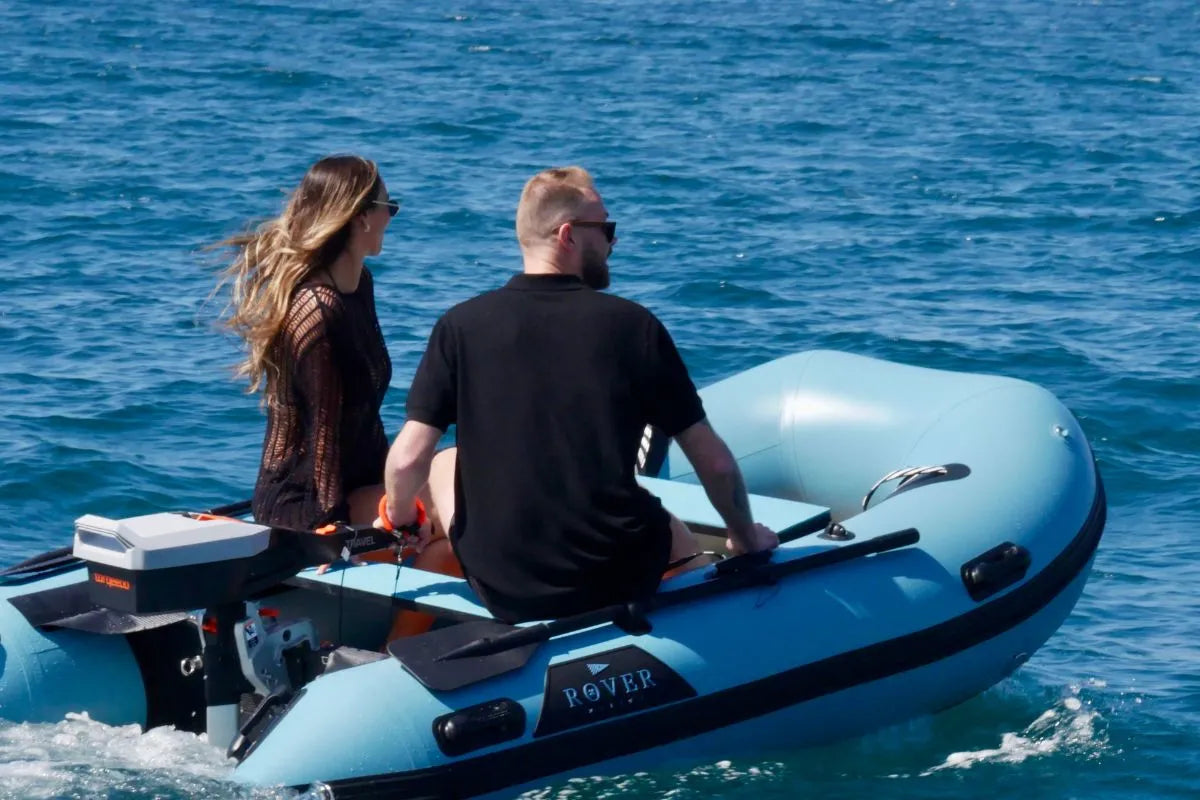
The first time most people see an inflatable boat at a marina, they ask the same question: it is full of air, so how is that safe?
It is a fair question. Rover Marine hears it from yacht owners stepping into a tender for the first time, parents buying a packable boat for family lake days, and boaters who have only trusted fiberglass or aluminum hulls.
The honest answer is simple: a well-built modern inflatable boat can be very safe when it is properly sized, properly loaded, properly inflated, and operated with the same judgment you would use in any small boat.
The Short Answer and Why the Long Answer Matters
Inflatable boats are not all the same. A cheap pool-style inflatable and a serious inflatable tender share a category name, but not the same materials, construction, pressure ratings, seams, floor system, or intended use.
A properly built inflatable boat uses independent air chambers, reinforced marine fabric, a rigid or high-pressure floor, and load ratings that tell you how many people, how much weight, and how much horsepower the boat is built to handle.
That construction is not a weakness. In many common small-boat failure scenarios, it is a safety advantage.
Why People Think Inflatables Are Less Safe
Most doubts come from three misconceptions.
Misconception 1: One puncture means the boat sinks
A quality inflatable is not one large air chamber. It is built with multiple independent chambers. If one chamber is damaged, the others remain inflated and continue to provide buoyancy.
Misconception 2: Inflatables are not stable
Stability depends on the hull design. A wide inflatable catamaran can be extremely stable at rest because the pontoons create a broad stance. A V-hull inflatable can feel more like a traditional tender, with the tubes adding reserve flotation and a forgiving perimeter.
Misconception 3: Cheap inflatables fail, so all inflatables fail
Cheap products fail in every boat category. The question is not whether a boat is inflatable. The question is how it is built, what it is rated for, and whether it is being used within its limits.
According to the U.S. Coast Guard’s recreational boating reporting, major accident factors are commonly tied to operation, alcohol, speed, lookout, inattention, and life jacket use, not simply hull material. The most important safety equipment on any small boat is still a responsible operator.
Multi-Chamber Construction Is the Passive Safety System
This is the biggest engineering reason modern inflatables are safer than many first-time buyers assume.
A quality inflatable boat is divided into multiple sealed chambers. Those chambers do not all share the same air. If one chamber loses pressure from a puncture, valve issue, hook strike, or abrasion event, the remaining chambers continue to support the boat.
On the Rover Marine Battle Boat, the inflatable tube system gives the boat reserve buoyancy around the hull. On the Rover Marine Battle Cat, the twin-pontoon layout adds a wide, stable stance with separated buoyancy on each side.
Tube Fabric and Seam Strength
Modern inflatable boat safety starts with the fabric. Stronger fabric resists abrasion, puncture, UV exposure, flex fatigue, and the everyday abuse that comes from docks, beaches, fishing gear, swim platforms, and storage.
| Spec | What It Means | Why It Matters |
|---|---|---|
| 1100D PVC | Heavy-duty marine PVC fabric with a dense denier rating | Built for real boating use, not pool-toy use |
| Multi-layer construction | Reinforced layers bonded into a stronger fabric system | Improves abrasion resistance and tube durability |
| Heat-welded seams | Seams fused by heat instead of relying only on glue | Helps reduce seam failure and aging issues |
| Drop-stitch floor | Internal threads hold two fabric faces together under pressure | Creates a firm, stable deck underfoot |
| Proper inflation pressure | Tubes and floors are inflated to their intended operating pressure | Improves ride, structure, stability, and handling |
Rover Marine’s Battle Boat and Battle Cat are built with reinforced PVC materials and welded construction for rugged small-boat use. That is what separates a serious inflatable boat from a casual float.
Drop-Stitch Floor Safety
A drop-stitch floor is not a soft air mattress. It is a high-pressure inflatable structure with thousands of internal threads connecting the top and bottom fabric layers. Once inflated, those threads hold the panel flat and rigid.
That rigidity matters for safety because a firmer deck improves footing, weight distribution, gear control, and confidence when stepping aboard. It also helps the boat handle outboard thrust more cleanly than a soft, flexible floor.
For fishing, tender duty, family lake days, and dock-to-shore runs, a solid-feeling deck is one of the biggest upgrades an inflatable boat can have.
United States Safety Requirements and Smart Gear
Rover Marine is a United States brand, so safety should be considered through a US boating lens. Required equipment can vary by vessel size, propulsion, state, and operating area, but the basics are consistent for small recreational boats.
- Wearable USCG-approved life jacket for every person onboard
- Child life jacket rules followed exactly for young passengers
- Sound-producing device such as a whistle or horn
- Navigation lights when operating from sunset to sunrise or in reduced visibility
- Visual distress signals where required, especially coastal or nighttime operation
- Fire extinguisher where required by boat setup and fuel system
- Engine cut-off switch use where applicable
- State registration and boater education compliance where required
Federal capacity plate rules are specific and do not apply the same way to every boat type. Inflatable boats are excluded from the standard monohull under-20-foot capacity plate rule, but serious inflatable builders still provide capacity and horsepower ratings that operators should follow.
Stability: Why Inflatable Cats Feel So Secure at Rest
Stability is not one thing. There is initial stability, which is how steady the boat feels when you step aboard or stand still. Then there is running stability, which is how the hull behaves when moving, turning, crossing wake, or handling chop.
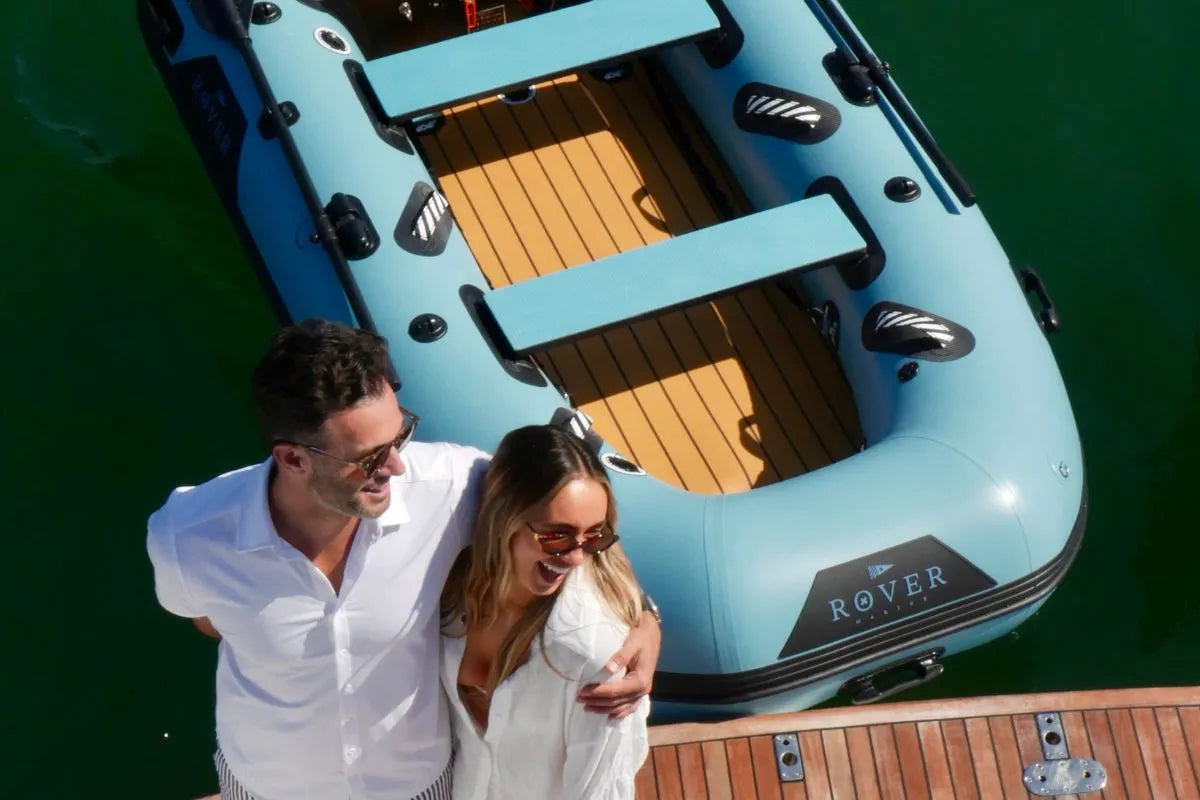
The Battle Cat is built around initial stability. Its twin-pontoon catamaran layout creates a wide stance that feels planted when fishing, stepping aboard, loading gear, helping kids in, or moving around the deck.
The Battle Boat gives a more traditional inflatable dinghy feel. Its V-hull style is better aligned with tender runs, compact storage, portable cruising, and general utility.
For a deeper format comparison, read the inflatable catamaran vs RIB comparison or the narrow vs wide inflatable boat guide.
When an Inflatable Boat Is Not the Right Choice
A good inflatable is safe when used correctly, but it is not the right boat for every job. Here are the situations where another hull type may be the better tool.
- Sustained offshore high-speed running: Heavy fiberglass or aluminum offshore hulls are better for long, fast, open-water runs.
- Heavy commercial workboat abuse: If the job involves dragging heavy gear over the rail all day, aluminum or steel may make more sense.
- Constant sharp abrasion: Barnacle-covered pilings, sharp debris fields, and repeated hard contact are rough on tube fabric.
- Towing heavy objects at speed: Inflatables are excellent tenders and utility boats, but they are not the right platform for every towing job.
For yacht tendering, family lake use, fishing, diving support, photography, sandbar runs, and packable boating, a quality inflatable can be an excellent fit.
How Long Do Inflatable Boats Last?
Service life depends on material, storage, UV exposure, cleaning habits, and inflation discipline.
- PVC inflatables: often deliver many years of service when stored properly, rinsed, dried, and protected from harsh sun.
- Hypalon or CSM inflatables: generally offer stronger UV and chemical resistance, usually at a higher price.
The biggest enemies of inflatable boat life are direct sun, heat, harsh chemicals, fuel contact, improper storage, and leaving the boat over-pressurized in hot conditions.
Good habits are simple: rinse it, dry it, store it covered, avoid solvents, keep sharp gear controlled, and check pressure before every run.
Battle Boat and Battle Cat Safety Highlights
| Safety Feature | Battle Boat | Battle Cat |
|---|---|---|
| Hull style | Inflatable V-hull dinghy | Inflatable catamaran with twin pontoons |
| Material | Reinforced marine PVC construction | Reinforced marine PVC construction |
| Seams | Welded construction | Welded construction |
| Deck feel | Rigid inflatable floor system | High-pressure drop-stitch deck |
| Stability profile | Traditional tender-style stability | Wide catamaran stability |
| Available sizes | 8 ft, 10 ft, 12 ft | 8 ft, 10 ft, 12 ft |
| Starting price | $1,999 | $2,299 |
Pair either hull with an electric outboard from the Rover Marine electric outboards collection for quiet, low-maintenance power with no fuel stored onboard.
FAQ
Are inflatable boats safe for kids?
Yes, when the boat is properly sized, properly loaded, and operated by a responsible adult. Every child should wear a properly fitted USCG-approved life jacket, and operators should follow all state and federal boating rules.
What happens if an inflatable boat gets a puncture on the water?
On a multi-chamber inflatable, the damaged chamber may lose pressure, but the other chambers remain inflated. The boat should retain enough buoyancy to return to shore when operated carefully. Carry a repair kit and inspect the boat after any impact or abrasion event.
Can inflatable boats sink?
A correctly built multi-chamber inflatable is very difficult to sink in normal recreational use because the tubes provide significant reserve buoyancy. Safe operation still matters. Do not overload the boat, ignore weather, skip life jackets, or exceed horsepower ratings.
How long does a quality inflatable boat last?
A quality inflatable can last many years with proper care. The biggest factors are UV protection, dry storage, mild cleaning, correct inflation pressure, and avoiding repeated sharp abrasion.
Are military-grade inflatable boats really military-grade?
The phrase should be backed by actual specs. Look for denier rating, reinforced fabric layers, welded seams, pressure ratings, floor construction, and stated capacity. Specs matter more than the label.
The Bottom Line
If safety concerns have made you hesitate on an inflatable boat, the real answer is this: a well-built modern inflatable is a serious small boat, not a toy. Multi-chamber buoyancy, reinforced fabric, welded seams, stable hull design, and proper safety gear make the category far stronger than many first-time buyers expect.
- Shop the Battle Boat from $1,999
- Shop the Battle Cat from $2,299
- Read the inflatable catamaran vs RIB comparison
- Compare rigid vs soft inflatable boats
- Browse the full Rover Marine catalog
Questions about the safest setup for your water, family, tender use, or fishing plans? Reach out through the Rover Marine contact page.


Leave a comment
This site is protected by hCaptcha and the hCaptcha Privacy Policy and Terms of Service apply.