Ask ten boaters which is better, a narrow inflatable or a wide one, and you will get ten different answers, each anchored to the conditions that boater runs most. The truth is that beam width is one of the biggest levers in small-boat design after length, and it controls almost everything you feel on the water: how the boat rolls, how quickly it gets moving, how it tracks in a crosswind, and how much weight you can comfortably carry.
This guide cuts through the marketing copy and walks through the design tradeoffs in plain English, then puts two real Rover Marine boats head-to-head: the Battle Boat traditional inflatable hull and the Battle Cat wide-beam inflatable catamaran. By the end, you will know which hull shape fits your water, your crew, and your use case.
Quick answer: Narrower inflatable boats usually feel quicker, easier to store, and more efficient with small motors. Wider inflatable boats usually feel more stable, carry gear better, and give anglers, divers, kids, and pets more confidence. The Battle Boat is the compact traditional inflatable option. The Battle Cat is the wide, stability-first inflatable catamaran.

What “Beam” Actually Means and Why It Matters
Beam is the width of the boat at its widest point, measured in feet or inches. On an inflatable, that measurement includes the tubes, which do most of the work keeping you upright. The ratio that matters most is length-to-beam. A narrower boat has more length relative to width. A wider boat, especially a catamaran-style inflatable, puts more of its footprint side to side.
In plain language, beam changes three things at once:
- Resistance: how much effort the hull needs to move through the water.
- Stability: how much the boat resists side-to-side roll.
- Tracking: how straight the boat wants to run in wind, current, and chop.
You cannot optimize all three at the same time. Widen the beam and you gain stability and working room, but you may give up some efficiency and compact storage. Narrow it and you gain easier handling, simpler storage, and often better efficiency with small motors, but you lose some initial stability.
Inflatables add a wrinkle that rigid hulls do not have. The tubes are both buoyancy and structure, so beam also affects how much side-to-side support you feel when you step aboard, carry gear, or take wake on the beam. That matters in chop, and it is why the “right” beam depends heavily on where you run the boat.
Narrow Hulls: Speed, Efficiency, and a Few Tradeoffs
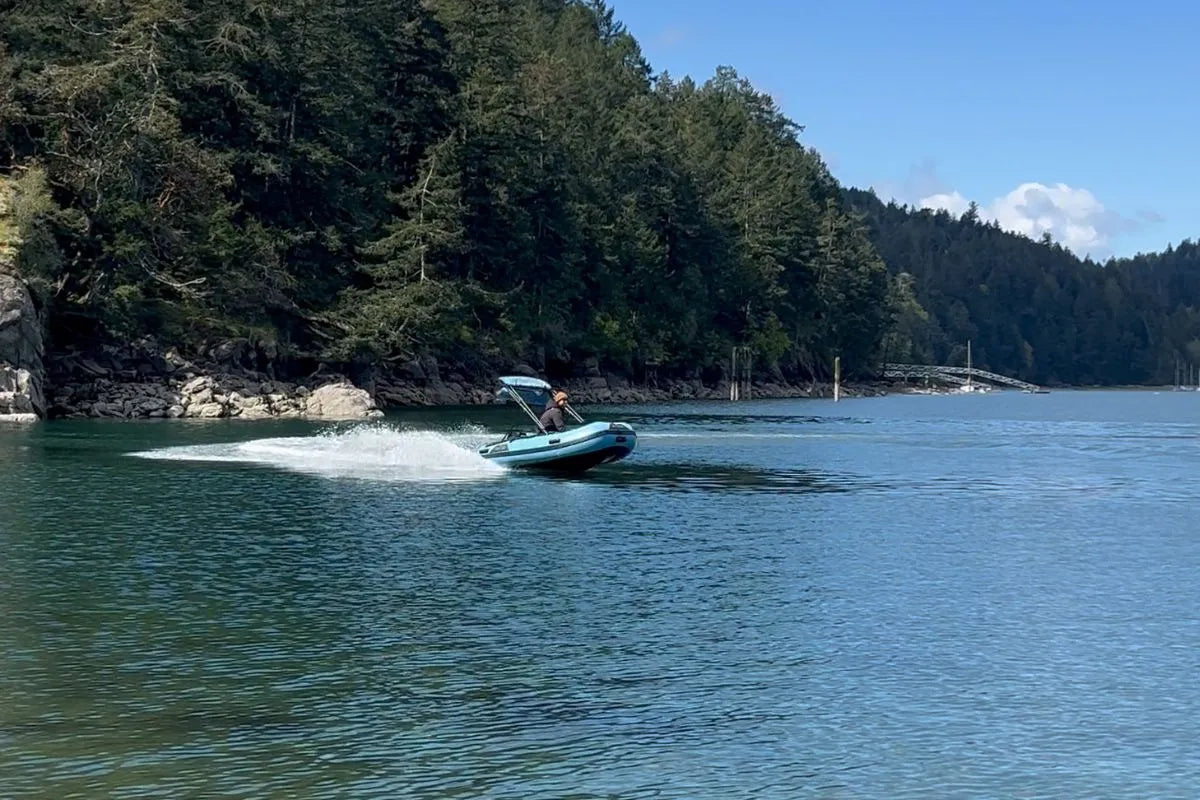
A narrower inflatable presents less beam to the water. With less drag and a more compact footprint, it can feel quicker with the same motor, especially when lightly loaded. For boaters who value range with a small electric outboard, that efficiency matters.
Where narrow works well:
| Condition | Why narrow works |
|---|---|
| Flat water and calm bays | Less hull width to push through the water. |
| Solo or two-person runs | No need for the widest possible platform. |
| Small outboards and 3HP-equivalent electric motors | Efficient use of limited thrust. |
| Compact storage | Easier fit for vehicles, lockers, garages, and yacht storage. |
| Yacht tenders | Fits tighter davits, deck space, and storage plans. |
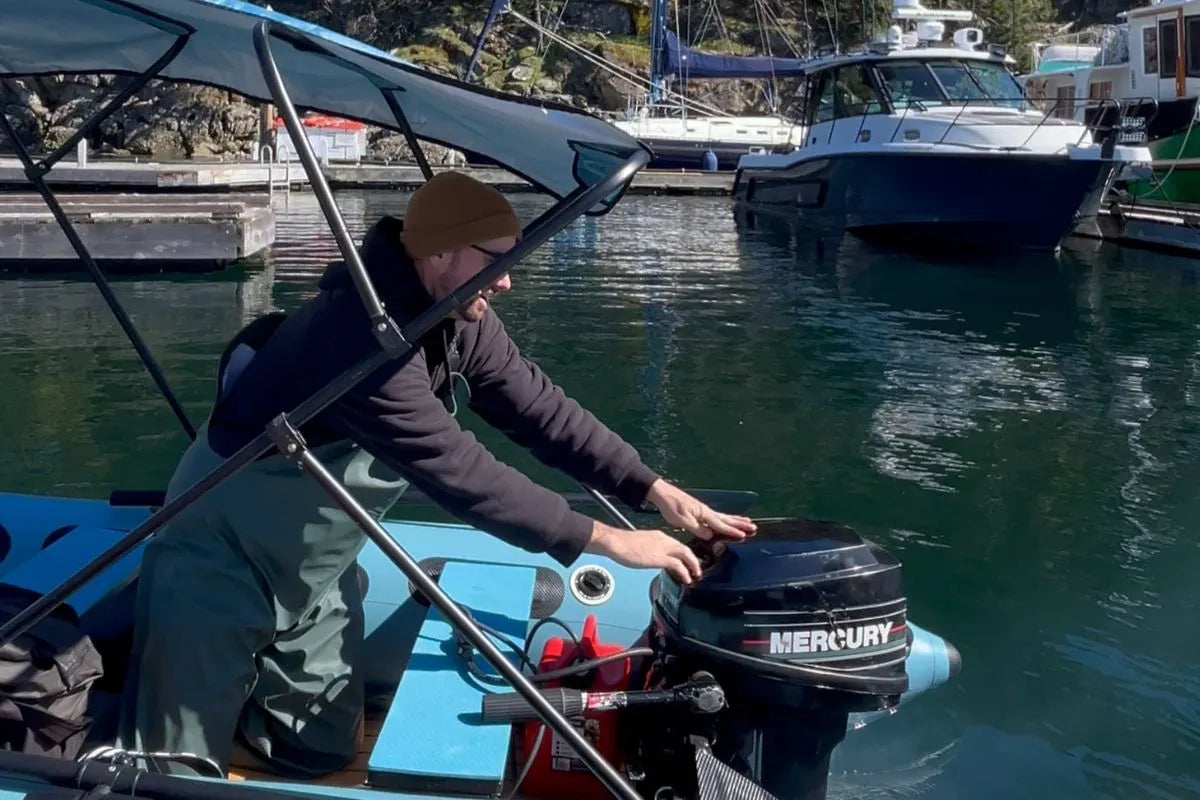
The Battle Boat is built around this practical, packable idea. The 8 ft model packs down to 38 in x 24 in x 15 in, weighs 86 lb assembled, and fits the kind of no-trailer use that makes inflatable boats useful in the first place.
Where narrow struggles: step from one side of the boat to the other and you will feel more movement than you would in a wide catamaran-style platform. Stand up to cast, reach for a dive tank, or shift a cooler across the floor and the boat talks back. Narrower boats can also feel more sensitive to side wind and shifting live loads because there is less lateral footprint resisting the movement.
If you regularly run loaded with passengers, coolers, fishing gear, batteries, and a dog, the practical feel of the boat matters more than the clean spec sheet.

Wide Hulls: Stability, Capacity, and Weather Tolerance
A wide inflatable, especially a catamaran layout, treats the water more like a platform. Two tubes separated by a wider stance give the boat a broad footprint, which translates directly into roll resistance. You can move around with more confidence. Two anglers can shift gear without everyone bracing.
Where wide works well:
| Condition | Why wide works |
|---|---|
| Standing activities, including fishing, diving, and photography | Wider stance reduces side-to-side roll. |
| Multiple passengers or heavy gear | More usable confidence when weight shifts around the boat. |
| Chop and crosswinds | Dual pontoons can track flatter and feel more planted in many protected-water conditions. |
| Mixed-crew family use | Kids, pets, and guests usually feel more secure on a wider platform. |
| Slow-speed precision work | The boat feels settled at trolling speed, docking speed, and around swim platforms. |
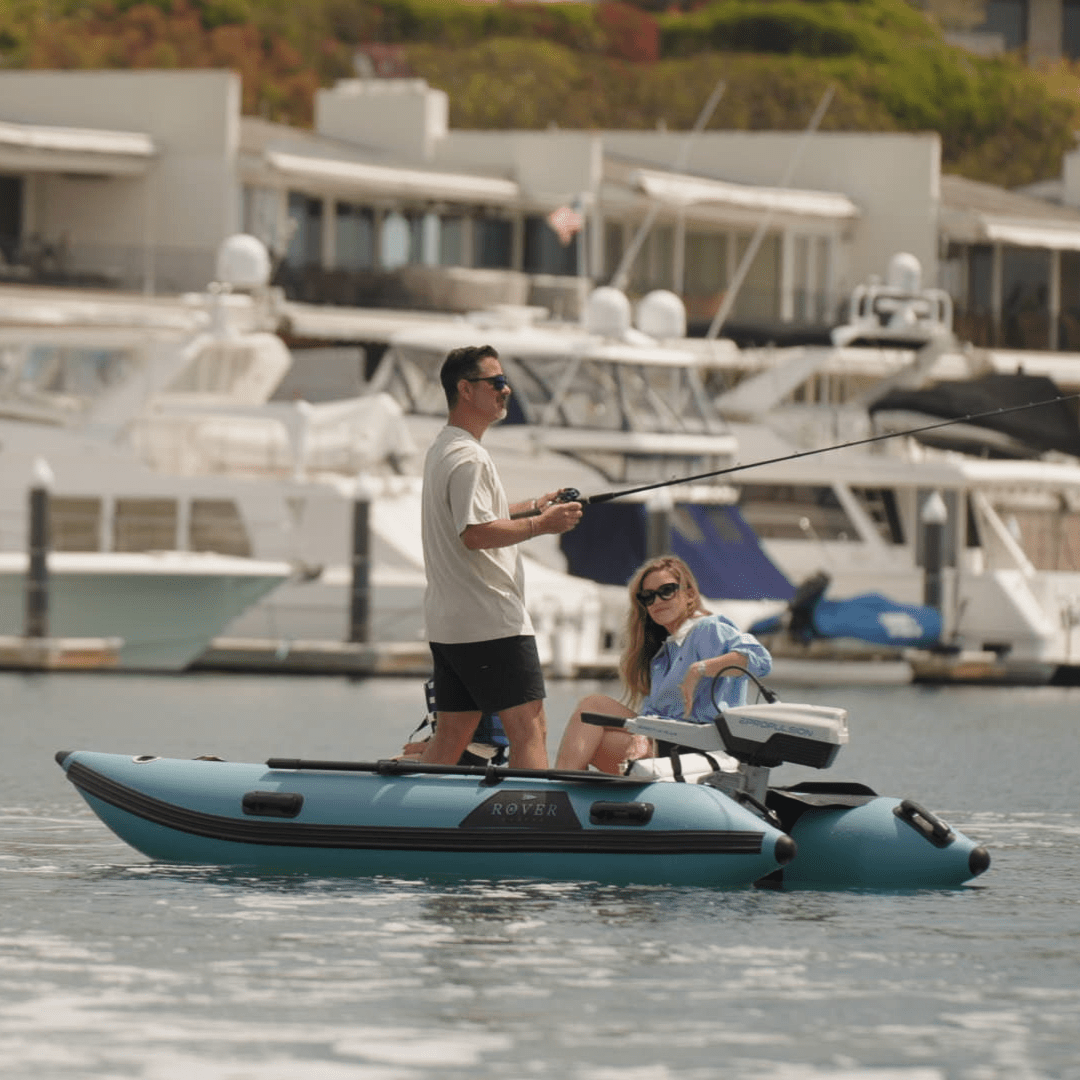
The Battle Cat is the catamaran expression of this idea. The twin-pontoon design gives you a steadier casting platform and a wider internal stance. It is the boat you grab when you are bringing a cooler, two buddies, and a full tackle setup.
Where wide struggles: more beam usually means more boat to push. Depending on the hull, load, and motor, a wide boat may need more thrust to match the same top-end feel as a narrower design. It may also require more storage room, even if the packed dimensions on the 8 ft Rover models are the same. Width still matters when the boat is inflated, moving around a dock, or fitting into a yacht storage plan.
Initial vs Secondary Stability, the Part Most Buyers Miss
Boat stability is not one thing. Buyers often feel the first kind immediately and forget about the second kind until they are in rougher water.
Initial stability is how the boat feels when you first step on. Wide hulls have strong initial stability. They resist that first degree of roll with authority. That is what makes a catamaran-style inflatable feel locked in when you stand up.
Secondary stability is what happens once the boat is already heeling hard, such as in a steep beam sea or when someone puts too much weight on one side. Inflatables rely heavily on tube buoyancy here. As the leeward tube presses deeper into the water, it creates upward buoyancy that helps resist further roll.
The takeaway for most US boaters is simple: if you run protected water and stand up a lot, optimize for initial stability. That points you toward a wide platform like the Battle Cat. If you run open water, pay attention to total load, tube pressure, freeboard, weather, and how the boat behaves when weight moves suddenly. No hull shape makes overloading safe.
Practical Comparison: Battle Boat vs Battle Cat
Instead of pretending one boat wins everything, look at what each one is built to do. The Battle Boat is the compact, traditional inflatable hull. The Battle Cat is the wider catamaran-style inflatable. Same brand family, same size range, different feel.
| Metric | Battle Boat | Battle Cat |
|---|---|---|
| Hull style | Traditional inflatable hull | Catamaran-style dual pontoons |
| Inflated size, 8 ft model | 8 ft x 4.5 ft x 15 in | 8 ft x 4.5 ft x 15 in |
| 8 ft deflated size | 38 in x 24 in x 15 in | 38 in x 24 in x 15 in |
| 8 ft assembled weight | 86 lb | 84 lb |
| 8 ft capacity | 2 people / 600 lb | 2 people / 600 lb |
| Recommended power, 8 ft model | Up to 6 hp | Up to 6 hp |
| Tube and floor pressure | Tube 3.5 psi / Floor 10 psi | Tube 3.5 psi / Floor 10 psi |
| Starting price | From $1,999 | From $2,299 |
| Stability at rest, standing | Good | Excellent |
| Tracking feel | Standard tracking | Improved straight-line tracking |
Neither boat wins every category. They answer different questions. The Battle Boat is a compact tender and solo-friendly inflatable. The Battle Cat is a platform. For a deeper apples-to-apples on sizing, see Rover Marine’s inflatable dinghy size comparison guide.
Best Use by Beam
| Use Case | Narrow / Compact | Wide / Catamaran |
|---|---|---|
| Fishing, casting, fighting fish | Works, especially solo | Strong fit |
| Scuba and freediving | Works with careful gear loading | Strong fit |
| Family cruising with kids | Works for smaller crews | Strong fit |
| Yacht tender, tight storage | Strong fit | Works if your storage plan allows the width |
| Solo exploring and photography | Strong fit | Strong fit if stability is more important than compact handling |
| Long-range electric cruising | Strong fit for efficient light-load runs | Strong fit for stable low-speed cruising |
| Choppier protected water | Good in calm to moderate water | Strong fit for stability in chop and turns |
For a broader discussion of how hull construction, not just beam, plays in, read Rover Marine’s rigid vs soft inflatable boat breakdown.
Passenger and Load Capacity Math
Capacity is where beam gets practical. A wider boat usually gives people and gear more room to sit, shift, and balance. That does not mean you should load by feel. Load by the manufacturer’s listed capacity.
The 8 ft Battle Boat and 8 ft Battle Cat are both listed for 2 people / 600 lb. The 10 ft models are listed for 4 people / 1000 lb. The 12 ft models are listed for 4 people / 1200 lb. Those numbers include the practical reality that passengers, gear, batteries, fuel, coolers, anchors, and fishing equipment all add up fast.
BoatUS notes that federal capacity plate rules apply to many powered boats under 20 ft, but inflatable boats are exempt from that specific federal capacity-plate standard. That does not mean capacity does not matter. It means you should follow the manufacturer’s listed specs, the boat manual, and any applicable state or local rules.
| Rover Model Size | Battle Boat Capacity | Battle Cat Capacity |
|---|---|---|
| 8 ft | 2 people / 600 lb | 2 people / 600 lb |
| 10 ft | 4 people / 1000 lb | 4 people / 1000 lb |
| 12 ft | 4 people / 1200 lb | 4 people / 1200 lb |
Never load to the stated max without accounting for weather, current, chop, water temperature, operator skill, and how your crew moves. A boat that feels fine tied to a dock can feel very different when everyone shifts to one side to look at a fish.
How boat size and load interact with performance is covered more deeply in Rover Marine’s how size impacts inflatable dinghy performance and use article.
Buying Quiz: Which Beam Is Right for You?
Answer these five questions honestly:
- How many people ride most of the time? One or two points you toward the Battle Boat. Three or more points you toward sizing up, and often toward the Battle Cat if stability matters.
- Do you stand up to fish, dive, or photograph? If yes, go wide.
- Is your outboard under 3HP electric? A compact hull can feel efficient with limited thrust, but a catamaran can feel better at slow, stable cruising.
- Do you run open water with chop more than a few times a year? Size, load, weather judgment, and stability matter more than top speed.
- Do you store in a small space, such as a trunk, locker, or lazarette? Measure the actual space before buying. The 8 ft Rover models pack to 38 in x 24 in x 15 in.
If you leaned compact, the Battle Boat is the pick. If you leaned wide, the Battle Cat is the pick. Pair either with a quiet, clean electric outboard from the Rover Marine electric outboard motors collection and you have a complete rig.
FAQ
Are wider inflatable boats always more stable?
At rest and at slow speed, wider boats usually feel more stable because beam gives more initial stability. That is why catamaran-style inflatables are strong for fishing, diving, photography, and family boarding. At speed in chop, hull shape, tube pressure, load, trim, and operator judgment also matter.
Does a narrow inflatable go faster?
On the same horsepower and load, a narrower or more compact inflatable often feels quicker and more efficient because there is less boat to push. That said, speed is not guaranteed by beam alone. Motor choice, prop, weight, wind, water state, and inflation pressure all matter.
Which is safer for kids?
A wider beam usually feels safer for young kids because the boat does not rock as much when they move. That said, always require properly fitted PFDs, stay within capacity, keep weight low, and avoid abrupt movement in small boats.
Can I use a narrow inflatable for fishing?
Yes. Plenty of anglers fish from compact inflatables, especially solo. But if you stand to cast, fight fish from one side, bring a cooler, or fish with another person, a catamaran-style inflatable like the Battle Cat gives you a steadier platform.
How much beam do I need for two adults plus gear?
For most US boaters, an 8 to 10 ft inflatable with a beam around 4 to 5 ft can handle two adults and day gear when loaded properly. The real answer depends on total weight, water conditions, motor weight, and how much room you want to move. Always follow the manufacturer’s listed capacity.
Ready to Pick Your Hull?
Beam is the decision that cascades into everything else: outboard sizing, storage, capacity, ride quality, and how confident your crew feels aboard. Make it deliberately.
Browse the Battle Boat for compact traditional inflatable performance, the Battle Cat for wide-beam stability, or pair either with a clean electric outboard from the Rover Marine electric outboards collection.
Questions? Call 844-207-6837 or reach the team through the Rover Marine contact page. Our team runs these boats, and we are happy to help you dial in the right rig.

Leave a comment
This site is protected by hCaptcha and the hCaptcha Privacy Policy and Terms of Service apply.