
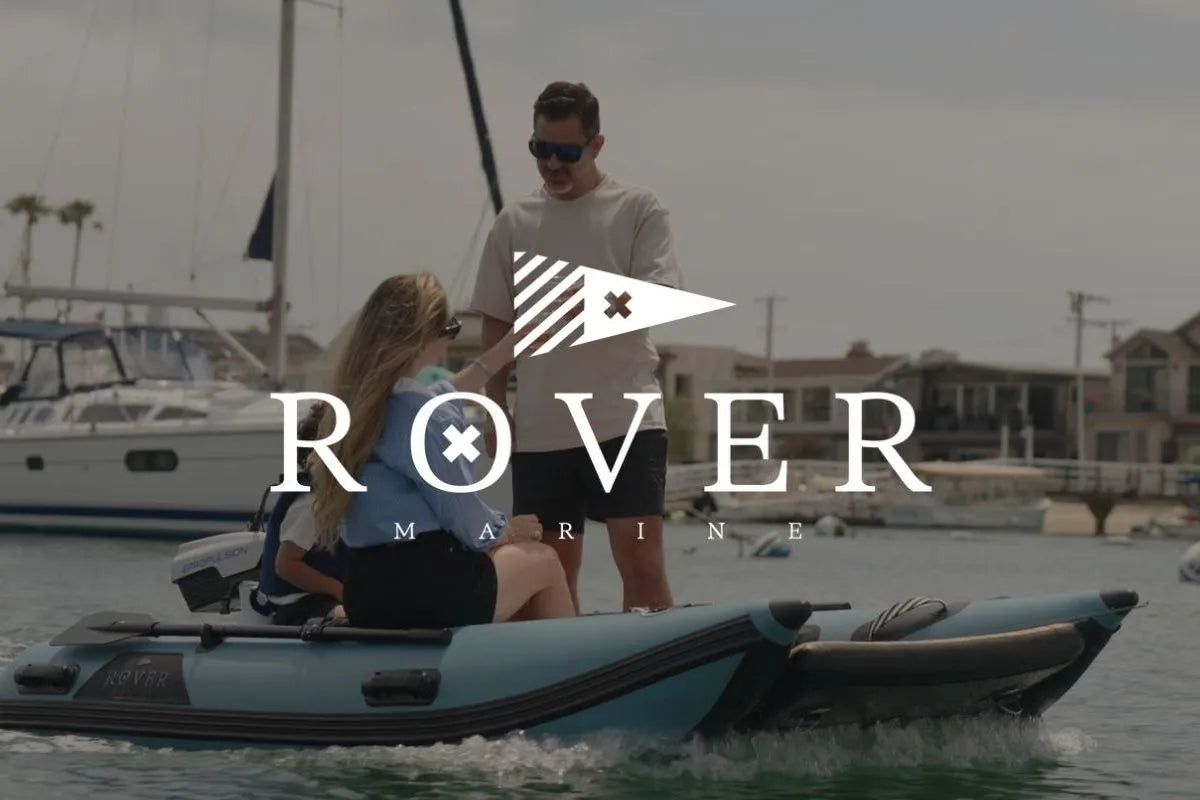
A weekend boat should make getting on the water easier, not create another storage and transportation project. Fully inflatable boats can provide a practical option for owners who want a boat that can be deflated, packed, and stored between trips.
Rover Marine offers the Battle Boat and Battle Cat in 8-foot, 10-foot, and 12-foot sizes. Each size balances portability, capacity, motor power, and deck room differently.
This guide explains how to choose the right model and size for fishing, family outings, yacht tender use, diving, lake trips, and short coastal adventures.
Why Fully Inflatable Boats Work for Weekend Trips
A fully inflatable boat can be reduced to a smaller package than a permanent rigid hull. That can make it useful for owners with limited garage space, yacht lockers, recreational vehicles, or vehicles that cannot tow a conventional boat.
Compact Storage
The boat can be deflated and stored in a protected space between trips instead of occupying a permanent trailer footprint.
Flexible Launching
A portable setup may allow access to locations where a full boat trailer and conventional ramp are less practical.
Removable Propulsion
The motor, battery, or fuel tank can be transported and stored separately from the boat.
Published Packed Dimensions
| Boat Size | Packed Dimensions | Transportation Consideration |
|---|---|---|
| 8 Foot | 38 x 24 x 15 inches | Smallest packed option, but room is still needed for the motor, pump, seats, and safety equipment. |
| 10 Foot | 45 x 28 x 18 inches | Provides four-person capacity while remaining more compact than the 12-foot option. |
| 12 Foot | 48 x 32 x 20 inches | Provides more load capacity and deck space but requires more room and lifting support. |
Measure the Vehicle Before Ordering
Confirm the cargo opening, interior dimensions, and available payload. The published packed dimensions do not include the motor, battery, charger, fuel tank, oars, seats, anchor, or other equipment.
Battle Boat vs. Battle Cat for Weekend Boating
Both Rover Marine models are fully inflatable and available in the same three lengths. The primary difference is the hull layout.
Battle Boat
The Battle Boat uses a traditional inflatable dinghy profile. It can fit yacht tender duty, family cruising, fishing, diving, and general recreational use.
- Traditional inflatable layout.
- Firm high-pressure drop-stitch floor.
- Available in 8-, 10-, and 12-foot sizes.
- Gas and electric outboard compatibility.
- Deflates for transportation and storage.
Battle Cat
The Battle Cat uses two parallel inflatable pontoons to create a catamaran-style stance.
- Dual-pontoon layout.
- Wider internal stance.
- Firm high-pressure drop-stitch floor.
- Available in 8-, 10-, and 12-foot sizes.
- Gas and electric outboard compatibility.

Does the Battle Cat Carry More People?
No. The Battle Boat and Battle Cat share the same published passenger and load capacity by length. The Battle Cat changes the hull and deck layout, not the passenger rating.
Which Size Fits a Weekend Getaway?
Boat size affects carrying weight, passenger capacity, gear room, motor power, packed dimensions, and how easily the setup can be moved.
| Size | Capacity | Maximum Motor | Typical Weekend Fit |
|---|---|---|---|
| 8 Foot | 2 people / 600 lb | Up to 6 HP | One or two people, compact tender trips, solo fishing, and owners prioritizing smaller storage dimensions. |
| 10 Foot | 4 people / 1,000 lb | Up to 10 HP | Family cruising, fishing, diving, tender use, and general weekend boating. |
| 12 Foot | 4 people / 1,200 lb | Up to 20 HP | More deck room, heavier equipment loads, and owners considering a higher-power motor. |
Current Boat Weights
| Model | 8 Foot | 10 Foot | 12 Foot |
|---|---|---|---|
| Battle Boat | 86 lb | 100 lb | 135 lb |
| Battle Cat | 84 lb | 98 lb | 130 lb |
The 12-Foot Model Does Not Add Passenger Capacity
The 10-foot and 12-foot boats are both rated for four people. The 12-foot models provide more total load capacity and deck room.
How Weekend Boaters Use Inflatable Boats
Fishing Trips
Consider the number of anglers, tackle, cooler, anchor, battery, portable electronics, and safe storage for hooks and tools.
Family Outings
Account for passenger weights, life jackets, coolers, shade, movement inside the boat, route length, and access to a safe landing.
Yacht Tender Use
Measure the yacht locker or storage area and plan how the boat, motor, battery or fuel, and accessories will be lifted and secured.
Diving
Add the weight of divers, tanks, weights, fins, motor, battery or fuel, anchor, safety equipment, and the reboarding setup.

Can You Take One on a Camping Weekend?
A Rover Marine boat can transport camping equipment when the complete load remains within capacity and the route and conditions are appropriate.
The boat itself should not be treated as overnight sleeping accommodation. Plan secure shore lodging or a campsite, lighting, communication, navigation, anchoring, weather, and return range.
Electric Outboards for Quiet Weekend Trips
Electric outboards can be a strong fit for tender runs, fishing, harbor cruising, lakes, and predictable short routes where charging access is available.
Electric Advantages
- Quieter than small gas outboards.
- No direct combustion exhaust at the motor.
- No onboard gasoline required.
- Simple starting and low-speed control.
- Fewer gas-engine maintenance tasks.
Electric Considerations
- Range depends on battery capacity and throttle.
- Charging access must be planned.
- Motor and battery weight count toward capacity.
- Wind, current, waves, and load affect range.
- A return reserve should be maintained.
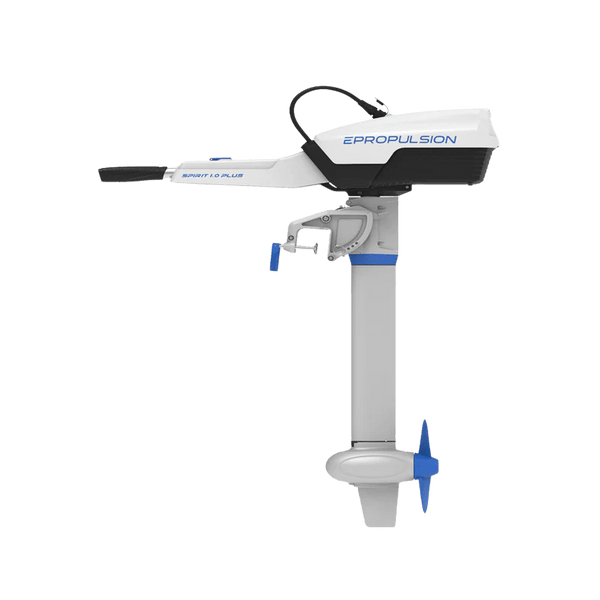
Current Portable Electric Options
Rover Marine currently carries the ePropulsion Spirit 1.0 Plus and Torqeedo Travel 1103 platforms for inflatable boats, yacht tenders, fishing, and harbor cruising.
Current Battle Boat and Battle Cat models use 15-inch transoms, so a compatible short-shaft motor is the normal fit.
Compare Electric OutboardsHow Long Will an Electric Motor Run?
There is no reliable universal runtime. Battery duration and travel distance depend on usable battery capacity, throttle, boat size, total load, wind, waves, current, temperature, propeller condition, inflation pressure, and battery health.
High Throttle Uses Battery Faster
A motor that can run for several hours at low power may have much less runtime near maximum output. Plan the route with a return reserve rather than relying on one advertised runtime.
Accessories That Matter on a Short Trip
Weekend boating rewards simple, organized setups. Every accessory adds weight and occupies space, so bring items that improve safety, reliability, comfort, or the specific activity.
Setup Equipment
- Compatible pump
- Accurate pressure gauge
- Oars or paddles
- Seats and mounting hardware
- Boat storage bag
Safety Equipment
- Properly fitting life jackets
- Sound-producing device
- Communication equipment
- First-aid kit
- Required lights and signaling gear
Trip Equipment
- Anchor and suitable line
- Dry storage bag
- Water and sun protection
- Compatible repair kit
- Battery or fuel reserve
Fishing and Dive Accessories
Keep hooks, knives, tanks, weights, anchors, and tools secured so they cannot puncture or abrade the tubes and floor. Do not attach permanent hardware without confirming that the mounting method is approved.
Accessories Count Toward Capacity
The motor, battery, fuel, anchor, seats, cooler, fishing tackle, dive equipment, and safety gear all count toward the published load limit.
How to Keep the Boat Ready for the Next Weekend
Regular cleaning, inspection, correct pressure, and dry storage prevent many avoidable problems.
Before Launch
- Inspect the tubes, seams, valves, floor, and transom.
- Inflate the tubes to 3.5 PSI.
- Inflate the drop-stitch floor to 10 PSI.
- Confirm the motor is centered and secure.
- Check battery or fuel status.
- Confirm all safety equipment is aboard.
- Review weather and route conditions.
- Check the complete passenger and equipment load.
After the Trip
- Remove sand, mud, vegetation, and loose debris.
- Rinse the boat after saltwater use.
- Use mild, material-compatible cleaners where needed.
- Inspect for abrasion, cuts, leaks, or loose components.
- Allow the boat to dry before extended packed storage.
- Follow the motor manufacturer's care instructions.
- Store the boat away from heat, sunlight, chemicals, and pests.

Repairing a Small Puncture
Use a patch and adhesive compatible with the boat material. Clean and dry the area, follow the complete preparation process, allow the full cure time, and pressure-test the repair before normal use.
Contact Rover Marine before attempting repairs involving a seam, valve base, transom, attached fitting, or internal floor structure.
Weekend Trip Planning Checklist
- Confirm the boat fits the vehicle and storage space.
- Add the weight of every passenger and all equipment.
- Stay within the published passenger and load limits.
- Use a motor within the 6, 10, or 20 HP limit for the selected size.
- Confirm the motor matches the 15-inch transom.
- Check the weather, wind, waves, current, and launch conditions.
- Plan enough battery or fuel for the route and return reserve.
- Carry required safety, communication, and signaling equipment.
- Tell someone where you are going and when you expect to return.
- Plan how the boat will be cleaned, dried, and stored afterward.
Frequently Asked Questions
Which Rover Marine boat is the lightest?
The current 8-foot Battle Cat is listed at 84 pounds. The 8-foot Battle Boat is listed at 86 pounds. These weights do not include the motor, battery or fuel, seats, pump, anchor, or safety equipment.
Can one person carry a Rover Marine boat?
That depends on the person's ability, the boat size, distance, terrain, and lifting method. Current boat weights range from 84 to 135 pounds, so two-person lifting or suitable handling equipment may be appropriate.
Which size is best for two people?
The 8-foot models are rated for two people or 600 pounds. The 10-foot model may provide more room for gear while remaining more compact than the 12-foot option.
Which sizes carry four people?
The 10-foot and 12-foot Battle Boat and Battle Cat models are rated for four people.
Can the 12-foot boat carry more than four people?
No. Current 12-foot Battle Boat and Battle Cat models are rated for four people or 1,200 pounds.
What motor can each size use?
The 8-foot models support motors up to 6 HP, the 10-foot models up to 10 HP, and the 12-foot models up to 20 HP.
Can I use an electric outboard?
Yes. Rover Marine currently offers ePropulsion Spirit 1.0 Plus and Torqeedo Travel 1103 options. Confirm the package, shaft length, total weight, battery capacity, and expected route before ordering.
How long does an electric outboard battery last?
Runtime depends on usable battery capacity, throttle, boat size, total load, wind, current, waves, temperature, propeller condition, and battery health. High throttle reduces runtime significantly.
Can Rover Marine boats be used in saltwater?
Yes. Rinse the boat, transom, hardware, and accessories with fresh water afterward. Follow the motor manufacturer's separate saltwater care instructions.
Can I transport the boat on a roof rack?
Do not assume a roof rack is suitable. Confirm the rack, vehicle, load limit, securing method, dimensions, and local transport rules. Transporting the boat deflated inside an appropriate cargo area may be the better option.
What pressure should Rover Marine boats use?
Current Battle Boat and Battle Cat models use 3.5 PSI in the tubes and 10 PSI in the high-pressure drop-stitch floor.
Where can I ask which setup fits my trips?
Use the Rover Marine contact page and include the passenger count, equipment, storage dimensions, preferred motor, and typical water conditions.
Make the Next Weekend Easier to Put on the Calendar
Start with your passenger load, gear, vehicle, storage space, route, and motor needs. Then choose the Battle Boat or Battle Cat size that fits those plans without exceeding the published limits.
Built for Water. Designed for Freedom.

Leave a comment
This site is protected by hCaptcha and the hCaptcha Privacy Policy and Terms of Service apply.