Choosing an inflatable boat involves more than selecting a length or comparing prices. Hull layout, passenger capacity, total load, boat weight, motor limits, storage space, operating pressure, and intended use all affect whether a boat fits your routine.
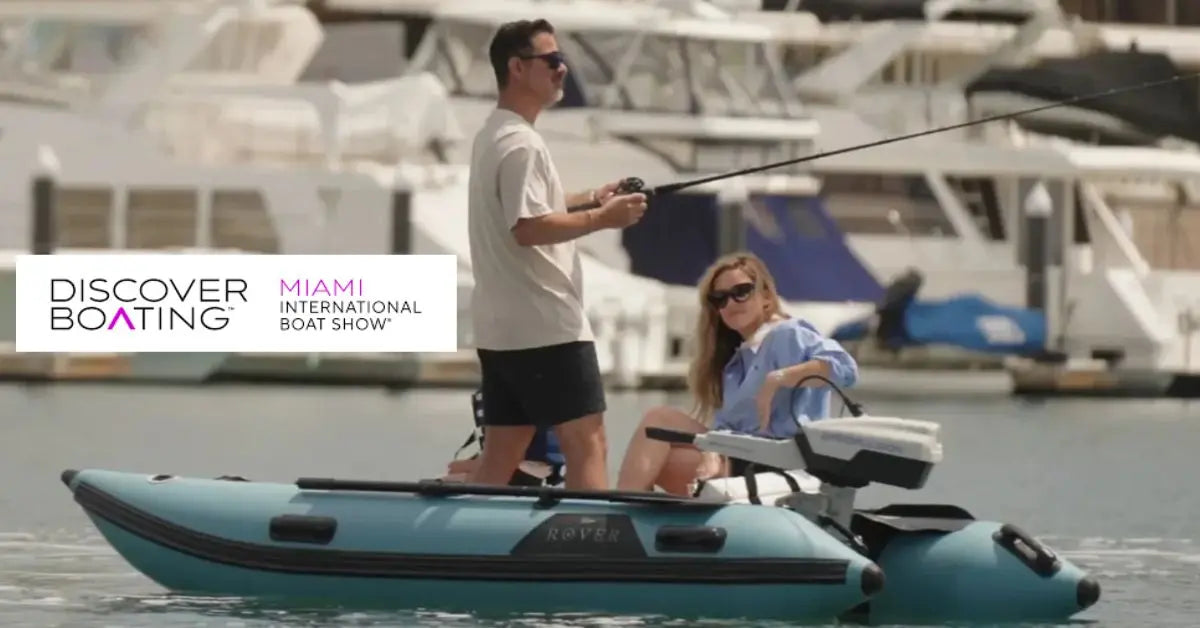
Rover Marine offers two fully inflatable platforms. The Battle Boat uses a traditional inflatable dinghy layout, while the Battle Cat uses two parallel pontoons to create a catamaran-style stance.
This guide explains the construction, hull designs, available sizes, portability, motor options, safety considerations, and ownership habits that matter before choosing either model.
What Inflatable Boat Construction Features Matter?
Inflatable boat durability depends on the complete construction, not a single marketing phrase. Fabric, seams, valves, air chambers, transom, floor, pressure, care, storage, and repair quality all influence how the boat performs over time.
Rover Marine product pages describe UV-resistant tubes, reinforced seams, triple-layer inflatable material, high-pressure drop-stitch floors, and V-TEAK traction flooring.
Reinforced Inflatable Tubes
The tubes create the boat's buoyancy and outer structure. They should be checked regularly for cuts, abrasion, pressure loss, valve issues, or seam movement.
High-Pressure Drop-Stitch Floor
Internal threads help the floor hold a firm, flat shape at 10 PSI while still allowing it to be deflated for transportation and storage.
Reinforced Transom
The transom supports the outboard. Motor power, motor weight, battery or fuel, shaft length, and mounting method must remain compatible with the boat.
Multiple Air Chambers
Separate chambers add redundancy, but they do not make the boat immune to handling changes or risk after a puncture or pressure loss.
How Hull Design Changes the Boat
The Battle Boat and Battle Cat are both fully inflatable, but their hull layouts create different interior shapes and ownership priorities.
Battle Boat
The Battle Boat uses a traditional inflatable dinghy profile. It can fit tender trips, fishing, diving, family cruising, and general recreational use.
- Traditional tender-style layout.
- Firm drop-stitch floor.
- Gas and electric motor compatibility.
- Available in 8-, 10-, and 12-foot sizes.
- Deflates for transportation and storage.
Battle Cat
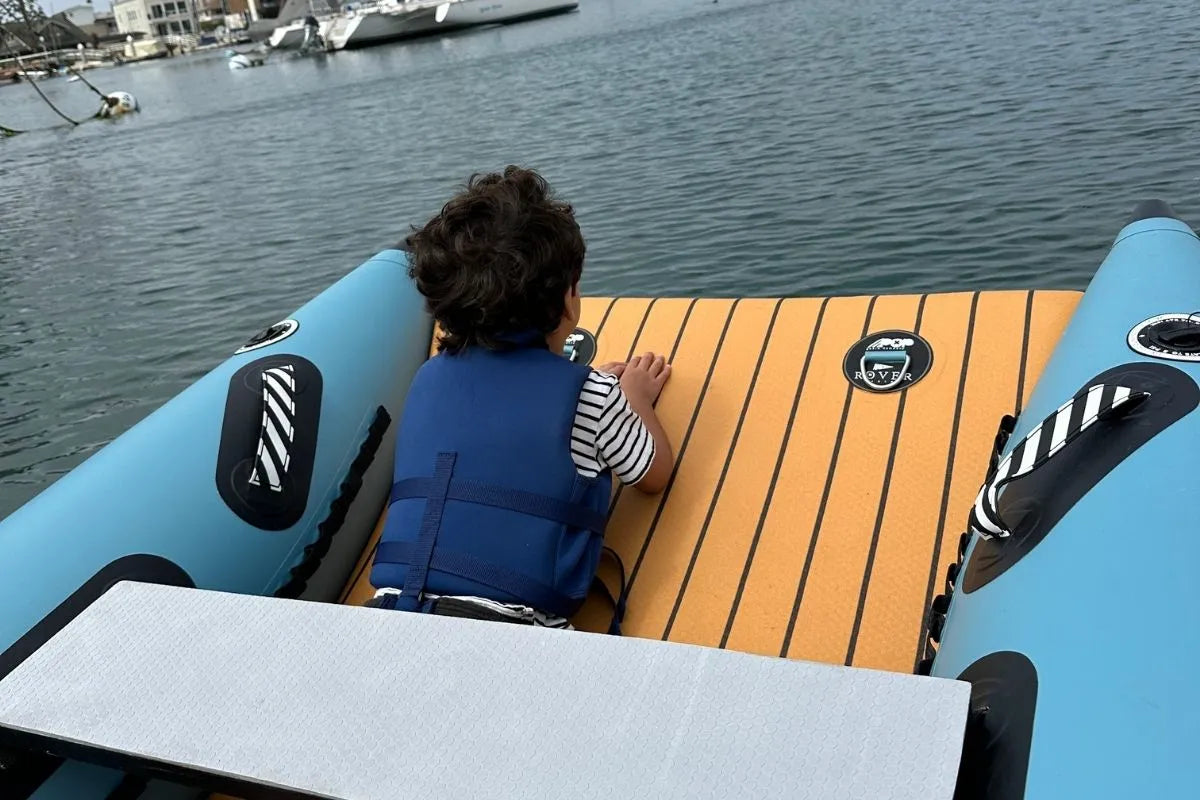
The Battle Cat uses two parallel inflatable pontoons to create a wider catamaran-style stance.
- Dual-pontoon layout.
- Wider internal stance.
- Firm drop-stitch floor.
- Available in 8-, 10-, and 12-foot sizes.
- Gas and electric motor compatibility.

Is One Hull Always More Stable?
The Battle Cat's wider stance may appeal to owners who prioritize initial stability and deck width. Actual stability still depends on boat size, pressure, passenger movement, load placement, motor weight, speed, waves, current, and operator input.
Choose the Size Around the Complete Load
Passenger count is only part of capacity planning. The motor, battery, fuel, seats, anchor, safety gear, cooler, fishing equipment, dive gear, and personal items all count toward the published limit.
| Boat Size | Capacity | Maximum Motor | Transom | Common Fit |
|---|---|---|---|---|
| 8 Foot | 2 people / 600 lb | Up to 6 HP | 15 inches | One or two people, compact tender use, solo fishing, and smaller storage spaces. |
| 10 Foot | 4 people / 1,000 lb | Up to 10 HP | 15 inches | Family cruising, fishing, diving, and general yacht tender use. |
| 12 Foot | 4 people / 1,200 lb | Up to 20 HP | 15 inches | More deck room, additional equipment, and higher-power motor options. |
Boat Weight by Model
| Model | 8 Foot | 10 Foot | 12 Foot |
|---|---|---|---|
| Battle Boat | 86 lb | 100 lb | 135 lb |
| Battle Cat | 84 lb | 98 lb | 130 lb |
The 12-Foot Boat Does Not Carry More People
The 10-foot and 12-foot boats are both rated for four people. The 12-foot models provide more total load capacity and deck room, not a higher published passenger count.
Portability and Storage
A fully inflatable boat can be deflated and packed into a much smaller footprint than a permanent rigid hull. That can help owners with limited garage space, condo storage, yacht lockers, or vehicles that cannot tow a traditional boat.
| Boat Size | Published Packed Dimensions | Planning Consideration |
|---|---|---|
| 8 Foot | 38 x 24 x 15 inches | Smallest packed option, but the complete setup still includes a motor and equipment. |
| 10 Foot | 45 x 28 x 18 inches | Balances four-person capacity with a more compact package than the 12-foot boat. |
| 12 Foot | 48 x 32 x 20 inches | Provides more capacity and room but requires more lifting and storage space. |
Measure Before Ordering
- Measure the vehicle cargo opening.
- Measure the garage, locker, or storage shelf.
- Plan where the motor will be stored.
- Include the electric battery or fuel tank.
- Allow room for seats, pump, oars, anchor, and safety gear.
- Confirm who will lift and move the packed boat.

Storage Habits That Protect the Boat
- Remove sand, mud, salt, and organic debris.
- Use mild, material-compatible cleaning products.
- Rinse away all cleaner residue.
- Allow the boat to dry before extended packed storage.
- Fold it without forcing sharp creases.
- Store it away from heat, direct sunlight, fuel, chemicals, and pests.
- Do not stack motors, anchors, or heavy equipment on the folded boat.
Electric vs. Gas Outboards
Rover Marine boats can use gas or electric outboards within the published power and load limits. The better option depends on route, range, charging or refueling access, storage, noise, maintenance, and the operator's lifting ability.
Electric Outboards
- Quieter than small gas outboards.
- No direct combustion exhaust at the motor.
- No onboard gasoline required.
- Simple starting and low-speed control.
- Fewer gas-engine maintenance tasks.
- Range depends on battery capacity and throttle.
Gas Outboards
- Fast refueling where approved fuel is available.
- More choices across the full horsepower limits.
- Can support higher-output setups.
- Requires fuel storage and handling.
- Produces combustion exhaust and more noise.
- Requires engine and fuel-system maintenance.
Current Electric Outboard Options
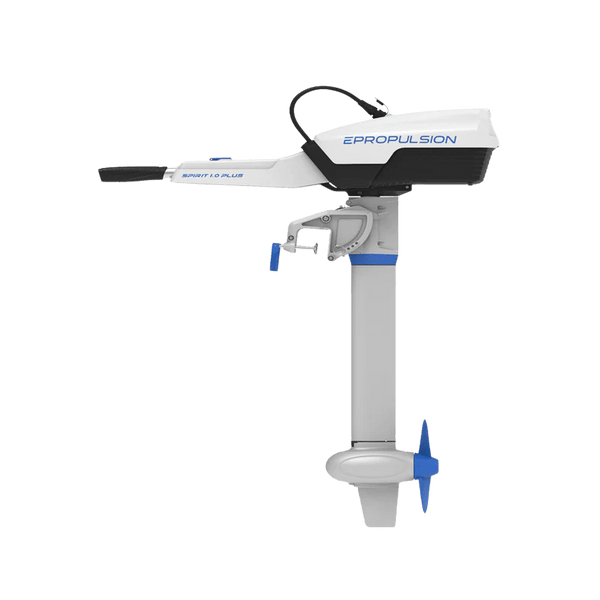
Rover Marine currently carries ePropulsion Spirit 1.0 Plus and Torqeedo Travel 1103 options for inflatable boats, tenders, harbor cruising, and fishing.
Current Battle Boat and Battle Cat models use 15-inch transoms, so a compatible short-shaft motor is the normal fit.
Compare Electric OutboardsHow Much Power Do You Need?
Maximum horsepower is an upper limit, not a requirement. A smaller motor may be a better fit for tender trips, fishing, slow cruising, portability, or predictable protected-water routes.
Never exceed the published 6, 10, or 20 HP limit for the selected boat size.
Match the Boat to the Activity
Fishing
Consider angler count, tackle, cooler, battery, anchor, electronics, and safe storage for hooks, knives, and tools.
Diving
Add the weight of divers, tanks, weights, fins, safety equipment, motor, battery or fuel, and the planned reboarding method.
Yacht Tendering
Measure the yacht locker or storage area, plan motor storage, and consider how the boat will be lifted, rinsed, dried, and secured.
Family Cruising
Consider passenger ages, life jacket fit, movement inside the boat, shade, coolers, route length, weather, and access to a safe landing.

Do Not Assume Every Activity Is Approved
A motor rating does not automatically approve tubing, waterskiing, wakeboarding, offshore travel, or commercial passenger service. Confirm the complete boat, motor, hardware, route, and intended use before operating.
Safety Features and Equipment
Boat construction is only one part of safety. Proper loading, pressure, maintenance, weather judgment, operator experience, and required equipment matter on every trip.
Current Rover Marine Air Chambers
| Model and Size | Published Chambers | Operating Pressure |
|---|---|---|
| 8-Foot Battle Boat | 3 tube chambers plus 2 floor chambers | 3.5 PSI tubes / 10 PSI floor |
| 10- and 12-Foot Battle Boat | 4 tube chambers plus 1 floor chamber | 3.5 PSI tubes / 10 PSI floor |
| All Current Battle Cat Sizes | 4 tube chambers plus 1 floor chamber | 3.5 PSI tubes / 10 PSI floor |
Multiple Chambers Add Redundancy
Separate air chambers can help keep part of the boat inflated after a pressure loss. They do not guarantee normal handling or make it safe to continue the original trip.
Reduce speed and load, put on life jackets, assess conditions, and return to a safe location when a chamber loses pressure.
Common Safety and Support Equipment
- A properly fitting life jacket for every person.
- A sound-producing device.
- Navigation lights when required.
- An engine cutoff switch link when applicable.
- Communication and first-aid equipment.
- An anchor and suitable line.
- A compatible pump and pressure gauge.
- A material-compatible repair kit.
- Required registration and documentation.
- Enough fuel or battery reserve to return safely.
Requirements vary by state, waterway, motor, operating area, and time of day. Confirm current rules with the authority responsible for the water where the boat will be used.
Inflatable Boat Buying Checklist
- Choose between the traditional Battle Boat and dual-pontoon Battle Cat.
- Add the actual weight of passengers and all equipment.
- Confirm the passenger count and total load remain within capacity.
- Measure the vehicle, yacht locker, garage, or storage area.
- Confirm who will lift and move the boat and motor.
- Select a motor within the published limit.
- Use a compatible motor for the 15-inch transom.
- Plan charging or approved fuel storage.
- Consider wind, waves, current, route, and return reserve.
- Review safety equipment, registration, and operating rules.
- Review the current written warranty and exclusions.
- Contact Rover Marine when the complete setup remains uncertain.
Review the complete Rover Marine warranty before purchase.
Frequently Asked Questions
What are Rover Marine inflatable boats made from?
Current product pages describe UV-resistant tubes, reinforced seams, triple-layer inflatable material, high-pressure drop-stitch floors, and V-TEAK traction flooring.
Are Rover Marine boats made from Hypalon?
Rover Marine product pages describe reinforced triple-layer inflatable material rather than a Hypalon or CSM hull. Use cleaning and repair products confirmed compatible with the actual boat material.
What pressure should the boat use?
Current Battle Boat and Battle Cat models use 3.5 PSI in the tubes and 10 PSI in the drop-stitch floor.
Which size carries four people?
The 10-foot and 12-foot Battle Boat and Battle Cat models are rated for four people. The 8-foot models are rated for two people.
Can the 12-foot boat carry more than four people?
No. The current 12-foot Battle Boat and Battle Cat are rated for four people or 1,200 pounds.
What motors can Rover Marine boats use?
The 8-foot models support motors up to 6 HP, the 10-foot models up to 10 HP, and the 12-foot models up to 20 HP.
Do Rover Marine boats use short-shaft motors?
Current models use 15-inch transoms. A compatible short-shaft motor is the normal fit.
Can I use an electric outboard?
Yes. Rover Marine currently offers ePropulsion Spirit 1.0 Plus and Torqeedo Travel 1103 options. Confirm shaft length, package, total weight, battery capacity, and expected route before ordering.
Can Rover Marine boats be used in saltwater?
Yes. Rinse the boat, transom, hardware, and accessories with fresh water after saltwater use, then dry the boat before extended packed storage. Follow the motor manufacturer's separate saltwater care instructions.
How long will an inflatable boat last?
There is no reliable universal lifespan. Service life depends on frequency of use, UV exposure, abrasion, impacts, pressure, cleaning, storage, repairs, water type, and maintenance.
Can I use the boat for an overnight camping trip?
The boat can transport camping equipment when the complete load remains within capacity and the route and conditions are appropriate. The boat itself should not be treated as overnight sleeping accommodation.
How do I repair a puncture?
Locate and mark the leak, clean and dry the area, use a compatible patch and adhesive, follow the full preparation and curing instructions, and pressure-test the repair before normal use. Contact Rover Marine for damage involving a seam, valve base, transom, or internal floor structure.
Choose the Boat Around the Way You Actually Use It
Start with the passenger and equipment load, storage space, route, conditions, motor, and transportation plan. Then choose the hull and size that fit those needs without exceeding the published limits.
Built for Water. Designed for Freedom.

Leave a comment
This site is protected by hCaptcha and the hCaptcha Privacy Policy and Terms of Service apply.