
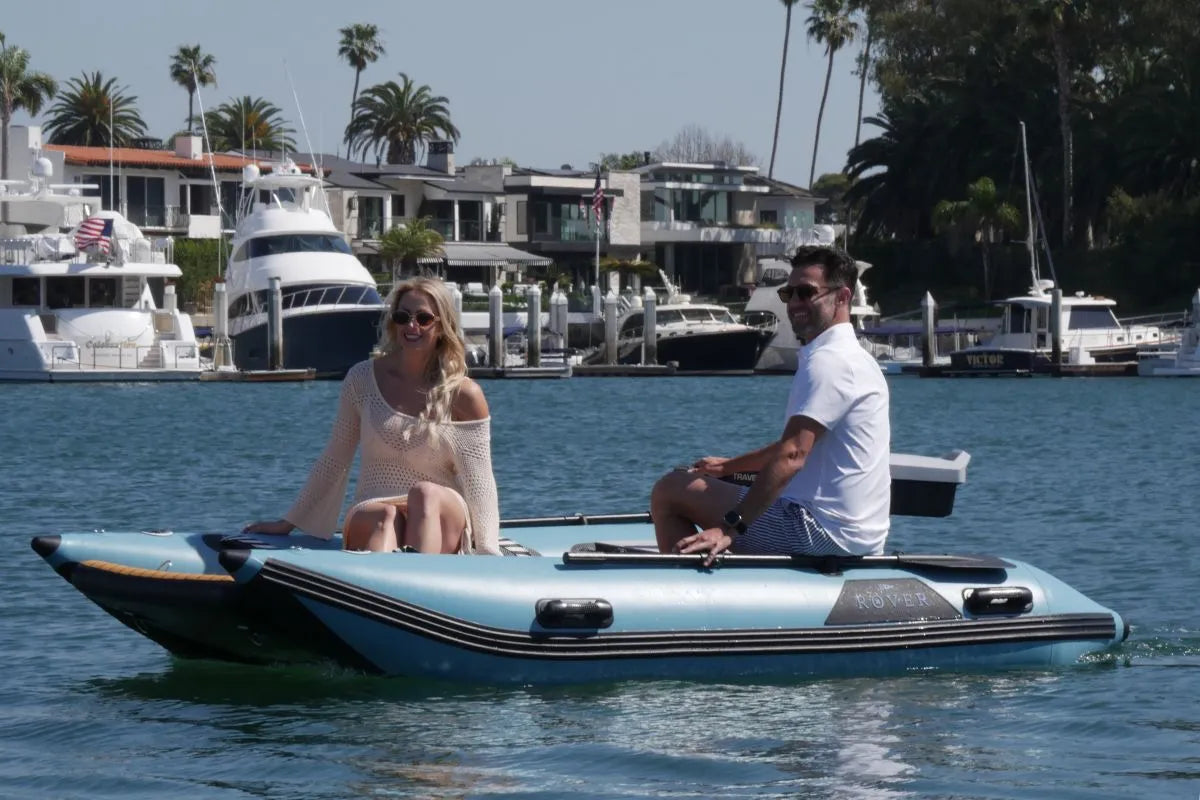
Rover Marine tender sizing guide
Your tender is a stowage problem before it is a boat
Most people research tender size backwards. They pick the boat they want, then find out the davits are close to the loaded weight, the foredeck footprint is too tight, or the locker opening is smaller than the packed tender.

This yacht tender size guide is not just about which tender looks best on paper. It is about the logistics underneath the purchase: what fits your davits, deck, foredeck, locker, lazarette, or towing plan, and whether you can handle it safely at the end of a long day.
Start with one practical number. A 10-foot inflatable that deflates to 45 x 28 x 18 inches and weighs 98 to 100 lb is a very different storage object than a 10-foot rigid tender that does not deflate. Same length on the water. Different problem on the mothership.
For a broader buying overview, read the Rover Marine yacht tender buying guide.
Four ways a tender travels
Carriage method comes first. It sets the ceiling, then you shop inside it. Davits, deck chocks, locker storage, and towing all limit size in different ways.
Weight is the limit
Davits are convenient, but the real limit is the safe working load after the tender, motor, gear, and water are counted.
Footprint is the limit
Deck or foredeck storage depends on clear length, beam, hatch access, sightline, and whether the tender can be secured properly.
Locker opening is the limit
A deflated inflatable can solve a yacht with no davits, but you still need the opening, interior depth, and handling plan to work.
Weather is the limit
Towing can work for short protected moves, but it is not a substitute for proper storage when the forecast, inlet, sea state, or night run gets serious.
Davits: check the wet number, not the brochure number
Davits are the most convenient answer and the most constrained. Convenient because the tender launches and recovers quickly without moving much else. Constrained because the limit is weight, and the weight that matters is not only the tender dry weight.
Your limit is on the rating plate of your davit system or in the manufacturer's manual. Read it before you shop, and confirm whether the rating is total system capacity or per-arm capacity. Rover Marine should not invent a number for your hardware, and neither should anyone selling you a tender.

Deck chocks and foredeck stowage
A sailboat foredeck or a motoryacht boat deck can carry a tender inverted in chocks, but the constraint changes from weight to footprint. Measure the clear space between the mast, windlass, forehatch, rail, and any deck hardware. Remember that a tender in chocks can block the hatch under it or affect sightline from the helm on smaller boats.
Deflated in a locker or lazarette
This is the option many owners forget they have, and it is why an inflatable tender can be easier to own than its on-water length suggests. Rover Marine boats pack to 38 x 24 x 15 inches at 8 ft, 45 x 28 x 18 inches at 10 ft, and 48 x 32 x 20 inches at 12 ft.
The cost is setup time. Plan on about 10 to 15 minutes with a high-output pump, plus the time to break down and roll cleanly. If you anchor out for a week, you may inflate once and tow or hoist between beaches, so the setup time happens twice a trip rather than twice a day.
For the full process, read how to inflate and set up an inflatable boat.
Short shaft, 15 inch transom, and motor weight
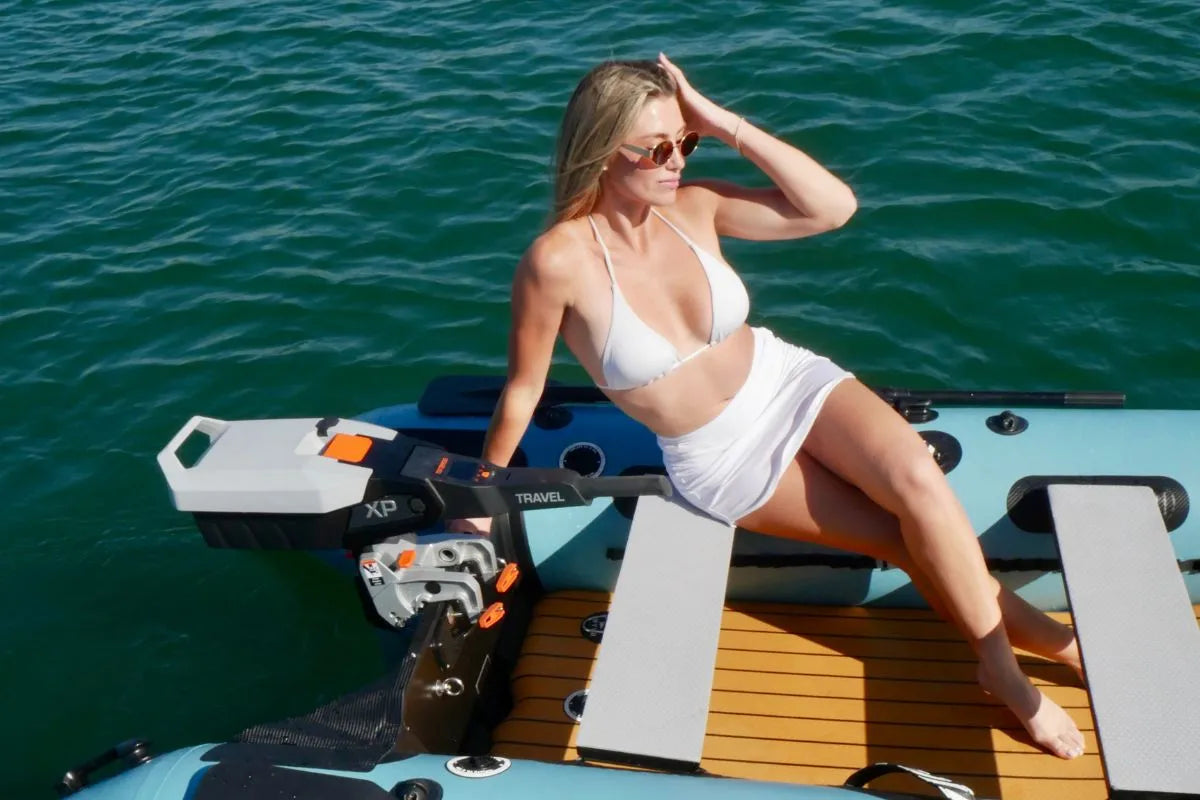
Every current Battle Boat and Battle Cat size uses a 15 inch transom, which matches short-shaft outboards. That includes electric packages like the ePropulsion Spirit 1.0 Plus and other options in the Rover Marine electric outboard motors collection.
For davit owners, the motor matters twice. First, the shaft length has to match the transom. Second, the motor weight must be counted in the davit calculation. If the motor stays mounted while the tender hangs, its mass sits at the transom, so the tender may hang stern-down and unevenly load the system. If the math is tight, remove the motor and stow it on a rail mount or aboard the mothership.
Yacht tender size guide by carriage plan
Some buyers begin with yacht length, but it is only a rough starting point. Carriage dimensions, rated lifting capacity, passenger load, motor weight, and the heaviest realistic shore run decide the size.
Under 30 ft or no davits
Likely tender size8 ft
Usual carriageDeflated in a locker or lazarette, or towed only on short protected moves
Capacity2 people / 600 lb
Deflated pack38 x 24 x 15 in
30 to 40 ft
Likely tender size8 or 10 ft
Usual carriageForedeck chocks, deflated below, or davits if rated for the wet load
Capacity600 lb or 1000 lb by size
Deflated pack38 x 24 x 15 in or 45 x 28 x 18 in
40 to 50 ft
Likely tender size10 ft
Usual carriageDavits, foredeck chocks, or deflated storage
Capacity4 people / 1000 lb
Deflated pack45 x 28 x 18 in
50 ft and up
Likely tender size12 ft
Usual carriageDavits or boat-deck chocks
Capacity4 people / 1200 lb
Deflated pack48 x 32 x 20 in
Do not size by liveaboard crew alone. Check the heaviest realistic shore run, including guests, provisions, fuel or battery, safety gear, permanent equipment, laundry, water, and anything that stays aboard the tender.
Horsepower follows the same size logic: up to 6 hp at 8 ft, up to 10 hp at 10 ft, and up to 20 hp at 12 ft. Planing and speed depend on total load, trim, propeller, motor selection, altitude, wind, and sea state. The maximum recommended power is not a promise of planing performance.
For more detail, read how size impacts inflatable dinghy performance.
Run the davit-load worksheet before you buy
Size to the wet number, never the dry number. Work through this in order, on paper:
The one-person lift reality check
Deflated weight reads easy on a spec sheet and lands differently on a dock. A rolled tender is a soft, unbalanced package with no rigid handhold, so it can feel heavier than the number suggests.
- 8 ft, 84 to 86 lb: one fit adult may move it short distances, but the shape is awkward.
- 10 ft, 98 to 100 lb: realistically a two-person carry, or use a dock cart, halyard, or hoist if solo.
- 12 ft, 130 to 135 lb: plan on two people or proper lifting gear. Do not rely on muscle alone.
Wet fabric, trapped water, windage, awkward side decks, and a moving dock all make handling harder. Plan the lift before you need it.
Towing a dinghy without losing it
Towing can work for short protected moves, but it is not the default answer for every passage. The failure mode is predictable: the tender starts snatching, surfing, filling, flipping, or putting slack line near the prop.
- Use a bridle when appropriate: a proper towing bridle helps keep load centered instead of pulling from one corner.
- Adjust painter length to conditions: the tender should ride cleanly in the wake rather than snatching or surfing forward.
- Shorten up in close quarters: at a fuel dock, fairway, or anytime you may reverse, bring the tender close enough to control.
- Remove the motor for serious towing: a flipped or filled tender with a mounted outboard is a much bigger problem.
- Keep it empty and drained: do not tow a tender full of heavy loose gear or standing water.
- Stop towing before it gets bad: inlets, following seas, night runs, offshore legs, and building weather are all reasons to recover or deflate.
The tender is a vessel with its own rules, and registration varies by state. We covered that in do you have to register an inflatable boat. What rides in it is worth checking too, in the inflatable boat safety checklist.
Battle Boat or Battle Cat as a yacht tender?
Once the carriage math is settled, the hull choice gets easier. The Battle Boat is the traditional inflatable tender shape for calm to moderate water, dock runs, and simple yacht-to-shore use. The Battle Cat uses a dual-pontoon layout for a wider stance, more lateral stability, and a more settled feel when people or gear shift.
Choose Battle Boat if
You want the classic inflatable tender format, compact handling, seated travel, and a familiar dinghy layout.
Choose Battle Cat if
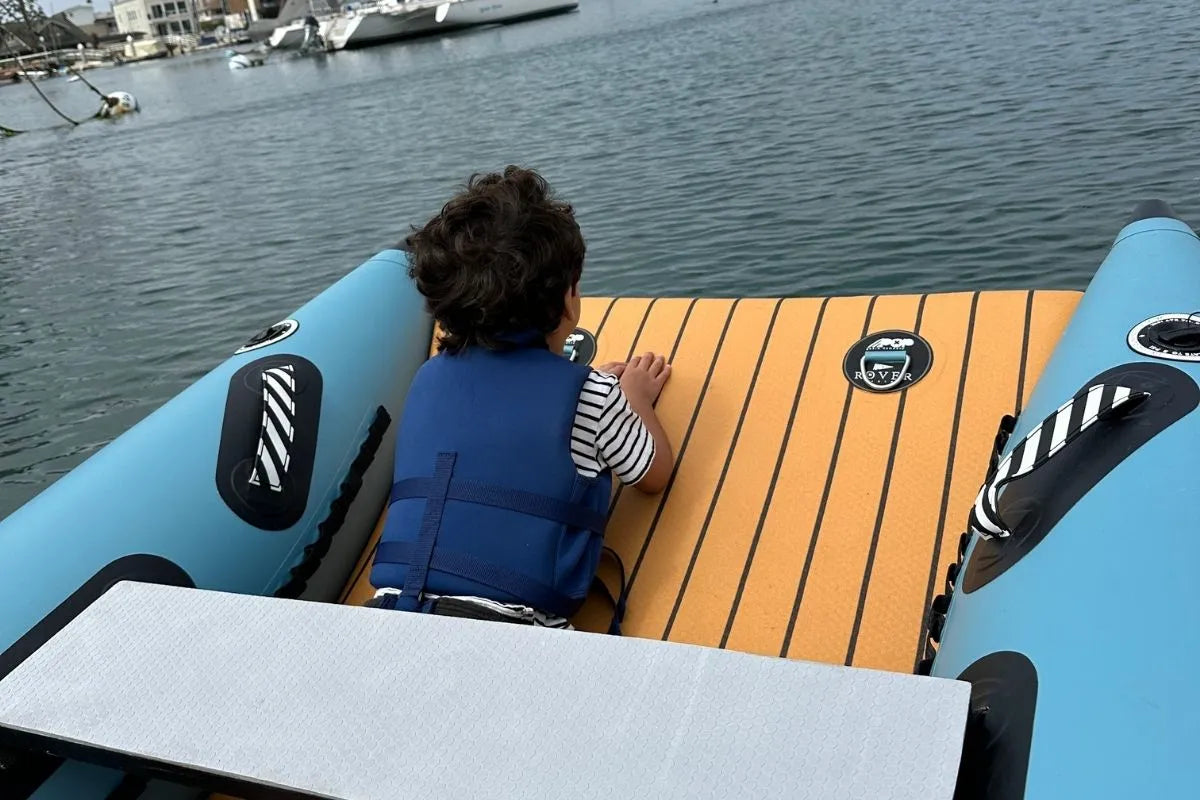
You want a wider stance, extra stability, and a platform that feels more settled for boarding, standing, dogs, or heavier gear.
Frequently asked questions
What size yacht tender do I need?
Carriage method decides the first cut. Boats without davits often need an 8 ft tender that can stow deflated. A 40 to 50 ft yacht often has room for a 10 ft tender, while 50 ft and up may support a 12 ft tender if the davits, deck, or boat-deck chocks are rated and sized for the full load.
How do I know if my davits can carry my tender?
Use the safe working load from your davit rating plate or manual, then add tender dry weight, outboard with fuel or battery, anchor, oars, PFDs, pump, ladder, fenders, safety gear, and possible standing water. Size to the wet total, not only the dry tender weight.
Can you tow an inflatable dinghy behind a yacht?
Yes, for short protected moves when conditions allow. Use a proper bridle or painter setup, remove the outboard for serious towing, keep the tender drained and empty, shorten up in close quarters, and recover or deflate before following seas, inlets, night runs, or offshore legs.
What tender works on a yacht with no davits?
A deflatable inflatable is usually the practical choice. Rover Marine tenders pack to 38 x 24 x 15 inches at 8 ft, 45 x 28 x 18 inches at 10 ft, and 48 x 32 x 20 inches at 12 ft, so the deciding factor becomes the locker opening and handling plan.
Can one person handle a yacht tender alone?
Sometimes, but do not size around wishful thinking. An 8 ft tender at 84 to 86 lb may be a short-distance one-person move for a fit adult. A 10 ft tender at 98 to 100 lb is usually a two-person carry. A 12 ft tender at 130 to 135 lb needs two people or proper lifting gear.

Leave a comment
This site is protected by hCaptcha and the hCaptcha Privacy Policy and Terms of Service apply.