
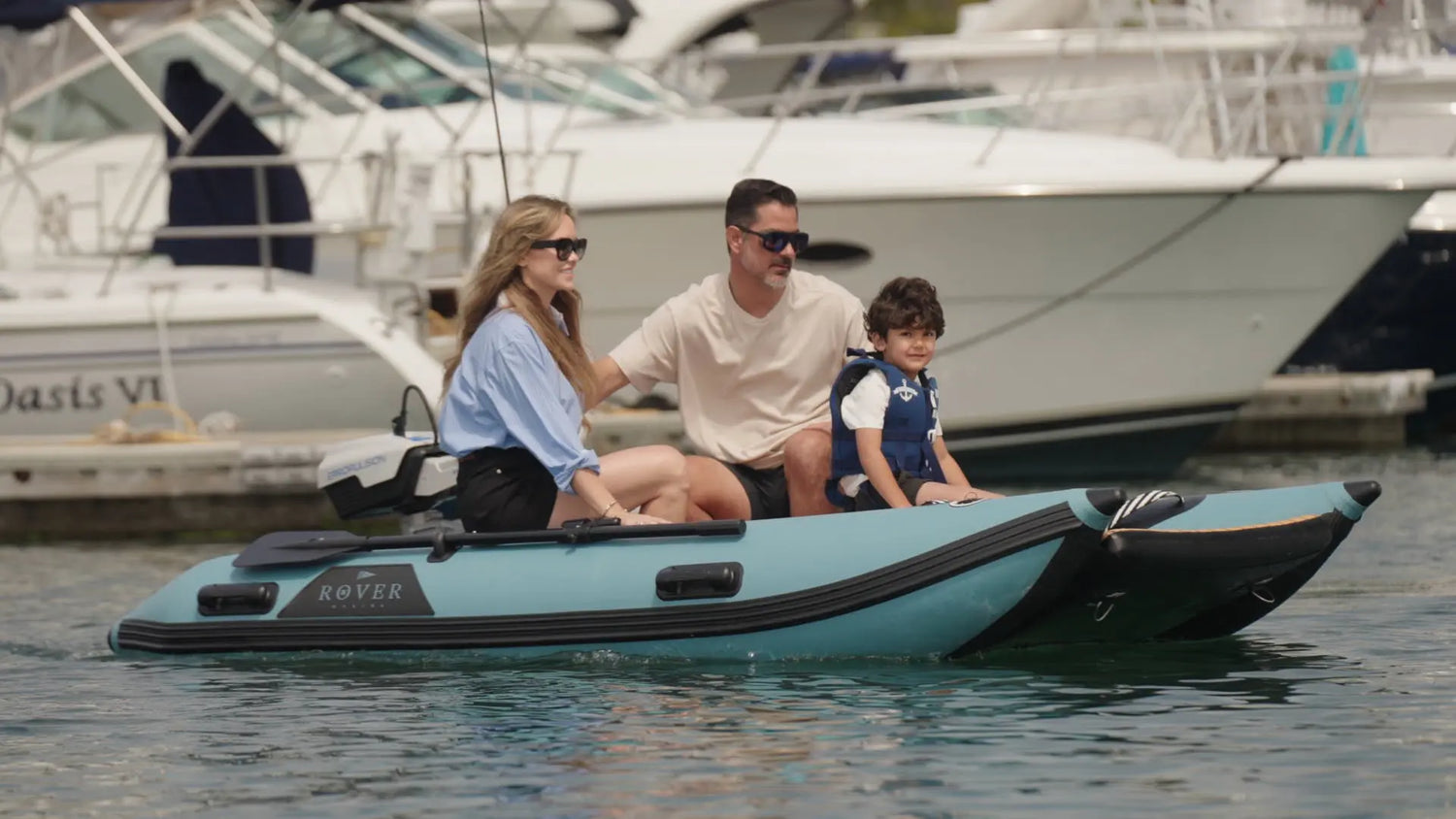
Don’t Let the Off-Season Destroy a $2,000+ Boat
A Battle Boat or Battle Cat stored incorrectly over winter will come out in spring with cracked seams, degraded PVC, seized valves, and a dead motor battery. A boat stored correctly will be mission-ready the day you pull it out. The difference is a few hours of proper winterization. This guide covers every step—from final rinse to spring launch—for owners in every climate, from the Great Lakes to the Gulf Coast to the Pacific Northwest.

When to Winterize: Know Your Climate
Winterization timing depends on where you operate. Use this as your trigger:
| Region | Typical Winterization Window | Primary Risks |
|---|---|---|
| Northeast / Great Lakes | October — November | Freeze damage, UV degradation, rodent damage in storage |
| Mid-Atlantic / Southeast | November — December | Mold, mildew, UV exposure, salt corrosion |
| Pacific Northwest | October — November | Moisture, mold, UV degradation |
| Gulf Coast / South Florida | Year-round use — extended storage between seasons | UV degradation, salt corrosion, humidity, mold |
| Mountain / Inland Lakes | September — October | Freeze damage, UV, rodent damage |
Rule of thumb: Winterize when water temperatures drop below 50°F or when you won’t be using the boat for more than 60 days. Don’t leave a Battle Boat or Battle Cat sitting uninspected for months regardless of climate.
Step 1: Final On-Water Inspection
Before you pull the boat for the season, do a final inspection on the water while everything is inflated and visible:
- Run your hand along all seams—feel for bubbling, separation, or soft spots
- Check all valves (bow, stern, floor) for leaks—apply soapy water and watch for bubbles
- Inspect the transom reinforcement for delamination or stress cracks
- Check D-rings and handles for torn stitching or pulled webbing
- Note any punctures, abrasions, or UV bleaching on the PVC surface
Repair everything now—not in spring. PVC repairs made in warm weather cure properly. Cold-weather repairs with HH-66 vinyl cement don’t bond as effectively.
Step 2: Thorough Cleaning
Salt, sunscreen, fish blood, fuel residue, and biological growth all degrade PVC over time. Clean the boat completely before storage—not a quick rinse.
Exterior (Hull and Pontoons)
- Rinse with freshwater to remove salt and loose debris
- Wash with mild soap (dish soap or dedicated inflatable boat cleaner)—avoid petroleum-based cleaners, acetone, or bleach, which degrade PVC
- Use a soft brush or sponge—no abrasive pads or stiff brushes that scratch the surface
- Pay attention to seam lines, valve bases, and D-ring attachment points where grime accumulates
- Rinse thoroughly—soap residue left on PVC attracts dirt and can cause surface degradation
Interior (Floor and Deck)
- Remove all gear, lines, and accessories before cleaning
- Rinse the drop-stitch floor thoroughly—sand and grit trapped in the floor weave abrades the material from inside
- Clean with mild soap, rinse completely, allow to drain
Valves
- Clean valve caps and threads with freshwater—salt crystals in valve threads cause seizing
- Apply a small amount of silicone grease (not petroleum-based) to valve O-rings to prevent drying and cracking
- Check that all valve caps thread on smoothly and seat fully
Step 3: Drying — The Most Important Step
Storing a damp inflatable boat is the fastest way to destroy it. Mold and mildew grow inside folded PVC within days in humid conditions and are nearly impossible to fully remove once established.
- After cleaning, inflate the boat fully and allow it to air dry completely in the sun—minimum 2-4 hours in direct sun, longer in humid or overcast conditions
- Flip the boat to dry both sides of the floor
- Open all valve caps to allow interior air circulation
- Run your hand inside the boat—if any surface feels cool or damp, it’s not dry enough
- Do not fold or bag a boat that has any moisture remaining—even slightly damp is too damp
In humid climates (Gulf Coast, Pacific Northwest, Southeast): Allow extra drying time. Consider placing a desiccant packet inside the storage bag to absorb residual moisture during storage.

Step 4: UV Protection Treatment
UV radiation is the primary long-term killer of PVC inflatable boats. Before storage—and before every season—apply a UV protectant specifically formulated for PVC or rubber:
- 303 Aerospace Protectant: Industry standard for PVC, rubber, and vinyl. Blocks UV, restores flexibility, prevents cracking. Apply to all exterior surfaces after cleaning and drying. Available at West Marine and Amazon.
- Apply with a clean cloth, allow to absorb for 5-10 minutes, wipe off excess
- Do not apply to valve threads or interior surfaces
- Reapply at the start of every season and every 90 days during active use in high-UV environments
Step 5: Deflating and Folding
How you deflate and fold the boat determines whether it comes out of storage with crease damage or in perfect condition.
Deflation
- Deflate the floor first, then the pontoons—this prevents the floor from being crushed under pontoon pressure
- Open all valves fully and allow air to escape naturally—don’t stand on the boat to force air out, which stresses seams
- Once mostly deflated, gently press remaining air toward the valves by hand
- Leave valves open during folding to prevent air pockets from building pressure inside folds
Folding — Battle Boat (V-Hull)
- Fold the bow toward the stern, keeping the keel line straight
- Fold the pontoons inward toward the centerline
- Roll from bow to stern—rolling creates fewer stress creases than folding flat
- Avoid sharp 90° folds at the same point every year—rotate fold points to distribute wear
Folding — Battle Cat (Catamaran)
- Deflate both pontoons evenly before folding—uneven deflation causes asymmetric stress on the cross-tubes
- Fold each pontoon inward toward the center platform
- Roll from one end to the other—the Battle Cat’s wider beam means it rolls into a larger package than the Battle Boat
- Do not force the Battle Cat into a smaller roll than it naturally wants to go—seam stress is the result
Step 6: Storage Location and Conditions
Indoor Storage (Preferred)
- Temperature: Store between 40°F and 80°F. Avoid unheated garages in freeze climates—PVC becomes brittle below freezing and can crack at fold points
- Humidity: Keep below 60% relative humidity. Use a dehumidifier in damp basements or garages
- Light: Keep away from windows and fluorescent lights—UV penetrates glass and degrades PVC even indoors
- Position: Store the rolled boat on a shelf or hanging—not on a concrete floor, which wicks moisture and cold into the PVC
- Pests: Rodents chew PVC for nesting material. Store in a sealed bag or hard container. Place rodent deterrents (dryer sheets, peppermint oil) near the storage area.
Outdoor Storage (If Indoor Is Not Available)
- Use a heavy-duty UV-resistant storage cover or tarp—not a standard blue poly tarp, which traps moisture and accelerates mold
- Elevate the boat off the ground on a pallet or rack—direct ground contact causes moisture wicking and freeze damage
- Ensure the cover allows airflow—sealed covers trap condensation inside
- In freeze climates: outdoor storage is not recommended for PVC inflatables. Freezing temperatures cause PVC to crack at fold points. Indoor storage is non-negotiable in the Northeast, Great Lakes, and Mountain regions.
Step 7: Electric Motor Winterization — ePropulsion Spirit 1.0 Plus & Torqeedo Travel 1103 S
Electric motors require specific off-season care that differs significantly from gas outboards. Both the ePropulsion Spirit 1.0 Plus and Torqeedo Travel 1103 S are lithium-ion battery systems with specific storage requirements.
Battery Storage — Critical
- Charge level for storage: Store lithium-ion batteries at 50-80% charge—not fully charged, not fully depleted. Full charge or full discharge during long storage degrades cell capacity permanently.
- Temperature: Store batteries between 32°F and 77°F. Never store lithium-ion batteries in a freezing environment—permanent capacity loss results. A heated garage or interior space is required in freeze climates.
- Check charge monthly: Lithium-ion batteries self-discharge slowly during storage. Check charge every 30 days and top up to 50-80% if it drops below 40%.
- Never store a fully depleted battery: A lithium-ion cell discharged to zero and left for months can enter a state that prevents recharging—effectively destroying the battery.
Motor Body
- Rinse the motor thoroughly with freshwater—flush the cooling water passages by running in a freshwater bucket for 2-3 minutes if the motor was used in saltwater
- Remove the propeller and inspect for fishing line wrapped around the shaft—line left on the shaft cuts through seals over winter
- Dry the motor completely before storage
- Apply corrosion inhibitor (CorrosionX or equivalent) to all electrical connectors and exposed metal
- Store the motor upright or in its original mount position—do not store horizontally with the lower unit up
- Cover the motor with its original bag or a breathable cover—not a sealed plastic bag, which traps moisture
ePropulsion-Specific
- Refer to the ePropulsion app for battery health status before storage—the app shows cell balance and charge level
- Update firmware before storage if updates are available—some updates include battery management improvements
Torqeedo-Specific
- The Torqeedo Travel 1103 S integrated battery display shows charge level—confirm 50-80% before storage
- Torqeedo recommends annual service inspection for the motor—schedule before or after the off-season
Step 8: Accessories and Gear Storage
- Anchor and chain: Rinse with freshwater, dry completely, store in a mesh bag that allows airflow. Inspect chain links for rust—replace corroded links before spring.
- Anchor rode (nylon): Rinse, dry, coil loosely. Inspect for chafe, UV degradation, and stiffness. Replace if it shows significant wear—nylon rode has a 3-5 year lifespan in saltwater use.
- PFDs: Rinse with freshwater, hang to dry completely, store in a dry location away from direct sunlight. Inspect straps, buckles, and foam for damage. Replace any PFD with compromised buoyancy material.
- Flares: Check expiry dates—replace any that will expire before the next season. Store in a cool, dry location away from heat sources.
- VHF Radio: Remove batteries if storing for more than 60 days to prevent corrosion from battery leakage. Store in a dry location.
- Repair kit: Check HH-66 vinyl cement—if the cap has been left off or the adhesive has thickened, replace it. Dried-out adhesive won’t bond in an emergency.
- POP Board Co. pumps: Rinse hoses and nozzles, dry completely, store coiled without kinks. Check the Shark 2S electric pump power cable for cracking or fraying.
Spring Launch Checklist: Coming Out of Storage
Before the first mission of the season:
- ☐ Inflate fully and inspect all seams, valves, and D-rings for damage that occurred during storage
- ☐ Check valve O-rings—replace if cracked or brittle
- ☐ Apply 303 Aerospace Protectant to all exterior PVC surfaces
- ☐ Charge motor battery to 100% and run a test cycle before the first mission
- ☐ Reinstall propeller and check shaft for fishing line or debris
- ☐ Test all safety gear—check flare expiry, VHF battery, fire extinguisher pressure gauge
- ☐ Re-register vessel if registration has expired
- ☐ Restock first aid kit and repair kit with any used or expired items
- ☐ Run motor in a freshwater bucket for 5 minutes before first water launch
Frequently Asked Questions
Can I store my Battle Boat outside in winter in the Northeast?
Not recommended. PVC becomes brittle below freezing and can crack at fold points during storage. In the Northeast, Great Lakes, and Mountain regions, indoor storage between 40°F and 80°F is required to prevent freeze damage. An unheated garage that drops below freezing is not adequate—the boat needs to stay above 32°F throughout storage.
What charge level should I store my ePropulsion or Torqeedo battery at?
50-80% charge. Never store fully charged or fully depleted. Full charge during long storage stresses lithium-ion cells and reduces long-term capacity. Full depletion can permanently prevent recharging. Check charge monthly and top up to 50-80% if it drops below 40%.
How do I prevent mold inside my stored inflatable boat?
Complete drying before storage is the only reliable prevention. Inflate fully, dry in direct sun for a minimum of 2-4 hours, and confirm no damp surfaces remain before folding. In humid climates, place a desiccant packet inside the storage bag. Never store a boat that feels even slightly damp—mold establishes within days in a sealed, humid environment.
How should I fold the Battle Cat for storage?
Deflate both pontoons evenly, fold each inward toward the center platform, then roll from one end to the other. Don’t force the Battle Cat into a tighter roll than it naturally allows—the wider catamaran beam means it stores as a larger package than the Battle Boat. Forcing it causes seam stress at fold points.
Do I need to do anything special for saltwater storage?
Yes. Saltwater use requires a thorough freshwater rinse of the entire boat, motor, valves, anchor chain, and all hardware before storage. Salt crystals left in valve threads cause seizing. Salt residue on PVC accelerates UV degradation. Flush the motor cooling passages with freshwater. Apply corrosion inhibitor to all electrical connectors and exposed metal on the motor.
How often should I replace my anchor rode?
Inspect annually. Replace if you see significant chafe at the chock or cleat point, UV bleaching that makes the rope stiff and brittle, or any visible core damage. Nylon anchor rode has a typical lifespan of 3-5 years in regular saltwater use—replace proactively rather than waiting for failure on the water.
Questions about winterizing your specific Rover Marine model?
Contact Rover Marine at 844-207-6837 (M-F, 10am-4pm PST) or visit the contact page.
Store It Right. Launch Ready in Spring.
A properly winterized Battle Boat or Battle Cat comes out of storage in the same condition it went in. A few hours of proper winterization protects a $2,000+ boat investment and ensures the first mission of the season goes off without issues. Follow the steps above, store the motor battery correctly, and you’ll be launch-ready the day the water opens up.
Questions about storage, motors, or accessories? Call 844-207-6837 (M-F, 10am-4pm PST) or visit the contact page.
Deploy. Launch. Dominate. See you in spring.
Watch the Battle Boat and Battle Cat in action on our YouTube channel.

Leave a comment
This site is protected by hCaptcha and the hCaptcha Privacy Policy and Terms of Service apply.