Buying a boat and a motor separately is how people end up with a shaft length that does not match the transom, a motor that is too heavy for the hull, or a battery setup that eats half the usable floor space. The boat may be right. The motor may be right. Together, they may still be wrong.
That is why package planning matters. In this guide, “package” means a properly matched Rover Marine inflatable dinghy and outboard setup. It does not always mean a single discounted bundle or one box at delivery. It means the hull, motor, shaft length, weight, range, and support path have been thought through before you order.
This 2026 US buyer guide walks through four practical inflatable dinghy and motor package paths: the Battle Boat V-hull inflatable with an ePropulsion electric outboard, the Battle Cat inflatable catamaran with Torqeedo power, a 12 ft Battle Boat with a local gas outboard, and a Battle Cat freshwater trolling setup. Pick the one that matches your water, not the one that sounds best on paper.
Quick answer: The best inflatable dinghy and outboard package for most US boaters is the smallest hull that safely carries your normal load, matched with a short-shaft motor that stays within Rover Marine’s recommended power rating. Choose the Battle Boat for V-hull portability and efficient tender use. Choose the Battle Cat when stability, fishing, family boarding, or wide-deck confidence matters more.
Why Buy Boat + Motor Together, Instead of Guessing Later?
Three reasons, in order of importance.
1. Compatibility is engineered, not guessed
Shaft length, transom height, motor weight, battery placement, and total load all have to match. Rover Marine’s Battle Boat and Battle Cat specs list a 15 in transom across sizes, which points buyers toward short-shaft outboards for these hulls. A long-shaft motor on a short transom can create handling problems, drag, spray, and poor performance.
Do not buy the motor first and force the boat to match it. Start with the hull, confirm the transom height, check the recommended power rating, then choose the outboard.
2. Support gets simpler
The hull and the outboard may still carry separate warranty terms from their own manufacturers, but buying the setup through one marine-focused source makes the pre-sale conversation cleaner. The team can help you confirm shaft length, motor weight, expected use, and whether your planned water demands electric, gas, or a low-power trolling setup.
That matters for first-time inflatable buyers. A wrong motor can turn a good boat into a frustrating one.
3. You avoid hidden launch-day problems
The annoying problems are not always dramatic. Sometimes the motor clamps fine but the battery sits where your passenger needs to put their feet. Sometimes the outboard is within horsepower range but too heavy for how you actually load the boat. Sometimes the shaft is correct but the range is wrong for the distance you run.
A proper boat-and-motor package avoids those mistakes before they hit the ramp.

For a deeper primer on motor selection, start with Rover Marine’s best outboard motors for inflatable dinghies guide.
Four Package Paths US Boaters Should Consider
These four pairings cover the most common missions: lake exploring, yacht tender duty, family stability, faster gas-powered range, and small-water fishing.
| Package Path | Best For | Why It Works |
|---|---|---|
| Battle Boat + ePropulsion Spirit 1.0 Plus | Solo and two-person cruising, lake exploring, yacht tender use | V-hull portability with clean, quiet 3HP-equivalent electric power. |
| Battle Cat + Torqeedo Travel 1103 S | Fishing, family runs, photography, guest transfers | Wide dual-pontoon stability with premium electric tender power. |
| Battle Boat 12 ft + local gas outboard | Longer runs, higher speed, bigger lakes, gas range | The 12 ft Battle Boat lists up to 20 hp recommended power. |
| Battle Cat 8 ft + freshwater trolling setup | Pond hopping, panfish, crappie, no-wake lakes, small electric water | Stable catamaran platform with a simple low-power motor sourced locally. |
Combo 1: Battle Boat + ePropulsion Spirit 1.0 Plus
Individual prices: Battle Boat from $1,999 + ePropulsion Spirit 1.0 Plus Short Shaft at $2,999 = $4,998 before taxes, shipping, and any accessories.
Best for: solo and two-person cruisers, lake explorers, sailboat tenders, quiet harbor runs, and no-fuel yacht-to-shore duty.
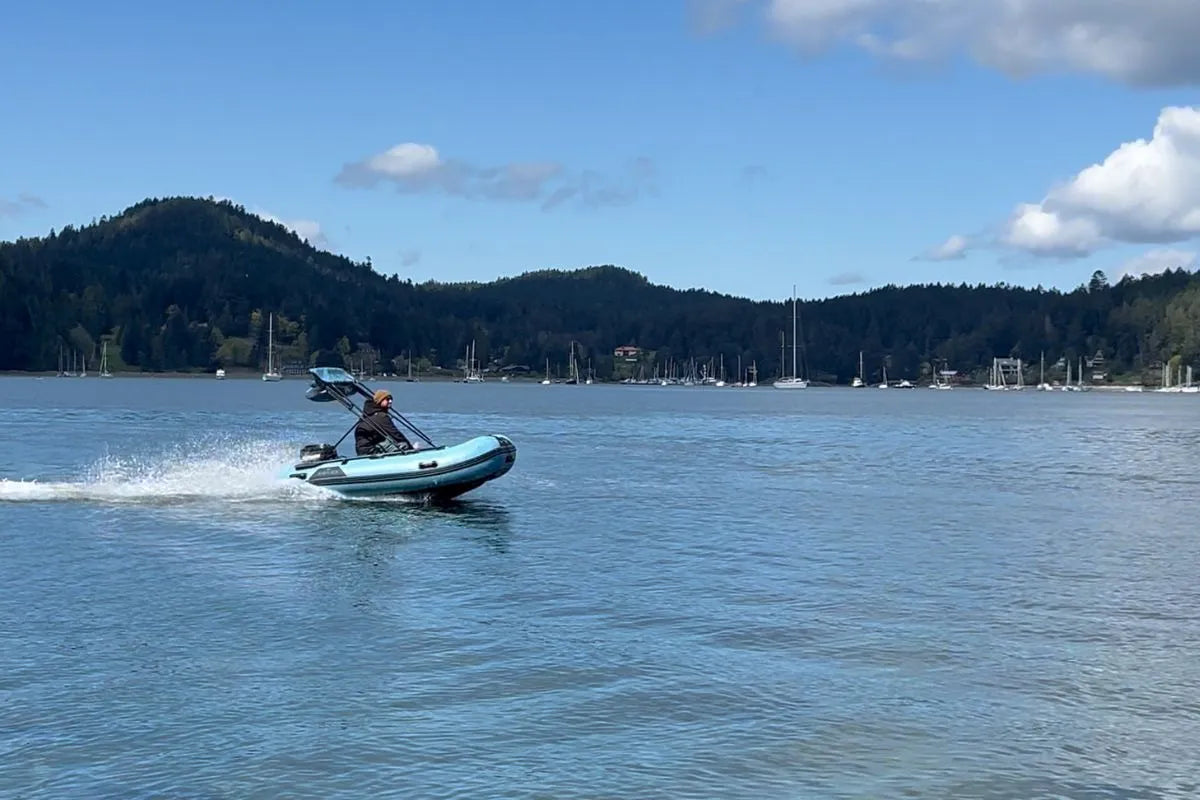
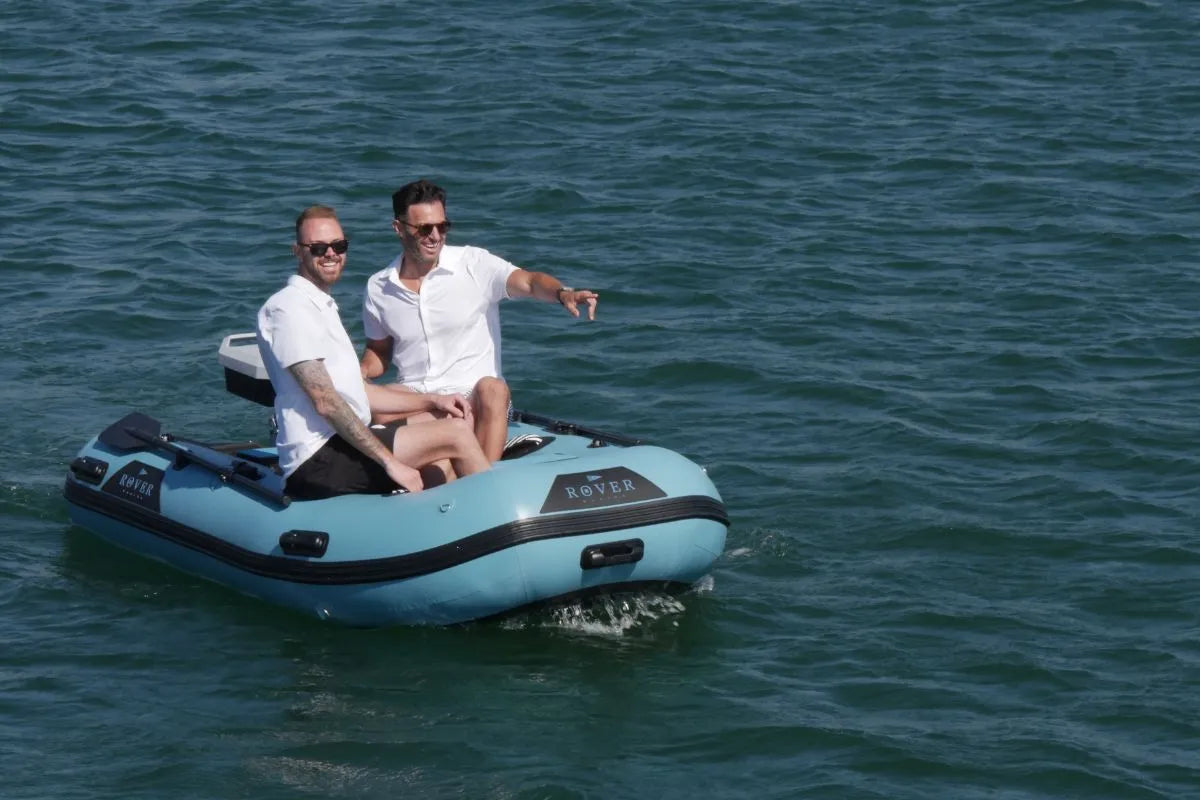
The Battle Boat is Rover Marine’s V-hull inflatable. It comes in 8 ft, 10 ft, and 12 ft sizes. The 8 ft model weighs 86 lb assembled, deflates to 38 in x 24 in x 15 in, carries 2 people / 600 lb, and is rated for recommended power up to 6 hp. The 10 ft model carries 4 people / 1000 lb and is rated up to 10 hp. The 12 ft model carries 4 people / 1200 lb and is rated up to 20 hp.
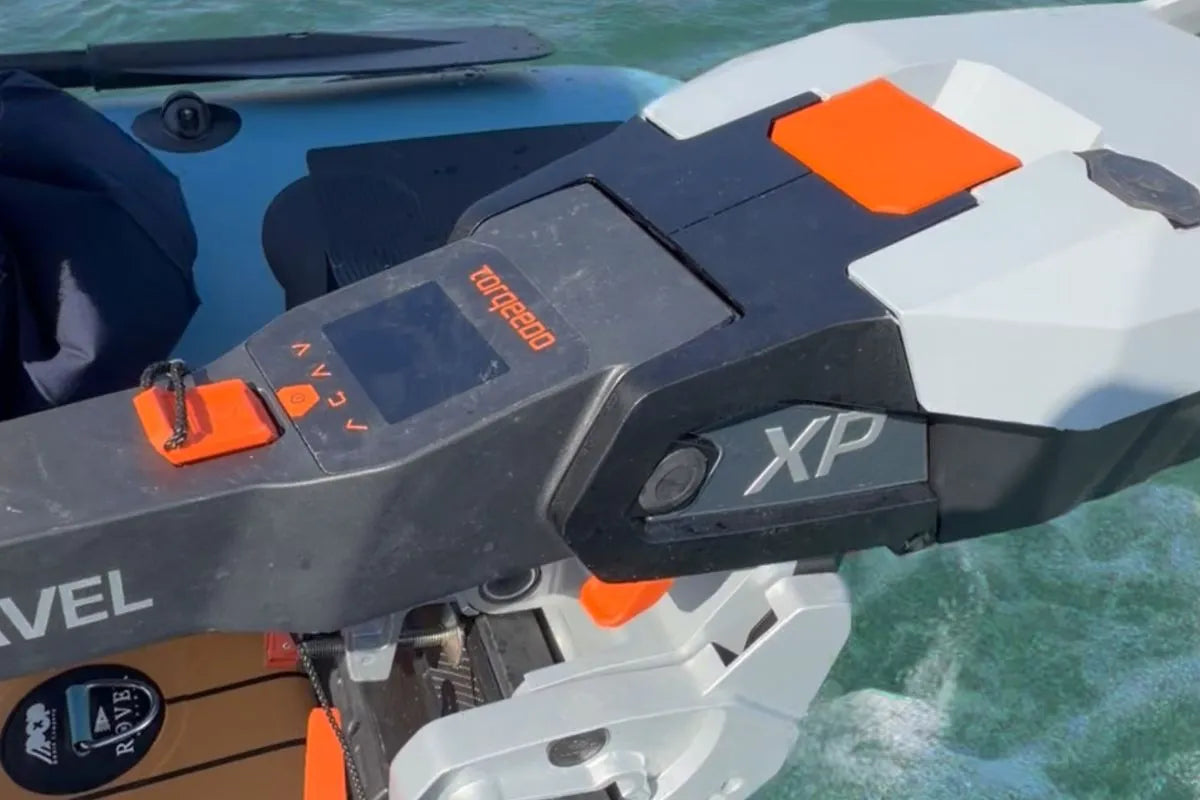
The ePropulsion Spirit 1.0 Plus is a 1kW, 3HP-equivalent electric outboard built for dinghies, tenders, fishing boats, and small sailboats. Rover Marine lists it at 42.6 lb total weight. ePropulsion’s official Spirit 1.0 performance data lists a 1276Wh battery system and shows about 2 hours 30 minutes at 500W in calm test conditions on a 12 ft aluminum boat with one operator. Actual runtime depends on the boat, load, wind, current, throttle, and water conditions.
Why this combo works: The Battle Boat keeps the hull side efficient and packable. The Spirit 1.0 Plus keeps the propulsion side quiet and clean. For short tender hops, marina cruising, calm lake exploring, and light fishing, this is the easiest electric package path in the Rover Marine lineup.
Use case
You keep a sailboat on a mooring and need a tender that stores small, charges at home or dockside, and does not leave gas smell belowdecks. Or you live near a lake, want to explore coves, and want a setup that gets from vehicle to water without trailer drama.
What to confirm before checkout
- Choose the Battle Boat size that matches your normal load, not your best-case light day.
- Confirm current ePropulsion package contents at checkout, including battery and charger details.
- Make sure your launch plan accounts for the boat, outboard, battery, PFDs, anchor, and gear.
- Check state registration rules if the boat is motorized.
Combo 2: Battle Cat + Torqeedo Travel 1103 S
Individual prices: Battle Cat from $2,299 + Torqeedo Travel 1103 S Short Shaft Essential Package at $3,299 = $5,598 before taxes, shipping, and accessories. The Torqeedo Travel 1103 S Short Shaft Extended Range Package is listed at $3,599.
Best for: fishing, families, photography, swim-platform boarding, dinghy-to-dock runs, and wide-stance stability.
The Battle Cat is Rover Marine’s inflatable catamaran. It uses catamaran-style dual pontoons with a reinforced high-pressure floor. The 8 ft model weighs 84 lb assembled, deflates to 38 in x 24 in x 15 in, carries 2 people / 600 lb, and is rated up to 6 hp. The 10 ft and 12 ft models carry 4 people and are rated up to 10 hp and 20 hp respectively.
The Torqeedo Travel 1103 S Short Shaft is a 3HP-equivalent electric outboard. Rover’s product pages list the motor for tenders, dinghies, and small daysailers, with quiet operation, electric start, a magnetic kill switch, and a full-color display. Torqeedo’s official Travel S description positions the motor for tenders, dinghies, and daysailers up to 1.5 tons.
Why this combo works: The Battle Cat gives you the stable deck. Torqeedo gives you premium electric tender power. It is a strong fit when the boat is more than transportation, such as fishing, carrying kids, loading guests, shooting photos, or stepping on and off from a swim platform.
Use case
You are fishing skinny water where stability matters. You are taking two kids and a dog for a morning loop. You are using the boat as a yacht tender and want guests to step aboard without feeling every small shift underfoot.
What to confirm before checkout
- Pick Essential or Extended Range based on your route, not just the price.
- Confirm package contents, battery details, and current availability on the live product page.
- Keep total load realistic. The boat, motor, battery, crew, anchor, water, and gear all count.
- Charge before every trip and keep a return-distance reserve.

Combo 3: Battle Boat 12 ft + Your Local Gas Outboard
Hull price: Battle Boat 12 ft is listed in Rover Marine comparison content at $2,450. Check the current product variant price before ordering.
Best for: longer runs, higher speed, bigger lakes, harbor hopping, and buyers who need fast fuel-based range.
Electric is the cleaner answer for a lot of small inflatable use, but gas still has a place. The 12 ft Battle Boat weighs 135 lb assembled, carries 4 people / 1200 lb, has a 15 in transom, and lists recommended power up to 20 hp. That gives you room to work with a portable gas outboard, as long as the motor stays within the boat’s rating and matches the transom.
Rover Marine does not currently sell gas outboards directly. The smart move is to buy the hull from Rover Marine and work with a local outboard dealer for a short-shaft portable gas motor from a brand they can service. Local service matters. A gas motor that nobody near you works on is not a bargain.
Why this combo works: The 12 ft Battle Boat gives you the biggest V-hull inflatable platform in the Rover lineup, plus the highest recommended power rating. Gas adds range and refueling speed when electric charging or battery capacity is the limiting factor.
Use case
You fish bigger lakes. You need to cover distance before afternoon wind builds. You already understand fuel handling, small-engine maintenance, winter storage, and outboard service. You are not trying to avoid gas. You are trying to get the right hull for a faster motor.
Tradeoffs to know
- Gas adds noise, smell, maintenance, and fuel handling.
- The outboard warranty and service path will come from the gas outboard dealer or manufacturer, not Rover Marine.
- Motor weight matters as much as horsepower. Confirm both before buying.
- Do not exceed Rover Marine’s recommended power rating for the boat size.
For the deeper electric-vs-gas breakdown, read Rover Marine’s outboard vs electric engines comparison for dinghies.
Combo 4: Battle Cat 8 ft + Freshwater Trolling Setup
Hull price: Battle Cat 8 ft from $2,299. Trolling motor and battery sourced separately from a local marina, tackle shop, or marine supplier.
Best for: pond hoppers, panfish and crappie anglers, electric-only lakes, no-wake water, and short freshwater fishing sessions.
Not every water asks for a 3HP-equivalent outboard. Sometimes the right answer is a stable inflatable catamaran and a simple freshwater trolling motor. The Battle Cat gives you the stable standing platform. The trolling setup gives you slow, quiet movement around docks, weed lines, timber, and small coves.
Rover Marine does not need to sell every piece of this setup for the idea to work. Source the trolling motor, battery, charger, battery box, PFDs, anchor, and safety gear from a reputable local marine supplier. Confirm battery weight before you buy. A heavy battery can change how a small boat trims.
Why this combo works: The 8 ft Battle Cat is compact but stable. For small freshwater, that matters more than top speed. It is a fishing platform first and a commuter second.
Use case
You fish small lakes, ponds, sloughs, and quiet state-park water. You want to slide the packed boat into a vehicle, inflate near the water, mount a simple electric setup, and fish without a trailer.
What to confirm before checkout
- Make sure the trolling motor mount works with the transom and does not damage the boat.
- Do not confuse pounds of thrust with horsepower. They are not the same measurement.
- Check total battery weight before you commit.
- Check state registration rules. Many motorized boats need registration even when the motor is electric.
How to Pick: Shaft Length, Power, Weight, and Range
Before you buy any inflatable boat and motor package, run these checks.
1. Shaft length
Rover Marine’s Battle Boat and Battle Cat specs list a 15 in transom. For these boats, short-shaft outboards are the normal match. Do not buy a long-shaft outboard unless you have a specific reason and have confirmed the setup with the motor manufacturer or a qualified dealer.
2. Recommended power
Follow Rover Marine’s listed recommended power by size:
| Rover Size | Battle Boat Recommended Power | Battle Cat Recommended Power |
|---|---|---|
| 8 ft | Up to 6 hp | Up to 6 hp |
| 10 ft | Up to 10 hp | Up to 10 hp |
| 12 ft | Up to 20 hp | Up to 20 hp |
Federal capacity marking rules are not as simple for inflatable boats as they are for many monohull powerboats. Use Rover Marine’s listed capacity and recommended power, follow the boat manual, and follow any plate or label supplied with your specific boat. Never overpower the hull.
3. Weight budget
Total load means people, motor, battery, fuel, anchor, oars, cooler, tackle, dog, dry bags, and everything else that comes aboard. The listed capacity is not a suggestion to pack the boat to the last pound every trip.
A practical comfort target is to stay below roughly 80% of the listed capacity when conditions are variable. That leaves margin for chop, shifting passengers, wet gear, and operator error.
4. Electric range math
The basic formula is simple:
Battery watt-hours divided by motor watts at cruise equals estimated hours of runtime.
Example: a 1276Wh battery running at 500W gives about 2.5 hours in simple math. If your real-world cruise is around 4 mph, that suggests about 10 miles of movement before reserve. Do not plan the full 10 miles as a one-way trip. Plan the return leg, wind, current, and a reserve.
Manufacturer performance data is useful, but it is not a promise for your exact boat. Load, weather, hull pressure, trim, prop condition, and current all change the result.
5. Support path
Know who supports what. Rover Marine supports the hulls it sells. ePropulsion and Torqeedo have their own factory warranty terms for motors. Gas outboards sourced locally are supported through the dealer and manufacturer that sold the motor. A clean support path is part of a good package.
Delivery, Warranty, and Returns for US Buyers
Rover Marine’s shipping policy says orders are processed within 5 to 7 business days after order confirmation, unless the item is a pre-order, backorder, or sold out and communicated separately. Standard U.S. shipping is listed at an estimated 5 to 7 business days, expedited U.S. shipping at 3 to 5 business days, and delivery times are estimates, not guarantees.
Rover Marine also states that it ships to all 50 U.S. states and currently offers international shipping. Oversized or heavy items, including boats, may incur additional freight charges. Current rates and timelines should be confirmed at checkout.
Warranty terms should be checked on the current product page before ordering. Rover Marine’s product pages currently show model-specific warranty wording for inflatables, and ePropulsion, Torqeedo, and any locally sourced gas outboard will have their own manufacturer terms.
For returns, Rover Marine’s refund policy says eligible items must be unused, in the same condition received, and in original packaging. Requests must be made within 60 days of purchase, proof of purchase is required, and a 15% restocking fee is listed. Check the current Rover Marine refund policy and Rover Marine shipping policy before ordering.
FAQ
Why buy the boat and outboard from the same place?
You reduce compatibility mistakes. Shaft length, motor weight, power rating, battery placement, and real-world load all matter. Buying the hull and motor through the same marine-focused source gives you one pre-sale conversation about the whole setup instead of guessing across two carts.
Can I mix and match, like a Battle Cat with the Spirit 1.0 Plus?
Yes, as long as the outboard stays within the boat’s recommended power rating and matches the transom height. A Battle Cat with an ePropulsion Spirit 1.0 Plus can make sense if you want the catamaran platform with the ePropulsion setup. Ask before ordering if you are unsure about shaft length, motor weight, or range.
What shaft length do I need, short or long?
Rover Marine’s Battle Boat and Battle Cat specs list a 15 in transom, so short shaft is the normal match. The ePropulsion Spirit 1.0 Plus Short Shaft and Torqeedo Travel 1103 S Short Shaft options are built around that tender and dinghy use case.
How long until the boat is on the water after delivery?
The Rover product FAQ says that with a high-output pump, each boat can be inflated in about 10 to 15 minutes. First-timers should allow more time for unpacking, pressure checks, motor mounting, safety gear, registration decals if required, and loading. Do your first setup at home, not at a crowded ramp.
What about shipping?
Rover Marine ships across all 50 U.S. states and lists international shipping as available. Shipping costs are calculated at checkout, and oversized or heavy items may require additional freight charges. Check the live cart and shipping policy before ordering.
Does Rover Marine sell gas outboards or trolling motors?
Rover Marine currently sells electric outboards through its electric motor collection. For gas outboards or freshwater trolling motors, source the motor from a reputable local dealer or marine supplier. Make sure the motor matches the boat’s 15 in transom, recommended power rating, and your service needs.
Ready to Go?
Pick the package that matches your water and your weekends:
- Exploring lakes and coves, solo or two-up? Start with the Battle Boat and ePropulsion Spirit 1.0 Plus Short Shaft.
- Fishing, family stability, or guest transfers? Start with the Battle Cat and a Torqeedo Travel 1103 S Short Shaft Essential Package.
- Need more speed and fuel-based range? Start with the 12 ft Battle Boat and pair it with a properly matched short-shaft gas outboard from your local dealer.
- Pond hopping with a trolling motor? Start with the 8 ft Battle Cat and source the trolling motor, battery, and safety gear locally.
Browse the full Rover Marine electric outboards collection or see all Rover Marine products.
Questions before you buy? Call 844-207-6837 or reach the team through the Rover Marine contact page. We would rather help you get the right combo on the first order than process a return on the wrong one.
Sources Referenced
This guide uses current Rover Marine product data plus manufacturer and boating references from ePropulsion Spirit 1.0 official specifications, Torqeedo Travel S official specifications, BoatUS Foundation registration guidance, and 33 CFR Part 183 Subpart B.

Leave a comment
This site is protected by hCaptcha and the hCaptcha Privacy Policy and Terms of Service apply.