If you have been circling the small-boat aisle, scrolling used listings at 11 p.m., or pricing packages on your phone in the driveway, you already know the short list. For a practical US freshwater rig, the real contenders are usually an inflatable boat, a jon boat, or an aluminum skiff. Each has die-hard defenders. Each one loses on at least one axis that might matter to you.
This guide cuts through the forum loyalty and compares the three on price, 5-year ownership cost, storage, durability, on-water performance, fishing utility, and resale. By the end, you will know which boat fits your lake, your truck, and your life, not the other way around.
Quick answer: Choose an inflatable boat if storage, no-trailer launch access, and portability matter most. Choose a jon boat if you want the simplest hard aluminum hull for shallow freshwater and rough utility use. Choose an aluminum skiff if you fish often, run bigger water, and have the storage, trailer, and budget to support it.

The Three Boat Types, Defined
Before we compare, let’s make sure we are talking about the same boats.
Inflatable boat, modern dinghy
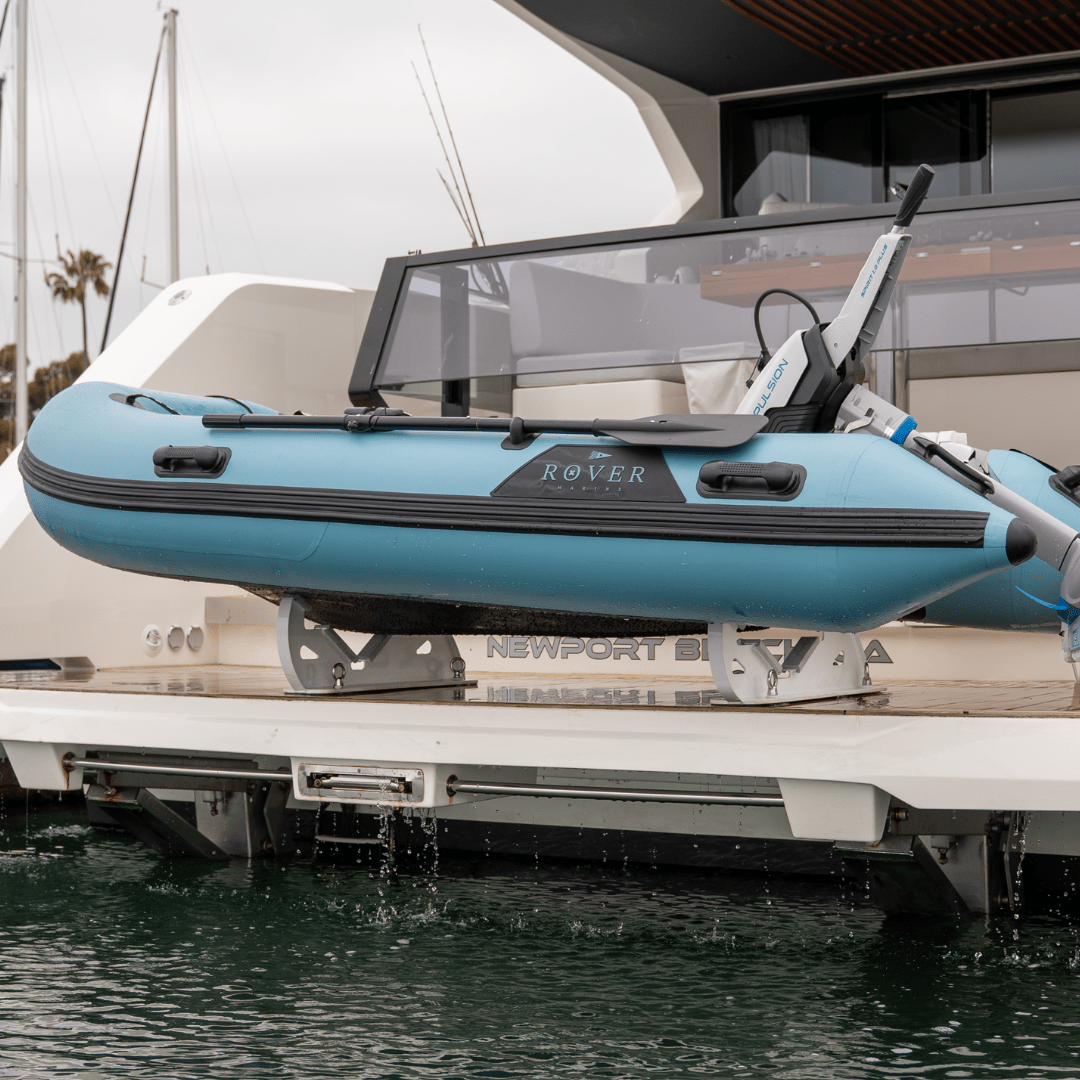
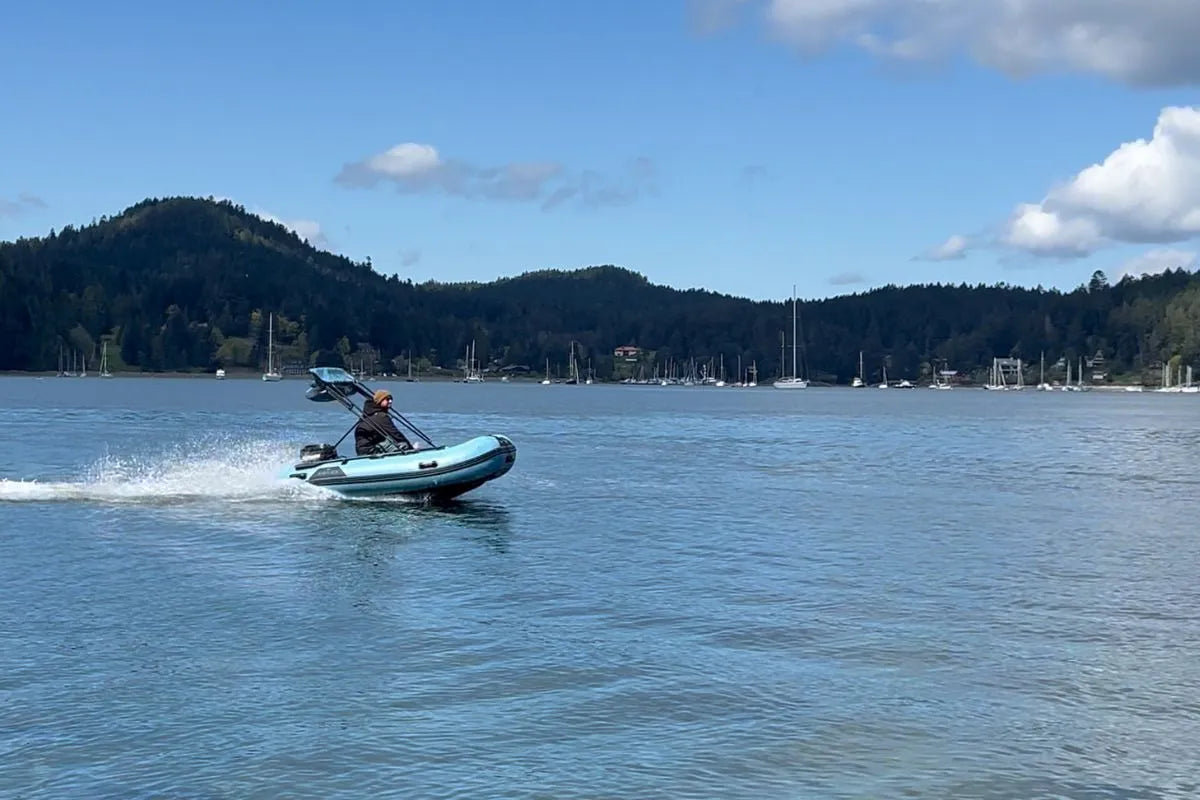
A modern inflatable dinghy uses reinforced inflatable tubes, a transom, and a high-pressure floor system to create a portable boat that can be packed down for storage and transport. Rover Marine models use military-grade PVC with reinforced seams and drop-stitch flooring. The Rover Marine Battle Boat is the V-hull inflatable option, built for packable tender duty, lake use, beach launching, fishing, and no-trailer access.
The Battle Boat comes in 8 ft, 10 ft, and 12 ft sizes. The 8 ft model weighs 86 lb assembled and deflates to 38 in x 24 in x 15 in. The 10 ft model weighs 100 lb, and the 12 ft model weighs 135 lb. Capacity is 2 people / 600 lb on the 8 ft, 4 people / 1000 lb on the 10 ft, and 4 people / 1200 lb on the 12 ft. Recommended power is up to 6 hp, 10 hp, or 20 hp by size.
The Battle Cat is Rover Marine’s inflatable catamaran option. Same size range, same no-trailer mindset, but with catamaran-style dual pontoons for more stability and a wider stance.
Jon boat
A jon boat is usually a flat-bottom aluminum hull with a squared-off bow, simple bench seats, and a very practical layout. Discover Boating describes jon boats as simple, utilitarian, flat or nearly flat-bottom boats that are often small, light, and among the least expensive boat types.
Most popular jon boat sizes are 10 ft, 12 ft, and 14 ft. They are common on farm ponds, shallow rivers, small lakes, duck water, backwaters, and stump fields. They are not fancy. That is the point.
Aluminum skiff
An aluminum skiff, in this context, means a more boat-like aluminum fishing platform than a basic jon. It may have a modified-V or deeper-V hull, more freeboard, more seating, a small casting deck, storage, or a console. Discover Boating notes that modified-V and deep-V aluminum boats are better suited to choppy water than flat-bottom jon boats because their hull shape cuts through waves more smoothly.
Typical freshwater skiffs are larger and heavier than portable inflatables or small jon boats. They fish well, run better in chop, and usually require a trailer.
All three can fish. All three can run an electric outboard in the right setup. Only one fits into a bag.
Price: Starting Cost and 5-Year Ownership Cost
Sticker price is the easy number. Total cost of ownership is the one that bites. A cheap hull can get expensive fast once you add a trailer, fuel, registration, maintenance, storage, and the time it takes to deal with all of it.
The table below is a practical budget framework, not a quote. Dealer pricing, state registration fees, insurance, taxes, accessories, and motor selection can swing the numbers hard.
| Cost Item, 5-Year View | Inflatable + Electric Outboard | 12 ft Jon Boat + Small Gas Outboard | 14 ft Aluminum Skiff + Larger Gas Outboard |
|---|---|---|---|
| Boat purchase | Battle Boat from $1,999 / Battle Cat from $2,299 | Often lower hull cost, depending on dealer and build | Usually higher due to size, hull, deck, and fishing features |
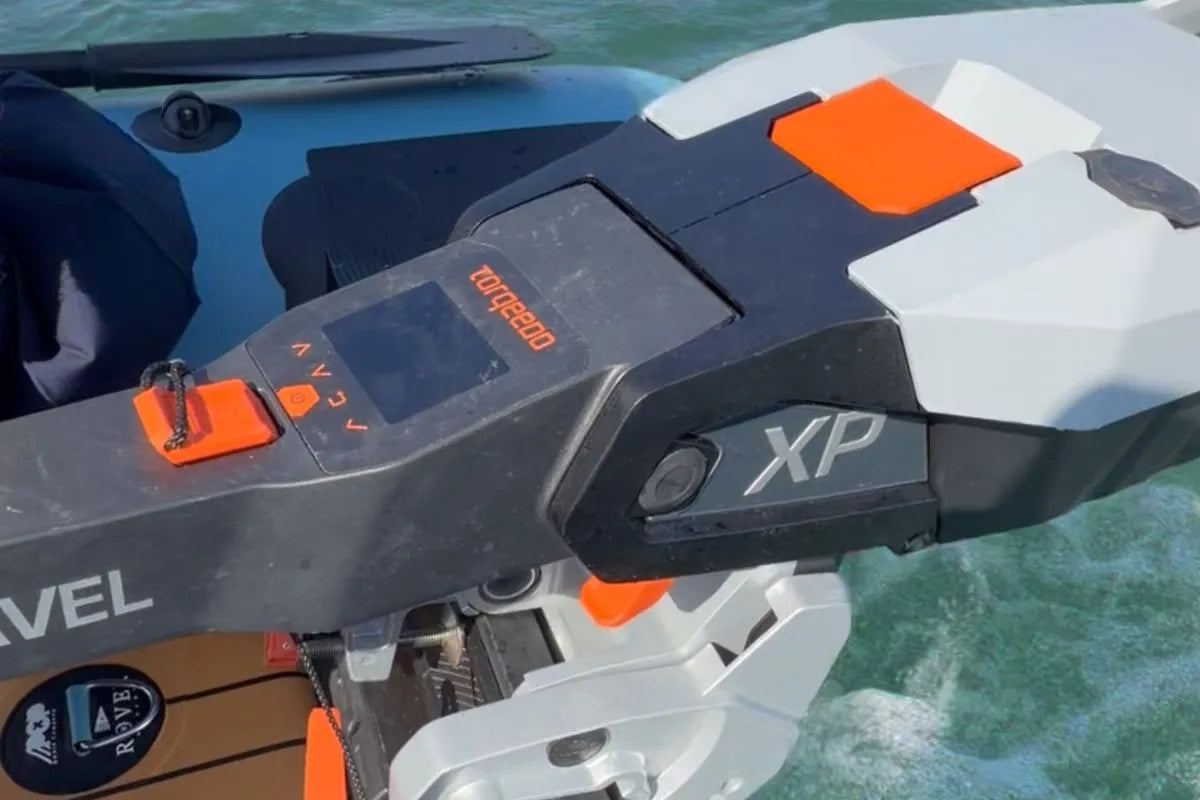
| Outboard | ePropulsion Spirit 1.0 Plus at $2,999, or Torqeedo Travel 1103 S packages from Rover Marine | Small gas or electric outboard | Usually larger gas outboard, sometimes electric for restricted waters |
| Trailer | Usually $0 if you transport deflated or in a vehicle | Often needed, unless carried in a truck bed or on racks | Usually required |
| Registration | State-specific. Powered vessels often need registration, even with electric motors. | State-specific | State-specific |
| Fuel or charging | Low electricity cost, but battery planning matters | Gasoline, oil, fuel stabilizer, and small-engine care | More fuel burn because the boat and motor are larger |
| Storage | Garage, closet, RV bay, yacht locker, or vehicle storage if space allows | Driveway, trailer space, yard, rack, or storage facility | Trailer, driveway, marina, or storage facility |
| Maintenance | Rinse, dry, inspect seams and valves, protect from UV, maintain electric outboard | Hull cleanup, trailer care, fuel care, gas outboard service | Hull, trailer, fuel, larger outboard, electronics, and fishing systems |
The inflatable-plus-electric combo usually wins on total cost for low-to-moderate-hour freshwater users because you can skip the trailer, fuel storage, and larger boat ownership routine. The jon boat wins on raw hard-hull simplicity. The skiff wins when fishing features, speed, and bigger-water comfort are worth the added cost.
Do not assume an inflatable is registration-free just because it is small. The BoatUS Foundation registration guide says mechanically powered vessels generally need proper numbering and registration, with state details and exemptions varying. Check your state boating agency before your first launch.
Storage and Transport: The Inflatable Advantage
This is where the inflatable outclasses every metal hull on the list. The 8 ft Battle Boat packs to 38 in x 24 in x 15 in and weighs 86 lb assembled. Break the setup into boat, floor, pump, motor, and battery, and it becomes a practical vehicle-based boat instead of a trailer-based boat.
A 12 ft jon boat may be light enough for a truck bed, roof rack, or utility trailer, but it is still a hard hull. It still has to live somewhere. A 14 ft aluminum skiff almost always requires a trailer, which means a hitch, tag, lights, tires, wheel bearings, driveway space, and another checklist before you even leave the house.
For apartment dwellers, HOA neighborhoods with no-trailer rules, cottage owners with limited storage, and anyone without a driveway, the inflatable is not just the better option. It may be the only practical option.
For a deeper look at portability, see Rover Marine’s lightweight inflatable boats for weekend getaways guide.
Durability: Aluminum’s Legacy vs Reinforced PVC
The old argument, and it was fair 20 years ago, was that any inflatable would eventually puncture or UV-age while aluminum would outlast everything. The modern answer is more balanced.
Rover Marine inflatables use military-grade PVC with reinforced seams and drop-stitch flooring. The product pages also describe UV-resistant tubes, reinforced seams, and triple-layer material. That makes them tough enough for real freshwater use, yacht tender duty, fishing, cottage boating, and beach launching when handled properly.
Aluminum still has the edge in one ugly scenario: scraping hard over submerged rebar, concrete ramps, jagged rock, and stump fields at speed. A jon or skiff hull may dent before it fails. An inflatable is tougher than people think, but fabric is still fabric. Do not drag it loaded across sharp rock and then act surprised when it complains.
BoatUS notes that PVC is lightweight, flexible, cost-effective, and common in small inflatable dinghies, but also more vulnerable to UV damage and long-term deterioration than Hypalon/CSM. Translation: PVC is practical, but storage discipline matters. Rinse it. Dry it. Cover it. Keep it out of long, hard sun when you can.
| Durability Test | Winner | Why |
|---|---|---|
| Sharp rock or concrete at speed | Aluminum | Metal dents and scrapes better than fabric handles sharp impact. |
| Dock bumps and soft impacts | Inflatable | Tubes absorb contact without the hard bang of aluminum. |
| Transport dents | Inflatable | No hard aluminum panels to dent in a truck bed or garage. |
| Long-term UV exposure | Aluminum | Fabric needs cover and UV discipline. Metal cares less about sun. |
| Brackish or salt-adjacent use | Depends on care | Inflatables need rinsing and drying. Aluminum needs corrosion awareness, hardware care, and proper setup. |
Performance in Chop, Shallows, and Weed Beds
Three conditions, three different answers.
Chop, 1 to 2 ft wind waves on a lake
A V-hull inflatable like the Battle Boat and a modified-V or deep-V aluminum skiff both make more sense than a flat-bottom jon boat in chop. A flat jon can pound when waves stack up. Discover Boating makes the same basic point: jon boats are strong in shallow water, while modified-V and deep-V aluminum boats are better suited to choppy conditions.
Shallows under 12 inches
Jon boats and inflatables both shine here. Jon boats are famous for shallow draft and simple utility. Inflatables are also shallow, quiet, and easier to launch from informal shoreline access. A skiff can do shallow water too, but a deeper V and heavier hull usually draw more water.
Weed beds and stump fields
Inflatables are quiet, forgiving, and easy to slow-roll through tight water. Jon boats are tough, but aluminum hull noise carries through the water when gear drops, stumps hit, or a tackle box slides across ribs. Skiffs are better for running and fishing, but less handy when the water is tight, shallow, and full of hazards.
Fishing Suitability, Side by Side
All three platforms can fish. They just fish differently.
| Feature | Inflatable | Jon Boat | Aluminum Skiff |
|---|---|---|---|
| Dedicated casting deck | Possible with careful removable rigging, stronger on Battle Cat layout | Common retrofit | Often factory or dealer option |
| Shallow-water draft | Excellent | Excellent | Moderate to good, depending on hull |
| Noise on hull impact | Very quiet | Loud | Moderate |
| Rod storage | Limited unless rigged with removable holders | Limited unless modified | Best of the three |
| Fish finder mounting | Clamp, suction, or portable mount preferred | Clamp or bolt-on | Flush or bracket mount common |
| Electric outboard friendly | Yes | Yes | Yes, but range and power needs may be higher |
| Livewell option | Cooler or portable aerator setup | Aftermarket or DIY | Often factory or dealer-installed |
The skiff is the best dedicated fishing platform. The jon boat is the most retrofit-friendly. The inflatable is the most versatile across use cases: fishing, tender duty, family lake cruising, camp hauling, cottage access, and no-trailer exploration.
Resale Value
Resale is where hard boats usually feel more familiar to buyers. Aluminum hull condition is easy to understand: dents, rivets or welds, transom, trailer, motor, and paperwork. Inflatable resale takes a different eye: fabric condition, UV exposure, seam health, pressure retention, valve condition, patch history, floor condition, and motor package.
A clean inflatable that has been rinsed, dried, stored out of sun, and paired with a healthy electric outboard can hold practical value because it solves a real storage problem. A chalked, sun-baked inflatable with mystery leaks will be discounted hard. Condition matters more than age alone.
A jon boat has the simplest resale story: if the hull is straight, the transom is sound, and the paperwork is clean, buyers understand it. A skiff may retain more dollars because it starts higher and has more built-in fishing utility, but it also depends on motor hours, trailer condition, electronics, and maintenance.
Resale rule: Do not buy only for resale. Buy for the boat you will actually use. A boat with perfect theoretical resale that stays in the driveway is still the wrong boat.
Verdict by Use Case
Cabin owner who needs a tender and a fishing boat
Go with the Battle Boat or Battle Cat with an electric outboard. Deflate at the end of summer, store it in the cabin, and skip the trailer routine. See Rover Marine’s inflatable dinghies with outboard motor options guide.
Weekend renter at state park lakes
Inflatable, hands down. No trailer. No boat-ramp politics. No waiting in line behind someone rebuilding their launch routine on a Saturday morning.
Truck camper or overlander
Inflatable in the truck bed or cargo area. A jon boat on a roof rack or extender can work, but it becomes a wind, storage, and loading problem fast.
Apartment dweller with no garage or driveway
Inflatable is usually the only legal, practical answer in many apartment, condo, and HOA situations. Measure your storage space before buying. Not the space you hope you have, the one you actually have.
Dedicated bass or walleye fisherman, 100-plus hours a year, same local lake
Aluminum skiff. If you are fishing hard, carrying electronics, storing rods, running a livewell, and using the same water constantly, the dedicated fishing layout pays for itself.
Duck hunter, small river, ramp abuse, stump fields
Jon boat. That is exactly what it is built for. Flat, simple, tough, easy to hose out, and not precious.
Quiet lake cruiser, tender owner, or portable explorer
Inflatable. The Battle Boat gives you a V-hull inflatable package for compact water access. The Battle Cat gives you the wider, stability-first catamaran layout.
For the broader inflatable-vs-traditional breakdown, see Rover Marine’s inflatable dinghies vs traditional boats guide.
FAQ
Is an inflatable boat safe for big lakes like Lake Erie or Lake of the Ozarks?
For nearshore use, sheltered coves, calm mornings, and smart weather windows, a properly sized V-hull inflatable can make sense. For open-water crossings, exposed chop, fast-changing weather, or long runs far from shore, a larger skiff or bigger boat is the safer tool. Do not let portability talk you into bad water.
How long does a modern inflatable last in US sun?
There is no magic number. Fabric, UV exposure, storage, rinsing, drying, pressure management, and owner discipline all matter. PVC needs sun protection. Cover the boat, store it shaded when possible, rinse after use, dry before long storage, and inspect seams and valves regularly.
Do I need to register an inflatable dinghy in my state?
It depends on your state and how the boat is powered. BoatUS says mechanically powered vessels generally need registration, and state details vary. If you mount an electric or gas outboard, check your state fish and wildlife agency, DNR, DMV, or boating agency before launch.
Can I put a gas outboard on an inflatable?
Yes. The Battle Boat and Battle Cat are both compatible with gas outboards within their size-specific recommended power limits. The 8 ft models are rated up to 6 hp, the 10 ft models up to 10 hp, and the 12 ft models up to 20 hp. Many Rover Marine buyers still prefer electric for noise, weight, simplicity, and no-fuel transport.
Which is cheapest to own over 5 years?
For low-to-moderate-hour freshwater use, an inflatable plus electric outboard is often the easiest to keep affordable because it can avoid trailer ownership, fuel storage, and paid boat storage. A jon boat may be cheaper to buy as a bare hull. A skiff usually costs more but gives you more fishing-specific utility.
The Bottom Line
There is no universally right answer. There is only the right answer for your lake, your storage situation, and your fishing style.
Need the boat to disappear when you are not using it? Start with the Battle Boat.
Want stability for family, fishing, photography, or a wider platform? Look at the Battle Cat.
Pairing with clean, quiet propulsion? Browse the Rover Marine electric outboards collection, including the ePropulsion Spirit 1.0 Plus Short Shaft, the Torqeedo Travel 1103 S Essential Package, and the Torqeedo Travel 1103 S Extended Range Package.
Questions on fit, shipping, storage, or your specific lake? Call 844-207-6837 or reach the team through the Rover Marine contact page. We would rather send you to the right boat than the most expensive one.
Sources Referenced
This guide uses current Rover Marine product data plus boating guidance from Discover Boating’s jon boat guide, Discover Boating’s aluminum fishing boat guide, BoatUS Foundation registration guidance, and BoatUS inflatable material guidance.