If you have spent any time scrolling boat forums or walking a boat show aisle, you already know inflatables stir up opinions. Some boaters swear by them. Others would never own one. The truth sits in between, and in 2026 it is more nuanced than ever thanks to better fabrics, smarter drop-stitch floors, and electric outboards that finally make a compact tender feel like a real boat.
This is the honest breakdown. No sales pitch wrapped in a spec sheet, no "inflatables are toys" dismissal. We will walk through the 10 biggest advantages, the 7 biggest drawbacks, the situations where each hull style wins, what your inflatable is realistically worth after years of use, and a five-question decision framework you can run on yourself before you buy.
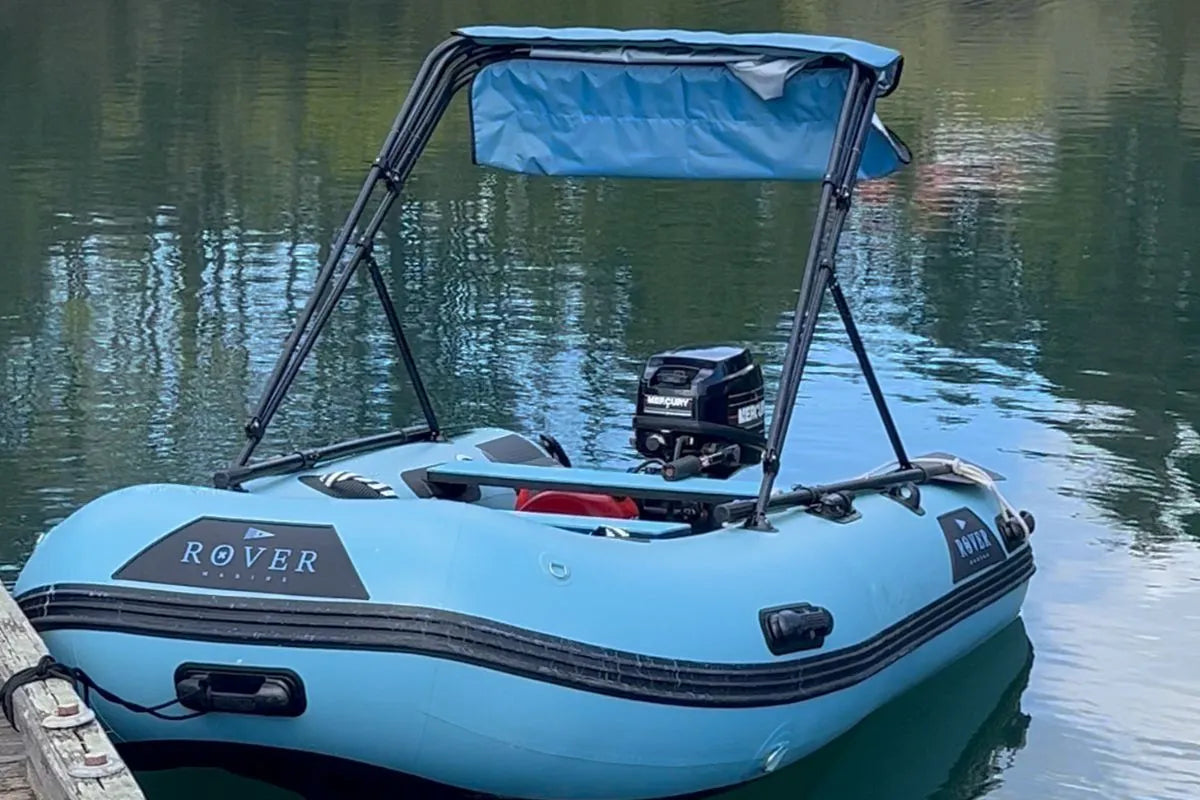
If you are comparing Rover Marine models, start with the Battle Boat if you want a compact traditional inflatable hull, or the Battle Cat if you want the wider, stability-first inflatable catamaran layout.
Quick answer: Inflatable boats are worth it when portability, storage, shallow-water access, tender duty, fishing, and no-trailer launching matter more than maximum speed, hardtop comfort, and rigid-hull resale value. They are not the answer for every boater. They are the answer when you want real water access without trailer drama.
The 10 Biggest Pros of Inflatable Boats in 2026
1. Portability
A quality inflatable rolls or folds into a package you can move, load, and store without owning a trailer. The 8 ft Battle Boat packs down to 38 in x 24 in x 15 in, which fits in many vehicle cargo areas, dock boxes, RV storage bays, and yacht lockers. You simply cannot do that with a rigid skiff.
Be honest about weight, though. The 8 ft Battle Boat weighs 86 lb assembled, and the 8 ft Battle Cat weighs 84 lb assembled. One strong adult can manage a lot of the setup, but smart owners use a second set of hands, a cart, or a clean launch routine when the carry gets awkward.

2. Storage
No trailer. No slip fee. No shrink-wrap bill in October. For boaters in condos, apartments, townhomes, marinas with limited storage, or states with winter lay-up seasons, the ability to stow a boat in a garage, closet, vehicle, or yacht locker is not a small thing.
This is the part traditional boaters underestimate. Storage is not just a cost. It is friction. The more friction between you and the water, the less often you go.
3. Stability at Rest
The tubes that make an inflatable look different are also what make it stable when you stop. Inflatable tubes add buoyancy along the sides of the boat and make the platform feel settled at the dock, at anchor, and at slow speed.
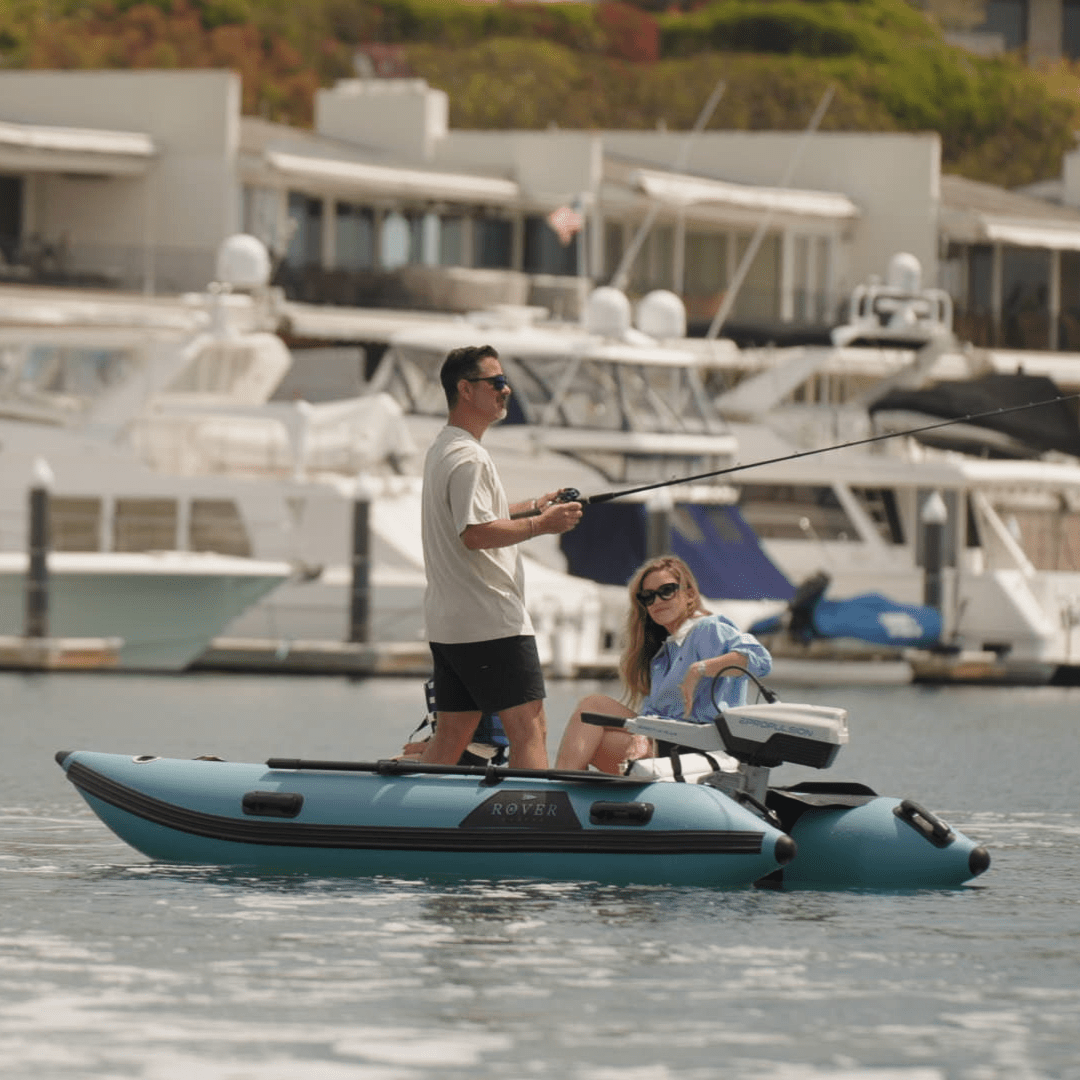
A wide inflatable catamaran like the Battle Cat takes that even further. The dual-pontoon layout gives the boat a wider stance, which helps when anglers stand, divers load gear, kids shift around, or someone steps aboard from a swim platform.

4. Cost of Entry
A new rigid powerboat with a trailer, electronics, outboard, storage plan, and insurance can get expensive fast. A capable inflatable plus an electric outboard can put you on the water for a fraction of that, especially if you are using it as a tender, fishing platform, cottage boat, lake boat, or no-trailer weekend rig.
The 8 ft Battle Boat starts at $1,999. The 8 ft Battle Cat starts at $2,299. Pair either with a short-shaft electric outboard from the Rover Marine electric outboard motors collection, and you can build a real portable boating setup without stepping into full-size boat ownership.
5. Light Weight
Many inflatables in the two-to-four-person category are light enough to move without a trailer, especially compared with rigid boats of similar usable footprint. That changes how often you actually use the boat.
The boat that gets used is the boat that was worth buying. A garage queen with perfect resale value does you no good if you avoid launching it because the trailer, ramp, and storage routine are a pain.

6. Versatility
Tender one weekend, fishing platform the next, cottage runabout after that. Few rigid hulls flex that way.
A portable inflatable can shuttle people from yacht to shore, work protected fishing water, haul gear to a beach, explore a lake, move around a marina, or serve as a second boat that does not demand a second storage bill. That does not mean it replaces every boat. It means it covers a lot of the jobs most people actually do.
7. Reserve Buoyancy and Safety
Inflatable boats use air-filled chambers as part of their structure. That gives them reserve buoyancy and a forgiving feel when loaded correctly. Rover Marine models use multiple air chambers, reinforced tubes, and high-pressure floors, which helps create a practical safety margin compared with a single hard shell that relies entirely on hull integrity.
That does not make an inflatable immune to bad decisions. Wear a PFD, stay within capacity, check weather, carry required gear, and treat the boat like a real vessel. The BoatUS Foundation federal equipment guide is a useful starting point for required and recommended safety gear.

8. Fishing Platform
Quiet, shallow draft, stable, and easy to launch. That is a strong formula for anglers.
A Battle Cat inflatable catamaran with a clean electric outboard setup is a serious platform for bass water, flats, protected bays, and cottage fishing. Source rod holders, anchors, PFDs, fish finders, and safety gear from a reputable marine supplier, then rig everything so it stays removable and does not damage the boat.
9. Tender Role
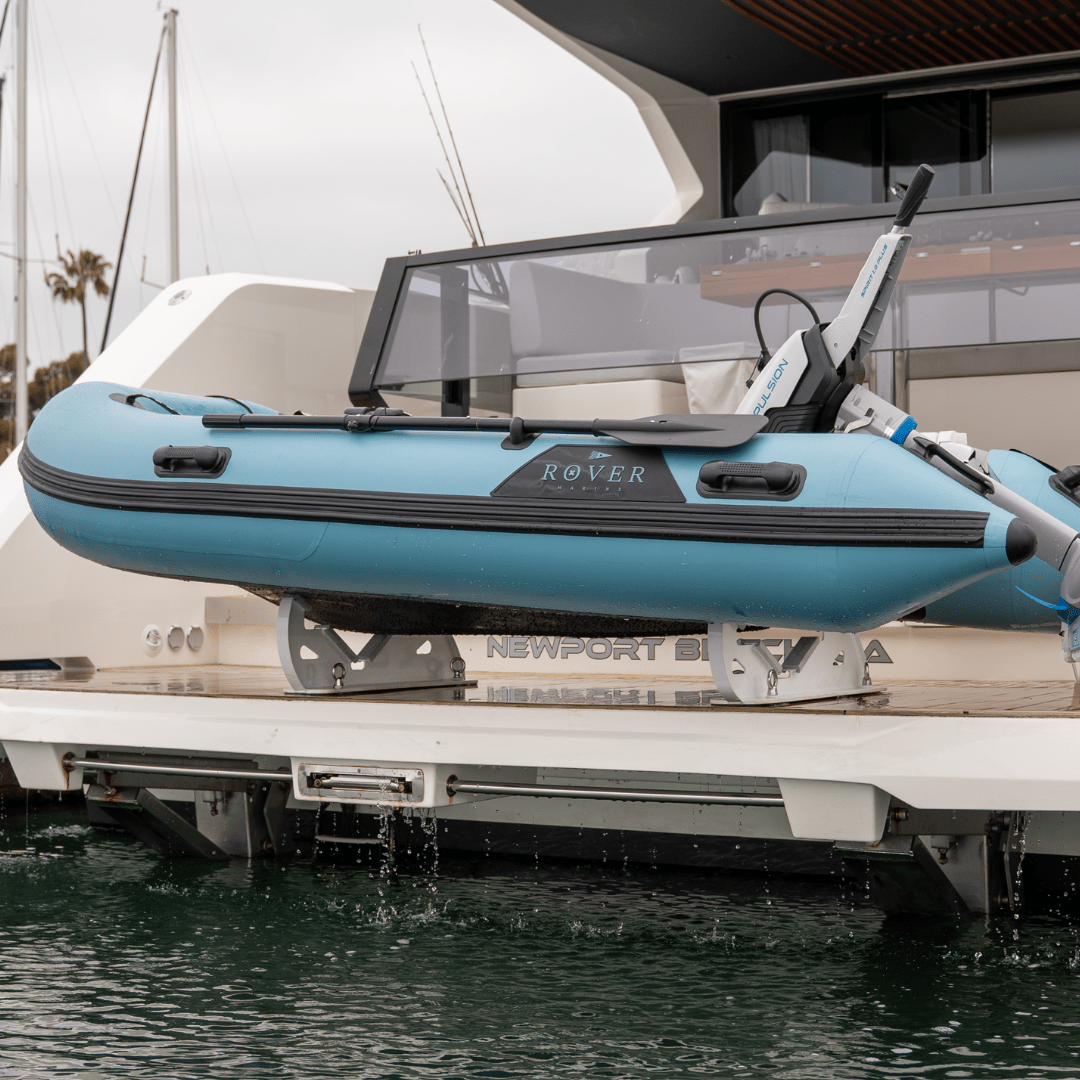
If you own or charter a sailboat, trawler, or cruiser, a packable inflatable makes obvious sense. It can carry crew to shore, move provisions, get people to the dock, and live aboard without demanding the storage footprint of a rigid hull.
Rover Marine's inflatable dinghies vs traditional boats guide covers this tradeoff in more detail.
10. No-Trailer Freedom
No trailer registration. No tire pressure checks. No trailer lights. No launch-ramp anxiety. No backing down a ramp with a line of trucks behind you.
You drive to the water with the boat inside the vehicle or stored aboard the yacht. That is the entire point. Inflatable boats are not just boats. They are access tools.
The 7 Biggest Cons of Inflatable Boats
1. UV Aging
Ultraviolet light is one of the biggest enemies of tube fabric. Leave an inflatable uncovered in hard sun for season after season and you will eventually see it in chalking, fading, surface wear, and material fatigue.
BoatUS notes that PVC is light, flexible, cost-effective, and common in small inflatables, but it is more vulnerable to UV damage and long-term deterioration than Hypalon/CSM. That does not mean PVC is bad. It means you need to cover it, rinse it, dry it, and store it out of prolonged direct sun when possible.
2. Puncture and Abrasion Worry
It is mostly a worry, not a daily reality, but it is still real. Oyster beds, barnacle-crusted pilings, sharp dock hardware, careless fish hooks, and rough beach landings can damage fabric if you treat the boat poorly.
Good news: modern reinforced PVC and drop-stitch construction are tougher than most first-time buyers expect, and small field repairs are usually manageable with the right kit and instructions. Better news: most puncture problems come from avoidable handling mistakes.
3. Resale Value
This is the honest one. Inflatables are condition-sensitive on the used market. Buyers look hard at fabric age, UV exposure, seam condition, valves, patches, pressure retention, storage history, and whether the motor package is included.
A clean, covered, well-rinsed inflatable with a known history will sell better than a sun-baked tender with chalked tubes and mystery leaks. If resale value is your top criterion, a well-kept rigid hull may be the cleaner play. If total cost, storage, portability, and actual use matter more, the inflatable math can still win.
4. Speed Ceiling
Most portable inflatables are not designed to run like 35-knot center consoles. A good inflatable can move efficiently, and Rover Marine's larger models accept more power within their size-specific ratings, but if you want high-speed offshore runs or waterski-duty horsepower, you are shopping in the wrong category.
The Battle Boat is a traditional inflatable hull built for practical performance and portability. The Battle Cat is a wide, stable catamaran-style inflatable. Neither is trying to be a heavy fiberglass sport boat.
5. Sun Exposure on the Operator
There is usually no windshield, no hardtop, and no enclosed helm. You are in the weather.
That is part of the appeal on a good day and part of the penalty on a hot or cold one. Plan your sun protection, clothing, water, and foul-weather gear accordingly.
6. Setup Time
Even with a high-output pump, a rolled inflatable takes time to go from bag to water. Rover Marine product FAQs describe inflation in the 10 to 15 minute range with a high-output pump. Add time for pressure checks, oars, seats, safety gear, motor mounting, battery connection, and loading.
Rigid boats are faster once they are already on a trailer or in a slip. Inflatables win before and after the trip: transport, storage, and ownership friction.
7. Insurance and Marina Quirks
Some marinas, clubs, storage yards, and insurers treat inflatables differently from rigid boats. That can affect where you can store one, how it is listed on a policy, or whether a marina wants it in a slip at all.
Ask before you sign. Better to find out during the buying process than at the dock.
When an Inflatable Wins Outright
- You do not have a driveway for a trailer.
- You live in an apartment, condo, townhouse, or tight urban area and still want to fish.
- You need a cruising tender that stows aboard or packs down between trips.
- You want a second boat that does not add a second storage bill.
- You paddle, row, and occasionally motor, and you want one hull that can cover multiple jobs.
- You drive to remote water and cannot bring a trailer.
- You want a boat that two adults can load into an SUV, truck bed, RV, or yacht locker without a ramp.
The people who thrive with inflatables tend to share a pattern: they value flexibility over top speed, access over horsepower, and total cost of ownership over resale math. If that sounds like you, the category fits.
Best Fit: Battle Boat
Starting price: $1,999
Hull: Traditional inflatable hull
Best for: Compact storage, yacht tender use, solo runs, lake cruising, and no-trailer portability.
Best Fit: Battle Cat
Starting price: $2,299
Hull: Catamaran-style dual pontoons
Best for: Stability, fishing, diving, family runs, guest transfers, and moving around with gear.
When a Rigid Hull Is the Right Call
- You regularly run fast for long distances.
- You trailer far and want a step-on, key-on, go routine.
- You fish big water with heavy tackle, hard-mounted electronics, and plumbed live wells.
- You want the strongest used-market resale profile after years of ownership.
- You need an enclosed cabin, windshield, hardtop, or fixed helm protection.
- Your typical trip is several hours at cruise with a large crew and heavy gear.
- You want a boat you can keep in a slip and use without any inflation or setup routine.
None of that is a knock on inflatables. It is a warning against buying the wrong category for the job. Rover Marine's rigid vs soft inflatable boat key differences guide digs deeper into that comparison with use-case examples and construction tradeoffs.
Resale Value and Depreciation: The Honest Numbers
Used inflatable pricing is condition-driven. That is the honest way to look at it. A buyer can see sun damage, seam lift, patch history, valve problems, fabric chalking, and floor wear quickly. They will discount the boat accordingly.
Rigid hulls often have a more familiar used-market structure because buyers know how to evaluate fiberglass, aluminum, engines, trailers, and electronics. Inflatables require a different inspection mindset. The tube fabric is the asset.
| Resale Factor | What Buyers Look For | How to Protect Value |
|---|---|---|
| Fabric condition | Chalking, fading, brittleness, abrasion, and sun exposure. | Use a cover, rinse salt, avoid long UV exposure, and store shaded when possible. |
| Seams and valves | Leaks, lifting, slow pressure loss, and sloppy repairs. | Inspect annually, fix small issues early, and keep sand and grit out of valves. |
| Floor and transom | Delamination, flex, impact damage, and motor-mount wear. | Inflate to spec, do not overpower, and avoid dragging the boat loaded. |
| Motor package | Battery health, charger, prop condition, runtime, and service history. | Follow charging instructions, rinse after salt use, and store batteries properly. |
Does that mean inflatables are a bad financial decision? Not necessarily. The boat that costs less to buy, less to store, and less to launch can still cost less per year of use, even if the resale percentage is lower. Run total cost of ownership, not the resale line in isolation.
How Long a Quality Inflatable Actually Lasts
This is where fabric, storage, climate, and owner discipline matter. Do not plan around a magic calendar number. Plan around how the boat is built and how it is treated.
BoatUS notes that PVC is common in small inflatable dinghies because it is light, flexible, relatively affordable, and easy to mass produce. It also notes that PVC is more vulnerable to UV damage and long-term deterioration than Hypalon/CSM. Hypalon/CSM is commonly used on larger and heavy-duty craft because it handles UV, abrasion, and temperature exposure better, but it costs more.
Rover Marine inflatables use military-grade PVC with reinforced seams and drop-stitch flooring. That is a practical choice for boaters who value portability, cost control, and strong day-to-day usability. It also means care matters. Cover the boat. Rinse after saltwater use. Dry before long storage. Check pressure. Inspect seams and valves. Do not leave it baking uncovered just because it is built tough.
| Care Factor | Extends Life | Shortens Life |
|---|---|---|
| Sun exposure | Covered, shaded, or stored indoors. | Uncovered storage in high-UV climates. |
| Saltwater care | Freshwater rinse, dry storage, clean valves. | Salt left on fabric, hardware, and seams. |
| Inflation pressure | Tubes and floor inflated to manufacturer spec. | Running underinflated or overinflating in heat. |
| Storage position | Clean, dry, loosely packed when practical. | Stored wet, dirty, folded tight for long periods. |
The climate you boat in matters almost as much as the fabric. A boater in the Pacific Northwest who keeps the dinghy in a garage and rinses it after use may see a very different lifespan than a Gulf Coast boater who leaves the tender uncovered on a lift through August. The number that actually matters is how many clean, safe seasons you get for your money, and that number is heavily tied to storage discipline.
One underrated point: the inflatable that gets inspected, rinsed, aired, and used regularly is often in better shape than the one ignored for years. Fabric, seams, and valves do not benefit from neglect. A boat should not disappear into a wet bag for three winters and then be expected to act new.
For the basic care routine, read Rover Marine's top 5 inflatable boat mistakes to avoid.
Decision Framework: 5 Questions to Ask Yourself
1. Where will I store it, honestly?
If the answer is outside and uncovered, fix the storage plan before you buy. A cover is not optional in high-UV climates.
2. How often will I actually use it?
Under 10 trips a year? Portability and no-trailer freedom may still outweigh resale concerns because the boat is easier to launch spontaneously.
3. What is my top-speed requirement?
If you need high speed as a daily requirement, look rigid. If you need practical tender speed, lake cruising, fishing access, and no-trailer utility, inflatable makes more sense.
4. Who is coming aboard?
Two adults and light gear? An 8 ft to 10 ft inflatable can make sense. Three or four people, pets, coolers, and tackle? Size up and look hard at the Battle Cat layout.
5. Am I buying a tender or a primary boat?
Tenders often favor inflatables because storage, weight, and transfer duty matter. Primary boats split by use case. Use Rover Marine's inflatable dinghy size comparison guide to map those answers to a real size.
FAQ
Are inflatable boats worth it in 2026?
For tenders, second boats, portable fishing rigs, cottage boats, no-trailer lake setups, and yacht-to-shore work, yes. For primary high-speed use, heavy offshore runs, enclosed-helm comfort, or maximum rigid-hull resale value, usually no. The right answer depends on storage, water, crew, and how fast you really need to go.
How long does an inflatable boat last?
It depends on fabric, UV exposure, saltwater care, storage, inflation pressure, and seam condition. PVC needs more UV discipline than Hypalon/CSM. Rover Marine uses military-grade PVC with reinforced seams and drop-stitch flooring, so the care routine is straightforward: cover it, rinse it, dry it, inspect it, and store it properly.
Do inflatable boats puncture easily?
No, not if you are using a quality inflatable and treating it like a real boat. Modern reinforced fabric and high-pressure floors are tougher than the reputation suggests. Hooks, oysters, barnacles, sharp docks, and careless beach dragging can still cause damage, so carry a repair kit and use common sense.
Can you use an inflatable boat in saltwater?
Yes. Saltwater use is normal for tenders, fishing dinghies, dive platforms, and coastal inflatables. The rule is simple: rinse with fresh water after use, clean around valves and seams, dry before long storage, and inspect hardware and the outboard.
What is the best outboard for an inflatable dinghy?
For many boats in this class, a 3HP-equivalent electric outboard is the sweet spot for tender runs, lake cruising, quiet fishing, and calm-water exploring. Rover Marine carries the ePropulsion Spirit 1.0 Plus Short Shaft, the Torqeedo Travel 1103 S Essential Package, and the Torqeedo Travel 1103 S Extended Range Package. Choose based on range, budget, charging plan, and your boat's power rating.
Ready to Run the Numbers on Your Own Setup?
Browse the current lineup in all Rover Marine products, or start with the hull that fits your use case: the Battle Boat at $1,999 or the twin-pontoon Battle Cat at $2,299.
Pair either with a clean electric outboard from the Rover Marine electric outboard motors collection and you have a boat that is honest about what it is: portable, useful, durable when cared for, and built to get you on the water without trailer drama.
Questions about fit, storage, motor pairing, or which Rover Marine model makes sense for your water? Call 844-207-6837 or reach the team through the Rover Marine contact page. We run these boats too.

Leave a comment
This site is protected by hCaptcha and the hCaptcha Privacy Policy and Terms of Service apply.