
Lightweight inflatable boats have become a go-to for boaters who value versatility, easy transport, and simple storage. This guide breaks down the real differences between inflatables and conventional boats — benefits, performance measures, and how to choose the right boat for your use. You’ll get clear comparisons on portability, durability, and how electric outboard motors change the game. Many boaters struggle to match a boat to their plans; understanding these distinctions makes the choice straightforward. We’ll cover the core traits of both types, compare performance, and share practical maintenance tips.
What Are Lightweight Inflatable Boats and Their Key Benefits?
Lightweight inflatable boats are built for easy transport and compact storage, so they work well across a range of activities. Most are made from rugged materials like triple-layer reinforced military-grade 1100D PVC that extend service life and improve safety. The biggest benefits are portability, simple storage, and flexibility across different water conditions.

How Do Portability and Storage Advantages Benefit Inflatable Boat Owners?
Inflatables are easy to move — many models can be carried by one or two people, which makes spontaneous trips practical. When deflated they pack down small enough for a car trunk or a closet, a huge plus if you don’t have a permanent slip or garage space. That portability also opens up access to remote launch spots for fishing, diving, or day cruising.
A key differentiator for Rover Marine boats is their ability to fully deflate and pack down into compact bags. This makes them incredibly easy to store in small lockers, garages, car trunks, or even onboard larger yachts as tenders. For travelers, yacht owners, or anyone with limited storage space, this compact stowability is a game-changer, offering unparalleled convenience and access to the water without the need for a trailer or permanent slip.
What Materials and Construction Features Enhance Durability and Safety?
Rover Marine boats are built from triple-layer reinforced military-grade 1100D PVC, a material chosen for its lightweight properties, durability, and budget-friendliness. While some other inflatable boat brands use Hypalon, Rover Marine boats are exclusively built from this high-quality PVC material. Modern builds often use drop-stitch or reinforced seams to increase stiffness and stability, helping the boat handle varied conditions without compromising safety.
How Do Traditional Boats Compare in Performance and Use Cases?
Traditional boats — typically fiberglass, aluminum, or wood — deliver solid performance and handling in a wide range of conditions. Their rigid hulls generally offer better speed and more confident handling in rough offshore water, which matters if you prioritize long runs, higher speeds, or heavy loads in challenging seas.
What Are the Advantages of Traditional Boats in Speed and Rough Water Handling?
Rigid hulls improve hydrodynamics, so traditional boats often reach higher speeds and slice through waves more cleanly. That design gives them an edge in open offshore water, longer trips, and situations where rough conditions demand predictable handling and passenger comfort. However, for nearshore, coastal, lake, and utility use, where portability, stability, and ease of handling are paramount, Rover Marine inflatables excel. Their wide tubes and catamaran hull designs offer excellent stability in moderate chop, making them highly capable for their intended environments.
How Do Payload Capacity and Hull Durability Affect Traditional Boat Use?
Traditional boats usually carry more gear and passengers thanks to higher payload capacity, which is valuable for fishing charters, diving setups, or family outings. Their hull materials tend to be more impact- and wear-resistant over time, which can translate to longer service life with proper care.

What Are the Main Differences Between Inflatable and Traditional Boats?
Comparing inflatable and traditional boats highlights a few clear trade-offs that steer buying decisions: how easy they’re to move and store, their stability and handling, upkeep needs, and both upfront and lifetime costs.
| Feature | Inflatable Boat | Traditional Boat |
|---|---|---|
| Portability | Extremely portable — easy to carry and stow | Less portable; typically requires a trailer |
| Stability | Good in calm to moderate conditions; wide tubes and catamaran hulls offer excellent stability in chop | Very stable, especially in rough offshore water |
| Maintenance | Regular cleaning and inspections; repairs are usually straightforward for PVC materials | Less frequent routine cleaning, but repairs can be more complex and costly |
| Cost | Lower initial price point | Higher upfront cost, often better long-term value for heavy use |
How Do Portability, Stability, and Maintenance Compare in Inflatable vs Rigid Boats?
Portability is the standout strength of inflatables — they deflate and pack away. Rigid boats trade that convenience for superior stability and predictable handling in challenging offshore seas. Rover Marine inflatables, with their wide tubes and catamaran hull options, offer excellent stability and predictable handling for nearshore, coastal, and lake conditions. Inflatables need regular cleaning, proper inflation (Rover Marine tubes are inflated to 3.5 psi), and timely patching to stay in top shape; rigid boats usually need less frequent upkeep but can incur larger bills when serious repairs are required.
What Are the Cost and Longevity Trade-offs Between These Boat Types?
Inflatable boats make boating more accessible with a lower entry cost, but lifespan depends on care: punctures, abrasion, and UV exposure can shorten service life if ignored. Traditional boats demand more upfront investment but often justify it through durability and performance over years of heavy use. Match your budget to how and where you’ll use the boat.
How Do Electric Outboard Motors Enhance Inflatable Boat Performance?
Electric outboards have changed expectations for inflatable boats by offering quiet, efficient propulsion that’s kinder to the environment. They’re easier to operate and pair well with the lightweight nature of modern inflatables.
The lightweight nature of inflatable hulls, including Rover Marine's V-hull and catamaran designs, particularly benefits from electric propulsion. Electric motors offer instant torque, which aids in quick acceleration, and their lighter weight reduces stern load, improving overall balance and planing efficiency on these platforms.
What Are the Benefits of Using ePropulsion and Torqeedo Motors with Inflatable Boats?
ePropulsion and Torqeedo are top electric outboard brands known for reliability and thoughtful engineering. Their motors cut noise, reduce maintenance compared with gas engines, and are light enough to preserve an inflatable’s portability — a compelling combo for day trips and wildlife-friendly outings.
For those wanting high-efficiency electric propulsion, the Torqeedo Travel series delivers advanced features and dependable performance for smooth, quiet runs.
How Do Electric Motors Improve Quiet Operation and Environmental Impact?
Electric motors run much quieter than gas engines, so you can enjoy calmer mornings and disturb less wildlife. They also emit no exhaust while running, reducing your on-water carbon footprint. For eco-minded boaters and places with noise restrictions, electric propulsion is an increasingly attractive choice.
How to Choose the Right Boat for Your Activities and Needs?
Picking the right boat comes down to intended use, how you’ll store and transport it, and what trade-offs you’re willing to accept. Clarifying your primary activities makes the decision far easier.
Which Boat Type Is Best for Fishing, Diving, Yacht Tendering, or Leisure Cruising?
For fishing and diving, inflatables score for access and portability to remote spots. Rover Marine inflatables are excellent for these activities in nearshore, coastal, and lake environments. Yacht tenders often favor rigid hulls for stability and load capacity, though Rover Marine's stable catamaran models are also a strong choice. Leisure cruising works with either type — choose based on comfort, range, and how rough the waters are where you’ll be boating.
What Factors Should Influence Your Decision Between Battle Boat and Battle Cat Models?
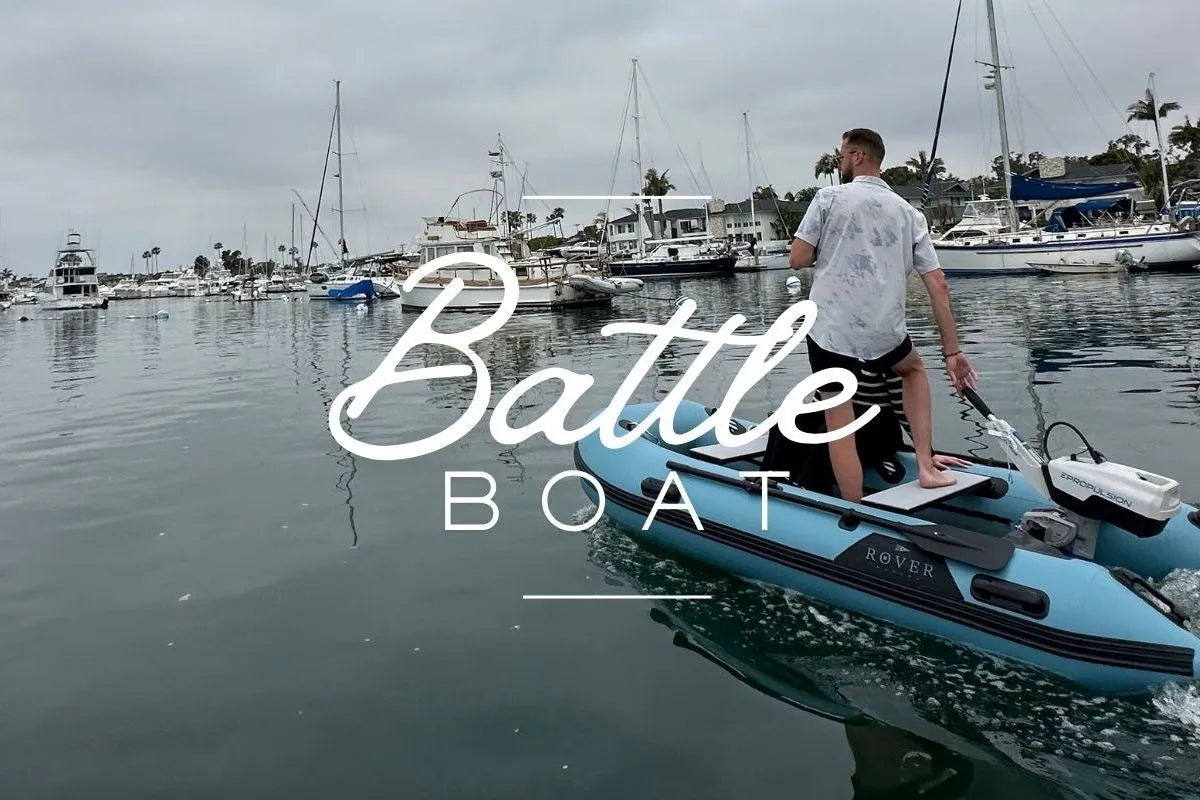
When choosing between the Battle Boat and Battle Cat from Rover Marine, think about intended use, passenger and gear capacity, and the water conditions you expect. The Battle Boat is built for rugged utility and versatility, featuring a fully inflatable V-hull with a high-pressure drop-stitch deck inflated to 10 psi. The Battle Cat line is engineered to deliver extra stability and performance for boaters who need a rock-solid platform in more demanding conditions, utilizing a fully inflatable catamaran hull with twin inflatable pontoons and a high-pressure deck. All Rover Marine boats feature tubes inflated to 3.5 psi, are available in 8 ft, 10 ft, and 12 ft sizes, and support engines up to 6 HP, 10 HP, and 20 HP respectively, depending on the model size. Every Rover Marine boat is backed by a 3-Year Warranty plus a 60-Day Rider’s Guarantee. Match the model to your missions for the best fit.
The Battle Cat line is engineered to deliver extra stability and performance for boaters who need a rock-solid platform in more demanding conditions.
What Are Best Practices for Inflatable Boat Maintenance and Care?
Good maintenance extends service life and preserves performance. Simple routines after every trip go a long way toward preventing common issues.
How Should You Clean, Repair, and Store Your Inflatable Boat for Longevity?
Rinse salt and grit off with fresh water after each use, wash with mild soap when needed, and let the boat dry fully before packing away. Use manufacturer-approved patches and adhesives for repairs to keep seams and material integrity intact. Store boats in a cool, dry place out of direct sun to avoid premature UV breakdown.
What Tips Ensure Optimal Performance and Durability of Rover Marine's 1100D PVC Materials?
Protect Rover Marine's triple-layer reinforced military-grade 1100D PVC by avoiding prolonged sun exposure and contact with sharp objects. Inspect seams and valves regularly and address small issues early. Using covers and stowing the boat properly when not in use will help the material last longer.
Frequently Asked Questions
What are the key considerations when choosing between inflatable and traditional boats?
Focus on how you’ll use the boat, where you’ll store it, and your budget. Rover Marine inflatables, built from triple-layer reinforced military-grade 1100D PVC, excel for portability and versatile use in nearshore, coastal, and lake environments; traditional boats offer stronger performance in rough offshore water and greater payload capacity. Think about your main activities — fishing, diving, tendering, or cruising — then weigh maintenance needs and long-term costs to decide which trade-offs work for you.
How do weather conditions affect the performance of inflatable boats?
Weather matters: high winds and heavy seas reduce an inflatable’s stability compared with a rigid hull, especially in offshore conditions. However, Rover Marine inflatables are designed for nearshore, coastal, and lake use, where their wide tubes and catamaran hull options provide excellent stability in moderate chop. Inflatable boats can be more affected by gusts and currents, so always check forecasts and plan trips for appropriate conditions. Know your boat’s limits and have a safety plan for changing weather.
What safety equipment is recommended for inflatable boat users?
Safety essentials include properly sized life jackets for everyone, a signaling device (whistle or horn), and a basic first aid kit. Also carry a waterproof flashlight, a fire extinguisher if required, and reliable communication like a phone or VHF radio. Check local regulations for required equipment before heading out.
Can inflatable boats be used in saltwater environments?
Yes — Rover Marine boats, constructed from triple-layer reinforced military-grade 1100D PVC, are designed for use in saltwater environments. Rinse thoroughly after each saltwater outing and dry before storage to prevent corrosion and material damage. Regular inspection and care, including proper cleaning and maintenance routines, will extend the life of your Rover Marine boat in marine environments.
What are the environmental benefits of using electric outboard motors on inflatable boats?
Electric outboards run quietly and produce no exhaust while operating, reducing noise pollution and on-water emissions. That benefits wildlife and makes for a more peaceful experience. For boaters who care about sustainability, electric propulsion is a clear advantage.
How can I enhance the stability of my inflatable boat?
Choose a wider model or a catamaran-style hull for more inherent stability, such as Rover Marine's Battle Cat. Distribute weight evenly and avoid overloading the boat. Adding an inflatable keel or stabilizer can help in choppy conditions, and keeping proper inflation pressure (Rover Marine tubes are inflated to 3.5 psi) and routine maintenance will preserve handling characteristics.
For model-specific guidance and to explore the full range of Rover Marine inflatable boats, visit RoverMarine.com.