
Lightweight inflatable boats are growing in popularity because they’re easy to move, built to last, and work for lots of different water activities. This guide walks you through the best options, explains how these boats improve your time on the water, and covers what to look for when choosing one. You’ll learn the advantages of light inflatables, the common types, must-have features, how electric outboards change the game, and simple maintenance to keep your boat ready season after season. If lugging a heavy hull or finding storage has held you back, a lightweight inflatable is a practical, high-performance alternative.

Why pick lightweight inflatable boats for water sports?
Light inflatables pack several clear benefits for people who love being on the water. They’re compact and transportable, so you can take them to new launch sites without a trailer. They’re made to handle regular use, and they adapt to many activities — from fishing to diving to quick weekend outings.
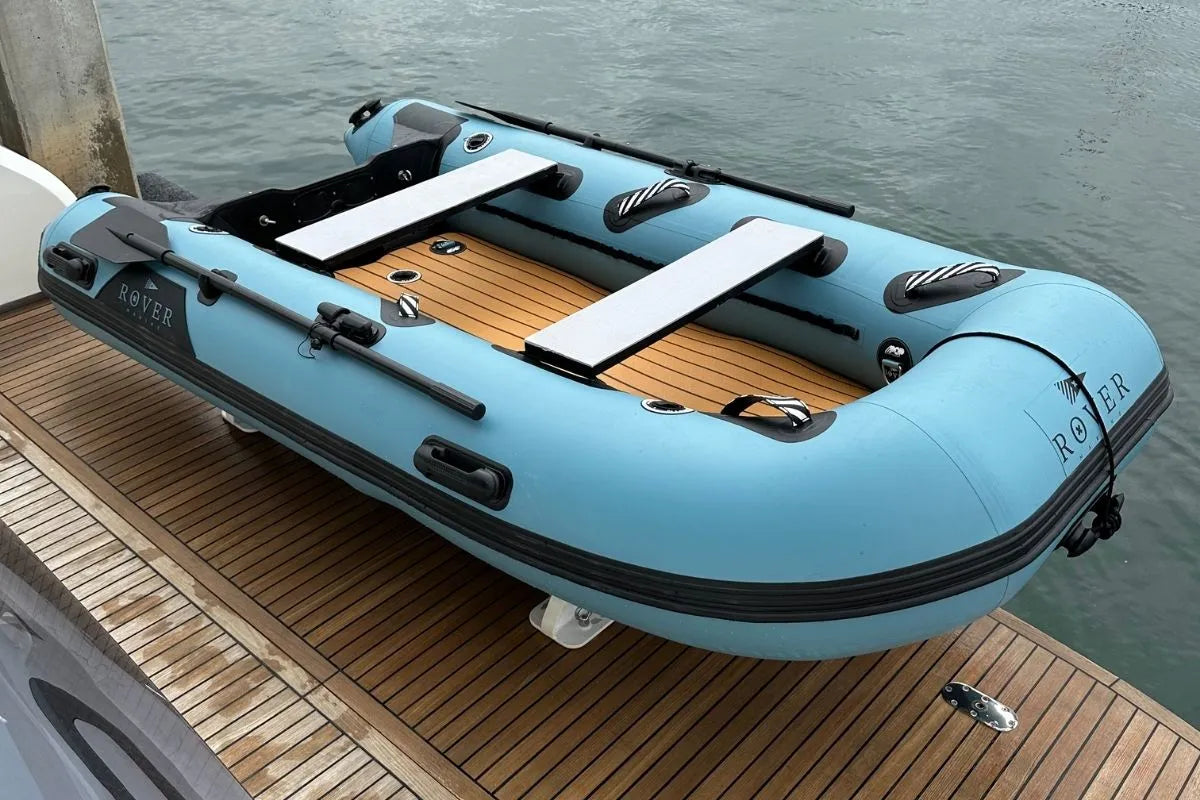
Adding a lightweight inflatable to your kit can make outings simpler and more flexible. At Rover Marine, we build rugged, easy-to-carry inflatables designed for real-world adventures, so you get the right boat for how you want to use it. Rover Marine tubes are inflated to 3.5 psi, and our boats are available in 8 ft, 10 ft, and 12 ft sizes, supporting engines up to 6 HP, 10 HP, and 20 HP respectively, depending on the model size. Every Rover Marine inflatable is backed by a 3-Year Warranty plus a 60-Day Rider’s Guarantee.
How do portability and durability improve your time on the water?
Portability means less fuss: no trailer, no heavy lifting, and faster trips from car to water. Durability gives you confidence — Rover Marine boats resist the bumps and scrapes of everyday use. Our inflatables are made from triple-layer reinforced military-grade 1100D PVC, a material chosen to stand up to punctures, abrasions, and repeated launches. While Hypalon is used by some other brands, Rover Marine construction exclusively features our robust PVC.
Why pair an electric outboard with a lightweight inflatable?
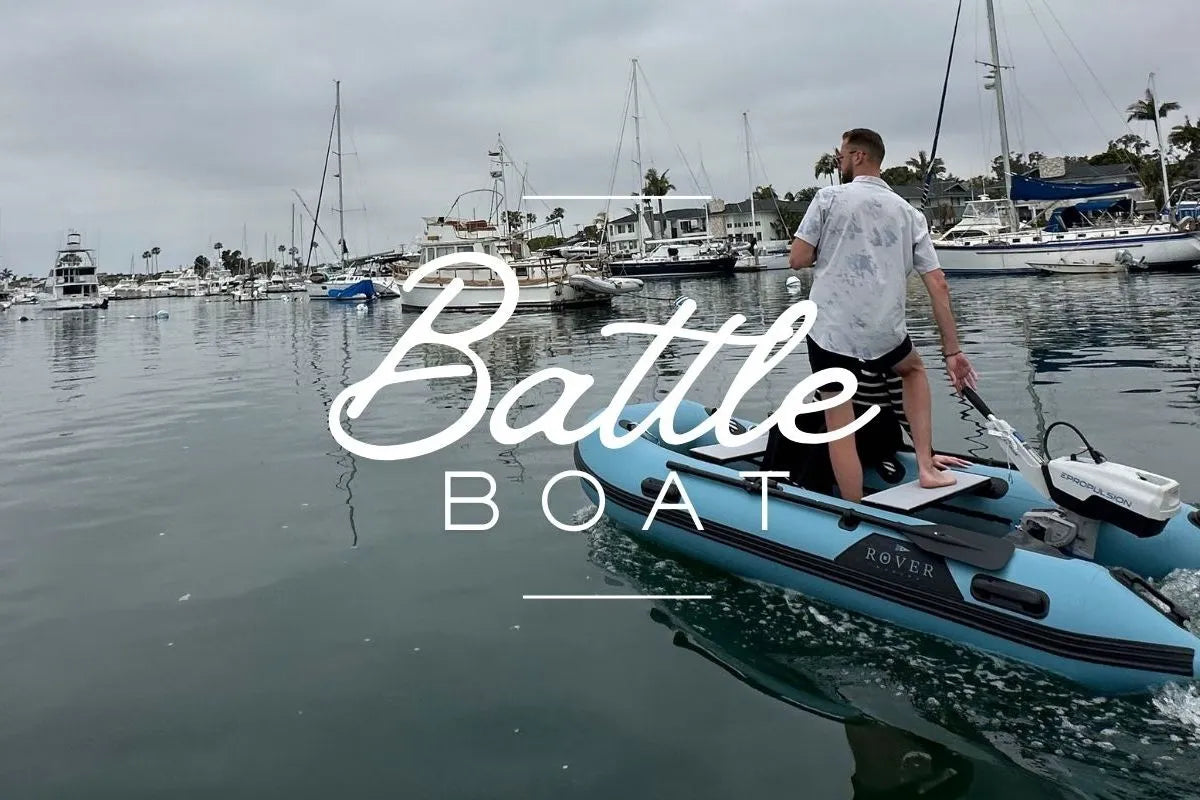
Electric outboards suit lightweight inflatables exceptionally well because they’re quiet, clean, and compact. They offer dependable push for day trips and reduce noise that scares fish or disturbs calm waters. The instant torque of electric motors, combined with their reduced stern weight, allows for efficient planing on inflatable V-hull and catamaran designs, enhancing performance and maneuverability. Models like the ePropulsion Spirit 1.0 Plus and the Torqeedo Travel 1103 S give efficient power and pair seamlessly with Rover Marine inflatable hulls.
Which kinds of lightweight inflatables work best for different water sports?
Rover Marine inflatables come in several shapes, each built for particular uses. Knowing the differences helps you pick a boat that fits your activity, crew size, and storage needs.
Inflatable dinghies vs. catamarans — what’s the difference?
Rover Marine dinghies are usually smaller and easier to maneuver, a great match for short trips and solo or two-person outings. Our catamarans trade some portability for added stability and deck space, which makes them a strong choice for diving, freediving, or family days on the water.
| Type of Boat | Stability | Capacity | Best Use |
|---|---|---|---|
| Inflatable Dinghy | Moderate | 2-4 people | Fishing, short trips |
| Inflatable Catamaran | High | 4-6 people | Diving, family outings |
How do Battle Boat and Battle Cat models meet specific needs?
Rover Marine's Battle Boat and Battle Cat models target different priorities. Battle Boats feature a fully inflatable V-hull with a high-pressure drop-stitch deck inflated to 10 psi, and usually include reinforced hulls and extra storage for rods and tackle, built with anglers in mind. Battle Cat models utilize a fully inflatable catamaran hull with twin pontoons and a high-pressure deck, focusing on stability and space, so they’re better when you need room for dive tanks or a group. Each Rover Marine design improves safety and usability for its intended activity.
Which features matter when you’re choosing a portable inflatable?
When shopping for a Rover Marine inflatable, pay attention to build quality, floor options, and how many air chambers the boat has. Those details directly affect comfort, safety, and how the boat handles.
Does military-grade PVC make a difference?
Material choice is central to longevity and performance. Rover Marine's triple-layer reinforced military-grade 1100D PVC resists punctures and wear, while staying light enough to carry. That balance of strength and weight is what makes our boats practical for repeated use and travel. While Hypalon is used by some other brands, Rover Marine construction exclusively features our robust PVC.
How do floor types and air chambers affect comfort and stability?
Floor construction changes the ride. Rigid floors give a steadier platform in choppy water; inflatable floors offer a softer, lighter option. Multiple air chambers improve safety — if one chamber loses pressure, the others keep you afloat until you can get back to shore.

How do electric outboards lift small inflatable performance?
Electric outboards add smooth, efficient propulsion to small inflatables without the fuss of gas engines. They’re compact, easy to mount, and offer reliable thrust for cruising, fishing, or getting out to dive sites. The instant torque and reduced stern weight of electric motors are particularly beneficial for Rover Marine's fully inflatable V-hull and catamaran designs, allowing for quicker planing and enhanced overall performance.
What do the ePropulsion Spirit 1.0 Plus and Torqeedo Travel 1103 S bring to the table?
The ePropulsion Spirit 1.0 Plus stands out for its light weight and long runtime — great for longer outings. The Torqeedo Travel 1103 S offers stronger thrust and smart features like GPS range estimates, which help you plan trips with confidence. Both are excellent choices for powering Rover Marine inflatables.
How to pick the right electric motor for your inflatable?
Match motor thrust to your Rover Marine boat’s size and payload. Check battery life for your planned trip length, and confirm the motor’s mount and shaft length fit your transom. Ease of installation and serviceability are useful bonuses when you want fewer headaches on the water.
Which lightweight inflatables suit specific water sports?
Different activities benefit from different features. Match the Rover Marine boat’s strengths to your needs — stability for divers, storage for anglers, or simplicity for solo explorers.
What makes an inflatable ideal for fishing?
Fishing boats need steady platforms, room for gear, and easy access to the water. Look for Rover Marine models with secure storage, rod holders, and a roomy layout so you can move and cast without getting tangled in equipment.
Why are inflatable catamarans often chosen for diving and freediving?
Rover Marine inflatable catamarans are popular with divers because their twin tubes and wide decks make entering and exiting the water safer and simpler. They offer ample space for kit and a stable platform for prepping gear before a dive.
How do you maintain and store a lightweight inflatable to make it last?
Good care extends a Rover Marine boat’s usable life and keeps it ready when you are. A few simple habits after each trip prevent most problems and make storage easy.
What are the best care and maintenance habits?
Rinse your Rover Marine boat with fresh water after saltwater use, check seams and valves regularly, and repair small punctures quickly. Those routine steps stop minor issues from becoming costly repairs.
How to set up and deflate Rover Marine inflatables the easy way?
Rover Marine inflatables are designed for straightforward setup and pack-down. Follow these steps for a quick launch:
- Unroll the boat and confirm all parts are included.
- Inflate the chambers with a compatible pump until they reach the recommended pressure (3.5 psi for tubes, 10 psi for drop-stitch decks).
- Fit seats, oars, and any other accessories before launch.
To pack up, open the valves, let the air out, fold carefully to avoid sharp creases, and store in a cool, dry place. This routine keeps launch and breakdown fast so you spend more time on the water.
A key advantage of Rover Marine inflatables is their ability to fully deflate and pack down compactly. Our boats can be stored in specialized bags, making them ideal for stowing in vehicle trunks, garage lockers, or onboard larger vessels. This compact storage solution is perfect for travelers, yacht owners, and anyone with limited space who still demands a high-performance watercraft.
If you have questions about choosing, matching an electric motor, or caring for a Rover Marine boat, get in touch with our team. We’re happy to help you find the right setup for your adventures.
| Maintenance Task | Frequency | Purpose |
|---|---|---|
| Rinse with fresh water | After each use | Remove salt and debris |
| Inspect for damage | Monthly | Catch issues early |
| Repair punctures | As needed | Keep the boat seaworthy |
This table highlights simple maintenance steps to keep your Rover Marine inflatable in top shape.
Frequently Asked Questions
What is the weight capacity of lightweight inflatable boats?
Capacity for Rover Marine inflatables varies significantly by model size and configuration. Our smaller dinghies typically carry 2–4 people, while larger catamarans can comfortably accommodate 4–6. Always check the specific Rover Marine model’s published weight limit and passenger capacity, especially if you’ll carry extra gear like dive tanks, coolers, or fishing equipment.
How do I choose the right size inflatable boat for my needs?
Decide based on your typical number of passengers, the amount of gear you'll carry, and your available storage space. A solo angler or day-tripper might choose a compact Rover Marine dinghy (available in 8 ft, 10 ft, or 12 ft sizes); families or dive teams will benefit from a larger catamaran. Verify the boat’s dimensions and load capacity to ensure it fits your transport and storage plans, and remember Rover Marine boats support engines up to 6 HP, 10 HP, or 20 HP depending on the model size.
Can lightweight inflatable boats be used in rough waters?
Performance in rough conditions depends on the specific Rover Marine model. Our catamarans with wider beams and greater buoyancy generally handle chop better than smaller dinghies. Always consider sea state, weather, and the boat’s specifications before heading into rough water — safety first.
What accessories should I consider for my inflatable boat?
Start with essential safety gear like life jackets, a high-quality pump, and paddles. Then, add task-specific items such as rod holders, storage bags, a shallow anchor, or an electric outboard for propulsion. Safety gear such as a first aid kit and a VHF or mobile radio is also a smart choice for any Rover Marine outing.
How do I properly store my inflatable boat during the off-season?
Clean and dry your Rover Marine boat completely, then deflate and fold it loosely to avoid tight creases. Store it in a cool, dry spot away from direct sunlight and extreme temperatures. A breathable cover helps keep dust off while preventing moisture buildup, ensuring your inflatable is ready for the next season.
What are the common repairs needed for inflatable boats?
Typical fixes for Rover Marine inflatables include patching small punctures, swapping out a faulty valve, or reinforcing a seam. Most minor repairs are manageable with a standard repair kit; for larger damage, contact a professional or Rover Marine directly to ensure a safe, durable fix.
Are there any safety tips for using inflatable boats?
Prioritize safety: always wear life jackets, check weather and tides, and avoid overloading your Rover Marine boat. Learn how your boat handles and practice basic recovery techniques. Carry a communication device and a basic emergency kit so you’re prepared if plans change.
For model-specific guidance, detailed specifications, and to explore our full range of high-performance inflatable boats, visit RoverMarine.com.

Leave a comment
This site is protected by hCaptcha and the hCaptcha Privacy Policy and Terms of Service apply.