Rigid inflatable boats (RIBs) blend a solid, load-bearing hull with buoyant, inflatable tubes. This combination delivers a fantastic mix of buoyancy, stability, and planing performance that’s perfect for tender operators, anglers, divers, and day-cruisers. This article dives into what a RIB is, how its rigid hull and inflatable collar work together for flotation and shock absorption, and why that synergy is crucial for safety and handling. You’ll learn about construction materials like PVC and Hypalon, how to tell the difference between hull types such as deep-V and catamaran profiles, and the pros and cons for common activities. We’ll also cover how electric outboard motors integrate with RIBs, a handy buyer’s checklist to match size and hull to your mission, and essential maintenance steps to keep your boat in top shape. Plus, we’ll compare portable and catamaran-style RIBs, and introduce fully inflatable alternatives from brands like Rover Marine. If you’re looking for a single, comprehensive guide to materials, hull behavior, propulsion options, and practical considerations for choosing and caring for a RIB, this is it – mapping out your key decisions and next steps.
What Is a Rigid Inflatable Boat and How Does It Work?
A rigid inflatable boat (RIB) features a solid, rigid hull paired with inflatable tubes around its perimeter. This design creates impressive buoyancy, keeps weight down, and offers a forgiving ride. The rigid hull provides the structural backbone and precise steering, while the inflatable tubes add reserve buoyancy, cushion impacts, and widen the deck space. Together, they boost stability and allow the hull to plane efficiently in calm to moderate seas. Key advantages include rapid acceleration thanks to lower overall weight and enhanced safety from peripheral buoyancy that helps keep the craft afloat even if compromised. Understanding these fundamental mechanics sets the stage for exploring components, construction materials, and hull shapes that dictate handling, durability, and intended use.
What Are the Key Components of a Rigid Inflatable Boat?
The main parts of a RIB include the inflatable tubes or collar, the rigid hull, the transom, the floor system, and deck fittings for gear and seating. Tubes are typically made from reinforced synthetic fabrics and feature multiple internal chambers for redundancy, housing valves and grab handles for safe boarding. The rigid hull—often aluminum, fiberglass, or composite—bears structural loads and defines the boat’s hydrodynamic traits, while the transom is where outboards and steering linkages are mounted. Knowing these parts helps buyers assess maintenance needs and compatibility with accessories like electric outboards, which in turn impacts usability for fishing, diving, or tender duties.
How Are RIBs Constructed? Materials Like PVC, Hypalon, Aluminum Explained
RIB construction balances cost, durability, and weight through careful material choices like PVC, Hypalon, and rigid hull materials such as aluminum or fiberglass. PVC is lightweight and budget-friendly but can be more vulnerable to UV and chemical damage without proper care; Hypalon (a chlorosulfonated polymer) offers superior UV and abrasion resistance but comes at a higher price. Rigid hulls vary by material—aluminum provides strength and lightness for workboats, while fiberglass and composites offer a smoother finish and better noise dampening for leisure craft. Reinforced seams and military-grade PVC options enhance durability and usability; understanding these trade-offs helps align expectations for longevity and maintenance effort. In contrast to RIBs, fully inflatable boats like those from Rover Marine utilize triple-layer reinforced military-grade PVC for their entire structure, including high-pressure drop-stitch decks, offering a different balance of portability and performance.
What Are the Different Hull Types in RIBs?
Hull profiles—deep-V, shallow-V, multi-chine, and catamaran—determine how a RIB handles waves, carries loads, and achieves planing speeds. Deep-V hulls slice through waves and offer superior rough-water performance, though they may have a deeper draft and slightly less initial stability. Shallow-V designs plane earlier and feel more responsive in calm water. Catamaran-style twin-pontoon hulls prioritize initial stability and deck area, making them excellent for fishing, family outings, and stable platforms for gear. Choosing a hull type involves balancing seaworthiness, deck utility, and the intended operating conditions.

How Does a RIB Compare to a Traditional Inflatable Boat?
Compared to soft-hulled inflatables and dinghies, RIBs provide greater structural integrity, higher speed potential, and improved handling because the rigid hull supports planing and steering loads effectively. Soft inflatables often win on initial cost and compact storage, but they can’t match the performance envelope and load-bearing capacity of a RIB. For tender duties, rescue operations, and high-speed transfers, a RIB’s durability and seaworthiness frequently justify the higher upfront investment and slightly more involved maintenance. Appreciating these performance differences helps buyers decide whether portability or performance should take precedence. Fully inflatable boats, while distinct from RIBs, offer a compelling middle ground, providing enhanced performance over soft-hulled inflatables while retaining superior portability compared to RIBs.
What Are the Main Types of Rigid Inflatable Boats?
Rigid inflatable boats generally fall into distinct categories: traditional deep-V RIBs, catamaran-style twin-pontoon RIBs, and foldable/portable RIBs. Each type is optimized for different activities and owner needs. Traditional RIBs excel at planing performance and rough-water handling, catamaran RIBs emphasize stability and deck space, and foldable designs prioritize convenient storage and transport. Matching the type to your specific use case—tender, fishing, diving, or watersports—streamlines the buying decision and clarifies required accessories and propulsion. Below is a quick comparison that maps hull type to typical activities to guide your selection.
| Model Type | Hull Type | Best Use Cases |
|---|---|---|
| Traditional RIB | Deep-V or multi-chine rigid hull | Tenders, planing transit, open-water transfers |
| Catamaran RIB | Twin-pontoon rigid catamaran | Fishing, stable family cruising, dive platforms |
| Foldable/Portable RIB | Removable/folded tubes and rigid hull sections | Travel, compact storage, occasional use |
This table clearly shows where each RIB type shines, setting the stage for the next step: comparing specific models that exemplify these categories, and also exploring fully inflatable alternatives.
Introducing Rover Marine's Fully Inflatable Battle Boat and Battle Cat
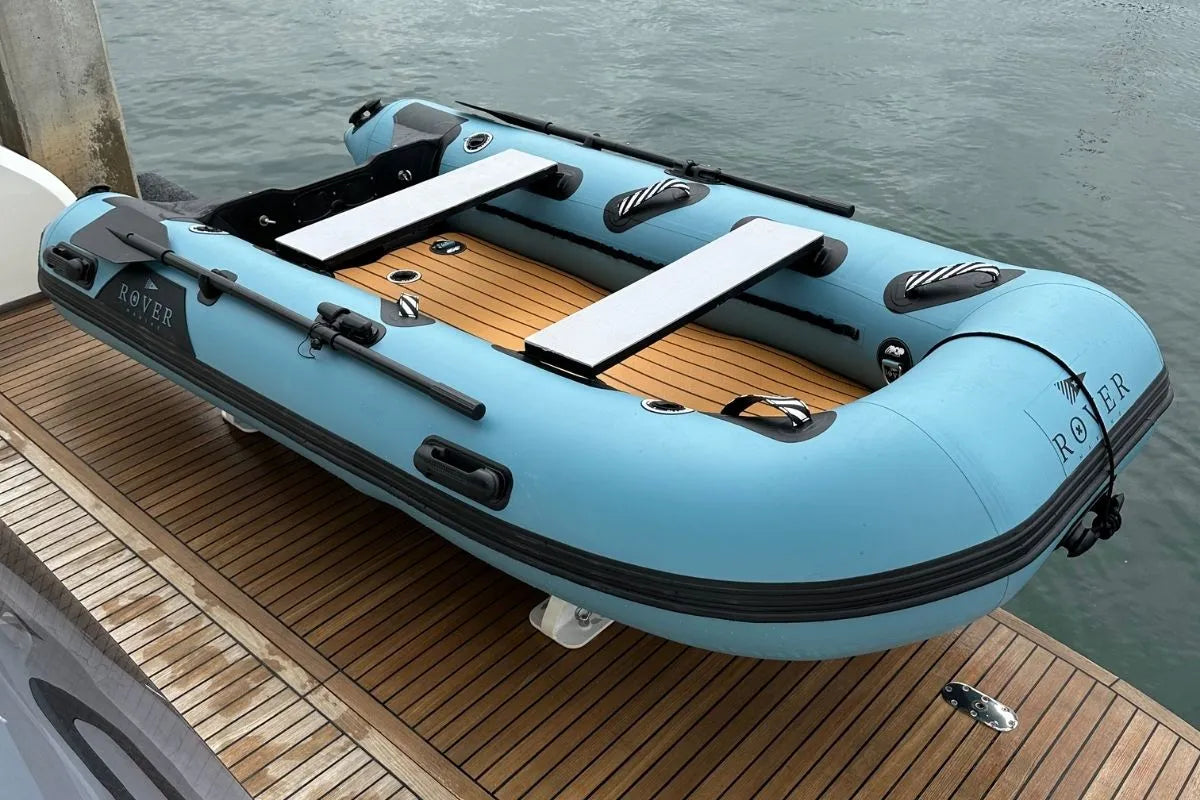
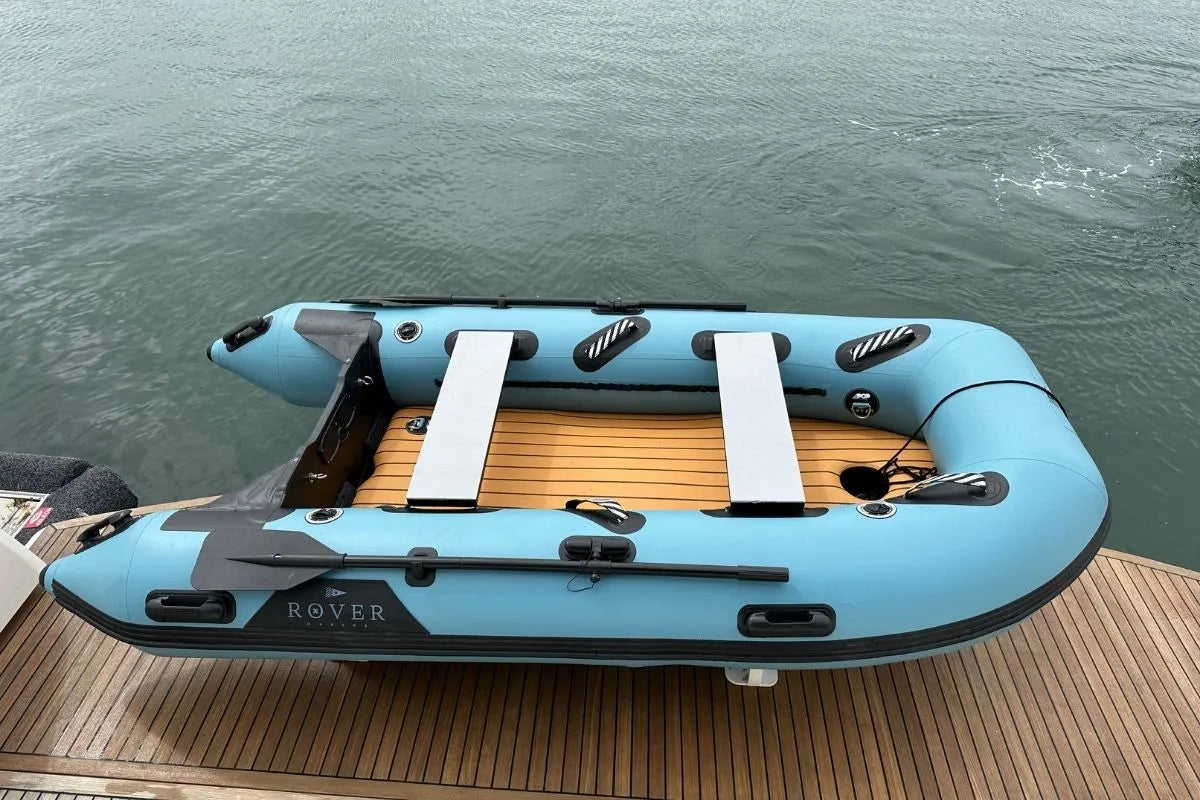
Rover Marine offers innovative fully inflatable boats that serve as excellent alternatives or companions to traditional RIBs. The Battle Boat is a fully inflatable V-hull dinghy, while the Battle Cat features a fully inflatable catamaran-style dual-pontoon layout. Both models are constructed from triple-layer reinforced military-grade PVC, featuring high-pressure 10 psi drop-stitch decks and 3.5 psi tubes for exceptional rigidity when inflated. They are available in versatile sizes: 8 ft (up to 6 HP), 10 ft (up to 10 HP), and 12 ft (up to 20 HP), making them ideal for trailer or dinghy-deck storage and accessible to buyers seeking portable options. The Battle Boat is engineered for efficient planing and nimble handling for quick trips and tender duties, whereas the Battle Cat prioritizes initial stability and ample deck space for fishing or family adventures. All Rover Marine boats come with a 3-Year Warranty and a 60-Day Rider’s Guarantee, reflecting their commitment to quality and customer satisfaction. These models serve as excellent practical examples when weighing hull-type trade-offs and mission suitability, offering a distinct advantage in portability and storage over rigid-hulled boats.

How Do Catamaran Hulls Enhance Stability in RIBs?
Catamaran hulls in RIBs significantly boost stability by distributing buoyancy across two parallel rigid pontoons that resist rolling and provide broad, predictable support for loads and on-deck activities. This geometry minimizes heel when anglers or divers are working on the side decks and spreads payloads without substantially increasing draft, which is beneficial for shallow-water operations. A catamaran RIB often offers a more comfortable stationary platform for fishing or for passengers boarding, reducing fatigue on longer excursions. For users who value platform steadiness and on-deck usability, a catamaran-style RIB is a compelling choice. Fully inflatable catamaran designs, like the Rover Marine Battle Cat, achieve similar stability benefits through their twin inflatable pontoons, combined with the added advantage of complete deflatability.
What Sizes Are Available for RIBs and How Do They Affect Use?
RIB sizes span from compact 8–12ft boats to midsize 13–18ft craft, and larger units used for commercial or rescue operations. Size profoundly influences passenger capacity, motor requirements, and transport logistics. Small RIBs (8–12ft) are perfect as tenders or personal fishing platforms and can often be trailered or stowed aboard larger vessels. Midsize RIBs expand range and gear capacity for day cruising and watersports. When deciding on size, consider how many people you’ll typically carry, the usual sea conditions, and where you’ll store or transport the boat, as each factor impacts hull choice and propulsion needs. For fully inflatable boats, Rover Marine offers models in 8 ft, 10 ft, and 12 ft sizes, providing excellent portability and versatility for various applications.
Are Foldable or Portable RIBs a Good Option?
Foldable and portable RIBs present clear advantages for owners with limited storage space or those who travel frequently, as their collapsible designs significantly reduce storage footprint and trailer requirements. Portability comes with trade-offs, including slightly longer setup times, potential seam wear from repeated folding, and sometimes lower continuous-use durability compared to permanently assembled RIBs. For owners who prioritize mobility and occasional use—like weekend explorers or larger yacht owners seeking a compact tender—portable RIBs offer a practical compromise. Proper handling and storage practices can mitigate most longevity concerns. For even greater portability and ease of storage, fully inflatable boats like those from Rover Marine offer a compelling alternative, as they can be completely deflated and packed away.
What Are the Advantages and Disadvantages of Rigid Inflatable Boats?
RIBs offer a compelling package of advantages—stability, buoyancy, speed, and safety—but also come with trade-offs regarding maintenance, storage, and cost that buyers must carefully consider against their intended use. The inflatable collar provides passive safety and easy reboarding, while the rigid hull supports efficient planing and precise steering. However, tube maintenance, UV protection, and storage needs add ongoing responsibilities. Below is a structured table highlighting core attributes to help readers quickly compare strengths and trade-offs of RIBs.
| Attribute | Consideration | Value/Trade-off |
|---|---|---|
| Stability | Inflatable collar & rigid hull shape | High initial stability; catamarans excel |
| Speed/Handling | Rigid hull planing | Good acceleration; deep–V better in chop |
| Durability | Tube material & seams | Military-grade materials increase longevity |
| Maintenance | UV, cleaning, patching | Requires regular care; repairable sections |
What Stability, Speed, and Safety Benefits Do RIBs Offer?
RIBs deliver exceptional stability thanks to their inflatable collar and well-designed rigid hull forms, instilling confidence when boarding, transferring passengers, or maneuvering near larger vessels. The rigid hull enables efficient planing, allowing RIBs to accelerate quickly and maintain speed with relatively modest engines, enhancing responsiveness and transit times. Safety benefits include multiple air chambers within the tubes and elevated reserve buoyancy, which help keep a craft afloat if one section is compromised. These inherent design strengths make RIBs a preferred choice for rescue services, tender operations, and recreational users seeking a capable, secure platform.
How Do RIBs Perform in Rough Water Conditions?
A RIB’s performance in rough water is largely dictated by its rigid hull type and size. Deep-V hulls are designed to cut through waves and minimize slamming, while catamaran hulls might pound more in steep seas but maintain superior lateral stability. Selecting a hull with sufficient deadrise and adequate length significantly improves seaworthiness for offshore conditions, and proper weight distribution helps maintain trim and reduce pitching. Operators should always match the boat’s design limits to expected conditions and prioritize safety gear and conservative routing in adverse weather. Understanding these performance boundaries is key for owners to choose the right rigid hull profile for their operating environment.
What Are the Maintenance and Cost Considerations for RIB Owners?
Owning a RIB involves routine tasks—cleaning salt and debris, inspecting seams and valves, protecting tubes from UV exposure, and servicing the rigid hull and propulsion system—that contribute to the total cost of ownership beyond the initial purchase price. Key cost drivers include material quality (military-grade PVC or Hypalon for tubes, fiberglass or aluminum for the hull), required motor power, and storage solutions; these factors also influence resale value and long-term durability. A simple maintenance checklist—regular rinsing, periodic seam inspections, and scheduled outboard checks—helps keep operating costs predictable and reduces the likelihood of unexpected repairs. Prioritizing preventive care optimizes lifetime value.
How Durable Are RIBs Made with Military-Grade PVC and Reinforced Seams?
RIBs constructed with military-grade PVC and reinforced seam techniques offer superior puncture resistance and extended longevity compared to basic PVC builds. This is because heavier fabric weights and robust seam reinforcement effectively reduce abrasion and stress-related failures. Proper maintenance—including UV protection, careful launching, and avoiding contact with sharp objects—preserves these material advantages over time. While no material is entirely immune to damage, stronger PVC variants and meticulous assembly methods significantly extend usable life in both everyday recreational and professional contexts. Evaluating material claims and construction quality helps buyers assess long-term durability without relying solely on specific warranty terms.
What Are the Common Uses and Activities for Rigid Inflatable Boats?
RIBs are incredibly versatile, serving a wide array of activities—from yacht tenders and recreational cruising to fishing, diving, watersports, and rescue operations. Their unique blend of buoyancy, load capacity, and propulsion flexibility allows them to adapt to diverse missions. Different activities prioritize different attributes: quiet electric propulsion is ideal for diving and wildlife approaches, catamaran stability is perfect for fishing and family outings, and deep-V hulls are best for rough-water transit. Below, we map out common use-cases and recommend hull or accessory choices that optimize performance and user experience.
How Are RIBs Used as Yacht Tenders and for Recreational Cruising?
As yacht tenders, RIBs provide reliable passenger transfers, provisioning runs, and short-range transports, offering fast planing and easy stowage aboard a mothership. For recreational cruising, features that enhance comfort—secure seating, modest deck protection, and ample storage for provisions—are favored, along with propulsion that balances range and noise levels. Choosing a tender-sized RIB depends on ease of boarding, capacity, and how frequently tender duties will be performed; compact 10–12ft models often suffice for light duties, while larger tenders expand range and comfort. Thoughtful selection significantly improves day-to-day usability and guest experience.
Why Are RIBs Ideal for Fishing and Diving Adventures?
RIBs are exceptionally well-suited for fishing and diving, providing stable, low-draft platforms for gear staging, quick water entry/exit, and close-to-shore operations. Ample deck space, tie-down points, and easy access to the water support both sportfishing and dive logistics. The initial stability of catamaran-style models helps anglers move about confidently. Electric outboards reduce noise and vibration, enabling silent approaches to fishing spots or low-disturbance dive entries, thereby enhancing the on-water experience for wildlife observation and underwater activities. Fully inflatable boats, with their inherent stability and quiet electric motor compatibility, also excel in these roles, often with the added benefit of lighter weight and easier transport.
Can RIBs Be Used for Water Sports and Rescue Operations?
RIBs can tow towables and support watersports when equipped with adequate motor power and reinforced tow points. They are also widely employed for rescue operations due to their inherent reserve buoyancy and rapid acceleration. Operators should always confirm the boat’s rated towing capacity and ensure secure attachment points and proper weight distribution to maintain safe handling while towing. For rescue and rapid-response tasks, durability, reliable propulsion, and clear deck layouts that facilitate patient handling are core considerations that inform outfitting and training.
How Do Electric Outboard Motors Enhance Boat Performance?
Electric outboard motors elevate certain boat use-cases by offering quieter operation, lower routine maintenance, and instant torque that simplifies low-speed maneuvering. These attributes are particularly valuable for diving, wildlife viewing, and operating in environments where noise or emissions are restricted. Electric propulsion also shifts maintenance focus to battery care and charging logistics, requiring owners to plan for energy management on outings. For many smaller RIBs and especially for fully inflatable boats like those from Rover Marine, electric outboards present an attractive balance between simplicity and range for nearshore activities, benefiting from the lighter overall weight of fully inflatable craft.
How Do Electric Outboard Motors Work with Rigid Inflatable Boats and Fully Inflatable Boats?
Electric outboard motors convert stored electrical energy from batteries into propulsion through a motor, controller, and propeller assembly mounted on the transom. This system replaces traditional internal combustion engines with quieter, lower-maintenance alternatives. Integration depends on the motor’s mounting, weight, and thrust requirements relative to the boat’s size and intended use. Small electric outboards pair exceptionally well with compact RIBs and fully inflatable boats used for fishing, tender duty, and calm-water cruising. The table below helps compare common motor categories and compatibility notes to support your evaluation.
| Motor Model | Power Output / Equivalent | Compatible Boat Models | Typical Range (notes) |
|---|---|---|---|
| ePropulsion (brand example) | Small to medium electric outboards | Suitable for small RIBs and fully inflatable tenders | Range varies by battery capacity and load |
| Torqeedo (brand example) | Small to premium electric outboards | Compatible with portable and mid-size RIBs, and fully inflatable boats | Range depends on usage profile and reserve planning |
| Generic small electric outboards | Light-duty equivalents to small gasoline outboards | Best for 8–12ft RIBs and fully inflatable boats for short trips | Practical for nearshore and short-duration outings |
What Are the Features of ePropulsion and Torqeedo Electric Motors?
ePropulsion and Torqeedo stand out as leading electric outboard brands, focusing on quiet, low-emission propulsion and user-friendly installation for smaller vessels. These brands excel in integration with portable platforms, offering options perfectly suited for compact RIBs and fully inflatable tenders. They provide streamlined controls and significantly less mechanical complexity compared to traditional gas outboards. While specific model specifications differ, both manufacturers are renowned for designing systems that make electric propulsion a practical choice for nearshore operations and low-noise activities. Their strong presence in the market helps normalize electric options for both RIB and fully inflatable boat owners.
How Do Electric Motors Improve Fuel Efficiency and Reduce Noise?
Electric outboards eliminate combustion noise and drastically reduce vibration, enhancing onboard comfort and enabling quiet approaches to wildlife or peaceful anchorages with minimal disruption. Electrical propulsion replaces fuel-burning maintenance tasks—like oil changes, carburetor care, and fuel-system servicing—with battery management and electrical system checks, simplifying routine upkeep. Efficiency gains stem from high motor efficiency and the potential for energy recovery in certain designs, while noise reduction significantly enhances experiences like diving and slow-speed sightseeing. These operational advantages translate into tangible benefits for specific user scenarios.
What Should You Know About Battery Life and Charging for Electric Outboards?
Effective battery planning is fundamental to using electric outboards: owners must estimate their expected outing duration, factor in a reserve margin, and plan charging logistics or spare batteries for extended trips. Charging options range from standard shore-power charging to portable chargers and onboard charging when paired with appropriate systems. Battery chemistry and capacity directly influence weight and usable range. Good battery care practices—consistent charge cycles, temperature-aware storage, and avoiding deep discharge—extend usable life and ensure reliable performance on the water.
Which Rover Marine Fully Inflatable Models Are Compatible with Electric Outboard Motors?
Rover Marine’s fully inflatable boats, including the popular Battle Boat and Battle Cat models, are fully compatible with electric outboard motors like those from ePropulsion and Torqeedo. This makes them excellent choices for quiet, low-maintenance propulsion in nearshore and tender applications. Their lighter construction, featuring triple-layer reinforced military-grade PVC and 10 psi drop-stitch decks, makes them particularly well-suited for electric propulsion, benefiting from instant torque and extended range due to reduced weight. Matching the motor size to the boat’s length and intended load is crucial: Rover Marine's 8 ft models are rated up to 6 HP, 10 ft models up to 10 HP, and 12 ft models up to 20 HP. For precise pairings, always consult product details and plan battery capacity according to your expected range and payload; this ensures a balanced, silent-running setup perfectly tailored to your mission needs.
Why Choose a Fully Inflatable Boat as an Alternative or Companion to a RIB?
Many RIB and yacht owners are discovering the significant advantages of incorporating a fully inflatable boat, such as those from Rover Marine, into their boating setup as a secondary or backup craft. Unlike RIBs with their rigid hulls, fully inflatable boats can be completely deflated, rolled up, and stored in remarkably compact spaces. This unparalleled portability makes them ideal for easy transport in a car trunk, on an RV, or stowed away on a larger vessel without requiring davits or extensive deck space. They offer exceptional flexibility for shore access, allowing you to explore shallow waters inaccessible to rigid-hulled boats, and provide a safe, stable platform for guests or emergency use. Their lightweight nature also makes them easier to launch and retrieve, enhancing overall convenience and expanding your on-water capabilities.
How to Choose the Best Rigid Inflatable Boat for Your Needs?
Selecting the right RIB involves carefully balancing size, rigid hull type, tubing material, propulsion, and budget against the boat’s intended missions—whether for tender duties, fishing, diving, watersports, or general recreational use. A prioritized checklist can make the decision process much more practical: first, define your primary use; then, determine passenger and gear capacity; select a rigid hull type suited for expected sea conditions; choose materials for optimal durability; and finally, select compatible propulsion that meets your range and noise requirements. Below is a concise decision checklist to guide buyers through these essential considerations for RIBs.
- Define Primary Use: Pinpoint whether tender duties, fishing, diving, watersports, or mixed recreational use is your main priority.
- Set Capacity Requirements: How many passengers and how much gear will you routinely carry?
- Choose Rigid Hull Type: Opt for a deep–V for rough water, a catamaran for superior stability, or a shallow–V for calm water efficiency.
- Select Materials: Weigh the pros and cons of PVC versus Hypalon for tubes, and different rigid hull materials (fiberglass, aluminum) for durability and budget.
- Plan Propulsion: Decide between gas and electric based on your desired range, noise tolerance, and maintenance preferences.
This checklist effectively organizes the essential questions you need to ask before evaluating specific RIB models, fitting perfectly into the comparison process described next.
What Factors Should You Consider: Size, Rigid Hull Type, and Material?
Size dictates capacity, trailerability, and motor needs for a RIB; rigid hull type governs seaworthiness and on-water behavior; and material choices determine durability and maintenance intensity. Prioritize size based on the maximum passenger load and the largest reasonable motor you intend to mount. Then, select a rigid hull that matches your typical operating conditions—a deep–V for choppy open water or a catamaran for stable inland or coastal work. Finally, choose tube materials that align with expected exposure and handling: heavier-duty materials tolerate rougher use but naturally increase costs and weight.
How Do Different Boat Models Compare: Rover Marine Battle Cat vs. Battle Boat?
A practical comparison positions the Rover Marine Battle Cat as the stability-focused, fully inflatable catamaran-style option and the Rover Marine Battle Boat as the traditional, planing-performance fully inflatable V-hull model. Both are constructed from triple-layer reinforced military-grade PVC with 10 psi drop-stitch decks and 3.5 psi tubes. The Battle Cat is ideal for anglers and families who need a steady platform and generous deck area, while the Battle Boat appeals to owners seeking rapid acceleration, nimble handling, and efficient planing. Both are available in compact sizes (8 ft, 10 ft, and 12 ft), so the key trade-off becomes deck stability versus planing behavior. Your choice between them hinges on whether stability and deck utility or planing performance and compactness are more critical for your intended use. All Rover Marine models come with a 3-Year Warranty and a 60-Day Rider’s Guarantee.
What Are the Price Ranges and Value Propositions of Top RIBs?
Instead of focusing on exact prices, it’s more effective to compare value through factors like material quality, included accessories, motor compatibility, and expected maintenance commitments for RIBs. A higher upfront cost often reflects more durable fabrics, reinforced seams, and superior fittings that ultimately reduce long-term expenses. Evaluate the total cost of ownership by estimating motor, battery (for electric), storage, and maintenance needs over several seasons. Look for transparent build specifications and strong supplier support when weighing value propositions.
Where Can You Book RIB Tours or Private Charters for On-Water Experience?
Experiencing a RIB firsthand in real conditions is one of the most informative steps before making a purchase. Look for local marinas, tour operators, or demo days that offer short excursions with similar rigid hull types and propulsion options. Partnered demos and private charters allow buyers to thoroughly assess handling, boarding ergonomics, and storage practicality before committing. For product demonstrations or to inquire about experiential bookings tied to specific fully inflatable models like the Battle Boat or Battle Cat, contact Rover Marine for information and potential demo referrals or partner events.
What Are Essential Maintenance Tips for Rigid Inflatable Boats?
Effective maintenance is key to preserving RIB performance, extending material life, and minimizing unexpected repair costs. Focus on proper inflation management, regular cleaning, smart storage, puncture prevention, and propulsion system servicing. A targeted maintenance program includes daily rinsing after saltwater use, routine inspections of seams and valves, protection from UV exposure, and scheduled checks of the rigid transom and fittings. Consistently following this checklist reduces wear and tear and helps identify when professional repairs are necessary.
How Do You Properly Inflate, Store, and Clean Your RIB?
Proper inflation for a RIB strikes a balance between rigidity and shock absorption: maintain manufacturer-recommended pressures by qualitatively checking for proper tube firmness and adjusting for temperature and altitude changes. Clean tubes using mild, non-abrasive cleaners specifically designed for marine fabrics, rinse thoroughly, and dry completely before storage to prevent mildew. For storage, keep the RIB supported off the ground in a shaded, ventilated area to prevent abrasion and UV damage. Foldable RIB models should be dried and loosely stowed to avoid creating creases in stressed areas. These steps are vital for preserving material integrity and ensuring readiness for the season.
What Are Common Repairs and How to Prevent Punctures?
Punctures and abrasion represent the most common types of damage for inflatable boats, including RIBs and fully inflatable craft; prevention strategies center on careful launching, the strategic use of fenders, protective chafe gear where lines run, and avoiding dragging the boat over rough surfaces. Minor punctures can often be repaired with manufacturer-recommended patch kits, while larger seam failures or structural damage typically require professional attention. Identifying potential trouble spots early—such as loose fittings, rubbing lines, or sharp hardware—prevents issues from escalating and keeps repair costs manageable.
When Should You Service Your Electric Outboard Motor?
Service attention for electric outboards primarily focuses on battery health, electrical connections, and mechanical inspection of propellers and mounting hardware. Routine visual checks before and after use are essential for spotting corrosion, loose wiring, or damaged seals. Battery systems benefit from scheduled capacity checks according to manufacturer guidance. Seek professional diagnostics if you notice unusual noise, a rapid decline in capacity, or charging irregularities. Always follow the motor manufacturer’s recommended service intervals for more in-depth maintenance.
How Does Proper Maintenance Extend the Life of Your RIB?
Consistent maintenance preserves the integrity of tube material, seams, and the rigid hull of a RIB, which in turn sustains safety margins and maintains resale value over time. Preventive care—including regular cleaning, UV protection, and careful launching—reduces the frequency of major repairs and ensures seams and fittings function as intended. Proper battery care and timely motor servicing also prevent premature failure of propulsion systems, guaranteeing reliable performance on every outing. Treating maintenance as a wise investment yields lower long-term ownership costs and a safer, more enjoyable boating experience.
This guide has covered the essential RIB concepts—from construction and rigid hull types to electric propulsion, maintenance, and practical selection criteria—so you can confidently evaluate your options and find the rigid inflatable boat that perfectly matches your needs. For model-specific details, demo inquiries, or to learn more about Rover Marine’s fully inflatable Battle Boat and Battle Cat models and their compatibility with electric outboards like ePropulsion and Torqeedo, please visit RoverMarine.com to explore high-quality, portable, fully inflatable alternatives to traditional RIBs.
Frequently Asked Questions
What are the advantages of using electric outboard motors on RIBs and fully inflatable boats?
Electric outboard motors offer several compelling advantages for both RIBs and fully inflatable boats, including significantly quieter operation, reduced maintenance requirements, and instant torque for superior low-speed maneuverability. These motors eliminate the noise and emissions associated with traditional gas engines, making them ideal for activities like wildlife watching and diving. Furthermore, electric motors simplify routine upkeep, as they demand less mechanical servicing compared to gas engines. This makes them a practical and environmentally conscious choice for users who prioritize ease of use in nearshore applications, with fully inflatable boats benefiting particularly from their lighter weight.
How do I choose the right size RIB for my needs?
Selecting the right RIB size involves carefully considering passenger capacity, your intended use, and available storage options. Smaller RIBs (8-12ft) are well-suited for personal use and are easily transported, while larger models (13-18ft) provide more space for gear and passengers, making them ideal for family outings or commercial applications. Assess how many people you typically carry and the types of activities you plan to engage in, as this will guide your decision on the appropriate size to effectively meet your needs.
What maintenance tasks are essential for keeping a RIB in good condition?
Essential maintenance tasks for RIBs include regular cleaning, thorough inspection of seams and valves, diligent protection of the tubes from UV exposure, and consistent servicing of the rigid hull and propulsion system. After each use, rinse the boat with fresh water to remove salt and debris, and meticulously check for any signs of wear or damage. Additionally, ensure that the inflatable tubes are properly inflated and stored in a shaded, ventilated area to prevent deterioration. Following a routine maintenance checklist helps extend the life of your RIB and ensures safe operation.
Can RIBs be used for commercial purposes?
Absolutely, RIBs are widely utilized for commercial purposes due to their exceptional durability, speed, and versatility. They are commonly employed in industries such as tourism, rescue operations, and marine research. Their inherent ability to handle rough waters and carry significant loads makes them perfectly suited for transporting passengers and equipment. When selecting a RIB for commercial use, it’s crucial to consider factors like size, rigid hull type, and propulsion options to ensure it precisely meets the specific demands of your business operations.
What should I consider when using a RIB for watersports?
When using a RIB for watersports, pay close attention to the boat's power capacity, stability, and towing capabilities. Ensure that the RIB is equipped with a suitable motor that can effectively handle the demands of towing activities, such as wakeboarding or tubing. Additionally, verify that the boat features reinforced tow points and provides adequate space for passengers and gear. Safety is paramount, so always ensure life jackets and other essential safety equipment are on board, and be mindful of local regulations pertaining to watersports activities.
How do I ensure the longevity of my boat's inflatable tubes?
To ensure the longevity of your boat's inflatable tubes (whether on a RIB or a fully inflatable craft), it’s vital to practice proper care and maintenance. Regularly inspect the tubes for any signs of wear, punctures, or abrasions, and address any issues promptly. Clean the tubes with mild, non-abrasive cleaners after each use, especially after exposure to saltwater. Store the boat in a shaded, dry area to protect it from UV damage, and make a conscious effort to avoid dragging the boat over rough surfaces. Adhering to these practices will significantly help maintain the integrity and performance of the inflatable tubes over time.
What are the best practices for transporting a RIB?
When transporting a RIB, ensure its rigid hull is securely fastened to the trailer to prevent any movement during transit. Utilize appropriate tie-down straps and confirm that the boat is properly balanced on the trailer to avoid swaying. Furthermore, check local regulations regarding trailer lights and registration. Before embarking on your journey, inspect the trailer's tires and brakes to guarantee safe travel. Following these best practices will help protect your RIB throughout the transportation process.


Leave a comment
This site is protected by hCaptcha and the hCaptcha Privacy Policy and Terms of Service apply.