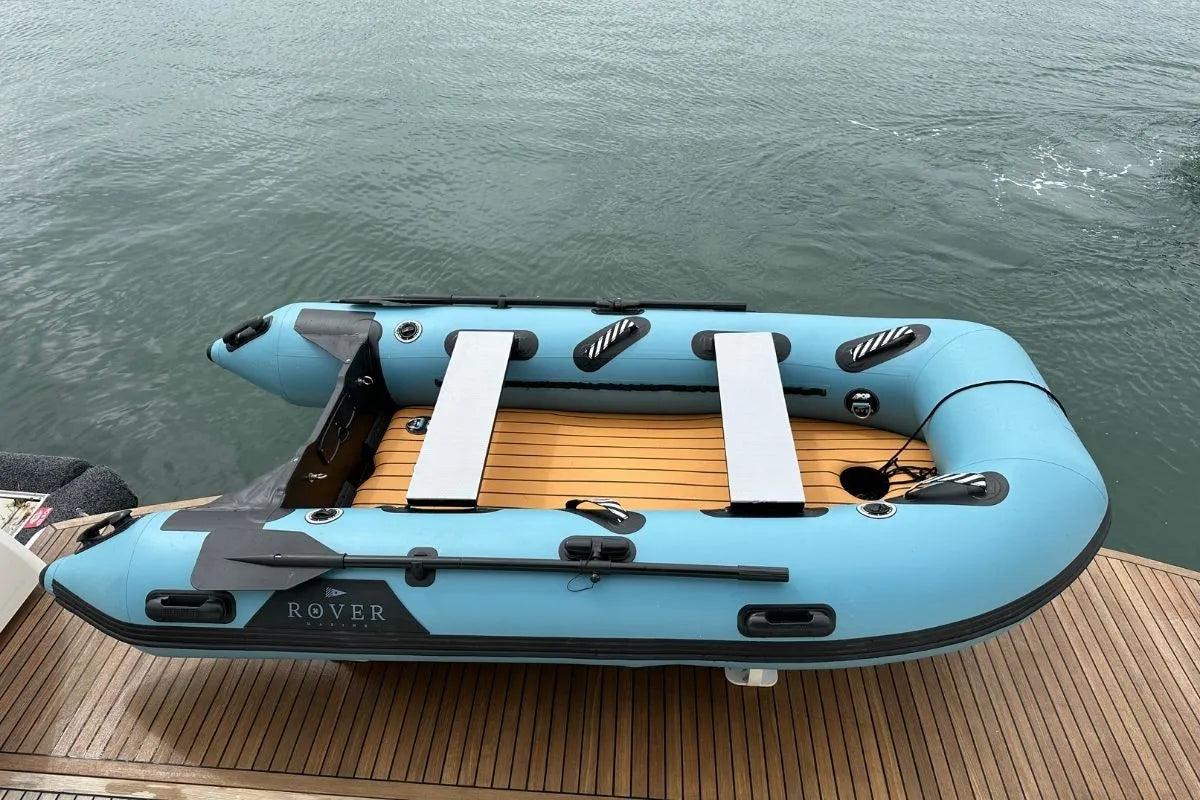
Fully inflatable boats, like those from Rover Marine, offer a unique blend of portability, versatility, and performance, making them ideal for everything from tenders and fishing platforms to leisure craft. Unlike rigid inflatable boats (RIBs), which combine a solid hull with inflatable tubes, fully inflatable boats rely entirely on their robust, multi-chambered inflatable structure for buoyancy and shape. This guide dives into the different types of fully inflatable boats, exploring their advanced materials like triple-layer reinforced military-grade PVC, and how their design choices impact stability, speed, and rough-water performance. You'll learn how fully inflatable boats, including catamaran and V-hull designs, perform on the water, how their materials affect upkeep and lifespan, and which configurations pair best with electric outboards from brands like ePropulsion and Torqeedo. We'll map hull forms to specific uses and provide practical checklists for tendering, diving, fishing, and coastal cruising. Throughout, we'll highlight key distinctions—fully inflatable versus rigid hull, catamaran versus V-hull—using comparison tables and actionable lists to help you pinpoint the perfect inflatable boat for your adventures. We will also explore how these fully inflatable boats offer unique advantages as high-quality alternatives or companions to traditional RIBs, providing complete deflation, compact storage, lighter weight, and easier transport.

Understanding Fully Inflatable Boats and How They Differ from Rigid Inflatable Boats (RIBs)
A rigid inflatable boat (RIB) is a compact vessel featuring a rigid hull, typically crafted from fiberglass or aluminum, complemented by inflatable tubes (pontoons) that provide essential buoyancy and reserve flotation. This hybrid design allows RIBs to plane swiftly, resist punctures thanks to distributed buoyancy, and deliver a more controlled, drier ride than fully inflatable boats. The tangible advantages include superior handling in choppy conditions, increased payload capacity, and quicker planing compared to soft-sided inflatable boats. Understanding these structural differences clarifies why discerning buyers opt for RIBs as offshore tenders, rescue craft, and stable fishing platforms. In contrast, fully inflatable boats, such as those from Rover Marine, are constructed entirely from durable, multi-chambered inflatable materials, offering unparalleled portability and ease of storage.
Defining Rigid Inflatable Boats (RIBs): A Closer Look at Their Hull and Tube Components
The defining elements of a RIB are its rigid hull, inflatable tubes with multiple air chambers, a transom for mounting propulsion, and flooring systems that can range from inflatable mats to rigid drop-stitch decks. The hull's shape—whether a deep V, flat-bottom, or catamaran—dictates its hydrodynamic behavior, while the tube material (Hypalon, PVC, or military-grade PVC) influences durability and resistance to UV rays and abrasion. Drop-stitch flooring creates a firm, flat deck that enhances load distribution and comfort, whereas inflatable floors prioritize minimal weight and easy pack-down. These component choices directly affect maintenance needs, repair complexity, and the boat's suitability for tasks like tendering or dive support, which we'll explore next. It's important to note that fully inflatable boats, like those from Rover Marine, achieve similar structural integrity and performance through entirely inflatable designs, utilizing high-pressure drop-stitch decks and robust tube construction.
How Do Rigid Inflatable Boats (RIBs) Measure Up Against Fully Inflatable Boats?
RIBs generally outperform fully inflatable boats in terms of speed, handling, and seaworthiness, thanks to the rigid hull's ability to cut through waves while the tubes offer buoyancy and shock absorption. Fully inflatable boats, however, excel in pack-down portability, lightweight design, and lower cost, making them appealing for occasional use and limited storage situations. Rover Marine's fully inflatable boats, for instance, offer complete deflation, compact storage, lighter weight, and easier transport. RIBs represent a greater initial investment and, depending on hull material, may require more robust trailer or davit infrastructure, but they offer significantly higher safety margins in challenging conditions. Comparing performance, durability, maintenance, portability, and price is key to matching the right boat to your intended use and storage realities.
What Are the Key Advantages of Opting for a Rigid Inflatable Boat (RIB)?
RIBs deliver a compelling combination of buoyancy, stability, and speed, benefiting both recreational enthusiasts and professional users through their robust design and predictable handling. High tube volume enhances reserve buoyancy and bolsters safety during swamping or in heavy seas, while rigid hulls (whether deep-V or catamaran) improve spray deflection and planing efficiency. Their inherent versatility makes RIBs ideal as yacht tenders, dive platforms, and fishing boats where rapid deployment and a steady platform are paramount. These advantages naturally lead to selecting an appropriate hull type—next, we'll break down the different hull families and their respective trade-offs.
Exploring Rigid Inflatable Boat (RIB) Hull Types and the Versatility of Fully Inflatable Boat Designs
While rigid inflatable boats (RIBs) offer various hull types—be it a fiberglass deep-V or aluminum—each significantly influences ride comfort, weight, maintenance requirements, and overall intended use. Each rigid hull type presents distinct trade-offs in terms of strength, weight, and handling: fiberglass offers excellent stiffness and a smooth ride; aluminum provides rugged durability and minimal maintenance. Fully inflatable boats, by contrast, offer complete deflation, compact storage, lighter weight, and easier transport, making them excellent alternatives or companions to RIBs. Below, you'll find a concise comparison of common RIB hull types, followed by an exploration of fully inflatable boat designs, to help you align boat attributes with your operational priorities and understand common selection criteria.
An introductory comparison table highlighting common RIB hull types and their practical attributes.
| Hull Type | Key Attribute | Typical Best Use |
|---|---|---|
| Fiberglass deep V | Stiff, smooth ride; excellent wave handling | Offshore cruising, demanding sea conditions |
| Aluminum | High strength-to-weight ratio; exceptionally durable | Commercial applications, workboats, rugged environments |
| Inflatable catamaran (RIB) | Exceptional dual-pontoon stability; rapid planing | Dive platforms, stable fishing, calm to moderate seas |
What Is a Fiberglass RIB Hull and Why Might You Choose It?
A fiberglass RIB hull utilizes molded composite construction to deliver superior stiffness, predictable handling, and outstanding energy absorption in choppy conditions. The deep-V forms commonly found in fiberglass hulls slice through waves effectively, minimizing slamming and enhancing comfort during offshore excursions. While fiberglass hulls can be heavier than their aluminum or fully inflatable counterparts, impacting trailering and power requirements, their ease of repair and finish options make them a popular choice for extended cruising. For buyers prioritizing ride comfort and hydrodynamic efficiency, a fiberglass deep-V hull often represents the optimal balance between performance and long-term upkeep.
How Does an Aluminum RIB Hull Compare in Terms of Strength and Weight?
Aluminum RIB hulls boast impressive strength-to-weight ratios and demonstrate remarkable resilience against impacts and abrasive environments, explaining their popularity in commercial and workboat sectors. While proper marine coatings and anodes are crucial for managing corrosion in saltwater, aluminum's inherent resistance to deformation and straightforward repairability contribute to its cost-effectiveness over time. In many designs, aluminum hulls are lighter than equivalently stiff fiberglass hulls, potentially increasing payload for a given powertrain. When durability and minimal long-term maintenance are key priorities, aluminum often emerges as the pragmatic choice.
What Are the Benefits of Fully Inflatable Catamaran Hulls, Such As Those Found on the Rover Marine Battle Cat?
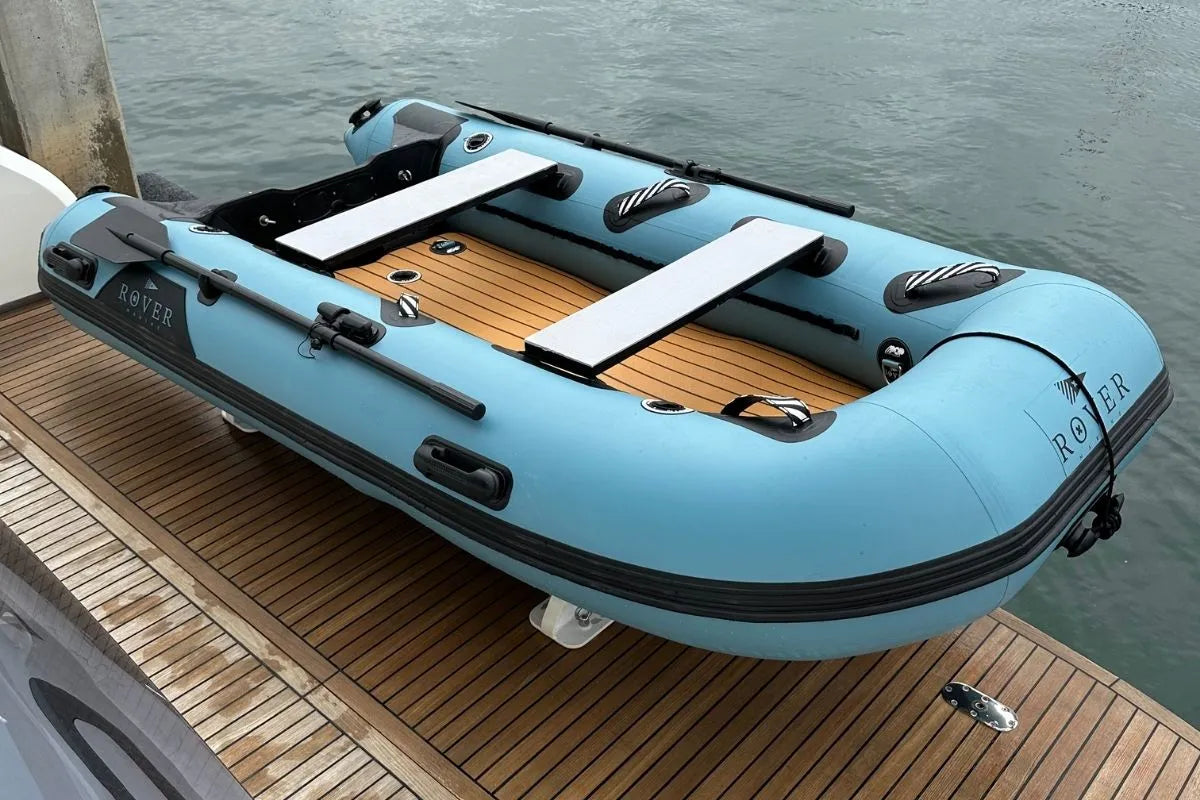
Fully inflatable catamaran hulls, like the Rover Marine Battle Cat, employ dual pontoons to create significant lateral separation and a broad waterplane, thereby enhancing both initial and secondary stability compared to single-hull designs. The catamaran configuration also reduces wetted surface area at planing speeds, facilitating quicker planing and more efficient cruise performance under lighter loads; this can translate into notable fuel or battery savings, especially with electric propulsion. For tasks where stability is paramount—such as diving operations, angling platforms, or tendering in choppy anchorages—a fully inflatable catamaran layout like the Battle Cat provides a remarkably steady and accessible deck. The Rover Marine Battle Cat features triple-layer reinforced military-grade PVC construction, 10 psi drop-stitch decks, and 3.5 psi tubes. It is available in 8 ft, 10 ft, and 12 ft sizes, with engine ratings up to 6 HP, 10 HP, and 20 HP respectively, and comes with a 3-Year Warranty plus 60-Day Rider’s Guarantee. Operators who value enhanced steadiness over a potentially different wet ride often favor this configuration, especially when combined with the benefits of full deflation and compact storage.
Inflatable Vessel Design Study: Parameters, Objectives, and Capabilities
The study consists of a variety of designs based on parameters and objectives provided by NUWC and Powerdocks. The goal of the study was to have students design concept vessels for their numerous applications based on their specifications. Some of these objectives the sponsors were looking for included an inflatable vessel capable of navigating at sea-state 3-5 and be able to carry a load of 100 lbs. Additionally, the vessel needs to have the ability to maneuver at a 6 knot hull speed and feature puncture resistance.
Inflatable Vessel Design Study, 2019
How Do Fully Inflatable Boat Hulls Offer Superior Portability and Versatility?
Fully inflatable boat hulls, such as the Rover Marine Battle Boat, are designed with low weight and simple folding mechanisms for effortless storage and transport, allowing owners to stow them in compact lockers or pack them for road trips. The Rover Marine Battle Boat features an inflatable V-hull with a high-pressure 10 psi drop-stitch deck and 3.5 psi tubes, constructed from triple-layer reinforced military-grade PVC. It is available in 8 ft, 10 ft, and 12 ft sizes, with engine ratings up to 6 HP, 10 HP, and 20 HP respectively, and includes a 3-Year Warranty plus 60-Day Rider’s Guarantee. The trade-off is a softer ride and less precise handling at higher speeds compared to their rigid-hulled counterparts, though modern tube constructions and multi-chamber designs effectively bridge this gap for many coastal and inshore applications. These are ideal for those needing a compact yacht tender, a weekend recreational craft, or an easily trailered boat. These hulls truly shine for portability-focused buyers who value convenience and a minimal storage footprint.
Understanding Tube Materials for Rigid Inflatable Boats (RIBs) and Fully Inflatable Boats
For traditional rigid inflatable boats (RIBs), the choice of tube material—Hypalon, PVC, or military-grade PVC—directly influences UV resistance, abrasion resistance, repairability, and overall lifecycle cost, while seam construction and floor materials further refine performance and longevity. Hypalon offers exceptional UV and chemical resistance, tending to last longer in harsh sun and salt environments, whereas PVC is lighter and more economical but may necessitate more frequent protective care. Reinforced seams and drop-stitch flooring enhance structural integrity, reduce flex, and extend the usable service life. Understanding these material trade-offs helps predict repair frequency, necessary maintenance actions, and the total cost of ownership. It is important to note that fully inflatable boats like those from Rover Marine utilize triple-layer reinforced military-grade 1100D PVC for their entire construction, offering a balance of durability, weight, and cost-effectiveness, specifically engineered for their unique fully inflatable designs.
An introductory table comparing common tube materials for traditional RIBs and their structural trade-offs.
| Tube Material | Durability Attribute | Practical Impact |
|---|---|---|
| Hypalon | Excellent UV & chemical resistance | Extended lifespan, reduced long-term maintenance |
| PVC | Lightweight, cost-effective | Lower initial cost, requires more frequent protective care |
| Military-grade PVC | Reinforced PVC blend | Enhanced abrasion resistance and value balance |
What Are the Properties of Hypalon Tubes and Their Distinct Advantages?
Hypalon (CSM) is highly valued for its superior UV resistance, chemical stability, and long-term dimensional integrity, which translates into an extended service life, especially in sun-exposed marine settings. Hypalon tubes resist fading and brittleness far better than standard PVC, reducing the need for premature replacement and intensive protective treatments. The primary trade-off is a higher initial material cost and sometimes increased weight, but for operators planning heavy or prolonged use in sunny regions, Hypalon's inherent durability often results in lower lifecycle costs. Proper cleaning and occasional protective coatings will still extend service intervals and preserve its appearance. This material is typically found in traditional RIBs with rigid hulls, not in fully inflatable boats.
How Does Military-Grade PVC Compare to Hypalon for RIB Tubes?
Military-grade PVC blends are specifically engineered to boost abrasion resistance and seam strength while retaining PVC's inherent cost and weight advantages, effectively creating a middle ground between standard PVC and Hypalon for traditional RIB tubes. This material can deliver robust performance for numerous recreational and tender applications where maximum UV resistance isn't the absolute top priority, but durability and portability remain crucial. Maintenance is typically less demanding than with standard PVC, although Hypalon still generally outperforms military-grade PVC under prolonged UV stress. For buyers seeking to balance cost, weight, and longevity in a traditional RIB, military-grade PVC often presents a compelling compromise. For fully inflatable boats like Rover Marine, triple-layer reinforced military-grade 1100D PVC is the material of choice, providing exceptional durability and performance for their unique fully inflatable design.
How Do Reinforced Seams and Drop-Stitch Flooring Elevate Inflatable Boat Durability?
Reinforced seams—achieved through methods like double-taping, blind-stitching, or high-frequency welding—effectively reduce stress concentration and minimize leak risks, while multi-chamber tube layouts significantly improve survivability should a single chamber be compromised. Drop-stitch flooring utilizes thousands of high-tensile microfilaments connecting two fabric layers to create a high-pressure, rigid deck that distributes loads evenly and reduces tube flex under weight. These advanced construction features minimize wear on tubes and hull attachments and enhance handling by stiffening the overall structure, though they do add manufacturing complexity and sometimes weight. When evaluating an inflatable boat, prioritize seam quality and floor construction that align with the expected operational stresses. Fully inflatable boats, such as those from Rover Marine, also leverage high-pressure drop-stitch decks (10 psi) and reinforced seams in their triple-layer military-grade PVC construction to achieve similar structural integrity and durability within their fully inflatable design.
Comparing Performance: Stability, Speed, and Rough Water Capabilities of RIBs and Fully Inflatable Boats
An inflatable boat's performance on the water is a direct result of its hull form (whether rigid or fully inflatable), tube volume, and propulsion system; consequently, stability, planing efficiency, and chop-handling capabilities vary significantly by design, influencing their suitability for offshore versus sheltered-water use. For rigid inflatable boats (RIBs), catamaran hulls and large-volume tubes tend to favor initial stability and efficient planing for lighter crews, while deep-V fiberglass hulls excel at suppressing slamming and maintaining directional control in waves. Fully inflatable boats, particularly catamaran designs like the Rover Marine Battle Cat, also offer exceptional stability and efficient planing due to their unique construction. Operators selecting any inflatable boat for rough water must carefully consider hull strength, multi-chamber redundancy, and sufficient engine power to ensure adequate safety margins. Below, we'll unpack the underlying mechanics and practical criteria for choosing designs that are best matched to your operating environments.
Why Are Catamaran Hulls Generally More Stable and Faster on the Water?
Catamaran inflatable hulls achieve greater lateral separation of their buoyant volumes, increasing the righting moment and reducing roll, which enhances apparent stability for standing passengers and during gear work. The twin-hull arrangement also minimizes wetted surface area at planing speeds, promoting earlier and more efficient planing for light to moderate loads, often resulting in better acceleration and fuel efficiency than comparable single deep-V designs. This geometry also moderates pitching in short chop but can transmit more slamming in steep seas, so operators should match catamaran selection to typical sea states and anticipated payloads. For applications where a stable, quick platform is essential—such as diving or angling—the catamaran form truly excels. Fully inflatable catamaran boats, like the Rover Marine Battle Cat, offer these stability and planing benefits within a design that can be completely deflated and stored compactly.
How Does a Deep V Fiberglass Hull Enhance Ride Comfort and Handling?
The deep-V hull geometry increases the deadrise angle at the keel, enabling the hull to slice through waves more effectively and disperse slamming energy across the hull form, thereby reducing shock transmitted to passengers. This design results in a drier, more comfortable ride in longer, wind-driven seas and improves directional stability at higher speeds. The trade-offs include increased weight and potentially higher power requirements to achieve equivalent speeds, along with reduced fuel economy at lower speeds. For offshore routes and consistently choppy conditions, deep-V fiberglass hulls provide the control and comfort many operators demand.
Are RIBs Generally Suitable for Rough Water and Offshore Use?
A RIB's suitability for offshore conditions hinges on its rigid hull strength, tube volume and redundancy, integrated safety equipment, and propulsion capacity to maintain planing speeds and navigate adverse conditions safely. Multi-chamber tubes, robust hull-to-tube joint construction, and proper transom reinforcement are critical design requirements for extended offshore use; adequate battery or fuel reserves and heavy-weather handling features (like spray rails and crash bulkheads) are also essential. RIBs engineered with these considerations are widely employed for inshore and limited offshore work, but operators must always match boat size, hull type, and engine power to expected sea states and voyage profiles to ensure safety and efficiency.
Hydroelasticity in Inflatable Boat Design: Challenges and New Methodologies
Inflatable boats are considerably more flexible than conventional metal or composite vessels. The RNLI have developed an inflatable boat, the IB1, with improved performance which has been attributed to its flexibility or hydroelasticity. Current design methodologies for planing vessels predict the performance assuming it is rigid. Designing an entirely hydroelastic boat presents completely new design challenges and will require new design methodologies in the future.
Hydroelastic inflatable boats: relevant literature and new design considerations, PA Wilson, 2012
Best Uses for Fully Inflatable Boats and Rigid Inflatable Boats (RIBs)
Mapping specific fully inflatable boat designs or rigid hull and tube combinations to particular tasks helps clarify expected performance and necessary features for yacht tenders, fishing, diving, and leisure cruising. Key choice factors include stowage constraints, deck layout preferences, motor compatibility, and payload requirements, while accessories like rod holders, dive ladders, and davit reinforcements can tailor boats for specialized work. Below, you'll find detailed use-case breakdowns and model recommendations that reflect typical mission demands and ideal equipment pairings for both fully inflatable boats and RIBs.
Why Rigid Inflatable Boats (RIBs) and Fully Inflatable Boats Are Ideal as Yacht Tenders and Support Boats
Both rigid inflatable boats (RIBs) and fully inflatable boats offer compelling qualities as yacht tenders and support vessels. RIBs provide predictable launch and recovery behavior and impressive load-carrying capacity relative to their size. Essential tender features for RIBs include a low trailering weight, davit-compatible lifting points, and compatibility with quiet electric propulsion for seamless marina approaches. For owners seeking dedicated tender options, fully inflatable boats like the Rover Marine Battle Boat provide an excellent alternative, well-suited for lightweight tender duties due to its inflatable V-hull and high-pressure drop-stitch deck. The Rover Marine Battle Cat offers a more stable, fully inflatable catamaran-style option for those prioritizing steady boarding platforms. These choices empower vessel teams to match tender geometry precisely to yacht handling systems and available storage limits, with fully inflatable options providing the added benefit of complete deflation for compact storage and unparalleled ease of transport.
How Do Fully Inflatable Boats and RIBs Enhance the Fishing and Diving Experience?
Both fully inflatable boats and rigid inflatable boats (RIBs) provide stable working decks, ample transom space for mounting motors and gear, and straightforward attachment points for fishing and dive equipment, all of which streamline operations. Enhanced stability, whether from larger tubes or catamaran layouts, offers anglers and divers a confident platform for standing, casting, and entering the water, while modular storage and removable seating maximize usable deck area. Recommended accessories include integrated rod holders, a reinforced transom, and a foldable dive ladder to simplify water entry and gear stowage. For fishing or diving where stability is paramount, a fully inflatable catamaran like the Rover Marine Battle Cat is a highly practical recommendation, featuring triple-layer reinforced military-grade PVC construction, 10 psi drop-stitch decks, and 3.5 psi tubes, available in 8 ft, 10 ft, and 12 ft sizes with engine ratings up to 6 HP, 10 HP, and 20 HP respectively, and a 3-Year Warranty plus 60-Day Rider’s Guarantee. For lighter, more portable dive tenders, the Rover Marine Battle Boat, with its inflatable V-hull and drop-stitch deck, strikes an excellent balance between transportability and platform utility.
What Makes Fully Inflatable Boats and RIBs Particularly Suitable for Leisure Cruising and Coastal Exploration?
Leisure operators typically prioritize seating comfort, options for sun and shade, ample storage for provisions, and motor selection that ensures a sensible range for day trips. For both fully inflatable boats and RIBs, features like plush cushioned seating, moderate tube volume for a stable ride, and drop-stitch floors for comfortable standing are common priorities for coastal cruising craft. Electric propulsion options significantly reduce noise and enhance onboard comfort for close-to-shore excursions, and efficient hull designs extend range for a given battery or fuel capacity. When planning leisure trips, carefully consider the layout, desired range, and transom strength to support your chosen propulsion and accessories for an enjoyable day-boat experience.
Fully Inflatable Boats: The Smart Companion for RIB and Yacht Owners
Many owners of traditional RIBs and larger yachts are discovering the significant advantages of incorporating a fully inflatable boat, such as those from Rover Marine, into their marine setup. These versatile vessels serve as ideal secondary or backup craft, offering capabilities that rigid-hulled boats simply cannot match. The primary benefit lies in their ability to fully deflate and pack down into compact bags, allowing for convenient storage in yacht lockers, boat garages, or even the trunk of a car. This eliminates the need for trailers or davits, simplifying transport and deployment.
In emergency situations, a fully inflatable boat provides crucial emergency access to shore, acting as a reliable lifeboat or a quick-response tender when the primary vessel is inaccessible or compromised. Their lightweight design and ease of launch make them invaluable for unexpected needs. Beyond emergencies, they offer flexible use for a variety of activities, from exploring shallow coves inaccessible to larger boats, to providing a stable platform for children to play near the shore, or even as a portable fishing platform for spontaneous outings. With their robust triple-layer reinforced military-grade PVC construction, 10 psi drop-stitch decks, and 3.5 psi tubes, Rover Marine's fully inflatable boats deliver durability and performance in a package that prioritizes portability and convenience, making them an indispensable addition for any discerning boater.
How Do Electric Outboard Motors Complement Fully Inflatable Boats and Rigid Inflatable Boats (RIBs)?
Electric outboard motors offer quiet, low-vibration propulsion, simplified maintenance, and reduced operating emissions, aligning perfectly with many inflatable boat use cases such as marina approaches, tender duties, and eco-conscious coastal cruising. Fully inflatable boats, with their lighter hull weight and efficient designs, often pair exceptionally well with electric motors due to their instant torque, making them highly efficient and enjoyable for quiet exploration. For rigid inflatable boats (RIBs), key compatibility considerations revolve around transom strength, shaft length, thrust equivalence to gasoline outboards, and weight distribution impacting trim. Leading brands like ePropulsion and Torqeedo provide advanced marine electric solutions with varying power and weight profiles, suitable for a wide range of inflatable boat sizes and mission requirements. Below, you'll find a compatibility-focused table and practical notes on integrating electric systems into both fully inflatable boat and RIB platforms.
An introductory compatibility table mapping electric outboard brands to their attributes and suitability.
| Motor Brand | Power/Thrust Equivalent | Compatibility Notes |
|---|---|---|
| ePropulsion | Often comparable to smaller gasoline outboards | Lightweight options ideal for tenders and small RIBs, and perfectly suited for fully inflatable boats like the ePropulsion Spirit 1.0 Plus. |
| Torqeedo | Integrated battery-motor systems with marine-grade controls | Excellent for leisure cruisers and extended-range electric applications, with models like the Torqeedo Travel 1103 S being a great match for fully inflatable boats. |
| Gasoline outboard (reference) | High peak power and extensive range | Traditional benchmark for power equivalence and weight comparison |
What Are the Benefits of Using ePropulsion and Torqeedo Electric Motors with Fully Inflatable Boats and RIBs?
ePropulsion and Torqeedo motors significantly reduce noise, vibration, and local emissions while simplifying routine maintenance compared to gasoline outboards, thereby enhancing the onboard experience during tendering and quiet cruising for both fully inflatable boats and RIBs. Electric motors deliver instant torque at low speeds, which is invaluable for precise maneuvering near docks or during dive operations, and their modular battery systems offer scalable range for day-long missions. Fully inflatable boats, with their lighter weight and efficient designs, integrate seamlessly with travel-class electric outboards like the ePropulsion Spirit 1.0 Plus and Torqeedo Travel 1103 S, enabling operators to pair appropriate power units with their chosen fully inflatable model and intended usage. Selecting an electric system involves carefully balancing weight, battery capacity, and expected mission profiles.

How Do Electric Motors Improve Fuel Efficiency and Eco-Friendliness?
Electric propulsion converts stored electrical energy into thrust with significantly higher drivetrain efficiency than internal combustion engines, translating into lower operating costs per mile, particularly for frequent short trips and nearshore operations. The reduction in emissions and quieter operation also minimize environmental impact and disturbance to marine life in sensitive areas, which is increasingly vital for conservation-minded boaters. Charging logistics—whether relying on shore power access or onboard charging systems—critically shape real-world usability, so careful planning for battery management and range expectations is essential when transitioning to electric power. For many tender and coastal cruising scenarios, electric outboards represent a practical and environmentally responsible alternative.
Which Fully Inflatable Boat and RIB Models Are Best Suited for Electric Outboards?
Compatibility for electric outboards is determined by factors such as transom reinforcement, weight distribution, required shaft length, and the thrust equivalent needed to plane the specific hull at its design load. Fully inflatable boats, due to their lighter weight and efficient hull forms, are particularly well-suited for electric outboards; smaller tenders and catamaran inflatables can often effectively utilize travel-class electric outboards. For example, Rover Marine’s fully inflatable Battle Boat and Battle Cat models are designed to support these pairings, integrating seamlessly with travel-class electrics for tender and leisure applications. For rigid inflatable boats (RIBs), it's crucial to match motor thrust to recommended horsepower equivalents, verify transom mounting standards, and confirm battery placement for optimal trim and safe load distribution. Practical installation notes include confirming transom structural reinforcement and planning for battery storage in well-ventilated, secure compartments.
Common Questions About Fully Inflatable Boats and Rigid Inflatable Boats (RIBs)
Buyers and operators frequently inquire about structural differences, tube lifespan, repairability, and the overall trade-offs of owning either a fully inflatable boat or a rigid inflatable boat (RIB); providing concise, practical answers helps set realistic expectations. Below are focused responses to common queries, optimized for clear decision-making regarding materials, maintenance, and operational planning. These answers are designed to be actionable and to guide readers toward more in-depth technical sections when further guidance is needed.
What Is the Fundamental Difference Between a Rigid Inflatable Boat (RIB) and a Fully Inflatable Boat?
A rigid inflatable boat (RIB) uniquely combines a rigid hull (typically fiberglass or aluminum) with inflatable tubes, whereas a fully inflatable boat relies entirely on its inflated envelope for shape and buoyancy, lacking a structured rigid hull. The rigid hull of a RIB provides superior planing capabilities, enhanced handling, and a drier ride, while fully inflatable boats excel in pack-down portability, lower initial cost, and complete deflation for compact storage. Repairability also differs: while fully inflatable boats are generally simpler to patch in the field, RIBs' multi-chamber tubes and rigid hulls typically offer higher safety margins and better performance in adverse conditions. The choice between them ultimately depends on your priorities, such as transportability, offshore capability, and routine operating environments.
How Long Do Inflatable Boat Tubes Typically Last, and Can They Be Repaired?
Tube lifespan for inflatable boats (both RIBs and fully inflatable models) varies significantly based on material and owner care: Hypalon tubes (common in RIBs) can endure many years with consistent UV protection, while PVC and military-grade PVC (used in both RIBs and fully inflatable boats like Rover Marine's) may require more frequent maintenance but still deliver multiple seasons of reliable service. Patching and section repair are standard procedures for both types; small tears can often be repaired in situ, whereas larger damage or seam failures generally necessitate professional repair to restore structural integrity and rated pressure. Regular inspection of seams, valves, and tube fabrics, coupled with proper cleaning and protective coatings, can significantly extend tube service life. Owners should pay close attention to abrasion points and adhere to manufacturer guidelines regarding pressure and storage. Fully inflatable boats, such as those from Rover Marine, constructed with triple-layer reinforced military-grade PVC, also benefit from similar care routines to maximize their lifespan.
What Are the Potential Disadvantages of Rigid Inflatable Boats (RIBs)?
RIBs can sometimes come with a higher initial cost compared to basic inflatables, particularly when equipped with premium materials, drop-stitch floors, or deep-V hulls. Their heavier rigid hulls may also complicate trailering and davit handling, requiring more robust infrastructure. Tube maintenance demands vigilant UV and abrasion protection, along with occasional seam inspections; repairs can also be more costly than for simpler soft inflatables. Some high-performance RIBs may consume more energy at speed due to heavier hulls or larger displacements, making propulsion choices critical for long-range missions. While these downsides are typically outweighed by enhanced performance and safety, buyers should carefully balance desired features against their operational budgets.
What Is Considered the Best Material for Inflatable Boat Tubes and Hulls?
There isn't a single "best" material; selection typically follows a rule of thumb: for offshore, frequent-use rigid inflatable boats (RIBs), Hypalon tubes and fiberglass hulls are favored for longevity and ride quality; commercial or impact-prone RIBs often opt for aluminum hulls due to their strength. For fully inflatable boats, like those from Rover Marine, triple-layer reinforced military-grade 1100D PVC is the preferred material, offering a robust and portable solution. The decision-making process balances UV exposure, expected abrasion levels, budget constraints, and storage patterns. Consistent maintenance and proper protective measures can narrow the lifespan gaps between materials, so it's best to think in terms of mission fit rather than absolute material superiority.
Are Fully Inflatable Boats and RIBs Generally Easy to Transport and Store?
Transport and storage ease depend heavily on the boat type: fully inflatable boats (like Rover Marine's models) pack down into compact bags and are easily transported by road, whereas rigid-hull RIBs necessitate trailers or davits and occupy a larger storage footprint. Key checklist items include trailering weight, hull beam for road regulations, davit compatibility for yacht stowage, and inflation/deflation time for fully inflatable variants. Guidance for long-term storage includes selecting dry, shaded environments and slightly reducing tube pressure to relieve stress on seams, which helps preserve materials over winter or inactive seasons.
- Inflation/deflation checklist: Confirm valve integrity, follow recommended pressure charts (e.g., 10 psi for drop-stitch decks, 3.5 psi for tubes on Rover Marine boats), and securely fasten tube covers.
- Trailering checklist: Verify tongue weight, ensure transom protection, and check tie-down points before launching.
- Storage checklist: Thoroughly clean off salt and contaminants, apply UV protective treatments, and store in a well-ventilated, shaded area.
These practical lists are designed to support operational readiness and align material choices with transport and storage needs, effectively closing the loop between initial design selection and day-to-day ownership.
Frequently Asked Questions About Inflatable Boats
What are the typical maintenance requirements for Fully Inflatable Boats and RIBs?
Maintaining an inflatable boat (whether fully inflatable or a RIB) involves regular inspections of both the rigid hull (for RIBs) and tubes, checking for any signs of wear and tear, and ensuring all seams remain intact. Tube materials like Hypalon (for RIBs) and PVC (for both) require distinct care routines; Hypalon benefits from consistent UV protection, while PVC may need more frequent cleaning and specialized treatments. Furthermore, the rigid hull of a RIB should be kept clean to prevent corrosion, especially crucial for aluminum models. Regularly servicing the engine and electrical systems, particularly for electric outboards, is also vital for ensuring optimal performance and longevity.
Can Fully Inflatable Boats and RIBs be safely used in freshwater environments?
Absolutely, both fully inflatable boats and RIBs are well-suited for use in freshwater environments, and many owners enjoy them for activities such as fishing, leisurely cruising, and water sports. However, it's important to consider the specific materials of the rigid hull (for RIBs) and tubes, as prolonged saltwater exposure can accelerate corrosion and wear. Even when used in freshwater, regular maintenance and cleaning are still necessary to prevent algae buildup and other common freshwater-related issues. Inflatable boats are remarkably versatile and adapt well to various water conditions, making them a suitable choice for both salt and freshwater applications.
What essential safety features should I look for when choosing an Inflatable Boat?
When selecting an inflatable boat (either a fully inflatable model or a RIB), prioritize essential safety features such as multi-chamber tubes for enhanced buoyancy redundancy, robustly reinforced transoms, and adequate built-in flotation devices. Additionally, consider boats equipped with standard safety equipment like navigation lights, fire extinguishers, and comprehensive first aid kits. Some models may also offer integrated storage solutions for safety gear and emergency supplies. Crucially, ensure that the inflatable boat complies with all local safety regulations and standards for safe operation, especially when venturing into offshore or rough water conditions.
How do I determine the right size Inflatable Boat for my specific needs?
Choosing the correct inflatable boat size (whether fully inflatable or a RIB) hinges on several key factors, including your intended use, the typical number of passengers, and your available storage capabilities. Carefully consider the required payload capacity for your planned activities, such as carrying fishing gear or diving equipment. Also, think about the space needed for storage and transport, as larger boats will naturally require more significant storage solutions. It's equally important to match the boat's size with the appropriate engine power to guarantee optimal performance and safety on the water.
What are the best practices for storing an Inflatable Boat during the off-season?
To properly store an inflatable boat (fully inflatable or RIB) during the off-season, begin by thoroughly cleaning the rigid hull (if applicable) and tubes to remove all salt, dirt, and debris. Slightly deflate the tubes to relieve pressure on the seams, and store the boat in a dry, shaded location to prevent UV damage. If possible, use a protective cover to shield it from dust and moisture. Additionally, ensure that the engine and electrical systems are winterized according to the manufacturer's guidelines to prevent damage from freezing temperatures. Performing regular checks during storage can help maintain the boat's condition over time.
Are there specific accessories that can significantly enhance an Inflatable Boat's functionality?
Yes, a variety of accessories can substantially enhance the functionality of an inflatable boat (both fully inflatable models and RIBs). Common additions include integrated rod holders for fishing enthusiasts, dive ladders for effortless water entry, and smart storage solutions like modular compartments for gear organization. Essential safety accessories such as life jackets, flares, and first aid kits are also crucial. For leisure cruising, consider adding comfortable cushioned seating or deployable sunshades for enhanced comfort. Furthermore, electric outboard motors can improve efficiency and reduce noise, making them a popular choice for eco-conscious users. Tailoring accessories to your specific activities can dramatically elevate your inflatable boat experience.
Explore Fully Inflatable Alternatives and Companions
Discover the versatility, portability, and convenience of high-quality fully inflatable boats. Perfect as primary craft for light adventures or as indispensable tenders and backup vessels for your yacht or RIB.

Leave a comment
This site is protected by hCaptcha and the hCaptcha Privacy Policy and Terms of Service apply.