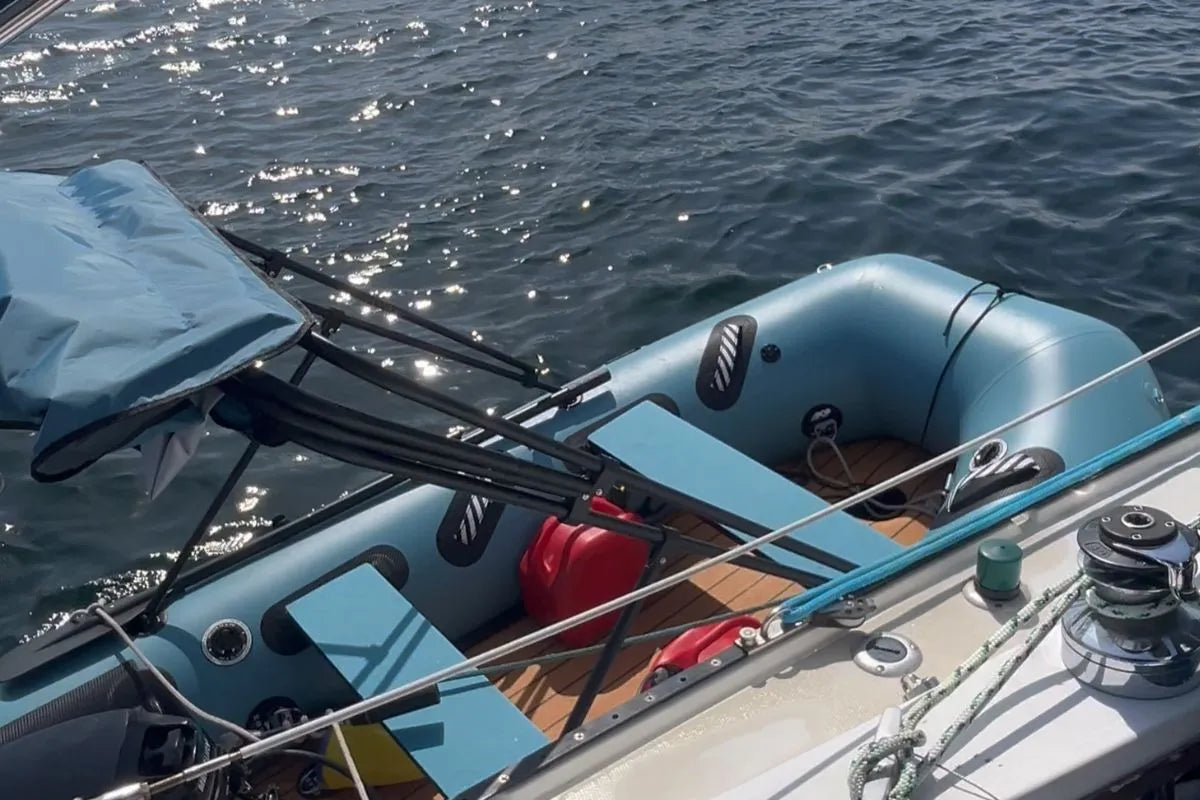
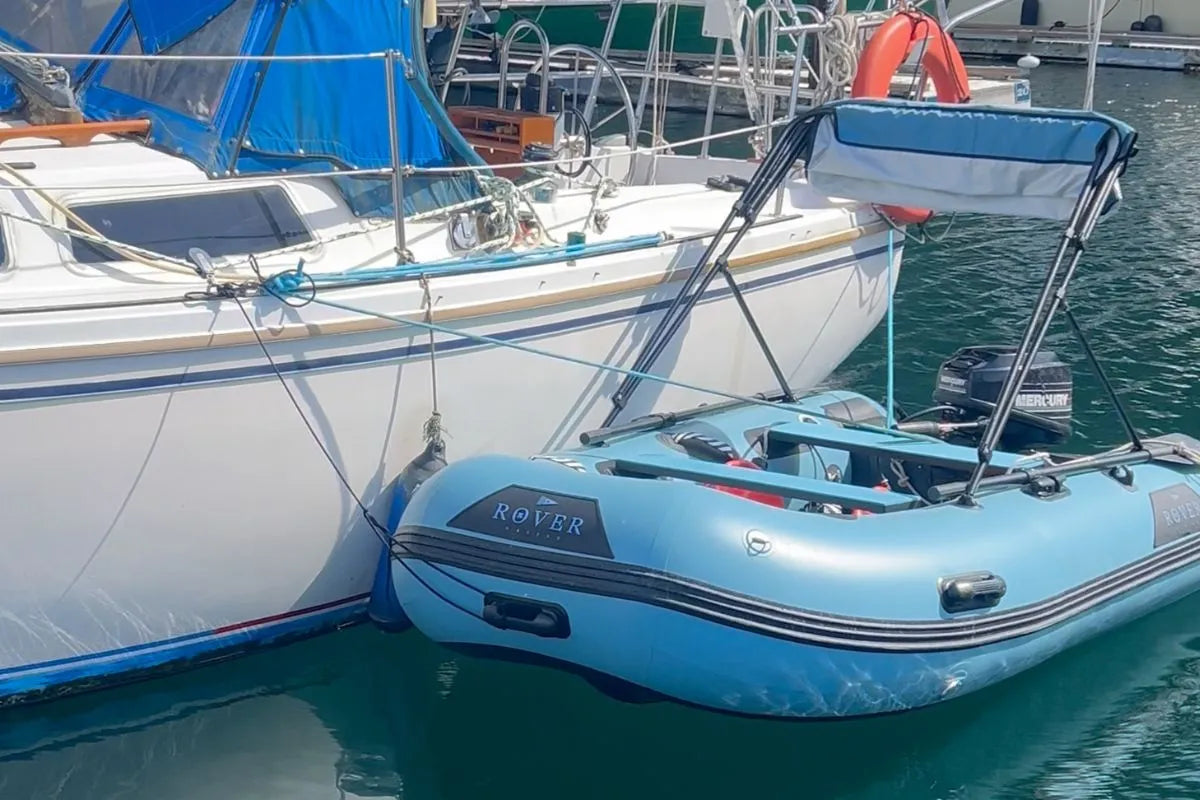
Your tender is not an accessory. It is a daily driver. It runs you to shore for groceries, ferries guests through anchorages, hauls fuel jugs, handles marina errands, and gives you a second small vessel when the mothership needs backup.
The American Boat and Yacht Council maintains small-craft standards covering systems such as load capacity, powering, and inflatable boats. That is the right mindset for tender buying. A tender is not loose deck gear. It is a working boat that needs to match your yacht, your crew, your storage system, and the water you actually run.
And yet most cruisers buy theirs wrong the first time. Too small to handle chop. Too heavy for the davits. Wrong hull for the places they actually anchor. This 2026 buyer’s guide fixes that for US boaters running anywhere from the Chesapeake to the Sea of Cortez.
Quick answer: The best yacht tender is the smallest boat that safely carries your normal crew and gear, fits your storage system, stays within your davit or deck weight limit, and handles the chop in your usual cruising grounds. For Rover Marine buyers, the Battle Boat is the compact, packable choice. The Battle Cat is the stability-first inflatable catamaran choice.

Why Your Tender Choice Matters More Than You Think
Three scenarios play out every season:
Undersized tender, crowded anchorage. You cannot take the whole crew to shore in one run. Two trips in a chop, both wet.
Oversized tender, undersized davits. The tender hangs wrong, overloads the lift system, or becomes a problem in a following sea.
Wrong material, hard UV exposure. Tube fabric that is fine for weekend lake use may age faster if it sits uncovered in tropical sun for months.
Tender mistakes get expensive because the boat gets used constantly. A bad fit is not something you notice once a season. You notice it every grocery run, every beach landing, every guest transfer, and every wet ride back to the yacht.
Do not be one of those owners.
Rule of Thumb: Yacht Length to Tender Length
There is no single formula, but the working range many cruisers use is roughly 10 to 15% of yacht LOA for the tender. Go bigger if you have 4 or more people aboard full-time. Smaller is fine if it is usually a couple, a dog, and a dry bag.
| Yacht LOA | Typical Tender Length | Typical Capacity |
|---|---|---|
| 28 to 34 ft | 7.5 to 8.5 ft | 2 to 3 adults |
| 35 to 42 ft | 9 to 10.5 ft | 3 to 4 adults |
| 43 to 50 ft | 10.5 to 12 ft | 4 to 5 adults |
| 51 to 65 ft | 12 to 14 ft | 5 to 6 adults |
| 66 ft and up | 14 ft and up | 6 or more adults |
This is a starting point, not gospel. A 38 ft catamaran with beam to spare can carry a larger tender than a narrow 45 ft monohull. Davits, deck space, swim platform layout, and where you cruise matter just as much as LOA.
If you want a deeper dimensional breakdown, read Rover Marine’s inflatable dinghy size comparison guide before you buy.

Hull Types: RIB vs Soft Inflatable vs Catamaran-Inflatable
Rigid Inflatable Boat (RIB)
A RIB uses a fiberglass or aluminum hull with inflatable collars. It planes easily, handles chop well, and can take a larger outboard. The downsides are simple: it is heavier, does not pack down, usually needs davits or chocks, and costs more.
Soft inflatable
A soft inflatable uses inflatable tubes with an inflatable, slatted, or drop-stitch floor. It packs into a bag, moves by SUV or cockpit locker, and works well for owners who do not want trailer or davit drama. The tradeoff is that it generally carries less horsepower and has more flex than a rigid hull in heavier chop.

Inflatable catamaran
An inflatable catamaran uses twin inflatable sponsons with a bridging deck. The big advantage is initial stability. That matters when someone steps off a pitching swim platform with a backpack, a dog leash, or a bag of provisions. The tradeoff is width. A cat-style tender can take more deck planning than a narrow single-hull inflatable.
For a side-by-side look at construction differences, see Rover Marine’s rigid vs soft inflatable boat guide.
The Battle Cat is an inflatable catamaran purpose-built for wide-beam stability, a serious advantage when you are stepping off a pitching swim platform into chop. The Battle Boat is a packable traditional-hull inflatable for cruisers who prioritize stowability.
Weight Budget: Davits, Transom Mounts, and Deck Stow
Every tender option has to live somewhere on the yacht. Work the weight backward from your platform.
Davit limits
Check the actual rated working load of your davit system, not what the previous owner said at the dock. Your tender, motor, battery, fuel, water, anchor, and gear all count. A wet tender hanging off the stern in a roll can load the system harder than the same tender sitting still at the dock.
Do not buy the boat first and hope the davits agree. Verify the davit rating, measure the span, and leave margin.
Transom mount
A transom mount can work for smaller cats and monohulls, but it adds windage and can interfere with steering gear, windvanes, boarding ladders, or swim platforms. Check that your rudder, vane, and boarding path all clear when the tender is stowed.
Deck stow, deflated
Deflated stow is the most flexible option. The 8 ft Battle Boat lists a deflated size of 38 in x 24 in x 15 in and a weight of 86 lb assembled. That can work for many cockpit lockers, SUV cargo areas, RV bays, and yacht storage spaces, but measure the locker before buying. Not the locker you think you have, the one you actually have.
Deflated stow also means you can pull the tender entirely for long passages, reducing UV exposure and windage.
Outboard Pairing: Gas vs Electric at Tender Level
For years, the default tender outboard was a small 2.5 to 6 hp gas motor. That is still a practical choice for longer runs and heavier loads, but electric has become a serious tender option.
Gas at the tender
Pros: familiar, widely serviceable, long range with spare fuel, and strong power for heavier loads.
Cons: fuel storage, fumes, maintenance, carburetor issues, oil, noise, and theft risk in some anchorages.
Electric at the tender
Pros: quiet operation, no onboard gasoline for short tender runs, low routine maintenance, easy dock or yacht charging when your setup supports it, and removable batteries on some models.
Cons: range limit per charge, higher upfront cost, battery planning, and slower recovery if you forget to charge.
The ePropulsion Spirit 1.0 Plus Short Shaft is listed by Rover Marine at $2,999 and delivers 1kW, or 3HP-equivalent, output. The Torqeedo Travel 1103 S Short Shaft Extended Range Package is listed at $3,599 and delivers 3HP-equivalent thrust with an integrated 1080Wh lithium battery on the Rover product page.
Both live in the practical tender-power range for short yacht-to-shore runs, harbor cruising, and calm-water errands. Planing depends on hull size, load, trim, water state, and motor setup. Speed matters less than predictable range if you are coming back to the yacht after dark.
Browse the full Rover Marine electric outboard motors collection for current short-shaft and long-shaft options.
Tube Material: Hypalon vs PVC vs Polyurethane (5-Year Comparison)
The tube fabric is one of the biggest drivers of tender lifespan. It determines UV resistance, repairability, weight, cost, and how hard you have to work to keep the boat alive.
BoatUS notes that PVC is common in smaller inflatables because it is light and cost-effective, but it is more vulnerable to UV damage and long-term deterioration. BoatUS also notes that Hypalon/CSM is commonly used on larger and heavy-duty craft because of its durability and strong UV resistance.
| Material | Five-Year Tender Reality | Repairability | Cost Profile |
|---|---|---|---|
| PVC | Strong value when rinsed, dried, covered, and stored out of hard sun. UV exposure is the enemy. | Common patch kits are widely available, but seam repairs should be handled carefully. | Lower |
| Hypalon / CSM | Best fit for constant UV, tropical exposure, and heavy-duty long-term tender use. | Often repaired with two-part adhesive. Many owners use professional repair shops for larger work. | Higher |
| Polyurethane / TPU | Tough and abrasion-resistant, but less common in small recreational tenders. Verify seam method and repair path. | Manufacturer-specific. Confirm before buying. | Mid to high |
Rover Marine inflatables use military-grade PVC with reinforced seams and drop-stitch flooring. That is a practical fit for owners who want portability, value, and tough day-to-day use. If you are storing any PVC tender inflated in Florida, the Gulf, the Bahamas, or the Caribbean, use a cover, rinse salt, dry it properly, and get it out of the sun whenever possible.
Rough takeaways:
- Great Lakes, New England, Pacific Northwest cruiser? Reinforced PVC is practical when stored properly.
- Florida, Gulf, Caribbean, Bahamas full-time? UV management becomes non-negotiable. Cover the boat or choose a material built for constant sun exposure.
- Stored under a cover or deflated between trips? Any material lasts longer.
US-Specific: Bluewater Cruising from the ICW to the Caribbean
If you are running down the Intracoastal Waterway, across to the Bahamas, or through the Windwards, your tender choice has real consequences.
Intracoastal Waterway (ICW)
Short hops, calm water, frequent dinghy-to-dock runs. Stability and easy stow matter more than top speed. A wide-beam inflatable catamaran like the Battle Cat shines here, especially with two people plus gear.
Bahamas / Caribbean
Longer dinghy runs in chop are routine. An 8 to 10 ft tender is a practical working minimum for many cruisers, depending on crew size and route. Electric propulsion reduces gasoline storage for short runs, but only if you have a charging plan. UV exposure is constant, so cover and storage habits matter.
Pacific Northwest and Alaska
Cold water means falls overboard are survival events. Stability and freeboard win over speed. A firm drop-stitch floor gives better footing than a soft, low-pressure floor in cold, wet conditions.
Great Lakes
Big fetch and fast weather changes can make a short tender ride feel serious. Size up one tier from the yacht-length table if you cross open water regularly, and do not overload a small tender with people, coolers, dogs, and fuel jugs just because the ride looks short on a chart.
Buyer’s Shortlist: Battle Cat vs Battle Boat
Both boats are inflatable, both are supported by Rover Marine, and both are designed for real-world tender duty. Here is how to decide.
Battle Boat
Starting price: $1,999
Hull: Traditional inflatable hull
Best for: Packable stow, SUV transport, solo cruisers, yacht tender duty, and general-purpose use.
Battle Cat
Starting price: $2,299
Hull: Catamaran-style dual pontoons
Best for: Stability, family and guest runs, fishing from the tender, and choppier-water confidence.
| Criterion | Battle Boat | Battle Cat |
|---|---|---|
| Price | From $1,999 | From $2,299 |
| Hull | Traditional inflatable hull | Catamaran-style dual pontoons |
| Best for | Packable stow, SUV transport, solo cruisers | Stability, family and guest runs, fishing from the tender |
| 8 ft stowed size | 38 in x 24 in x 15 in | 38 in x 24 in x 15 in |
| 8 ft weight | 86 lb | 84 lb |
| Stability profile | Great for calm to moderate water | Enhanced stability in chop and turns |
| Power compatibility | Short-shaft electric or gas outboard, with size-specific power ratings | Short-shaft electric or gas outboard, with size-specific power ratings |
Rule of thumb: if your yacht has davits and you run 2 to 4 guests regularly, the Battle Cat’s stability is worth the upcharge. If you sail shorthanded, stow below, or want the most straightforward packed tender, the Battle Boat makes more sense.
For a broader sizing framework, see Rover Marine’s inflatable dinghy size comparison guide.
FAQ
What size yacht tender do I need?
Most cruisers land between 10 to 15% of yacht LOA, sized up for crew count and chop exposure. A 40 ft cruiser with two people on board may be fine around 9 ft. The same yacht with four people in Bahamas chop may want 10.5 to 11 ft. Always check capacity, storage, davits, and your real load.
Is Hypalon really worth the upcharge over PVC?
In constant tropical exposure, often yes. Hypalon/CSM generally handles UV and harsh exposure better. On a temperate-latitude weekend-use boat, reinforced PVC can be economical and practical, especially if the tender is rinsed, dried, covered, and stored out of the sun.
Can an electric outboard actually replace a gas tender outboard?
For typical tender use, including anchorage runs, dock hops, quiet harbor cruising, and light fishing, yes. A 3HP-equivalent electric covers a lot of real dinghy work at displacement speed. For long open-water runs, heavy loads, strong current, or frequent planing, gas or a larger electric setup may be the better tool.
How should I store my tender on long passages?
For bluewater legs, deflate and bag it when practical. Stow it below or lash it securely on deck in a UV-protective bag. Davits are convenient at anchor, but they add windage and expose the tender to following seas. If the forecast says passage weather, treat the tender like deck cargo and secure it properly.
Do US regulations treat the tender differently from the mothership?
Yes. If your tender has a motor, most states require its own registration. On the water, it is a separate vessel subject to applicable equipment rules. Use the BoatUS Foundation federal equipment guide as a starting point, then check your state boating agency for local requirements.
Pick Your Tender
A right-sized, right-material tender pays itself back in safety, convenience, and years of service. A wrong one becomes the story you tell when you are explaining why you had to leave the boat.
Start with hull type, work the weight budget, match the outboard, and verify the material fits your cruising grounds. When you are ready:
- Shop the Battle Boat inflatable dinghy, from $1,999, packable and SUV-friendly.
- Shop the Battle Cat inflatable catamaran, from $2,299, built for wide-beam stability.
- Browse Rover Marine electric outboards, quiet, low-maintenance, and tender-ready.
- See the full Rover Marine catalog.
Questions about fit for your specific yacht? Call 844-207-6837 or reach the team through the Rover Marine contact page. We sail too.