
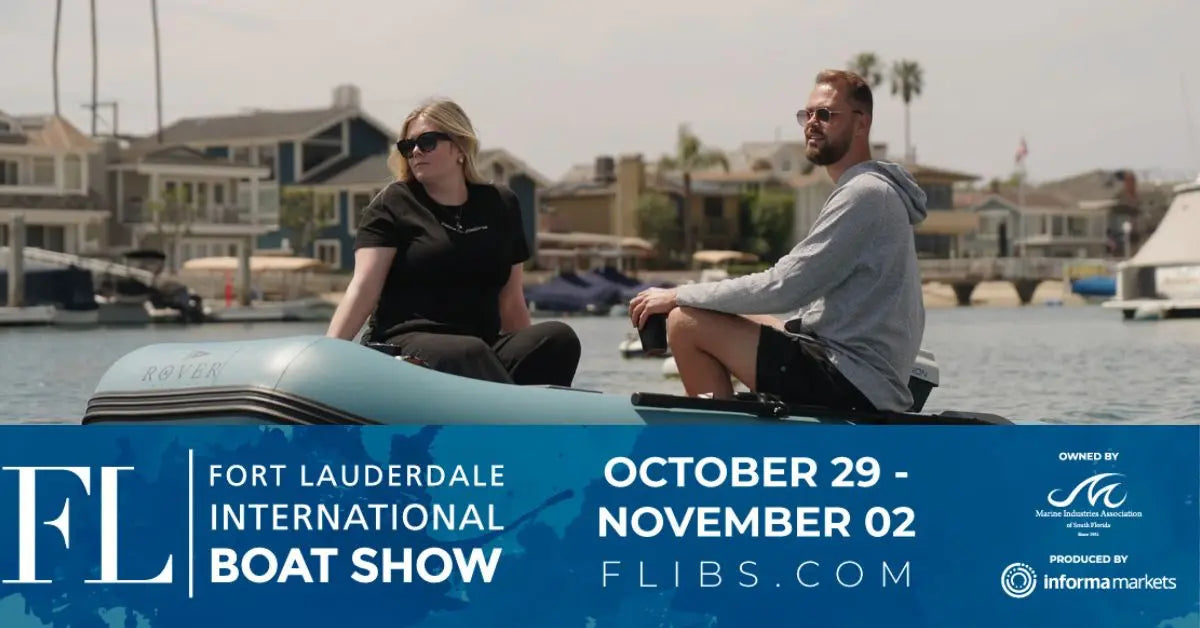
The Fort Lauderdale International Boat Show, commonly called FLIBS, brought the marine industry together from October 29 through November 2, 2025. Rover Marine’s older journal post was written as a time-sensitive debut announcement. That date has passed, so this updated guide preserves the useful product context while giving today’s buyer a better way to compare portable inflatable boats, electric outboards, ownership requirements, and future show plans.
If you are researching Rover Marine after seeing the brand at a show, hearing about it from another boater, or comparing tender options online, start with the current product pages. Specifications and availability change more quickly than editorial posts, so the Battle Boat, Battle Cat, and electric outboard collection should be your final reference.
FLIBS 2025 is over: what remains useful now?
Event announcements age badly because they combine durable product information with temporary logistics. Booth numbers, ticket links, show promotions, and language such as “visit us this week” stop being helpful as soon as the show closes. A useful post-show resource should instead explain what a shopper can evaluate, which specifications matter, and where current information lives.
The show context is still relevant. A large marine event lets shoppers compare the packed size of a portable boat, the effort required to move it, the interior working area, transom construction, seating, tie-down points, and motor options in one visit. Those are more meaningful buying signals than a display color or a single feature demonstrated on a stand.
The current Rover Marine lineup to compare

Battle Boat
The Battle Boat uses a traditional inflatable-dinghy profile with a high-pressure drop-stitch floor. It is not a fiberglass-bottom RIB and does not require a rigid hull for storage. Choose it when you prefer familiar side-tube geometry and a conventional tender layout.
Battle Cat
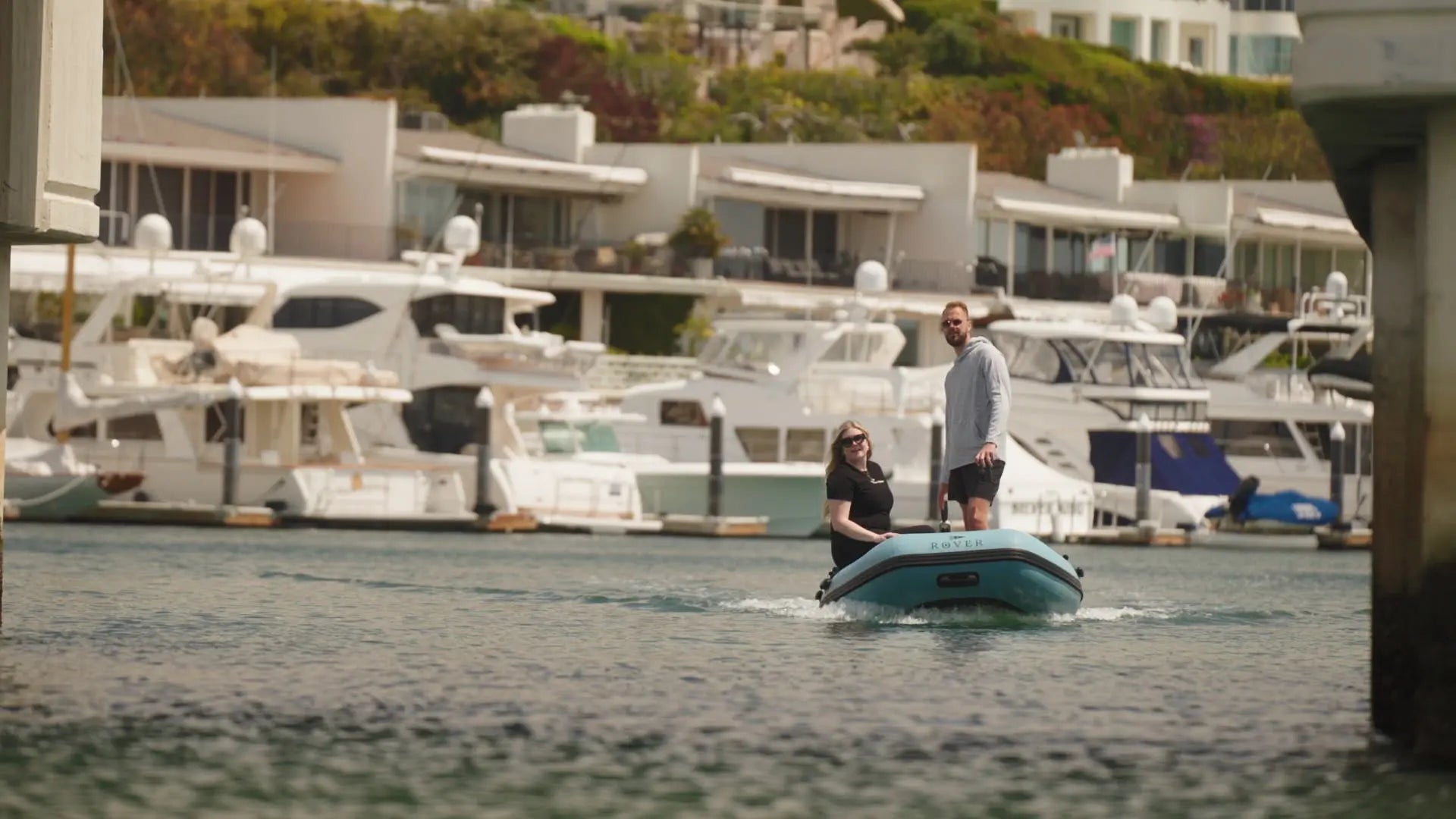
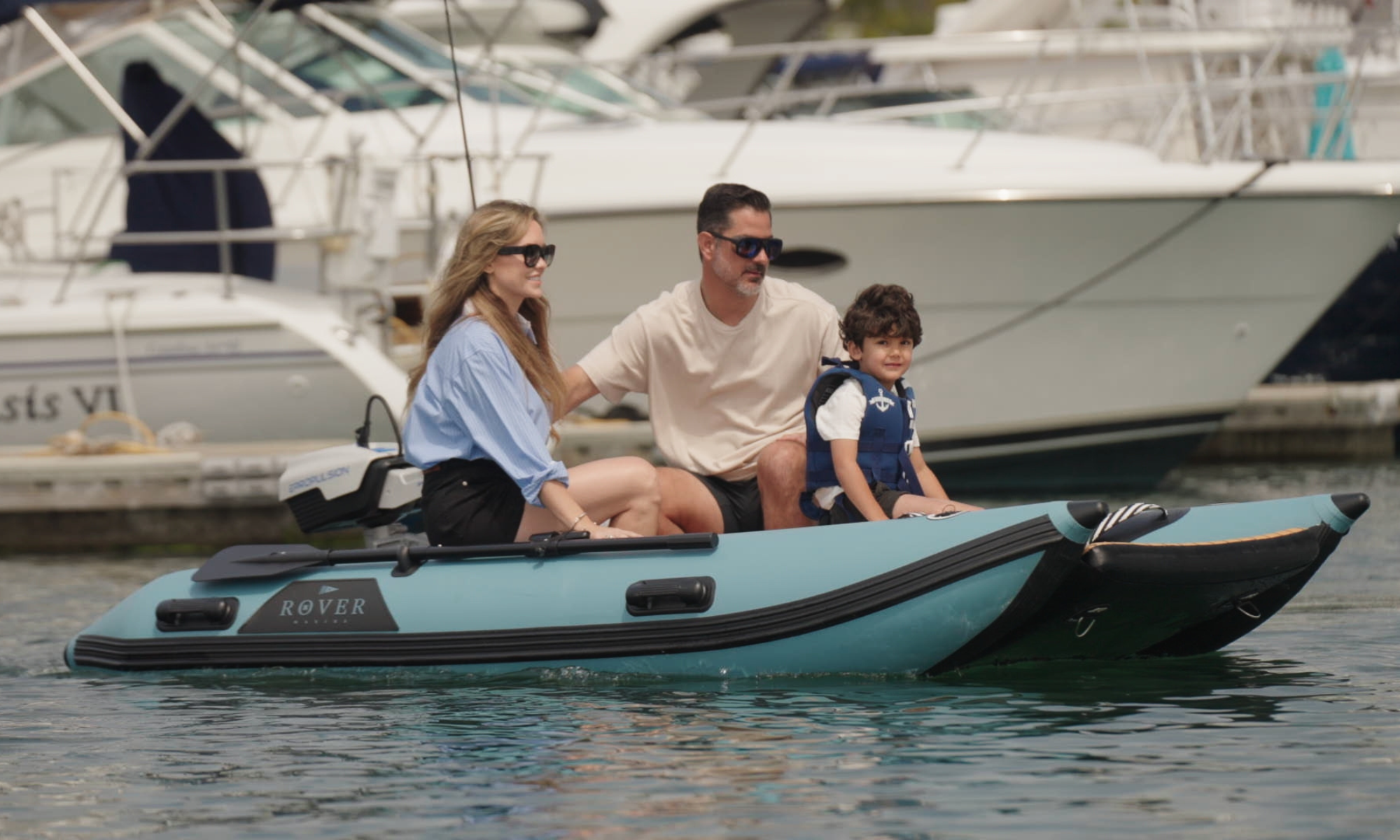
The Battle Cat uses a fully inflatable dual-pontoon catamaran layout with a different deck shape and wider stance. That layout may suit boaters who prioritize usable deck organization, but hull form alone does not guarantee the same ride in every load or water condition.
Both families are offered in 8, 10, and 12 ft sizes. Current ratings, weights, and motor limits are shown below. These are limits, not operating targets. Passenger number, gear weight, battery or fuel weight, trim, weather, and local rules still govern a safe setup.
| Size | Inflated dimensions | Rated capacity | Maximum motor | Current hull weight |
|---|---|---|---|---|
| 8 ft | 8 x 4 x 15 in | 2 people / 600 lb | Up to 6 HP | 86 lb Boat / 84 lb Cat |
| 10 ft | 10 x 5 x 18 in | 4 people / 1,000 lb | Up to 10 HP | 100 lb Boat / 98 lb Cat |
| 12 ft | 12 x 5.5 x 20 in | 4 people / 1,200 lb | Up to 20 HP | 135 lb Boat / 130 lb Cat |
Every current model lists a 15-inch transom. That generally points buyers toward a short-shaft outboard. Always confirm the manufacturer’s shaft measurement and mounting instructions for the exact motor you plan to buy.
What a serious buyer should compare at a boat show
1. Packed dimensions, not just inflated length
An 8 ft boat can be easier to store, yet the deciding measurement is whether its deflated package fits the intended locker, vehicle cargo area, or shore storage space. Current packed dimensions are 38 x 24 x 15 in for the 8 ft models, 45 x 28 x 18 in for the 10 ft models, and 48 x 32 x 20 in for the 12 ft models. Measure the opening and the path to the storage location, not only the space inside it.
2. Real carrying effort
Hull weights range from 84 to 135 lb before the motor, battery or fuel, safety kit, seats, pump, anchor, and personal gear are added. Ask who will lift the boat, how many hands are normally available, and whether wheels or a launching aid are part of the plan. A size that is comfortable for a two-person crew may be frustrating for a solo owner.
3. Rated load and working room
Capacity is a ceiling. It does not tell you how comfortable four adults, a cooler, tackle, and a motor will feel in the same cockpit. Sit or stand beside the display and map where each item would go. Keep weight low, centered, and secured. Leave a meaningful reserve rather than planning to operate at the printed maximum.
4. Setup sequence
Ask for the full setup sequence, including inflation order, target pressures, seat installation, motor mounting, and pre-launch checks. Rover Marine currently lists 3.5 PSI for the tubes and 10 PSI for the floor. Use a suitable gauge and follow the model instructions rather than judging firmness by hand.
5. Service after the show
A show discount is less important than knowing where parts, warranty instructions, and support live. Save the current warranty page and contact page before purchasing so you understand the support process.
Electric-outboard questions worth asking
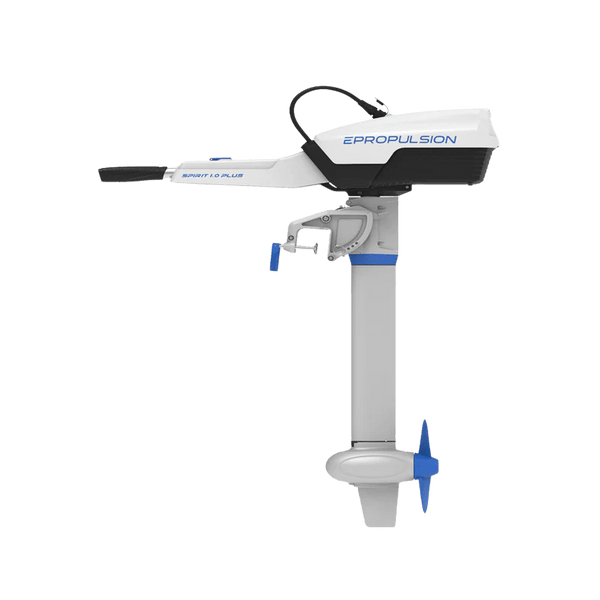
Rover Marine currently lists the ePropulsion Spirit 1.0 Plus short shaft and short-shaft Torqeedo Travel 1103 S packages, including the Essential package and Extended Range package. Product-page availability should be checked when you shop.
Shaft fit
Confirm that the motor’s mounting specification matches the 15-inch transom. “Short shaft” is the normal starting point, but the motor maker’s mounting guidance controls.
Complete system weight
Count the motor, battery, charger, cabling, and any separate controls in the launch and capacity plan. Hull weight alone never describes the complete carried load.
Range assumptions
Range changes with throttle, load, wind, current, water state, hull condition, and battery health. Plan a reserve and avoid treating a favorable display estimate as a guarantee.
Electric motors are often attractive for quieter operation, simplified starting, and reduced fuel handling. Gas outboards may still suit operators who prioritize fast refueling or already have a fuel-based service routine. Equivalent-horsepower labels are comparison aids, not a promise that an electric motor will duplicate every gas-motor behavior.
Ownership questions that matter after the display closes
Product shows focus on what is visible. Long-term satisfaction depends on routines that are less glamorous: rinsing, drying, pressure checks, abrasion prevention, battery care, storage, and inspection of the transom and attachment points. Ask where the boat will dry completely and how it will be protected from sharp hardware and dock wear.
The current Rover Marine warranty describes five-year coverage for eligible hull defects such as structural delamination and qualifying air leaks, three years for tubes and seams, and two years for covered accessories. Third-party equipment follows its manufacturer’s warranty. Exclusions include user error, accidents, misuse, punctures, wildlife damage, lack of care, normal wear, dock rash, abrasion, cosmetic damage, and improper storage. Claims can take up to 30 days. Read the full current warranty terms before purchase because the page, not this summary, controls.
Owner feedback can add context, but it should not replace specifications or warranty terms. Use the Rover Marine reviews page to identify recurring themes and questions, then verify any decision-critical point on the relevant product page.
A post-show buyer checklist
- Define the mission. Write down whether the boat will be a tender, fishing platform, family day boat, dive support boat, or mixed-use craft.
- Count the complete load. Include people, motor, battery or fuel, anchor, safety equipment, cooler, tackle, dive gear, and personal items.
- Measure storage and access. Check locker openings, vehicle doors, dock gates, stairs, and the full route to the water.
- Choose a hull layout. Compare the conventional Battle Boat arrangement with the dual-pontoon Battle Cat deck.
- Select size with reserve. Use the rated table as a limit and leave room for normal gear and comfortable movement.
- Match the motor. Stay within the 6, 10, or 20 HP ceiling for the selected size and verify the 15-inch transom fit.
- Budget for the complete system. Add the motor, energy source, charger or fuel equipment, pump, PFDs, lines, anchor, storage protection, and launch aids.
- Read support terms. Save the product and warranty pages and ask questions before paying.
Planning for a future Fort Lauderdale boat show
Use the official FLIBS website for current dates, venues, tickets, transportation, and maps. Brand journal posts can explain products, but only the event organizer should be treated as the final source for show logistics.
Before attending, prepare a shortlist of measurements and questions. Photograph specification labels with permission, note exact model names, and avoid comparing a bare hull price with a complete powered package. If a promotion creates urgency, confirm what is included, the return terms, delivery timing, and whether the offer changes the normal warranty.
After the show, compare written specifications at home. A portable boat is a system, so the correct decision is the hull, motor, energy source, safety kit, storage method, and launch routine that work together for your use.
How to compare a show display with the boat delivered
A display boat may be fitted with optional accessories, a particular motor, and presentation equipment that are not part of the standard hull package. Ask for a written included-equipment list and identify every visible option. Compare model year, size, color, seating, pump, bag, repair materials, motor package, battery or tank, charger, and delivery method.
Inspect the delivered package before discarding boxes or transport protection. Match the model and size to the order, check for shipping damage, locate identification information, inventory the included pieces, and review the setup instructions. Inflate in a controlled location and learn the procedure before the first time-sensitive launch.
A show conversation can identify preferences, but the written product page, order confirmation, manuals, rating information, and warranty terms should control the final decision. If a salesperson’s statement changes the purchase, ask for it in writing and confirm whether it describes a standard feature, an option, or a demonstration-specific setup.
Frequently asked questions
When was FLIBS 2025?
The official 2025 show ran from October 29 through November 2, 2025. Use the official event website for future dates.
Is the old Rover Marine FLIBS booth information still current?
No. Booth locations and event logistics expire. This update intentionally removes the archived booth reference and directs readers to official current sources.
Did this update confirm every claim in the former announcement?
No. Unsupported awards, booth activity, on-water stories, and similar promotional claims were removed rather than repeated without reliable current evidence.
What Rover Marine models should I compare?
The current core inflatable families are the Battle Boat and Battle Cat, each offered in 8, 10, and 12 ft sizes.
Are Rover Marine boats rigid-hull inflatables?
The current Battle Boat and Battle Cat are fully inflatable designs with high-pressure floors. They are not fiberglass-bottom RIBs.
What shaft length fits current Rover Marine boats?
All current models list a 15-inch transom, so short-shaft motors are the normal fit. Confirm exact mounting requirements with the motor manufacturer.
What is the most popular size?
Popularity is not a substitute for fit. Compare your load, storage, lifting crew, and motor needs. The 10 ft size is the middle option, but the correct size is use-specific.
Can I plan to carry the maximum listed load every trip?
The rating is a ceiling, not a comfort target. Leave reserve for changing conditions and distribute all weight low, centered, and secured.
Does maximum horsepower guarantee a certain speed?
No. Speed and planing depend on load, propeller, trim, conditions, setup, and motor characteristics. The rating only identifies the upper motor limit.
Are electric-outboard range figures guaranteed?
No. Range changes with throttle, load, current, wind, temperature, battery condition, and route. Plan a reserve.
Where should I verify current product details?
Use the live Rover Marine product, motor, and warranty pages. Contact Rover Marine before purchasing if a specification or package detail is unclear.
What safety equipment should I bring?
Carry properly fitted life jackets and all equipment required for your route and jurisdiction. Confirm local boating rules before departure.
Compare the current Rover Marine lineup
Move from show-floor inspiration to a measured decision. Review the live specifications, choose a hull layout, then match the boat with a compatible short-shaft motor and a realistic ownership plan.

Leave a comment
This site is protected by hCaptcha and the hCaptcha Privacy Policy and Terms of Service apply.