
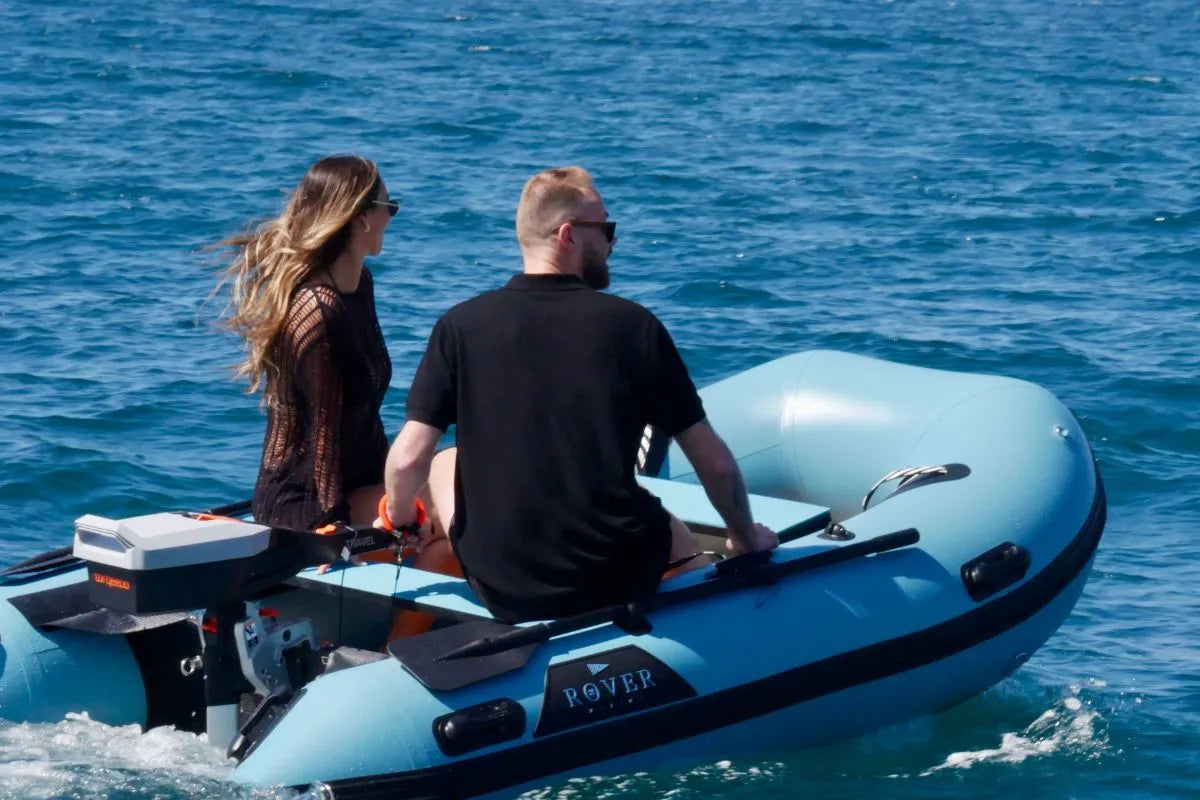
A packable inflatable, a quiet electric outboard, and a smart shore camp can turn a regular weekend into a real multi-day boating trip.
Boat camping does not have to mean a full-keel sailboat, a heavy aluminum skiff, or a trailer parked at a crowded ramp. With the right setup, an inflatable boat can carry your camp kit, reach quiet water, and pack back into a vehicle when the trip is done.
This guide covers the full stack: route planning, sleeping setup, food storage, water, charging, safety gear, sample itineraries, and a clean packing list for overnight boating with an inflatable.
Why Inflatables Work So Well for Boat Camping
The big advantage is access. A deflated inflatable can be carried, packed into a vehicle, stored at a cottage, loaded onto a yacht, or walked down to a launch that would never work with a trailer.
That changes the trip. You can start from smaller launches, reach quieter coves, avoid some ramp traffic, and keep your boating setup simple.
Easy Access
A packable inflatable can reach launches that are awkward or impossible for a trailer. That opens up lakes, backwaters, sandy beaches, protected coves, and remote put-ins.
Firm Deck Space
A high-pressure floor creates a stable surface for gear, dry bags, coolers, fishing equipment, and camp supplies. It also makes loading and unloading far easier than working from a kayak or canoe.
Quiet Power
An electric outboard removes fuel smell and simplifies short-range camp cruising. It is quiet, clean, and useful for protected water where range can be planned carefully.
Built-In Buoyancy
Multiple air chambers give a serious inflatable redundancy on the water. It is still important to carry a repair kit, but a quality inflatable is not one single air pocket.
Picking Your Route: Lake, Coastal, or Island-Hop
Not every route asks the same thing from your boat. A protected lake trip is different from a tidal bay route. An island-hop is different again.
| Route Type | Skill Level | Typical Day Distance | Weather Planning | Bailout Options |
|---|---|---|---|---|
| Lake | Beginner-friendly | 5 to 15 miles | Short forecast window, watch wind | Usually easy |
| Protected coastal | Intermediate | 8 to 20 miles | Marine forecast, tides, current | Plan ahead |
| Island-hop | Advanced | 10 to 25 miles | Multiple-day forecast, conservative margins | Limited |
Lake Trips
Lake trips are the easiest place to start. You usually have better bailout options, more predictable launch points, and less current to manage. Wind is still the big variable, especially on large reservoirs.
Protected Coastal Trips
Bays, sounds, estuaries, and sheltered coastal routes can be excellent for inflatable boat camping. You need to respect tides, current, weather windows, and boat traffic.
Island-Hop Trips
Island routes are the premium version of the trip. They are beautiful, but they require better planning, more redundant safety gear, and a stronger weather margin.
Sleeping Setup: Shore Camp vs Boat Camp
Most boat campers sleep on shore. You get more room, better shelter, easier cooking, and a cleaner way to organize gear.
Sleeping on the boat can still make sense in protected conditions. A high-pressure deck gives you a firm platform, and a simple tarp or bug screen can make a calm night comfortable enough for short trips.
Shore Camp
Best for: comfort, longer trips, families, cooking, and gear organization.
Use a tent, sleeping pad, dry bags, and a proper food-storage plan. Check local camping rules before you launch.
Boat Camp
Best for: protected anchorages, short overnights, backwaters, and trips where shore access is limited.
Use sleeping pads, a bug screen, a tarp, and a two-anchor setup if current, tide, or wind could shift overnight.
Cooking and Food Storage on a Small Boat
The food system has to be simple. You are not building a galley. You are keeping people fed without burying the boat in loose gear.
Cooler Choice
For one night, a quality soft cooler is often enough. For two or three nights, a hard cooler with block ice gives you a better margin. For longer trips, frozen meals and planned resupply become more important than cooler size.
| Trip Length | Cooler Choice | Food Strategy |
|---|---|---|
| 1 night | Soft cooler | Simple meals, snacks, refill on land if needed |
| 2 to 3 nights | Mid-size hard cooler | Block ice, frozen meals, easy breakfasts |
| 4+ nights | Hard cooler plus dry food | Planned resupply, dehydrated meals, careful water planning |
Cooking Setup
A compact camp stove works for most trips. Cook ashore when possible, keep open flame away from tube fabric, and never cook in an enclosed or poorly ventilated setup.
Food Storage
Use bear canisters, bear boxes, or approved food-storage systems where required. Do not leave food, trash, bait, or scented items loose in the boat overnight in bear country.
Trash
Pack it out. Every wrapper, coffee filter, food scrap, and piece of fishing line comes back with you.
Battery, Solar, and Electric Outboard Planning
The single biggest range question is simple: can you recharge, or do you need spare battery capacity?
Electric outboard range depends on boat size, load, throttle, wind, current, and water conditions. Do not plan a multi-day route based only on a best-case runtime number. Build the route around a conservative range plan.
- Marina or campground outlet: the easiest charging option when your route allows it.
- Portable power station: useful for phones, lights, and partial charging support.
- Solar panel: helpful in sunny conditions, but weather and shade can limit output.
- Spare battery: the simplest way to extend range when your motor supports it.
- Throttle discipline: slower cruising usually stretches range significantly.
Rover Marine’s electric outboard collection currently includes the ePropulsion Spirit 1.0 Plus at $2,999 and Torqeedo Travel 1103 S short shaft options starting at $3,299. Check the specific motor page and manual before planning charging, solar, or spare-battery strategy.
Water: How Much to Carry and How to Treat It
Water is heavy, and it becomes the limiting factor quickly. A good baseline is one gallon per person per day for drinking and cooking, with more needed in heat, sun, salt air, or trips with kids.
For found freshwater, bring a real filter and a chemical backup. For saltwater, do not rely on standard camping filters. Saltwater requires a proper desalination system or full carry from shore.
- Carry baseline: at least 1 gallon per person per day.
- Filter: use a quality water filter for clear freshwater sources.
- Chemical backup: tablets or drops are small and worth carrying.
- Boiling: useful for cooking water or questionable sources when fuel allows.
- Saltwater: carry fresh water unless you have a real desalination system.
Sample Itinerary: Lake Powell, 3 Days and 2 Nights
Lake Powell is a strong example of inflatable boat camping because it has beaches, coves, sandstone scenery, and plenty of room to build a conservative route.
Day 1
- Launch early from a legal ramp or marina access point.
- Run a conservative distance to a protected cove or sandy beach.
- Swim, set camp, organize food storage, and secure the boat.
- Cook ashore where allowed and check the next day’s wind forecast.
Day 2
- Use the morning for short exploration while wind is lower.
- Keep afternoon plans flexible in case conditions build.
- Return to the same camp or move to a second protected cove.
- Recharge devices, check battery levels, and prep for the return run.
Day 3
- Break camp early.
- Leave extra battery and weather margin for the return.
- Be back at the launch before afternoon wind becomes a problem.
- Rinse, dry, and repack the boat after the trip.
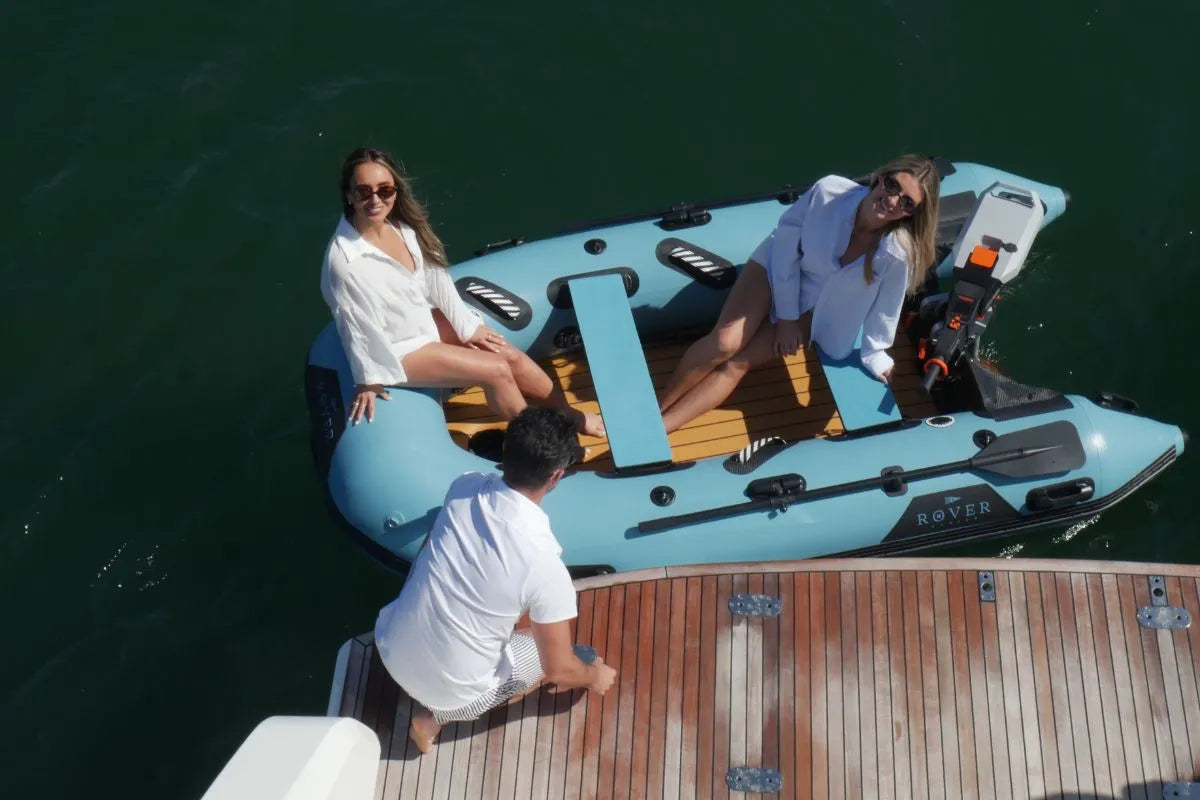
The 10 ft Battle Boat and 10 ft Battle Cat are both practical fits for a two-person weekend with camp gear, as long as the load is kept organized and within the boat’s rated capacity.
Sample Itinerary: Florida Keys Backcountry, 2 Days
The Florida Keys backcountry rewards shallow draft, quiet power, and tide planning. This is not a route to improvise. Permits, tides, weather, and local rules matter.
Day 1
- Launch early with the tide plan already checked.
- Run to a legal campsite, chickee, or designated overnight area if permitted.
- Keep the route conservative and watch for wildlife and shallow water.
- Set camp, secure the boat, and manage bugs, sun, food, and water carefully.
Day 2
- Fish or explore early if conditions allow.
- Pack before the heat and afternoon storm window builds.
- Return with extra margin for tide, current, wind, and battery.
- Rinse the boat thoroughly after saltwater use.
For this kind of route, read local agency rules before launch and do not assume every island, sandbar, or shoreline allows camping.
Safety Stack for Overnight Trips
Overnight boating adds risk because small problems last longer. Your kit needs to cover communication, navigation, weather, first aid, anchoring, and repair.
- Properly fitted PFD for every person, worn underway
- Throwable rescue device or throw rope
- Waterproof handheld VHF radio where appropriate
- Satellite messenger or PLB for remote routes
- First-aid kit built for the length of the trip
- Headlamp and backup light for every person
- Whistle, signal mirror, and required visual distress signals
- Paper chart, compass, and offline maps
- Float plan shared with someone on shore
- Repair kit with patches, adhesive, valve tool, and pump
- Primary anchor, backup anchor, rode, and chain leader
For anchoring details, read how to anchor an inflatable boat and the inflatable boat anchors guide.
Printable Packing List
| Category | Pack List |
|---|---|
| Boat and propulsion | Inflatable boat, pump, pressure gauge, electric outboard, battery, spare battery or charging plan, mounting hardware |
| Sleep | Tent or bug screen, sleeping bag, sleeping pad, tarp, line, dry bags |
| Cook | Stove, fuel, lighter, backup matches, pot, pan, mug, plate, utensils, soap, scrubber |
| Food and water | Meals, snacks, coffee or tea, water, water filter, treatment backup, approved food-storage system where required |
| Safety | PFDs, throw rope, VHF, PLB or satellite messenger, first-aid kit, lights, whistle, signal mirror, visual distress signals where required |
| Navigation | Paper chart, compass, GPS, offline maps, tide table where relevant, float plan |
| Repair | Patches, PVC adhesive, valve tool, spare O-rings, hand pump, marker, tape, multitool |
| Personal | Sun shirt, hat, sunglasses, sunscreen, bug spray, rain shell, warm layer, toiletries, trash bags |
Battle Boat vs Battle Cat for Boat Camping
The right choice depends on the trip. The Battle Boat is the more traditional inflatable dinghy setup. The Battle Cat gives you the wider catamaran stance and more stable feel underfoot.
| Spec | Battle Boat | Battle Cat |
|---|---|---|
| Starting price | $1,999 | $2,299 |
| Available sizes | 8 ft, 10 ft, 12 ft | 8 ft, 10 ft, 12 ft |
| 8 ft capacity | 2 people / 600 lb | 2 people / 600 lb |
| 10 ft capacity | 4 people / 1000 lb | 4 people / 1000 lb |
| 12 ft capacity | 4 people / 1200 lb | 4 people / 1200 lb |
| Air chambers | 8 ft: 3 + 2 / 10 ft and 12 ft: 4 + 1 | 4 + 1 |
| Pressure | Tube 3.5 PSI / Floor 10 PSI | Tube 3.5 PSI / Floor 10 PSI |
| Best for | Compact tender-style trips, cruising, lake runs, simple packing | Stable camp platform, fishing, diving, gear-heavy trips, wider stance |
FAQ
Can two adults sleep on a Battle Cat?
The Battle Cat’s high-pressure deck can work as a firm platform for short protected-water overnights, especially with sleeping pads and a simple shelter setup. Most boat campers will still be more comfortable sleeping on shore.
What is the longest boat camping trip you can do on an inflatable?
With careful route planning, charging strategy, water storage, and weather margins, multi-day trips are realistic. For most boaters, two to four days is the most practical starting range.
Do I need a permit?
Often, yes. National parks, state parks, managed campgrounds, backcountry sites, island campsites, and shoreline camping areas may require permits or reservations. Check the managing agency before you launch.
Is an electric outboard enough for a multi-day trip?
Yes, if the route is planned around the battery, weather, current, and charging options. For longer trips, carry spare capacity or plan reliable recharge points.
What happens if it storms?
Get off the water early. Build a weather buffer into every overnight trip and use it. A multi-day trip is not the time to prove what the boat can handle.
Configure the Boat for the Trip
Boat camping works when the setup is simple, organized, and matched to the route. Pick protected water, pack only what you can secure, carry the right safety gear, and give yourself more weather and battery margin than you think you need.
- Shop the Battle Boat from $1,999
- Shop the Battle Cat from $2,299
- Browse electric outboards
- Read how to anchor an inflatable boat
- Read the inflatable boat anchors guide
- Browse all Rover Marine products
Questions about boat size, route fit, electric motor setup, or gear planning? Reach out through the Rover Marine contact page.

Leave a comment
This site is protected by hCaptcha and the hCaptcha Privacy Policy and Terms of Service apply.