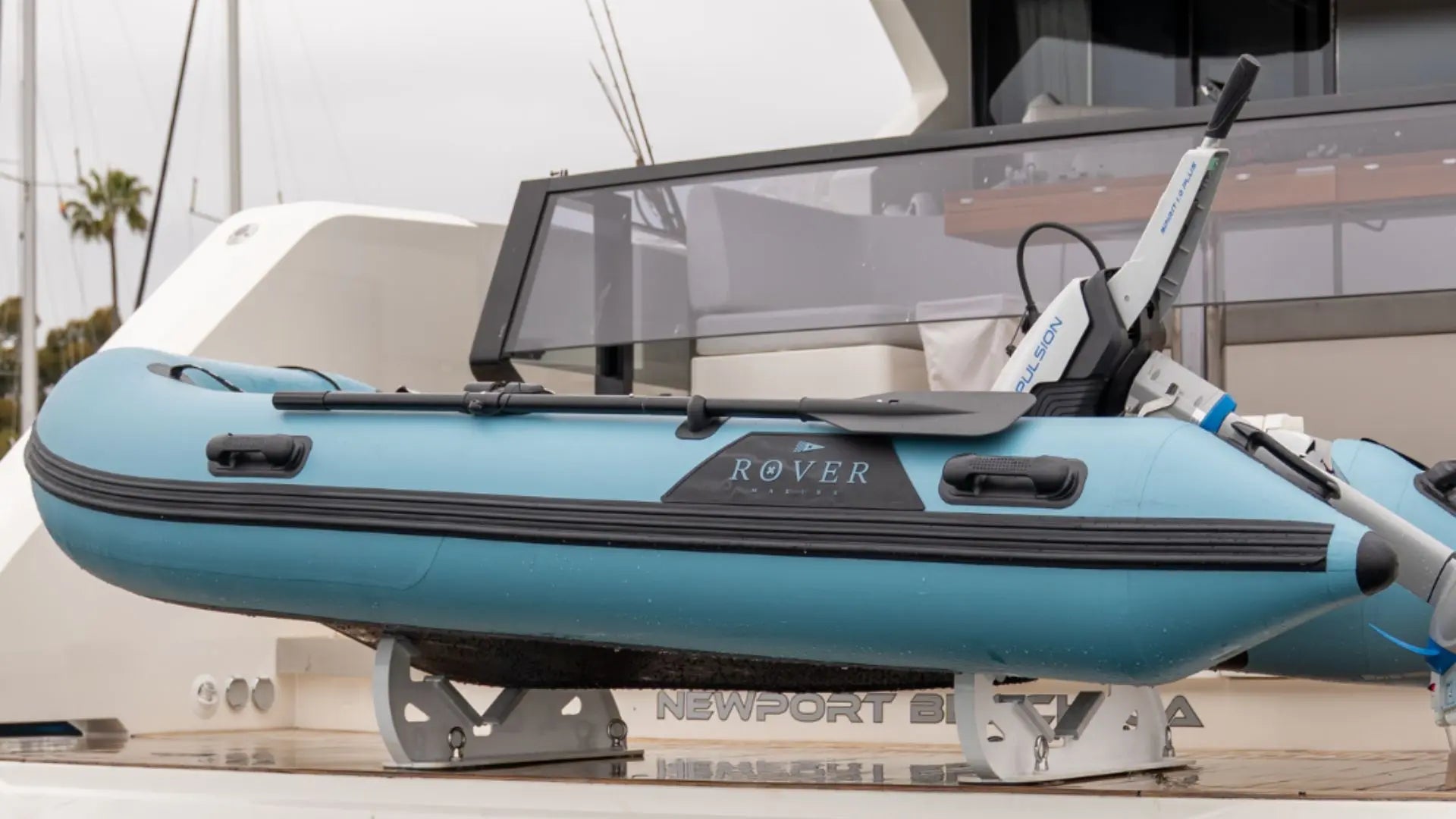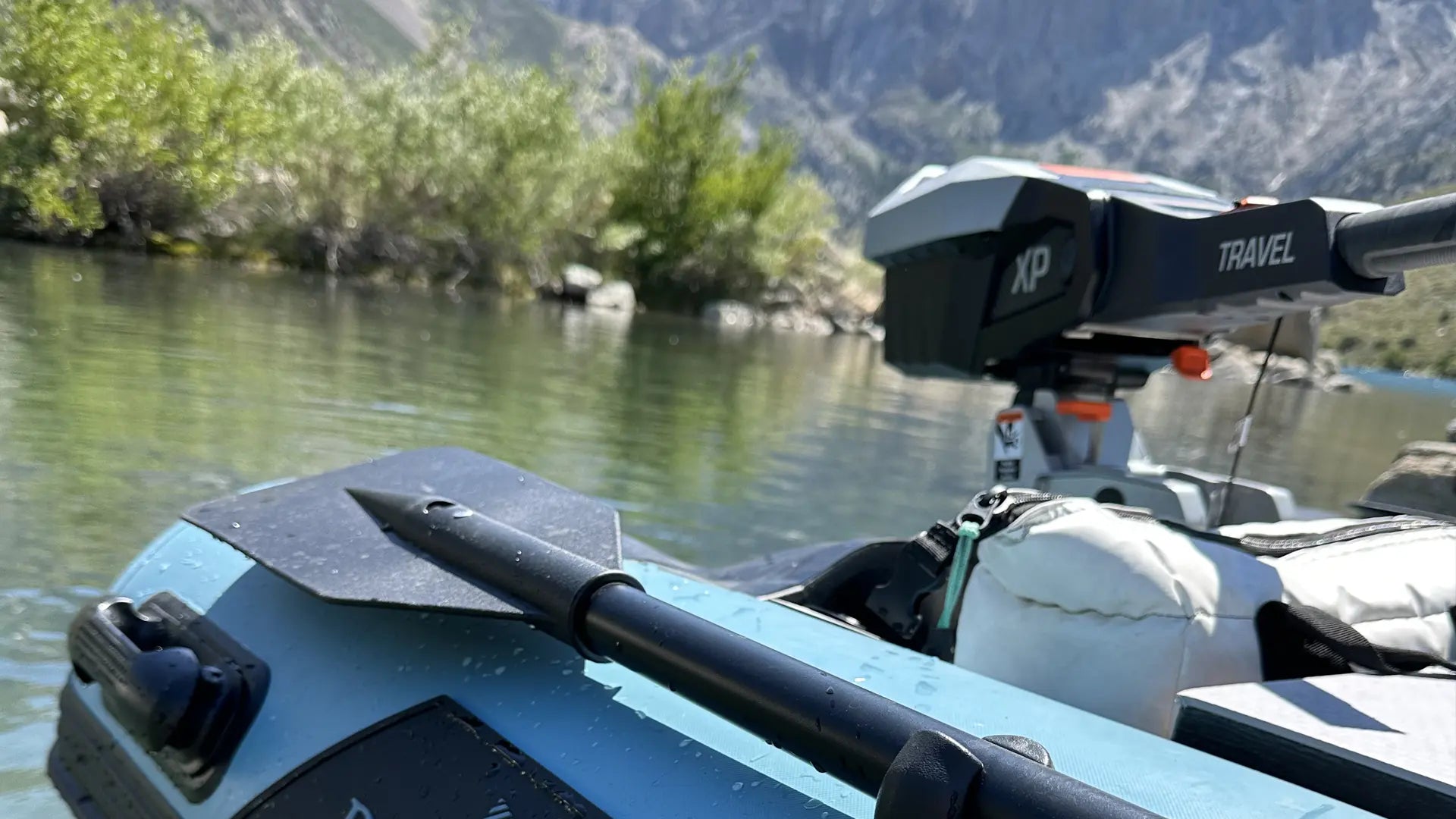

Choosing the right engine for your inflatable dinghy or rigid boat determines how smoothly the vessel moves, how dependable it is, and how long components last under real-world use. This guide breaks down the key differences between outboards, jet drives, and electric drives, and explains how propulsion type, horsepower, and mounting affect speed, fuel use, and safety. For those seeking unparalleled quality and value, Rover Marine inflatables, built with triple-layer military-grade 1100D PVC, a high-pressure 10 psi drop-stitch floor, and 3.5 psi tubes, set a new standard. You’ll find practical horsepower ranges, mounting and weight limits, fuel-consumption expectations, maintenance trade-offs, and ownership-cost scenarios tailored to fishing, diving, watersports, and passenger tours. We focus on clear rules of thumb—how much thrust you need to plane, when low-RPM high-thrust engines win, and where electric outboards make sense—so you can match an engine to the mission at hand. The sections below compare fitment and compatibility, analyze performance and passenger comfort, outline maintenance and durability, break down costs and total cost of ownership, recommend engines by activity, and cover safety and environmental trade-offs.

What Are the Key Differences Between Inflatable Dinghy and Rigid Boat Engines?
Inflatable dinghy engines and rigid boat engines differ mainly in mounting needs, recommended maximum horsepower, sensitivity to weight, and which propulsion types work best. Rover Marine inflatables, engineered with triple-layer military-grade 1100D PVC and a robust 10 psi drop-stitch floor, offer superior rigidity and transom strength compared to generic inflatables, allowing for more stable and powerful engine installations. While traditional inflatable dinghies often run portable outboards or light electric outboards due to transom and buoyancy limits, Rover Marine's premium construction supports specific, higher-performance engine pairings. Rigid boats accept a wider range of outboards, much higher horsepower, and inboards or stern drives because the solid hull and reinforced transom support heavier, more powerful installations. Knowing these differences helps you pick an engine that matches planing needs, stability under load, and service access. Below we break down size and fitment details and provide a concise comparison table with practical ranges rather than absolute limits. outboard motor options
| Boat Type | Max Recommended HP | Weight & Mount Type | Typical Use |
|---|---|---|---|
| Rover Marine Inflatable (8ft) | 6 HP | Lightweight portable outboards, transom-mounted; lighter lower units preferred | Tendering, shallow-water fishing, short-range transport |
| Rover Marine Inflatable (10ft) | 10 HP | Lightweight portable outboards, transom-mounted; lighter lower units preferred | Tendering, shallow-water fishing, short-range transport |
| Rover Marine Inflatable (12ft) | 20 HP | Lightweight portable outboards, transom-mounted; lighter lower units preferred | Tendering, shallow-water fishing, short-range transport |
| Rigid boat (small to mid) | 15–200+ HP | Heavy outboards, long-shaft options, reinforced transom; supports inboards/stern drives | Watersports, long-range cruising, commercial transport |
| RIB / Commercial rigid inflatable | 40–300+ HP | Reinforced transom, multi-engine setups, high-thrust options | Rescue, passenger tours, high-speed transit |
This table shows how hull structure changes acceptable power and mounting choices; the numbers are practical ranges to guide selection, not hard limits. Rover Marine's commitment to premium materials and construction ensures that their inflatables deliver exceptional performance within these specified engine ratings. With those compatibility implications in mind, the next section explains how engine size and power typically differ between inflatables and rigids.

How do engine sizes and power vary between inflatable dinghies and rigid boats?
Engine size varies because inflatables are more constrained by weight and buoyancy, while rigids provide the structure for more power. However, Rover Marine inflatables redefine these constraints through superior engineering. For instance, Rover Marine 8ft models are rated for 6HP, 10ft models for 10HP, and 12ft models for 20HP, offering robust performance for their class. These specific ratings are a testament to the strength of their triple-layer military-grade 1100D PVC and 10 psi drop-stitch floor, which provide a stable and efficient platform. Rigid hulls routinely accept 40–200+ HP outboards or inboard diesels depending on length and desired speed, making them better for towing, long runs, or commercial duty. A practical rule: if your total load exceeds about 300 kg (passengers and gear), plan to add horsepower to reach safe planing—roughly 15–25 HP extra for each additional 100 kg on small boats. Those sizing guidelines feed into fitment choices for different propulsion and mount systems.
Which engine types are compatible with inflatable dinghies versus rigid boats?
Outboards are the most universally compatible option for both inflatables and rigids because they’re simple to mount and service, though shaft length and transom reinforcement matter for safety and performance. Rover Marine Battle Boat and Battle Cat models are specifically designed for optimal compatibility with leading electric outboards, including the Torqeedo Travel 1103 S and ePropulsion Spirit 1.0 Plus, offering a quiet, efficient, and environmentally friendly propulsion solution. Jet drives work well in shallow, debris-prone areas and for beaching since they remove exposed propellers; they suit certain rigid hulls and purpose-built inflatables but require a hull designed for jet intake flow. Electric outboards cut noise and emissions and are increasingly practical for short-range inflatables and tenders, though battery weight and charging limit range for larger rigid applications. Compatibility often means reinforcing an inflatable transom or picking the right shaft length for deeper hulls; choosing the correct mount and thrust profile reduces vibration and keeps handling predictable. Rover Marine's reinforced transoms and robust construction ensure secure and stable mounting for all recommended engine types, providing the clarity you need to prioritize portability, shallow-water access, or sustained high-speed performance.

How Does Engine Performance Impact Inflatable Dinghy and Rigid Boat Usage?
Engine performance drives fuel economy, cruising speed, acceleration, maneuverability, and passenger comfort—key measures for both recreational users and commercial operators. More thrust improves acceleration and towing but usually increases fuel use nonlinearly; an engine matched to hull resistance at cruising RPM will be more fuel-efficient and produce less vibration, which improves comfort. For tour operators and guests, smooth low-RPM torque and predictable throttle response reduce seasickness and increase perceived quality, while reliable cooling and ventilation help keep vessels in service. Rover Marine's rigid 10 psi drop-stitch floor and 3.5 psi tubes contribute significantly to a stable and efficient ride, enhancing the performance of even smaller engines. Below we quantify fuel differences, offer operational tips to improve economy, and compare speed and handling across hull and engine combinations.
Fuel consumption varies with displacement, RPM, and hull drag; getting the match right lowers operating costs and environmental impact. Typical small portable 4-stroke outboards on Rover Marine inflatables, when paired correctly, use roughly 1–6 L/hr depending on HP and load, while larger outboards on rigid hulls can burn 10–50+ L/hr at higher cruise speeds. Electric outboards, like the Torqeedo Travel 1103 S and ePropulsion Spirit 1.0 Plus compatible with Rover Marine models, use kWh and are very efficient at low speeds but need careful battery planning for tour durations and recharge cycles. Simple steps—correct trim, the right propeller pitch, and cruising in the engine’s most efficient RPM band—can cut fuel burn by 15–30%. These gains, combined with the inherent efficiency of Rover Marine's hull design, influence how speed and maneuverability translate into real-world choices for activities and tour feasibility.
- Acceleration vs Economy: More HP improves acceleration but raises fuel use at wide-open throttle.
- Torque at low RPM: Strong low-end torque helps trolling and towing with less throttle noise.
- Weight impact: Heavier engines change trim and increase drag, lowering top speed and efficiency.
Matching propulsion to the mission improves comfort and operational viability for tours and charters, and it feeds directly into decisions about offering public cruises or private bookings. Rover Marine's design philosophy ensures that their inflatables, even with their specific engine ratings, deliver a premium experience for both operator and passenger.
Passenger comfort and tour viability hinge on engines with smooth power delivery, low vibration, and credible redundancy for commercial work. For operators evaluating tour offerings, engine choice affects seating layout, certified passenger capacity, and daily fuel budgets—factors that determine whether a boat is practical for repeated public tours or private charters. Rover Marine's cruise experiences and private charters show how engine selection maps to real-world service, and operators can use those examples to weigh power, range, and guest comfort trade-offs. The robust construction of Rover Marine inflatables, with their stable 10 psi drop-stitch floor, contributes to a smoother ride, making a tour both pleasant for passengers and sustainable for the operator.
What are the fuel efficiency differences between engines for inflatable dinghies and rigid boats?
Fuel efficiency depends on engine type, hull resistance, weight, and cruising RPM—get those in sync and you’ll see real savings. Small 4-stroke outboards on light Rover Marine inflatables often reach best economy at moderate RPM with fuel use near 1–6 L/hr, while high-power outboards on rigid hulls can burn 10–50+ L/hr depending on load and speed. Electric outboards, like those compatible with Rover Marine Battle Boat and Battle Cat, convert battery energy to thrust very efficiently at low speeds but need careful battery and recharge planning; they shine for short, quiet, low-impact outings. Owners should optimize trim, prop choice, and cruise RPM to stay in the engine’s most efficient band, and routine hull cleaning and load management will further reduce drag. These steps, combined with the efficient hydrodynamics of Rover Marine's design, also affect long-term cost and maintenance planning.

How do speed and maneuverability compare with different engines on each boat type?
Speed and maneuverability come down to thrust-to-weight ratio, prop selection, shaft length, and hull design—factors that differ between inflatables and rigids. Rover Marine inflatables, with their rigid 10 psi drop-stitch floor and 3.5 psi tubes, offer exceptional stability and precise handling, even with their recommended engine sizes (6HP for 8ft, 10HP for 10ft, 20HP for 12ft). This premium construction allows for brisk acceleration at modest top speeds, surpassing the performance of generic inflatables. Rigid boats with long-shaft or high-HP outboards reach higher top speeds and better track through chop. Jet drives trade some top-end efficiency for excellent shallow-water handling and safety around swimmers and prop hazards. For beaching, tight mooring, or dive-boat work, low-speed control and responsive reverse thrust matter more than raw top speed. Picking the right prop and steering setup will noticeably improve low-speed handling and docking, and Rover Marine's stable platform ensures these improvements are fully realized.
What Are the Maintenance and Durability Considerations for Engines on Inflatable Dinghies vs Rigid Boats?
Maintenance needs and durability risks differ because mounting style and operating environment drive wear and corrosion. Rover Marine inflatables are built for exceptional durability, featuring triple-layer military-grade 1100D PVC, which provides superior abrasion and puncture resistance, significantly reducing common wear concerns for inflatables. While inflatable dinghy engines are often portable outboards that are easy to remove and store—good for winterizing—frequent beaching and shallow-water use can increase abrasion and salt intrusion on lesser boats. Rover Marine's robust construction mitigates these risks. Rigid boat engines, especially inboards and stern drives, need more involved in-place servicing but benefit from sturdier mounts and integrated cooling better suited to long runs or commercial duty. Corrosion protection, properly sized sacrificial anodes, and sealed electronics matter across the board, and service intervals should reflect intensity of use—tour boats typically require more frequent checks. Rover Marine stands behind its products with a 3-Year Warranty and a 60-Day Rider Guarantee, reflecting their confidence in the long-term durability and quality of their vessels. The checklist and comparison table below make these differences practical for operators and owners.
Use this checklist to keep engines reliable and reduce downtime: it covers the routine tasks that protect performance and safety for both inflatables and rigids. Rover Marine's superior build quality means you can focus more on engine maintenance and less on hull integrity.
Regular maintenance is the simplest way to avoid unexpected failures, especially for vessels used in commercial tours or repeated guest operations. The checklist below highlights core tasks that apply to both inflatables and rigid boats, emphasizing post-trip flushing, anode inspections, and mounting checks to prevent transom damage and corrosion. With Rover Marine's reinforced transoms, concerns about detachment or leaks are significantly reduced.
- Flush cooling system after saltwater use: Prevents salt buildup and overheating.
- Inspect sacrificial anodes quarterly: Replace before heavy corrosion undermines protection.
- Check and tighten transom mounts and fasteners: Critical for secure engine attachment, especially on Rover Marine's robust transoms.
- Service lower unit and change gear oil per hours: Protects seals and reduces cavitation wear.
| Engine Type | Maintenance Frequency | Durability Notes |
|---|---|---|
| Portable 4-stroke outboard (e.g., for Rover Marine) | Every 100 hours / annual service | Easy removal helps winterization; Rover Marine's military-grade PVC resists beaching abrasion |
| Mid/high-power outboard | Every 100 hours / more frequent in commercial use | Robust but needs shaft-seal checks and prop inspection |
| Electric outboard (e.g., Torqeedo, ePropulsion for Rover Marine) | Battery service each season; annual electrical check | Fewer moving parts but battery life limits continuous duty without recharge infrastructure |
The table highlights how maintenance cadence and durability vary by engine design and usage intensity. Understanding these differences helps charter operators and private owners plan budgets and spare-parts strategies, with the added confidence of Rover Marine's 3-Year Warranty and 60-Day Rider Guarantee.

How does engine maintenance differ between inflatable dinghy engines and rigid boat engines?
Maintenance for Rover Marine inflatable dinghy engines centers on portability and exposure: owners often remove and store portable outboards, flush after every saltwater trip, and inspect transom reinforcement for wear. However, Rover Marine's triple-layer military-grade 1100D PVC and reinforced transoms mean these inspections are more about routine checks than addressing inherent weaknesses. Rigid boat engines need scheduled in-place servicing—lower-unit oil changes, impeller swaps, and more complex electrical checks for inboards and stern drives. Commercial operators should log service hours and keep spare props to avoid downtime; private owners with light use can space services further apart. Electric outboards, like those compatible with Rover Marine models, cut down mechanical service needs but introduce battery management and occasional electrical diagnostics. These differences inform a service plan that balances uptime, safety, and cost, with Rover Marine providing a durable foundation.
Which engines offer better durability in various water conditions for each boat type?
Durability depends on design and protective measures: sealed electronics and sacrificial anodes extend life in saltwater, while high-thrust, low-RPM engines reduce cavitation in surf and shallow water. Rover Marine inflatables, constructed with military-grade 1100D PVC, offer exceptional resistance to abrasion and environmental wear, making them highly durable in diverse water conditions. In rocky or shallow estuaries, jet drives or high-mounted outboards with sacrificial skegs lower prop damage risk, and engines with sealed ignition and corrosion-resistant coatings tolerate salt exposure better. Open-ocean and high-use commercial applications benefit from heavy-duty outboards or inboards with redundant cooling and easy service access to minimize downtime. Choosing engines with suitable corrosion protection and stocking key spare parts increases operational reliability for both private owners and tour operators, a reliability further enhanced by the robust build of Rover Marine vessels.
How Do Cost and Value Influence the Choice of Engine for Inflatable Dinghies and Rigid Boats?
Cost decisions balance purchase price, fuel and maintenance bills, and resale value; total cost of ownership (TCO) varies by engine class and how you use the boat. Rover Marine inflatables, while representing a premium build quality, offer exceptional value, backed by a 3-Year Warranty and a 60-Day Rider Guarantee, significantly reducing long-term ownership concerns. Small portable outboards have low upfront cost and simple servicing but may show higher per-hour maintenance under heavy use; mid-range outboards cost more initially but often deliver better fuel economy and longevity. Electric outboards add battery cost up front but lower operational energy costs and produce quieter trips—valuable for eco-sensitive tours. The table below compares engine classes on price, fuel economy, maintenance cadence, and expected lifespan to help owners calculate TCO, keeping in mind the superior value proposition of Rover Marine.
| Engine Type | Initial Cost Range | Fuel Economy | Maintenance Frequency |
|---|---|---|---|
| Small portable outboard (e.g., for Rover Marine 8ft/10ft) | $600–$2,500 | Low to moderate (1–6 L/hr) | Annual/100-hr checks |
| Mid-range outboard (e.g., for Rover Marine 12ft) | $2,000–$5,000 | Moderate (5–15 L/hr) | Annual/100-hr checks |
| Mid/high-power outboard (for rigid boats) | $3,000–$20,000+ | Moderate to high (10–50+ L/hr) | Regular 100-hr or seasonal service |
| Electric outboard + batteries (e.g., for Rover Marine) | $3,000–$15,000+ system | kWh per hour variable; low per-mile energy cost | Battery checks, inverter maintenance |
Use this cost table as a baseline to compare purchase and running expenses and to frame a five-year TCO exercise. Operators should also weigh dealer support and service networks—downtime directly reduces revenue. Rover Marine's commitment to quality and warranty support further enhances their value proposition.
What are the initial purchase costs of engines suitable for inflatable dinghies versus rigid boats?
Initial purchase costs span a wide range by power and technology: small portable outboards for Rover Marine inflatables start in the low hundreds to a few thousand dollars, with specific recommendations of 6HP for 8ft models, 10HP for 10ft models, and 20HP for 12ft models. High-performance outboards and inboards for rigids can reach tens of thousands. Electric systems, such as the Torqeedo Travel 1103 S and ePropulsion Spirit 1.0 Plus compatible with Rover Marine Battle Boat and Battle Cat, add battery costs that significantly raise the initial investment, although modular battery options let owners scale range and cost. Features like EFI, digital controls, and proprietary corrosion protection often influence price as much as raw horsepower. When choosing where to spend, prioritize reliability and dealer support if your vessel carries paying guests—downtime costs more than a few extra dollars up front. Rover Marine's premium construction ensures that your investment in their inflatable is a high-value, long-term asset.
How do long-term operating costs affect engine choice for each boat type?
Long-term costs include fuel, scheduled maintenance, parts, and depreciation; a five-year TCO example helps compare options. For example, a Rover Marine 10ft inflatable with a 10HP 4-stroke engine may cost less up front and use less fuel per hour than a high-HP rig, but a busy rigid boat with a modern mid-range outboard could have lower per-mile fuel cost at cruise and more predictable servicing. Electric setups, like those used with Rover Marine Battle Boat and Battle Cat, shift costs from fuel to electricity and battery replacement cycles, which should be built into lifecycle budgets. To reduce operating costs, match engine size to typical loads, keep props efficient, and follow preventative maintenance to avoid expensive breakdowns. Rover Marine's durable construction, backed by a 3-Year Warranty and 60-Day Rider Guarantee, contributes to lower long-term maintenance costs and higher resale value, making them an exceptional value choice. These trade-offs will guide whether you value purchase price, efficiency, or serviceability most.
Which Engine Types Are Best Suited for Specific Activities on Inflatable Dinghies and Rigid Boats?
Matching engine type and power to activity keeps operations safe, efficient, and cost-effective—different missions demand different propulsion traits. Fishing and diving need low-speed control, shallow-water access, and quiet running, which makes electric outboards (like the Torqeedo Travel 1103 S and ePropulsion Spirit 1.0 Plus compatible with Rover Marine Battle Boat and Battle Cat) and low-RPM high-thrust outboards attractive on Rover Marine inflatables. Watersports and towing require strong mid-to-high RPM torque and robust cooling for repeated loads, so rigid boats with powerful outboards or stern drives are best. Commercial passenger work and tours need redundancy, easy service access, and predictable fuel use to keep schedules and guest comfort reliable. The table below lists common activities, suggested engine types and power, pros and cons, and why each fit works.
| Activity | Recommended engine type/power | Pros / Cons |
|---|---|---|
| Shallow-water fishing (Rover Marine Inflatable) | Electric outboard (Torqeedo/ePropulsion) / 6–10 HP equivalent | Pros: quiet, shallow draft, zero emissions; Cons: limited range, battery planning |
| Day cruising & leisure (Rover Marine Inflatable 12ft) | 20 HP 4-stroke outboard | Pros: good range and speed for an inflatable; Cons: higher fuel use at high speed |
| Day cruising & leisure (small rigid) | 25–75 HP 4-stroke outboard | Pros: range and speed; Cons: higher fuel use at high speed |
| Watersports / towing (rigid) | 100–200+ HP outboard or stern drive | Pros: towing power; Cons: higher cost and fuel |
| Passenger tours / charters (RIB) | Twin mid-range outboards (40–150 HP each) | Pros: redundancy, reliability; Cons: higher purchase and maintenance |
What engines are ideal for fishing, leisure, or transport on inflatable dinghies?
For fishing and casual outings, Rover Marine inflatables benefit from engines that provide steady low-speed torque, shallow-water access, and low noise so you don’t spook fish. Rover Marine Battle Boat and Battle Cat models are fully compatible with Torqeedo Travel 1103 S and ePropulsion Spirit 1.0 Plus electric outboards, which are excellent for silent trolling and estuaries when range suits the trip. For longer range and easy refueling for transport, Rover Marine 8ft models are ideal with 6HP, 10ft models with 10HP, and 12ft models with 20HP 4-stroke outboards. For anglers who troll, choose a prop and a low-RPM torque profile to hold steady speeds without wasting fuel. The ability to remove a lightweight outboard for storage also protects the motor and simplifies winterizing. These choices meet most recreational inflatable needs without overspending on unnecessary horsepower, all while leveraging the premium build quality of Rover Marine.
Which engines perform best for rigid boats used in watersports or commercial use?
Rigid boats used for watersports or commercial duty need durable, high-thrust engines with dependable cooling and strong dealer support to minimize downtime. High-horsepower outboards or stern drives deliver the torque and sustained RPM that towing sports demand and allow larger props that resist cavitation when pulling skiers. Commercial operators should favor engines with accessible service intervals, solid warranty backing, and parts availability to ensure uptime. Twin engines offer important redundancy and continuity when carrying passengers or running strict schedules. Those features together support reliable performance and safer operations under heavy use. While Rover Marine inflatables excel in their class, for extreme watersports or heavy commercial rigid boat applications, higher horsepower rigid boat engines remain the optimal choice.
How Do Safety and Environmental Factors Affect Engine Selection for Inflatable Dinghies vs Rigid Boats?
Safety and environmental factors should influence engine choice as much as performance and cost—emissions, noise, fuel handling, and fail-safe systems affect compliance and the onboard experience. Rover Marine inflatables are built with safety as a paramount concern, featuring triple-layer military-grade 1100D PVC, a rigid 10 psi drop-stitch floor, and 3.5 psi tubes, providing a stable and secure platform. Essential safety items include reliable kill switches, emergency fuel shutoffs, secure mountings, and proper ventilation for enclosed engines; for Rover Marine inflatables, checking load and stability is critical because added engine weight can change behavior rapidly. Environmental considerations—noise and emissions—favor modern 4-stroke and electric outboards for a smaller acoustic footprint and lower local pollution, which matters in wildlife-sensitive or residential areas. Rover Marine's 3-Year Warranty and 60-Day Rider Guarantee further underscore their commitment to a safe and reliable boating experience. The sections that follow include a safety checklist and compare emissions and noise profiles to help you choose responsibly.
Putting safety first reduces incident risk and improves passenger confidence—especially important for operators running public tours or private charters. The checklist below lists required and recommended items tied to engine operation, all of which are enhanced by the robust design of Rover Marine inflatables.
- Functional kill switch and lanyard: Stops the engine if the operator is thrown overboard.
- Emergency fuel shutoff or accessible fuel isolation: Minimizes leak and fire risk.
- Transom reinforcement and secure mount bolts: Critical for inflatable dinghy integrity, a feature robustly addressed in Rover Marine's design.
- Ventilation and carbon monoxide monitoring for enclosed systems: Protects passengers and crew.
What safety features should be considered when choosing an engine for each boat type?
Look for a reliable kill switch or inertial cutoff, a clearly marked emergency fuel shutoff, properly torqued and reinforced transom mounts, and controls that allow rapid engine shutdown. For Rover Marine inflatables, the transom is specifically reinforced for the recommended engine weights (6HP for 8ft, 10HP for 10ft, 20HP for 12ft), and frequent inspection of mounting hardware is still recommended to prevent separation. For rigid boats with inboards or stern drives, maintain ventilation, monitor for carbon monoxide, and ensure bilge pumps are functional to handle any engine-related leaks. Prioritizing these features lowers accident risk and supports safer passenger operations, with Rover Marine's premium construction providing an excellent foundation for safety.
How do emissions and noise levels compare between engines for inflatable dinghies and rigid boats?
Older two-stroke engines tended to be louder and higher-emitting, while modern 4-strokes and electric outboards offer big reductions in both noise and emissions. Rover Marine Battle Boat and Battle Cat models are fully compatible with electric outboards like the Torqeedo Travel 1103 S and ePropulsion Spirit 1.0 Plus, which run nearly silent and produce zero tailpipe emissions, making them ideal for ecotourism and wildlife-sensitive areas—though their battery lifecycle and charging logistics need planning. High-power outboards can be loud at full throttle, so operating in the engine’s efficient cruise band and using good anti-vibration and muffling solutions will reduce acoustic impact. Choosing low-emission, quieter engines helps meet local rules and improves the guest experience on tours and charters, aligning perfectly with Rover Marine's commitment to a high-value boating experience.
Sustainable Electric Outboards: Life Cycle Assessment & Circular Economy
To support a sustainable and circular shift from internal combustion engine production to electric motor production, deploying a robust environmental impact assessment method—like life cycle analysis—alongside Design for Re‑X tools such as circularity indicators is essential. To show the industrial relevance of both approaches, two consecutive workshops were run with a major recreational boat and engine OEM. Based on those workshops, two circularity-indicator tools were used to quantify and improve (i) the circularity potential of the electric outboard as a whole, and (ii) the circularity performance of the two most impactful components, based on the LCA results: the electric motor unit and
Life Cycle Assessment and Circular Economy Indicators to Design Sustainable Electric Outboards: Results From Workshops With Industrial Experts, M Saidani, 2023
We’ve covered technical compatibility, performance trade-offs, maintenance routines, cost implications, activity-based recommendations, and safety and environmental factors to help you choose the right engine for an inflatable dinghy or a rigid boat. With Rover Marine, you invest in premium build quality, exceptional value, and peace of mind, backed by a 3-Year Warranty and a 60-Day Rider Guarantee.
Frequently Asked Questions
What are the advantages of using electric outboards for Rover Marine inflatable dinghies?
Electric outboards bring clear benefits for Rover Marine inflatables: low noise, zero tailpipe emissions, and strong low-speed torque—great for fishing and shallow-water work. Rover Marine Battle Boat and Battle Cat models are fully compatible with leading electric motors like the Torqeedo Travel 1103 S and ePropulsion Spirit 1.0 Plus. They have fewer moving parts, so routine mechanical maintenance is simpler. The trade-offs are battery weight and charging logistics, which limit range and operational flexibility. For short trips and eco-sensitive areas, they’re an excellent, quiet choice that complements Rover Marine's high-spec design.
How can I improve fuel efficiency when using an outboard motor?
To improve fuel efficiency, keep the engine well maintained—regular oil changes and prop inspections pay dividends. Operate in the engine’s most efficient RPM band (many outboards are most efficient around 3,000–4,000 RPM), optimize trim and load, and choose a propeller that matches your engine and typical speed. These steps reduce drag and fuel burn. The stable platform provided by Rover Marine's 10 psi drop-stitch floor also contributes to overall efficiency by reducing hull flex and drag.
What safety equipment is essential for Rover Marine inflatable dinghies?
Essential safety gear for Rover Marine inflatables includes a functional kill switch and lanyard, an emergency fuel shutoff, life jackets for everyone onboard, a basic first aid kit, and a fire extinguisher. Regularly inspect the transom and mounting hardware for wear, and ensure ventilation for any enclosed systems. Rover Marine's triple-layer military-grade 1100D PVC, 10 psi drop-stitch floor, and 3.5 psi tubes provide a robust and safe foundation, making these checks part of a comprehensive safety routine for safe outings.
How does the weight of the engine affect the performance of Rover Marine inflatable dinghies?
Engine weight has a big effect on an inflatable’s handling and buoyancy. Heavy engines can worsen trim, reduce top speed, and make the boat harder to control. Rover Marine inflatables are designed with specific engine ratings in mind: 6HP for 8ft models, 10HP for 10ft models, and 20HP for 12ft models. Choosing an engine that matches these rated capacities is essential; lighter powerplants generally give better maneuverability and quicker acceleration for short-range use, optimizing the performance of Rover Marine's stable and rigid hull design.
What are the environmental benefits of using modern outboard engines?
Modern 4-stroke outboards and electric motors cut emissions and noise compared with older two-strokes. Electric outboards, like those compatible with Rover Marine Battle Boat and Battle Cat, produce zero tailpipe emissions and run very quietly, which reduces disturbance to wildlife and shorelines. Advances in fuel efficiency across modern engines also lower overall fuel use, supporting cleaner boating practices. Rover Marine's commitment to quality extends to supporting environmentally conscious propulsion choices.
What factors should I consider when selecting an engine for commercial passenger tours?
For commercial tours prioritize reliability, dealer support, and ease of maintenance—downtime directly hits revenue. Choose engines with enough power for the expected passenger load, factor in fuel efficiency for operating costs, and consider redundancy (twin engines) for safety and continuity. Also confirm the engine meets local noise and emissions rules to ensure a good guest experience. While Rover Marine inflatables are built for exceptional durability and value, for dedicated commercial passenger tours, the specific requirements of rigid boats or larger RIBs with higher HP ratings and multi-engine setups might be more appropriate.