
Inflatable dinghies and rigid boats can both use outboard power, but the right engine depends on much more than hull material. Boat length, total load, transom height, motor weight, expected speed, trip distance, water conditions, fuel access, and charging access all affect the decision.
A portable inflatable may pair well with a compact electric or gas outboard for tender runs, fishing, diving, and family cruising. A larger rigid boat can support heavier propulsion systems for longer travel, higher sustained speeds, watersports, and specialized use.
This guide explains the differences without relying on generic horsepower formulas. It also provides the current specifications for Rover Marine's Battle Boat and Battle Cat .

How Do Engine Requirements Differ Between Inflatable and Rigid Boats?
Inflatable dinghies are generally more sensitive to motor weight, stern loading, and overall capacity because the hull and transom must remain portable. Rigid boats are available in a much wider range of sizes and can support everything from compact outboards to large outboards, inboards, and stern-drive systems.
That does not mean every rigid boat can use a large motor or every inflatable needs a small one. Each individual boat has a maximum power, weight, and transom specification that must be followed.
Inflatable Dinghy Priorities
- Portable motor and battery or fuel setup.
- Motor weight that leaves room for passengers and gear.
- Correct shaft length for a lower transom.
- Compact transportation and storage.
- Power matched to short or moderate trips.
- Careful trim and load distribution.
Rigid Boat Priorities
- Power appropriate for the full hull design and load.
- Engine configuration approved by the boat manufacturer.
- Fuel capacity or battery system for the planned range.
- Steering, controls, cooling, and service access.
- Trailer, marina, or permanent storage requirements.
- Performance appropriate for the intended activity.
Do Not Size a Motor From Boat Length Alone
Two boats of the same length can have different hull shapes, beams, capacities, transoms, weights, and intended uses. There is no dependable universal formula that adds a fixed amount of horsepower for every additional passenger or every increase in load.
Start with the exact boat manufacturer's specifications, then select power according to the normal trip and operating conditions.
Current Rover Marine Motor Limits and Capacities
Rover Marine offers the Battle Boat and Battle Cat in 8-foot, 10-foot, and 12-foot configurations. Both product lines use the same passenger capacity, maximum load, motor limit, pressure, and transom height by size.
| Boat Size | Passenger and Load Capacity | Maximum Motor | Transom | Pressure |
|---|---|---|---|---|
| 8 Foot | 2 people / 600 lb | Up to 6 HP | 15 inches | 3.5 PSI tubes / 10 PSI floor |
| 10 Foot | 4 people / 1,000 lb | Up to 10 HP | 15 inches | 3.5 PSI tubes / 10 PSI floor |
| 12 Foot | 4 people / 1,200 lb | Up to 20 HP | 15 inches | 3.5 PSI tubes / 10 PSI floor |
Battle Boat Specifications
| Specification | 8 ft Battle Boat | 10 ft Battle Boat | 12 ft Battle Boat |
|---|---|---|---|
| Inflated size | 8 ft x 4 ft x 15 in | 10 ft x 5 ft x 18 in | 12 ft x 5.5 ft x 20 in |
| Deflated size | 38 in x 24 in x 15 in | 45 in x 28 in x 18 in | 48 in x 32 in x 20 in |
| Boat weight | 86 lb | 100 lb | 135 lb |
| Air chambers | 3 + 2 | 4 + 1 | 4 + 1 |
Battle Cat Specifications
| Specification | 8 ft Battle Cat | 10 ft Battle Cat | 12 ft Battle Cat |
|---|---|---|---|
| Inflated size | 8 ft x 4 ft x 15 in | 10 ft x 5 ft x 18 in | 12 ft x 5.5 ft x 20 in |
| Deflated size | 38 in x 24 in x 15 in | 45 in x 28 in x 18 in | 48 in x 32 in x 20 in |
| Boat weight | 84 lb | 98 lb | 130 lb |
| Air chambers | 4 + 1 | 4 + 1 | 4 + 1 |
Which Engine Types Work With Inflatable and Rigid Boats?
Electric Outboard
Electric outboards provide quiet operation, smooth throttle response, zero exhaust emissions at the motor, and fewer routine combustion-engine maintenance tasks.
They are often a strong fit for yacht tenders, fishing, calm lakes, protected harbors, and predictable shorter trips.
Gas Outboard
Gas outboards provide quick refueling and can support longer travel or higher sustained output when properly matched to the boat.
They also require fuel handling, engine servicing, safe storage, and more attention to noise and exhaust.
Jet Propulsion
Jet drives can provide propulsion without an exposed propeller, but they require a boat and intake system specifically designed for jet operation.
A conventional Rover Marine transom should not be treated as approval for an improvised jet installation.
Why Outboards Are Common on Inflatable Dinghies
Outboards mount directly to the transom and can be removed for storage, service, or transportation. That modularity fits the portable nature of a fully inflatable boat.
Rover Marine Battle Boat and Battle Cat models use 15-inch transoms, so a compatible short-shaft outboard is the normal fit.

What Can a Rigid Boat Support?
Rigid boats may use outboards, inboards, stern drives, or purpose-built jet systems depending on the specific hull. The solid structure can support heavier engines, permanent fuel systems, steering systems, and larger power packages.
Rigid boat capability still varies widely. A small aluminum skiff and a large offshore center console should not be placed in one universal horsepower category.
How Hull and Motor Choice Affect Performance
Speed and maneuverability depend on the complete package. Horsepower is only one part of the equation.
- Hull design and waterline length.
- Total passenger, motor, battery, fuel, and gear weight.
- Propeller selection and condition.
- Shaft length and mounting height.
- Inflation pressure on an inflatable boat.
- Wind, waves, current, temperature, and elevation.
- Motor condition and throttle use.
- Weight distribution and trim.
Inflatable Dinghy Performance
A properly inflated dinghy with a correctly mounted motor can provide responsive handling and useful speed for tender runs, fishing, diving, and family cruising.
The drop-stitch floor should be inflated to 10 PSI and the tubes to 3.5 PSI. Underinflation can reduce hull shape, increase flex, and change the way the boat responds to power.
Rigid Boat Performance
A rigid hull can support greater sustained speed, heavier engines, and longer-range systems when designed for those purposes. A deeper V-hull may provide a smoother wave entry at speed, while flatter hulls may feel steadier at rest in calm water.
The trade-off is greater weight and a permanent footprint that normally requires a trailer, slip, davit, or dedicated storage.
Does More Horsepower Always Improve the Trip?
No. Additional power can increase speed and acceleration, but it can also add motor weight, fuel or battery demand, cost, noise, and maintenance.
A lower-power setup may be the better choice for relaxed harbor use, short yacht-to-shore trips, fishing, or electric cruising. A higher-power setup may suit owners who carry more weight or need faster travel, provided it remains within every published limit.
Electric vs. Gas Outboards
| Decision Factor | Electric Outboard | Gas Outboard |
|---|---|---|
| Noise | Quieter than a comparable combustion motor. | Produces combustion and exhaust noise. |
| Exhaust | Zero exhaust emissions at the motor. | Produces direct combustion exhaust. |
| Range | Depends on battery capacity, throttle, load, and conditions. | Can be extended by safely carrying additional fuel. |
| Refueling | Requires charging or a charged replacement battery. | Fuel can be added quickly where safe and permitted. |
| Maintenance | Battery, propeller, connections, mounting, rinsing, and inspections. | Fuel system, cooling, oil where applicable, spark plugs, and scheduled service. |
| Transport | Some systems separate into motor and removable battery components. | Motor weight is normally concentrated in one assembly, plus fuel. |
| Common fit | Predictable trips, fishing, tender service, and protected water. | Longer travel, fast refueling, and higher sustained output. |
Current Rover Marine Electric Motor Options
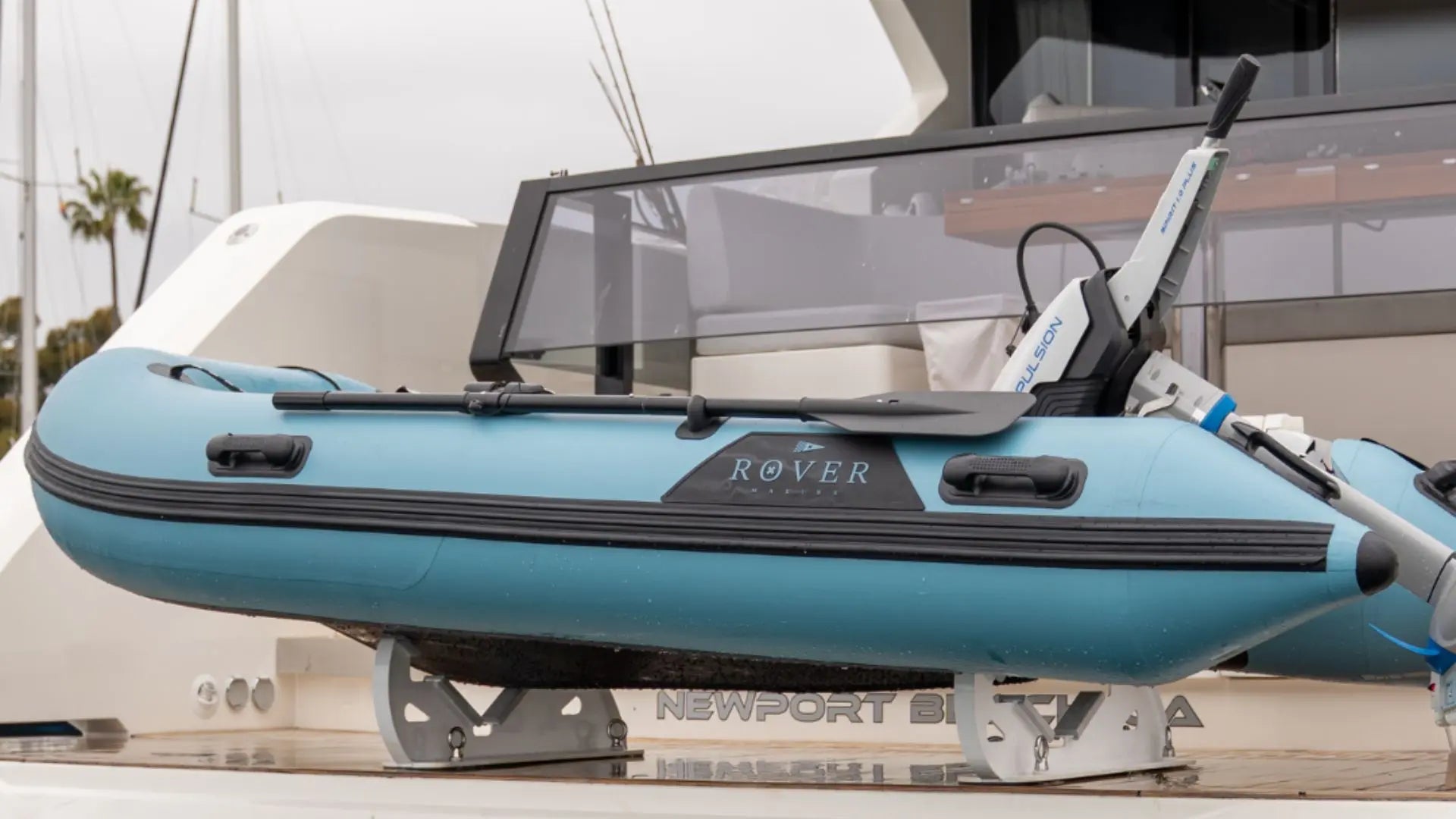
Rover Marine currently offers short-shaft electric motor options from ePropulsion and Torqeedo.
ePropulsion Spirit 1.0 Plus
The ePropulsion Spirit 1.0 Plus Short Shaft uses a removable battery platform and is designed for quieter tender trips, fishing, harbor cruising, and recreational use.
Range depends on battery configuration, throttle, load, wind, current, waves, temperature, and battery condition.
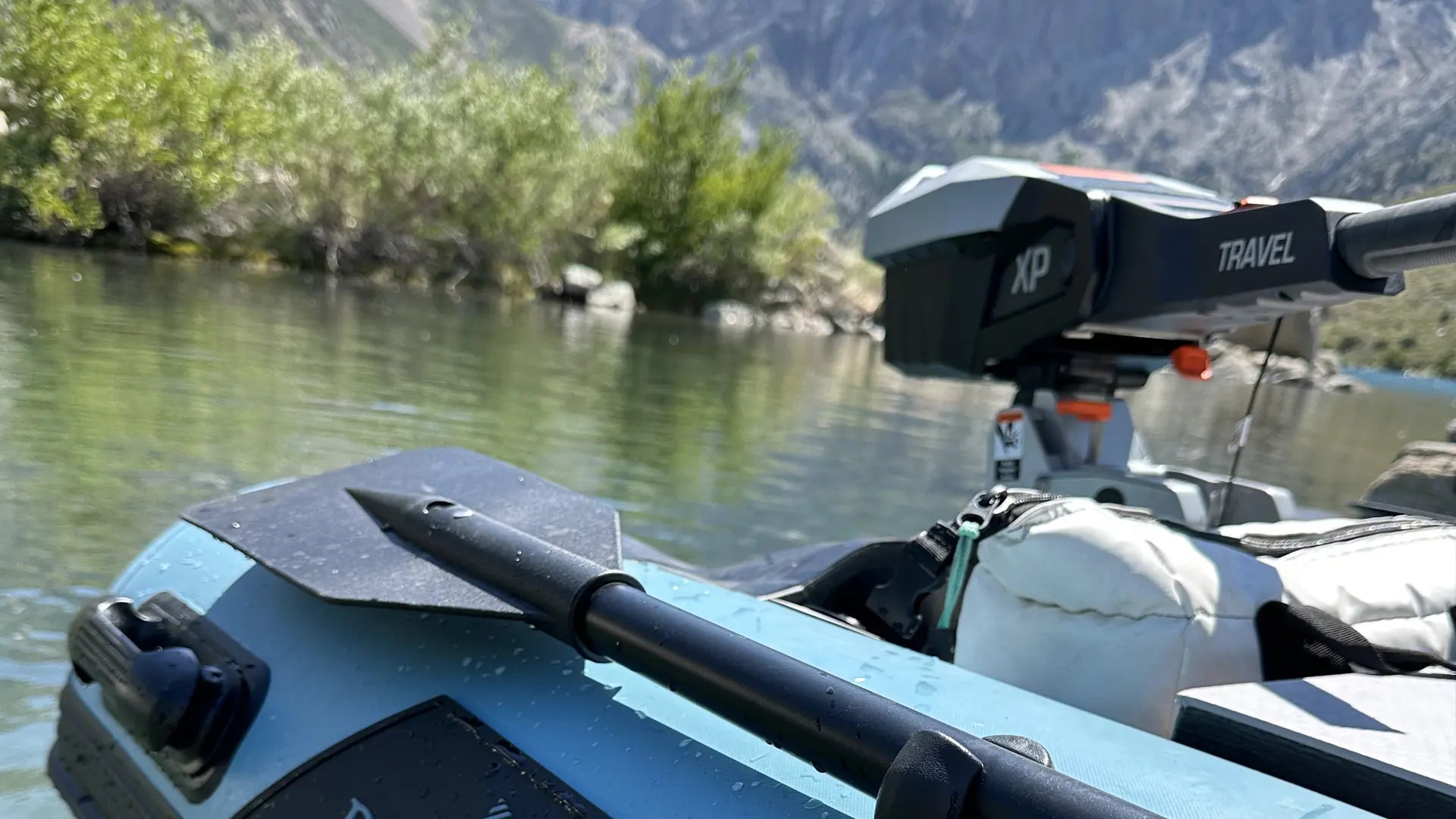
Torqeedo Travel 1103 S
The Torqeedo Travel 1103 S Short Shaft is a portable electric system with a removable battery and onboard range information.
Rover Marine lists essential and extended-range configurations in its electric motor collection.
Electric Equivalency Does Not Mean Identical Performance
A manufacturer may describe an electric motor as comparable to a gasoline horsepower class. That does not mean it will produce the same speed, acceleration, range, or planing performance as every gas motor carrying that horsepower label.
Compare the complete motor specifications and intended use rather than choosing from the equivalency statement alone.
View all current choices in the Rover Marine electric outboard motor collection .
Which Setup Fits Different Activities?
Fishing
Anglers may prioritize quiet low-speed control, initial stability, deck space, and a safe return margin rather than maximum speed.
A Battle Cat with a properly matched electric or gas outboard can provide a wide fishing platform. A rigid skiff may be preferable for longer travel or permanent fishing storage.
Yacht Tender Service
Tender owners often value compact storage, easy launching, manageable motor weight, predictable range, and low-speed control around docks.
The Battle Boat and Battle Cat both deflate for transportation and storage and can use appropriately sized short-shaft motors.
Diving
Dive setups need room for tanks, weights, fins, safety equipment, and reboarding. Every piece of equipment counts toward the total capacity.
A rigid boat may support more permanent storage. An inflatable can be easier to transport and may provide a softer side for water entry.
Watersports and Towing
Towing activities require a boat, motor, attachment system, and operating environment designed for the intended sport.
Do not assume that reaching a certain horsepower automatically makes a portable inflatable suitable for skiing, tubing, or repeated towing.
When a Rigid Boat May Be the Better Choice
- Longer travel and higher sustained speed are routine.
- The boat requires extensive permanent storage.
- The activity needs a specialized towing or commercial setup.
- The owner already has a trailer, slip, and tow vehicle.
- Greater onboard fuel or battery capacity is required.
- The boat must support heavier permanent propulsion equipment.
When an Inflatable Dinghy May Be the Better Choice
- Compact transportation and storage are priorities.
- The boat will serve as a yacht tender.
- The owner wants to avoid a permanent trailer or slip.
- Trips are shorter or take place in protected water.
- Fishing, diving, or family cruising are the primary uses.
- The motor needs to be removed and stored separately.
Maintenance Differences Between Inflatable and Rigid Boat Setups
Motor maintenance is determined by the motor manufacturer, operating environment, and use frequency. The hull type changes how the motor is mounted, stored, and inspected, but it does not replace the manufacturer's service schedule.
Inflatable Boat Checks
- Inspect the transom and motor clamps before launch.
- Confirm the boat is inflated to the correct pressure.
- Check tubes, seams, valves, and attachment points.
- Balance passengers and gear around the motor weight.
- Remove and store the motor safely when appropriate.
- Keep fuel and solvents away from inflatable fabric.
Rigid Boat Checks
- Inspect permanent mounting hardware and steering.
- Check fuel, battery, cooling, and control systems.
- Maintain the bilge, ventilation, and engine compartment.
- Inspect the hull, transom, and lower unit.
- Service trailer components when applicable.
- Follow all seasonal storage procedures.
Electric Motor Maintenance
- Rinse appropriate components after saltwater use.
- Inspect the propeller for fishing line and damage.
- Protect electrical and data connections.
- Charge and store the battery as instructed.
- Inspect mounting components and the tiller.
- Install firmware updates when applicable.
Gas Motor Maintenance
- Follow the manufacturer's scheduled service intervals.
- Inspect the fuel system, tank, vent, and connections.
- Flush or rinse after saltwater use as directed.
- Inspect the propeller and lower unit.
- Use proper fuel storage and winterization procedures.
- Check cooling-water flow during operation.
Safety Considerations When Choosing a Motor
A safe motor setup begins with the boat and motor manufacturers' specifications. Added power cannot compensate for overloading, incorrect shaft length, poor weather decisions, or an improperly mounted motor.
- Use the required engine cutoff switch and lanyard.
- Stay below the boat's passenger, load, and motor limits.
- Confirm the motor is secured according to its manual.
- Carry properly sized flotation for every person.
- Check weather, current, waves, and visibility.
- Maintain enough battery or fuel reserve to return safely.
- Carry communication and emergency equipment appropriate to the trip.
- Follow federal, state, and local boating requirements.
Motor Weight and Trim
A heavy motor shifts the center of gravity aft and can make the stern sit lower. Battery, fuel, passenger, and equipment placement should be planned to maintain balanced trim without exceeding capacity.
Electric Motor Safety
Protect batteries and connections from damage, follow charging instructions, secure the battery, and do not use damaged electrical equipment. Battery transport and storage requirements vary by chemistry and manufacturer.
Gas Motor Safety
Store fuel in approved containers, prevent leaks, provide appropriate ventilation, keep ignition sources away, and carry any fire-safety equipment required for the vessel and operating area.
Review the U.S. Coast Guard life-jacket guidance before heading out.
How to Compare Total Ownership Cost
Current motor prices, fuel prices, battery packages, and service costs change frequently. A broad cost table can become inaccurate quickly, so compare current quotes for the exact systems being considered.
| Cost Category | Electric Setup | Gas Setup | Rigid Boat Considerations |
|---|---|---|---|
| Initial purchase | Motor, battery, charger, and optional additional capacity. | Motor, fuel tank, lines, controls, and installation. | May include larger controls, steering, gauges, and permanent systems. |
| Operating energy | Electricity and possible replacement or additional batteries. | Gasoline and engine fluids. | Consumption generally rises with power, speed, load, and hull size. |
| Maintenance | Battery, propeller, connectors, software, and inspections. | Fuel, cooling, lower unit, ignition, oil, and scheduled service. | Permanent systems may require more complex service access. |
| Storage | Battery storage and safe charging space. | Ventilated fuel and motor storage. | Trailer, slip, dry stack, or permanent home storage. |
| Replacement planning | Battery condition and eventual replacement. | Wear components and engine service life. | Hull systems, controls, steering, trailer, and larger components. |
Questions to Ask Before Comparing Price
- Does the quoted package include the battery and charger?
- Does it include controls, cables, fuel components, or installation?
- Is the shaft length correct?
- Who provides warranty service?
- Are replacement parts available nearby?
- What maintenance is required each season?
- Will the boat need a trailer or paid storage?
- Does the setup provide enough practical range?
Current Rover Marine Warranty Coverage
The previous article contained outdated blanket three-year warranty language. Rover Marine now publishes tiered factory coverage for eligible boats and covered components.
Coverage applies to qualifying manufacturing defects and remains subject to the complete terms, exclusions, documentation requirements, and claim review process.
Electric motors, gas motors, batteries, electronics, and other third-party equipment generally follow the warranties provided by their manufacturers.
Read the Complete Rover Marine WarrantyFrequently Asked Questions
What is the maximum motor for an 8-foot Rover Marine boat?
The 8-foot Battle Boat and Battle Cat support motors up to 6 HP. Both are rated for two people or 600 pounds and use a 15-inch transom.
What is the maximum motor for a 10-foot Rover Marine boat?
The 10-foot Battle Boat and Battle Cat support motors up to 10 HP. Both are rated for four people or 1,000 pounds and use a 15-inch transom.
What is the maximum motor for a 12-foot Rover Marine boat?
The 12-foot Battle Boat and Battle Cat support motors up to 20 HP. Both are rated for four people or 1,200 pounds and use a 15-inch transom.
Do Rover Marine boats require a short-shaft motor?
Current Battle Boat and Battle Cat specifications list a 15-inch transom on every size. A compatible short-shaft outboard is the normal fit.
Is an electric outboard better than a gas motor?
Neither option is better for every owner. Electric can be ideal for quieter, predictable trips with charging access. Gas can be more practical for longer travel, fast refueling, and higher sustained output.
Can a Rover Marine inflatable use a jet drive?
Rover Marine product specifications are based on compatible transom-mounted gas and electric outboards. Do not install a jet system unless Rover Marine and the propulsion manufacturer specifically approve the complete configuration.
How much fuel will an outboard use?
Fuel consumption depends on the exact motor, throttle, propeller, boat size, load, trim, maintenance, wind, waves, and current. Use the engine manufacturer's performance data rather than a broad fuel-per-hour estimate.
How far will an electric outboard travel?
Range depends on battery capacity, throttle, total load, hull setup, wind, current, waves, temperature, propeller condition, and battery health. Maintain a safe reserve and do not treat a maximum test range as a guaranteed trip distance.
Does a 20 HP rating mean the 12-foot boat needs 20 HP?
No. Up to 20 HP is the published maximum for the 12-foot Battle Boat and Battle Cat. A smaller properly matched motor may be appropriate for tender work, fishing, harbor cruising, or electric use.
What warranty covers a Rover Marine boat?
Current eligible coverage consists of five years for the hull, three years for tubes and seams, and two years for eligible covered accessories. Review the complete Rover Marine warranty for current terms and exclusions.
Read Rover Marine Owner Experiences
Specifications establish the boat's limits, but owner feedback can help buyers understand setup, transportation, stability, motor use, and customer support.
Visit the Rover Marine reviews page and compare those experiences with your own crew, storage, range, and propulsion needs.
Choose the Boat and Motor as One Complete System
Start with the hull, capacity, motor limit, and transom. Then choose the propulsion type, power, range, weight, and maintenance requirements that match how you actually use the water.
Built for Water. Designed for Freedom.

Leave a comment
This site is protected by hCaptcha and the hCaptcha Privacy Policy and Terms of Service apply.