Inflatable boat ratings are useful only when the scoring method is visible. A list that declares a brand “best” without comparable models, measured criteria, test conditions, or current sources is marketing, not a reliable rating.
This guide shows how to compare brands and models using specifications, capacity, construction clarity, motor fit, warranty, support, review quality, storage, and ownership requirements. It uses Rover Marine as a worked example without inventing a market ranking.
What should an inflatable boat rating measure?
Published facts
Dimensions, weight, capacity, chambers, pressure, transom, motor ceiling, and included equipment.
Ownership fit
Packed size, lifting, setup, storage, motor handling, care, and local support.
Evidence quality
Current product pages, warranty, manuals, verified reviews, and disclosed test conditions.
First test: are the specifications complete and internally consistent?
A strong product page should make it possible to calculate storage, capacity, and motor fit. Look for inflated and packed dimensions, bare hull weight, passenger and weight capacity, pressure, chamber count, seating, transom height, and maximum motor.
Then check for contradictions. A current specification table should override old blog copy. If the same site shows different capacities or warranty terms, ask the brand to resolve the conflict before buying.
Second test: do reviews describe real use?
Useful reviews identify the model, size, motor, activity, and ownership stage. Give less weight to a one-line compliment with no context. Do not hard-code a review count or average rating into an evergreen article because those figures change.

Third test: can you explain the warranty in plain language?
The current Rover Marine warranty lists five years for eligible hull manufacturing defects, three years for tubes and seams, and two years for covered accessories. Third-party motors, batteries, and electronics follow their manufacturers.
It also lists exclusions such as punctures, accidents, misuse, wildlife damage, abrasion, dock rash, normal wear, lack of care, cosmetic damage, and improper storage. Claims require evidence and can take up to 30 days. A rating should reward clarity, not simply the largest number in a headline.
Fourth test: does the boat fit the complete ownership routine?
- Can the packed boat clear every door, hatch, stair, and vehicle opening?
- Can the normal crew move the bare hull weight?
- Where will it be inflated, dried, protected, and stored?
- Does the motor match transom, power, and capacity?
- Are parts, repair, and support accessible?
- Does the deck layout fit the activity and safety equipment?
A high rating for another owner can be a poor fit for your storage or route. Weight the criteria according to the mission.
Worked example: rating Rover Marine by current facts
| Size | Inflated dimensions | Capacity | Maximum motor | Battle Boat / Cat weight |
|---|---|---|---|---|
| 8 ft | 8 x 4 x 15 in | 2 people / 600 lb | Up to 6 HP | 86 / 84 lb |
| 10 ft | 10 x 5 x 18 in | 4 people / 1,000 lb | Up to 10 HP | 100 / 98 lb |
| 12 ft | 12 x 5.5 x 20 in | 4 people / 1,200 lb | Up to 20 HP | 135 / 130 lb |

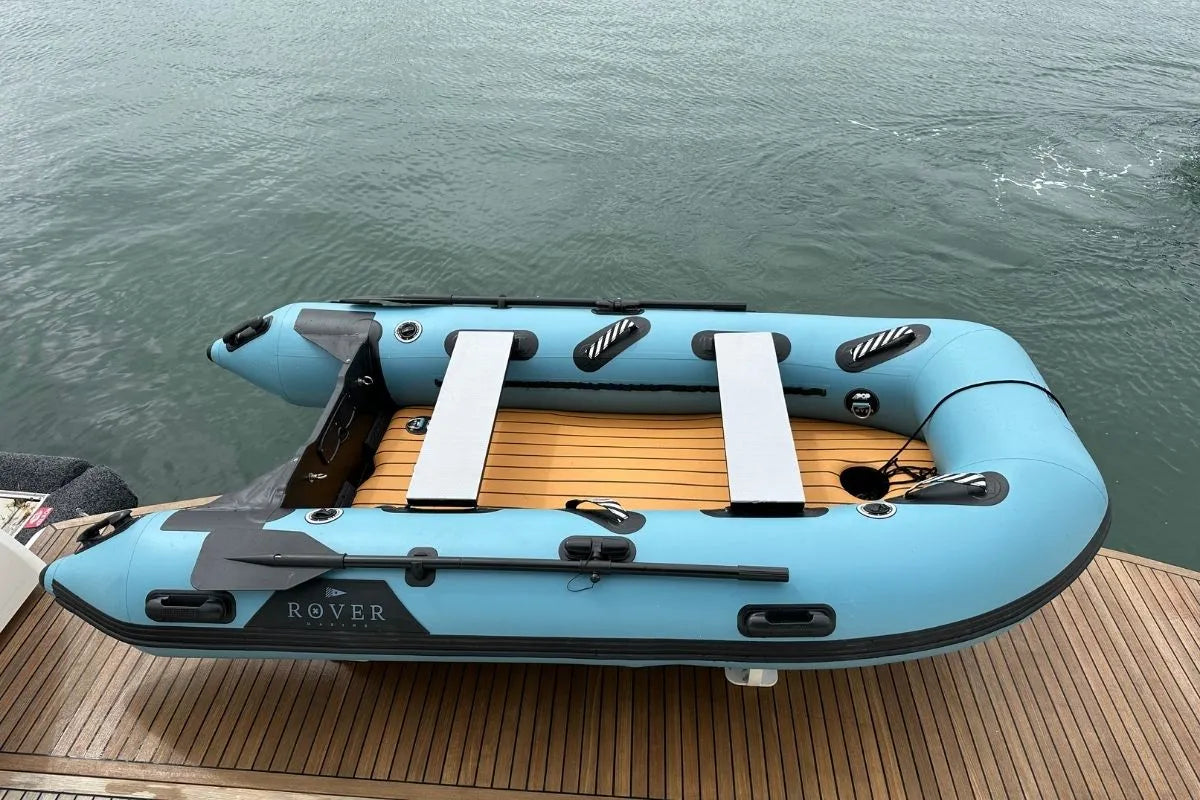
Rover publishes all three size choices for both hull layouts. The Battle Boat uses a traditional fully inflatable profile, and the Battle Cat uses dual pontoons. Current pages list 3.5 PSI tubes, 10 PSI floors, and 15-inch transoms.
The brand can be scored positively for current specification depth, a dedicated warranty page, a dedicated reviews page, current motor collection, and direct contact. Buyers should still resolve any promotional statements on product pages that exceed the controlled specification and performance guardrails.
A reusable inflatable boat scorecard
| Category | Questions | Weight suggestion |
|---|---|---|
| Mission fit | Does model, size, and layout fit the recurring use? | 25% |
| Verified specs | Are all capacity, weight, pressure, and motor facts current? | 20% |
| Storage and launch | Can the owner move, store, dry, and deploy it? | 15% |
| Warranty clarity | Are coverage, exclusions, evidence, and process clear? | 15% |
| Review relevance | Do reviews identify comparable use and ownership stage? | 10% |
| Support and parts | Can the buyer get pre-sale and after-sale help? | 10% |
| Design preference | Does the look and layout support pride of ownership? | 5% |
Change the weights for your mission and document why. Use properly fitted life jackets and confirm the current requirements for the exact craft, motor, operating area, and activity. The U.S. Coast Guard provides current life jacket guidance.
How to audit a brand comparison before trusting it
Check the publication date and every linked product page. Record whether the writer names exact models, declares affiliate or commercial relationships, separates measured results from manufacturer claims, and describes test load and conditions. A polished table with no sourcing is still weak evidence.
Normalize the comparison. Convert dimensions and weights to the same units, distinguish bare hull from ready-to-run weight, separate passenger count from total capacity, and compare warranty coverage plus exclusions. Do not award points for a feature another model does not need for its mission.
Red flags in “best brand” content
- One brand wins every category without a disclosed scoring method.
- Competitors are described vaguely while the publisher's preferred brand receives detailed claims.
- Review counts, prices, availability, or warranty terms are shown without a date.
- Speed, range, stability, or durability is asserted without the exact model and conditions.
- Different craft categories are ranked as direct substitutes.
Keep the completed scorecard and sources. If a product changes, update the affected row rather than rewriting the conclusion around a preferred answer. This produces information that people and search systems can verify.
Frequently asked questions
Which inflatable boat brand is best?
There is no universal winner. Compare specific models against a disclosed mission and scoring method.
Can I trust a top-10 list?
Only if it names comparable models, current sources, criteria, weighting, and test conditions.
What specifications matter most?
Capacity, dimensions, packed size, hull weight, pressure, chambers, transom, and motor ceiling.
How should I use customer reviews?
Look for the same model, size, motor, activity, and ownership stage.
Should a rating include warranty?
Yes, including exclusions and claims process, not only headline duration.
Is the highest capacity always best?
No. Higher capacity can add weight, storage volume, motor cost, and launch effort.
Are Rover Marine boats RIBs?
No. They are fully inflatable boats with high-pressure floors.
What current warranty structure does Rover publish?
Five years hull, three years tubes and seams, and two years covered accessories, subject to full terms.
Should ratings include price?
They can, but use current complete-package price and do not let temporary discounts dominate fit.
How do motor limits affect a rating?
They determine compatibility headroom but do not promise speed or recommend the maximum.
Why link to reviews instead of quoting a star count?
Counts and averages change. A live review page stays current and provides context.
What should I do when site claims conflict?
Use the specific current specification or warranty page and ask the brand to clarify.
Compare Rover Marine with a transparent scorecard
Review current specifications, warranty, owner feedback, and direct support, then choose the model that fits your use.