
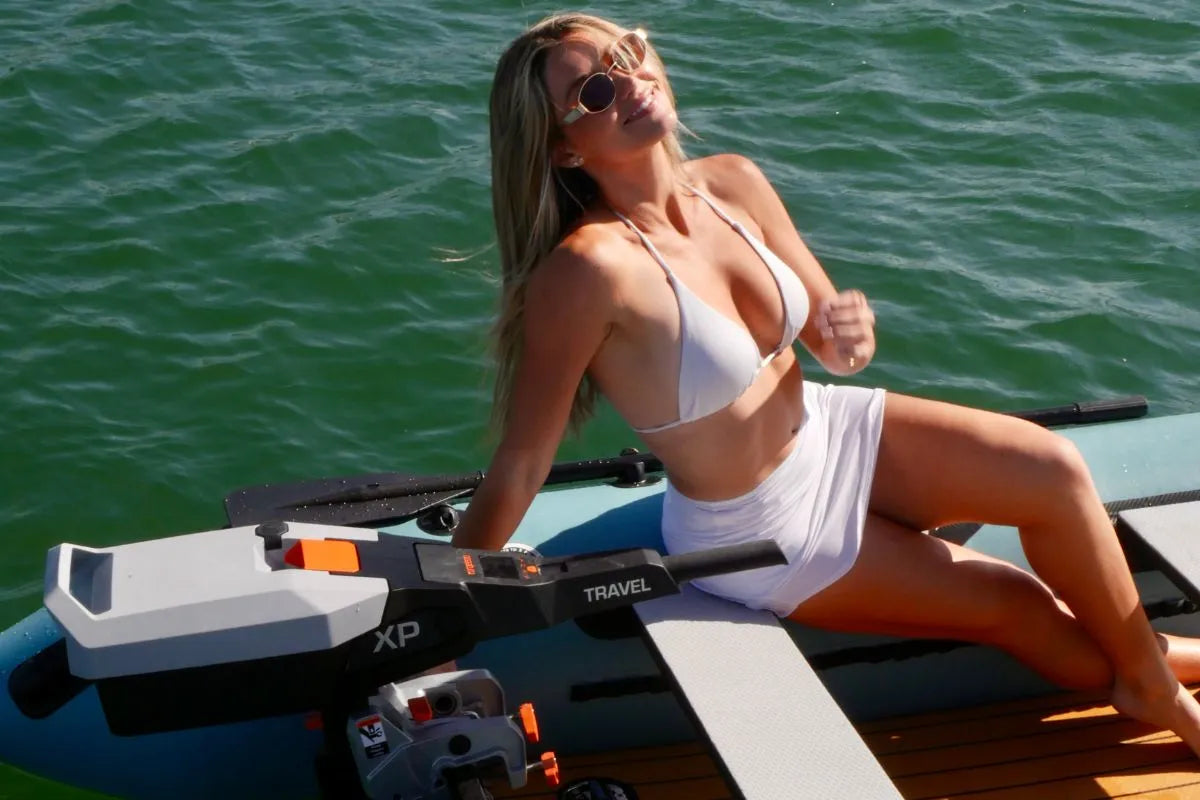
For tenders, dinghies, inflatable boats, and short-range cruising, electric outboards have become one of the cleanest and simplest ways to get on the water.
If you are shopping the 3HP-equivalent electric outboard category, two names come up again and again: ePropulsion and Torqeedo. Both are quiet, compact, clean, and well matched to small inflatable boats.
This guide compares the ePropulsion Spirit 1.0 Plus and the Torqeedo Travel 1103 S so you can choose based on your boat, storage setup, charging plan, and how you actually use the water.
Why Small Electric Outboards Make Sense
Small electric outboards are popular for a reason. They are quiet, clean, easy to start, easy to store, and easier to maintain than a small gas outboard for many tender and dinghy owners.
- No gas onboard: no fuel smell, oil mixing, carburetor cleaning, or fuel storage.
- Quiet running: better for harbors, fishing spots, morning dock runs, and marina use.
- Simple starting: press a button instead of pulling a cord.
- Low maintenance: no oil changes, no spark plugs, and fewer gas-engine service items.
- Good tender fit: ideal for yacht tenders, lake cruising, dock-to-shore runs, and short-range exploration.
Gas still has advantages for long-distance running, high horsepower, and remote routes where charging is not realistic. But for many inflatable boat owners, electric is the easier day-to-day setup.
The Two Motors: ePropulsion Spirit 1.0 Plus vs Torqeedo Travel 1103 S
ePropulsion Spirit 1.0 Plus
Current Rover price: $2,999
The Spirit 1.0 Plus is a 1kW, 3HP-equivalent electric outboard built for dinghies, tenders, fishing boats, and small sailboats. Rover lists it as a strong pairing for the Battle Boat and Battle Cat.
Torqeedo Travel 1103 S Extended Range Package
Current Rover price: $3,599
The Torqeedo Travel 1103 S is a 3HP-equivalent short-shaft electric outboard with Torqeedo’s premium small-motor platform, smart display features, and an extended-range package currently listed by Rover Marine.
Spec Sheet, Side by Side
Use this table as a buying guide, not a lab test. Always check the live product page before ordering because motor packages, battery configurations, and included accessories can change.
| Spec | ePropulsion Spirit 1.0 Plus | Torqeedo Travel 1103 S Extended Range |
|---|---|---|
| Power class | 1kW, 3HP equivalent | 3HP equivalent |
| Current Rover price | $2,999 | $3,599 |
| Listed weight | 42.6 lb total listed product weight | 44.4 lb total listed product weight |
| Battery listing | 1276Wh lithium-ion battery system listed on Rover page | 1080Wh lithium battery listed on Rover page |
| Shaft type | Short shaft | Short shaft |
| Controls | Tiller handle with integrated controls | Tiller handle with display and integrated controls |
| Best fit | Simple, quiet electric power for inflatable boats, tenders, and fishing use | Premium electric tender setup with Torqeedo’s small-outboard platform |
| Rover hull compatibility | Battle Boat and Battle Cat | Battle Boat and Battle Cat |
Power, Runtime, and Range
Both motors sit in the 3HP-equivalent category, which makes them practical choices for inflatable dinghies, yacht tenders, lake boats, fishing platforms, and short-range cruising.
Actual runtime and range vary widely. Boat size, load, wind, current, throttle setting, water conditions, battery age, and hull setup all matter. A light 8 ft tender at low throttle will behave very differently from a loaded 12 ft boat running into wind.
For short tender runs, quiet harbor cruising, fishing access, and dock-to-shore use, either motor can be a strong fit. For longer exploration days, plan charging, spare battery capacity, or a shorter route before you launch.
Charging and Battery Strategy
The right motor depends partly on where you charge. A yacht owner with shore power has a different routine than someone who drives to different lakes every weekend.
Choose Simple Charging If...
- You keep the boat near a dock, garage, marina, or cottage outlet.
- Your trips are short and predictable.
- You want fewer moving parts and a simple routine.
- You mostly use the boat as a tender or harbor cruiser.
Plan Extra Battery Capacity If...
- You fish all day.
- You run remote coves or islands.
- You cannot reliably recharge between runs.
- You want more margin for wind, current, and detours.
Before ordering, check what battery and charger package is included on the exact Rover product page. Motor packages can change, and the included battery setup is one of the most important details.
Weight, Carry, and Storage
Weight matters because small inflatable boat owners often mount and remove the motor by hand. They also store it in garages, yacht lockers, dock boxes, SUVs, and cottages.
The ePropulsion Spirit 1.0 Plus is listed by Rover at 42.6 lb. The Torqeedo Travel 1103 S Extended Range Package is listed by Rover at 44.4 lb. Both are portable compared with larger outboards, but neither should be treated like a casual backpack item.
If you remove the motor after every trip, think about where you will lift it, where it will sit while charging, and how it will be protected during transport. A clean storage routine matters almost as much as the motor choice.
Controls and Display
Both motors use tiller-style controls designed for small-boat operation. Electric start, smooth throttle control, and battery information are part of what makes electric outboards easy to live with.
For most buyers, controls will not be the deciding factor. The bigger decision is how the motor fits your boat, charging routine, budget, and service preference.
Saltwater Use and Maintenance
Electric outboards still need marine care. Quiet does not mean maintenance-free, especially around saltwater.
- Rinse the exterior with fresh water after saltwater use.
- Keep battery contacts clean and dry.
- Do not leave the motor sitting in standing saltwater.
- Store batteries according to the manufacturer’s instructions.
- Check propeller, skeg, shaft, and mounting hardware regularly.
- Follow the product manual for winter storage and charging intervals.
Electric outboards remove a lot of gas-engine maintenance, but they still deserve a proper rinse, dry, and storage routine.
Cold Weather and Battery Storage
Lithium batteries do not like extreme conditions. Cold can reduce performance, and improper storage can shorten battery life.
- Store batteries indoors when freezing conditions are expected.
- Avoid charging in conditions outside the manufacturer’s recommended range.
- Do not store fully depleted batteries for long periods.
- Follow the battery storage percentage and interval recommended in the manual.
- Keep batteries dry, clean, and away from direct heat.
If you boat seasonally, make battery storage part of your fall cleanup routine. It is one of the easiest ways to protect the motor investment.
Which Electric Outboard Should You Buy?
Buy the ePropulsion Spirit 1.0 Plus If...
- You want a clean 3HP-equivalent electric setup at $2,999.
- You are pairing with a Battle Boat or Battle Cat.
- You value quiet operation and simple tender power.
- You want a strong all-around choice for lake, harbor, fishing, and dinghy use.
Buy the Torqeedo Travel 1103 S If...
- You want Torqeedo’s premium small-outboard platform.
- You are looking at the Extended Range Package currently listed at $3,599.
- You care about advanced display features and premium electric-outboard design.
- You want a high-end tender motor for a Battle Boat or Battle Cat setup.
Neither is the wrong answer. The better choice is the one that fits your charging habits, route distance, boat size, budget, and how often you remove the motor.
Pairing with Battle Boat and Battle Cat
Both electric outboards are compatible with Rover Marine’s inflatable lineup. The better hull depends on the job.
| Boat | Starting Price | Best Electric Use Case |
|---|---|---|
| Battle Boat | $1,999 | Yacht tender, lake cruising, compact storage, harbor runs, simple utility boating |
| Battle Cat | $2,299 | Stable fishing platform, family cruising, dive support, wide-stance tender duty |
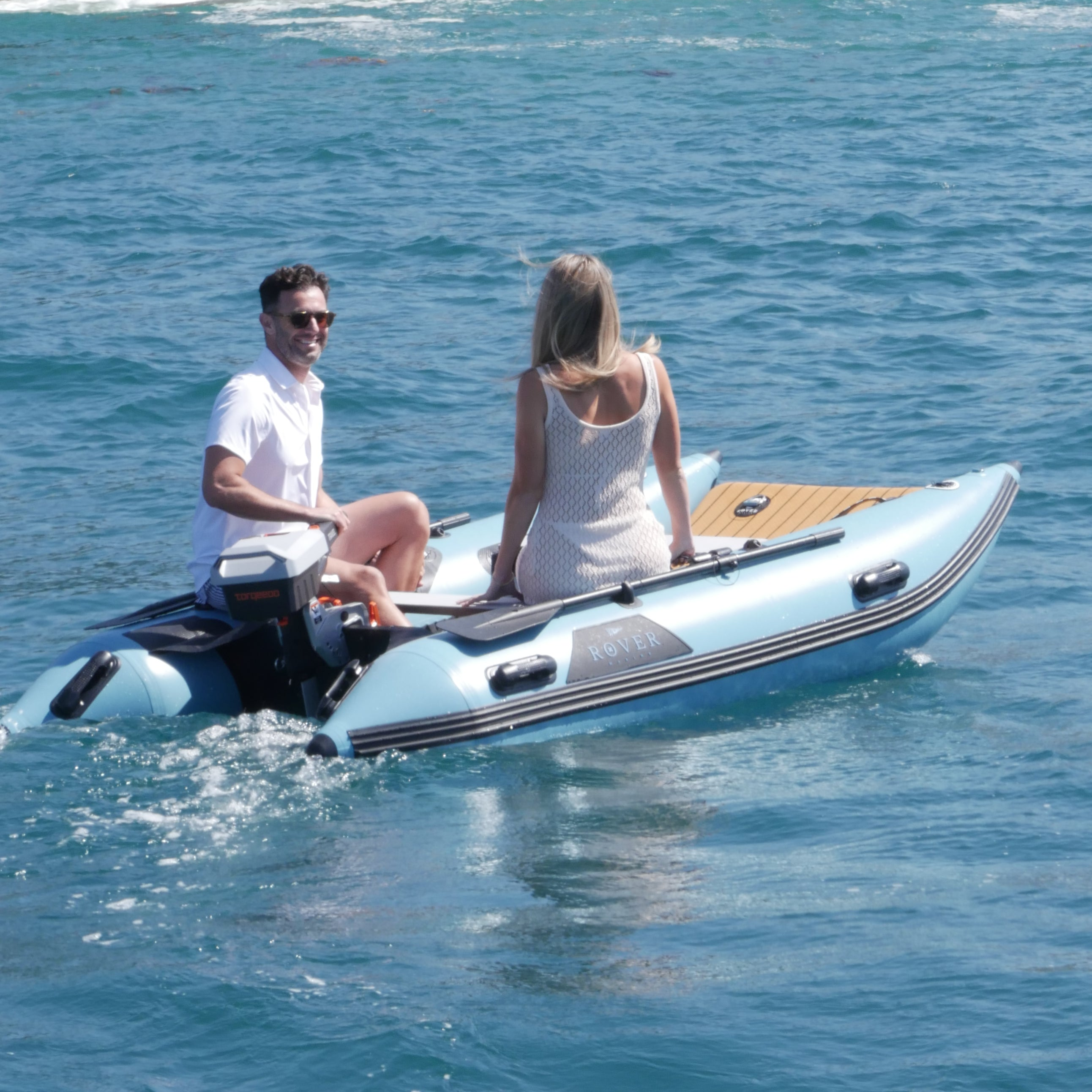
The Battle Boat gives you a more traditional inflatable dinghy layout. The Battle Cat gives you the wider catamaran stance and more stable feel underfoot. Both can pair with clean electric power for quiet, low-maintenance boating.
FAQ
Which is better, ePropulsion or Torqeedo?
Both are strong choices in the 3HP-equivalent electric outboard category. ePropulsion is currently the lower-priced Rover option at $2,999. Torqeedo’s Travel 1103 S Extended Range Package is currently listed at $3,599 and offers Torqeedo’s premium electric platform.
Can I run either motor in saltwater?
Both are designed for marine use, but saltwater care still matters. Rinse after use, keep contacts clean and dry, and follow the manufacturer’s maintenance instructions.
How long will the battery last on the water?
Runtime depends on throttle, load, wind, current, hull, and battery condition. Use manufacturer guidance as a starting point and always plan with a safe return reserve.
Is electric enough for a Battle Boat or Battle Cat?
Yes, for many common uses: yacht tender duty, lake cruising, fishing, harbor runs, and quiet short-range exploring. For long open-water runs or heavy loads, confirm your range and power needs before choosing any motor.
Can I charge with solar?
Some electric outboard systems support solar accessories or power-station charging workflows. Check the exact motor manual and package before relying on solar as part of your route plan.
Should I choose based on top speed?
No. In this category, choose based on boat fit, battery setup, charging routine, range planning, service preference, and budget. Top speed can vary widely by boat and load.
Ready to Pick the Right Electric Outboard?
Electric power makes the most sense when the whole setup fits together: the right hull, the right motor, the right charging routine, and the right expectation for your water.
- Shop ePropulsion Spirit 1.0 Plus at $2,999
- Shop Torqeedo Travel 1103 S Extended Range Package at $3,599
- Shop Battle Boat from $1,999
- Shop Battle Cat from $2,299
- Browse all electric outboards
- Browse all Rover Marine products
Questions about pairing a motor with your Battle Boat, Battle Cat, tender, or fishing setup? Reach out through the Rover Marine contact page.

Leave a comment
This site is protected by hCaptcha and the hCaptcha Privacy Policy and Terms of Service apply.