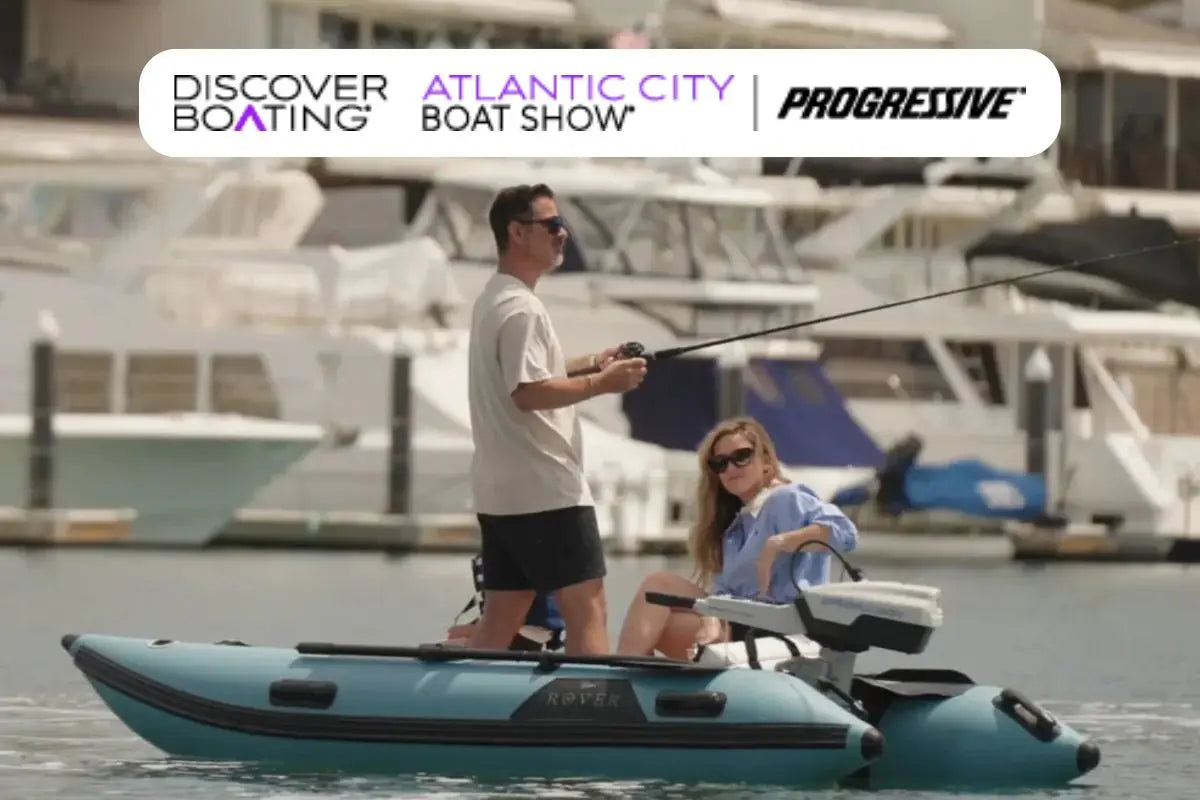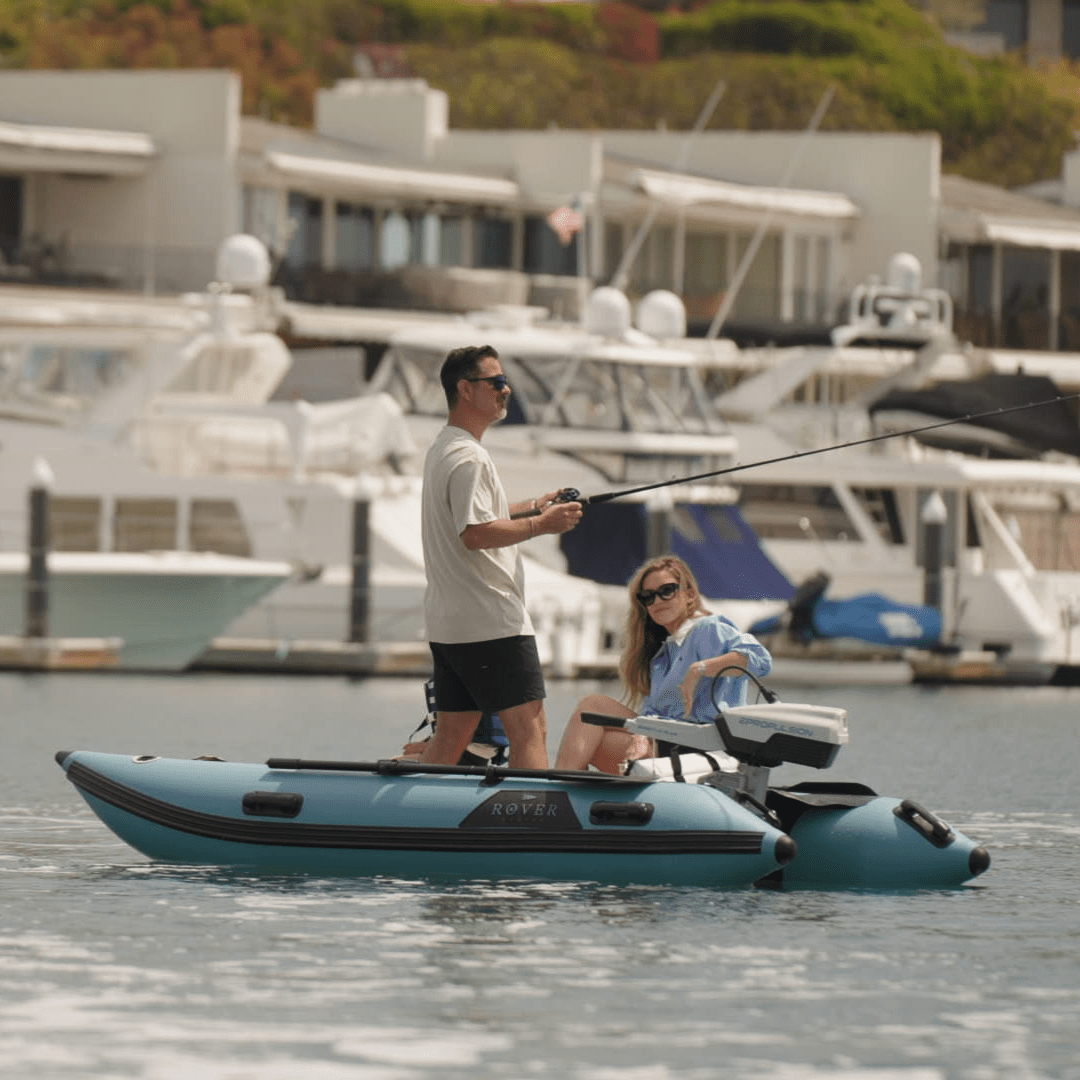
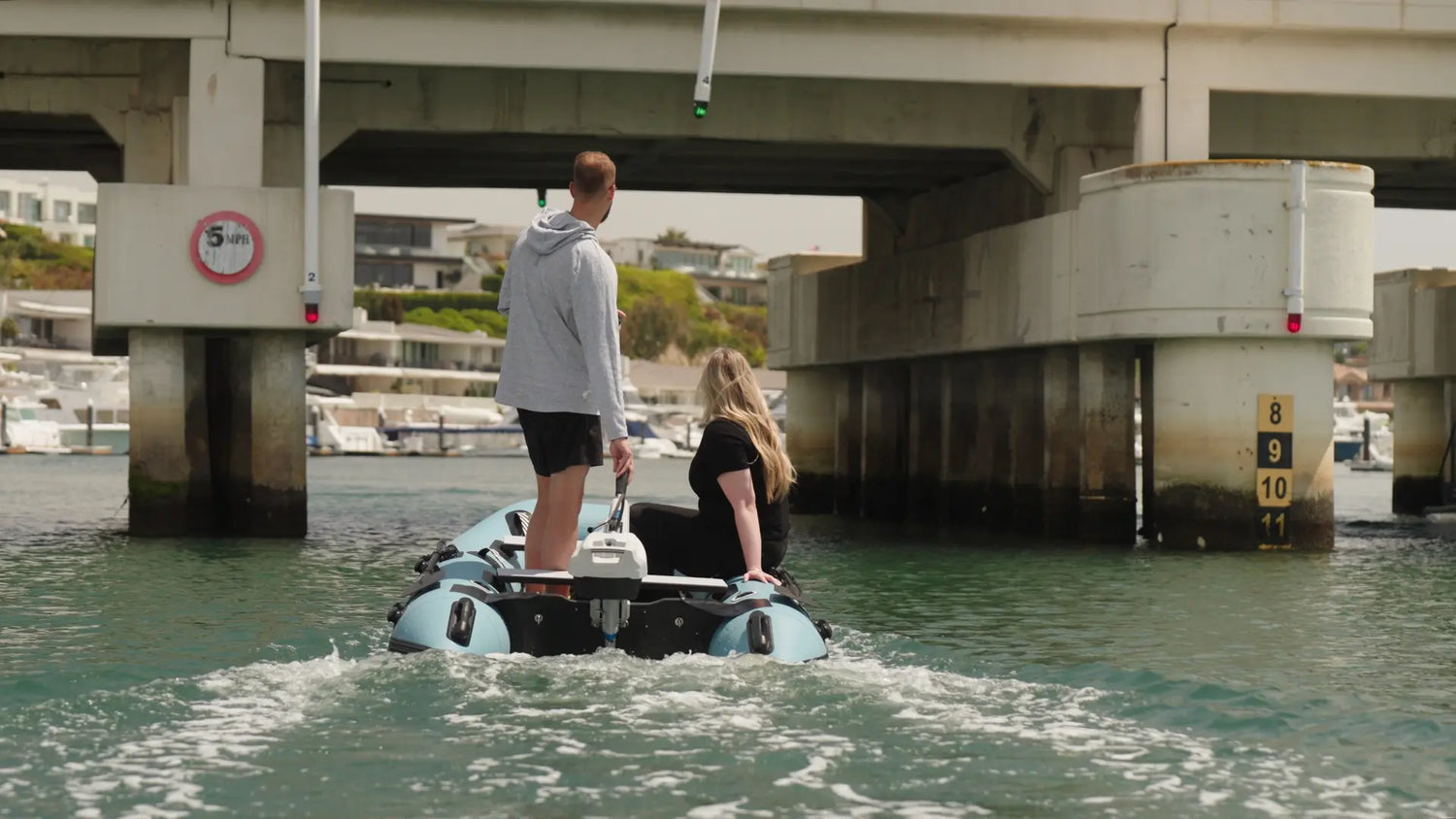
Deploy Your Fishing Platform: Inflatable Dinghies Built for Anglers
Serious anglers know the frustration: the best fishing spots are in skinny water, tucked behind mangroves, or miles from the nearest boat ramp. The Rover Battle Boat and Battle Cat solve the access problem—portable, high-performance fishing platforms that reach water fiberglass skiffs can't touch, without the Trailer Trauma.
This guide compares the best inflatable fishing dinghies for 2026, covering stability for standing casts, motor compatibility, gear storage, and real-world performance in bass lakes, flats, and coastal zones.
Why Anglers Are Switching to Inflatable Fishing Dinghies
Access Advantages Over Traditional Skiffs
Modern drop-stitch inflatable dinghies have revolutionized fishing access. Here's why tactical anglers are making the switch:
- Skinny Water Penetration: 4-6" draft reaches flats and backwaters impossible for fiberglass
- No Boat Ramp Required: Launch from beaches, docks, or yacht swim platforms
- Zero Storage Fees: Deflate and store in a closet or truck bed
- Multi-Location Fishing: Transport deflated to remote lakes, rivers, or coastal zones
- Standing Stability: Drop-stitch floors create rigid casting platforms
- Silent Approach: Pair with electric motors for stealthy presentations
Fishing Scenarios Where Inflatables Excel
- Flats Fishing: Redfish, bonefish, permit in 6-18" water
- Bass Fishing: Access lily pads, downed timber, shallow coves
- Coastal Inshore: Speckled trout, snook, flounder in marsh systems
- Offshore Island Hopping: Reach remote reefs and structure
- Fly Fishing: Stable platform for standing casts and sight fishing
- Kayak Fishing Upgrade: More stability, speed, and gear capacity
Battle Boat vs. Battle Cat: Fishing Performance Comparison
| Feature | Battle Boat | Battle Cat | Best Fishing Application |
|---|---|---|---|
| Hull Design | Single-hull monohull | Dual-pontoon catamaran | Cat = superior standing stability for sight fishing |
| Standing Stability | Excellent (8-10 PSI floor) | Superior (wider stance + dual pontoons) | Cat = fly fishing, poling platform |
| Casting Deck Space | Standard platform | Wider deck (extra 12-18") | Cat = more room for gear, coolers, rod storage |
| Speed to Fishing Zones | Higher top speed (15-20 mph) | Moderate speed (12-18 mph) | Boat = faster runs to offshore structure |
| Draft (Skinny Water) | 4-6" loaded | 5-7" loaded | Boat = ultra-shallow flats access |
| Chop Handling | Good (cuts through waves) | Excellent (stable in 2-3ft seas) | Cat = offshore/coastal rough water |
| Pricing (8ft) | $1,999 | $2,299 | Boat = budget-conscious anglers |
| Pricing (10ft) | $2,250 | $2,499 | Sweet spot for solo/duo fishing |
| Pricing (12ft) | $2,450 | $2,749 | Maximum gear capacity + 2-3 anglers |
Critical Features for Fishing Dinghies
Stability: The Standing Cast Test
Serious fishing requires standing—for sight casting, fly fishing, and working topwater lures. Drop-stitch PVC floors inflated to 8-10 PSI create rigid platforms comparable to fiberglass decks.
Battle Cat Advantage: The dual-pontoon catamaran design provides 30-40% more lateral stability than monohull designs. Anglers report confident standing casts in 1-2ft chop—conditions that would rock a kayak or canoe.
Battle Boat Advantage: Narrower beam allows tighter maneuvering in tight cover (mangroves, lily pads, downed timber).
Motor Compatibility: Power for Fishing Zones
Both the Battle Boat and Battle Cat accept short-shaft (15") outboards. Browse our electric outboard motors for silent approaches to spooky fish.
| Fishing Style | Recommended Motor | Power Rating | Key Advantage |
|---|---|---|---|
| Flats Fishing (Stealth) | Electric Outboard | 55-80 lbs thrust | Silent approach, no spooking fish |
| Bass Fishing (Lakes) | Electric or 5HP Gas | 55 lbs thrust / 5HP | Quiet for shallow coves, power for runs |
| Coastal Inshore | Gas Outboard | 5-9.9 HP | Range for island hopping, speed through channels |
| Offshore Structure | Gas Outboard | 9.9-15 HP | Safety margin for open water, fast returns |
| Fly Fishing (Skinny) | Electric Trolling Motor | 40-55 lbs thrust | Ultra-quiet, precise positioning |
Gear Storage & Rigging Options
Inflatable fishing dinghies require smart rigging to maximize limited space:
- Rod Holders: Flush-mount or clamp-on holders for trolling and storage
- Anchor System: Bow-mounted anchor trolley for wind/current positioning
- Cooler/Livewell: Soft-sided coolers fit between seats without blocking deck space
- Tackle Storage: Waterproof bags or deck-mounted tackle trays
- Fish Finder: Portable units with suction-cup transducers (no hull drilling required)
- Casting Brace: Leaning post or grab rail for standing stability
Size Selection Guide for Anglers
8ft Models: Solo Angler / Ultra-Portable
Best For: Single angler, backpack fishing trips, RV/camper transport
Weight Capacity: 600-800 lbs (angler + gear)
Motor Range: 2.5-5 HP gas / 40-55 lbs thrust electric
Typical Speed: 8-12 mph
Storage: Fits in a large duffel bag
10ft Models: Solo/Duo Fishing Workhorse
Best For: 1-2 anglers, day trips, coastal/lake fishing
Weight Capacity: 900-1,200 lbs (2 anglers + full gear)
Motor Range: 5-9.9 HP gas / 55-80 lbs thrust electric
Typical Speed: 12-18 mph
Storage: Trunk or truck bed when deflated
12ft Models: Multi-Angler / Offshore Capable
Best For: 2-3 anglers, offshore runs, tournament fishing
Weight Capacity: 1,400-1,800 lbs (3 anglers + heavy gear)
Motor Range: 9.9-15 HP gas / 80+ lbs thrust electric
Typical Speed: 15-22 mph
Storage: Garage or large storage unit when deflated
Real-World Fishing Performance
Flats Fishing: Redfish & Speckled Trout
Vessel: Battle Cat 10ft + 55 lbs thrust electric motor
Location: Louisiana marsh systems
Performance:
- 4-6" draft allows access to oyster bars and grass flats
- Silent electric motor enables 20-30 yard approaches to tailing redfish
- Standing stability for sight casting and fly fishing
- 8-hour runtime on single battery charge (trolling speed)
Bass Fishing: Shallow Cover Tactics
Vessel: Battle Boat 10ft + 5HP gas outboard
Location: Central Texas lakes
Performance:
- Narrow beam navigates lily pad fields and downed timber
- 15 mph cruise speed covers water efficiently
- Stable platform for pitching jigs and working topwater
- Launches from bank access points (no ramp required)
Offshore Island Hopping: Reef Fishing
Vessel: Battle Cat 12ft + 9.9HP gas outboard
Location: Florida Keys
Performance:
- 18 mph cruise handles 5-mile runs to offshore reefs
- Wide deck accommodates 2 anglers + cooler + tackle
- Stable in 2-3ft seas (typical Keys conditions)
- Deflates for yacht tender storage between trips
Safety & Regulations for Fishing Dinghies
USCG Requirements for Motorized Vessels
According to the U.S. Coast Guard, all motorized fishing dinghies must carry:
- USCG-Approved PFDs: One Type I, II, or III life jacket per person
- Sound-Producing Device: Whistle or horn (required for vessels under 39.4 feet)
- Visual Distress Signals: Flares or signal mirror for coastal/offshore fishing
- Fire Extinguisher: Required if equipped with enclosed fuel tanks
- Navigation Lights: Red/green bow lights + white stern light for night fishing
- Kill Switch Lanyard: Attach to PFD or belt loop (prevents runaway boat)
State Fishing Regulations
Most states require vessel registration for motorized boats, regardless of size. Check your state's fish and wildlife department for:
- Vessel registration requirements
- Fishing license regulations
- Size/bag limits for target species
- Restricted fishing zones (marine sanctuaries, no-motor areas)
Maintenance for Saltwater Fishing
Post-Fishing Protocol (Saltwater)
- Rinse Entire Vessel: Freshwater hose-down removes salt residue (5-10 minutes)
- Flush Motor Cooling System: Critical for saltwater outboards (prevents corrosion)
- Wipe Down PVC Surfaces: Remove fish slime, blood, and bait residue
- Inspect Valves: Check for sand/debris in valve mechanisms
- Dry Before Storage: Prevent mildew growth in humid climates
Monthly Maintenance Checklist
- Apply UV protectant to PVC surfaces (extends lifespan in sun exposure)
- Check air pressure in all chambers (8-10 PSI for drop-stitch floors)
- Inspect transom mounting bolts for corrosion
- Lubricate motor pivot points and steering cables
- Test emergency repair kit (patches, adhesive, pump)
For comprehensive saltwater maintenance standards, reference the American Boat & Yacht Council (ABYC) guidelines for small craft in marine environments.
Inflatable vs. Kayak vs. Fiberglass Skiff
| Feature | Inflatable Dinghy | Fishing Kayak | Fiberglass Skiff |
|---|---|---|---|
| Standing Stability | Excellent (drop-stitch floor) | Poor to Moderate | Excellent |
| Speed | 12-20 mph (motorized) | 3-5 mph (paddle/pedal) | 20-35 mph |
| Portability | Deflates to duffel bag | Roof rack or truck bed | Requires trailer |
| Storage Costs | $0 (closet storage) | $0 (garage/shed) | $1,200-$2,400/year (marina) |
| Initial Cost | $2,000-$2,750 | $1,000-$3,000 | $8,000-$25,000 |
| Gear Capacity | 600-1,800 lbs | 300-500 lbs | 1,000-2,500 lbs |
| Skinny Water Draft | 4-7" | 3-5" | 8-12" |
| Multi-Location Use | Yes (deflate/transport) | Moderate (roof rack) | No (trailer required) |
Frequently Asked Questions (FAQ)
Can I stand and cast in an inflatable fishing dinghy?
Yes! Drop-stitch floors inflated to 8-10 PSI create rigid platforms comparable to fiberglass decks. The Battle Cat's dual-pontoon design provides superior lateral stability for standing casts, fly fishing, and sight fishing. Anglers report confident standing in 1-2ft chop.
How shallow can inflatable fishing dinghies run?
Loaded draft is typically 4-7 inches depending on size and weight. This allows access to flats, backwaters, and shallow coves that fiberglass skiffs (8-12" draft) cannot reach. The Battle Boat's narrower hull drafts slightly shallower than the Battle Cat.
What's the best motor for flats fishing?
Electric outboards (55-80 lbs thrust) are ideal for flats fishing. They provide silent approaches to spooky fish (redfish, bonefish, permit) without the noise signature of gas motors. Runtime is typically 4-6 hours at trolling speed, 2-4 hours at cruising speed.
Can I use an inflatable dinghy in saltwater?
Absolutely. Both the Battle Boat and Battle Cat are built with UV-resistant, saltwater-grade PVC. Critical maintenance: rinse with freshwater after every saltwater use, flush motor cooling systems, and apply UV protectant monthly. Proper care extends lifespan to 5-10 years in saltwater environments.
How do I transport an inflatable fishing dinghy?
Deflate and roll into a duffel bag or storage bag. 8ft models fit in a car trunk, 10ft models fit in a truck bed or SUV, 12ft models require a larger vehicle or roof rack. No trailer required—launch from beaches, docks, or bank access points.
What's the weight capacity for fishing gear?
8ft models: 600-800 lbs | 10ft models: 900-1,200 lbs | 12ft models: 1,400-1,800 lbs. This includes anglers, motor, fuel, coolers, tackle, and catch. Always stay within rated capacity for safety and performance.
Do I need to register an inflatable fishing dinghy?
Yes, in most U.S. states. Any motorized vessel requires registration regardless of size. Check your state's fish and wildlife department or visit the U.S. Coast Guard Boating Safety site for specific requirements.
Can I add a trolling motor to an inflatable dinghy?
Yes, but trolling motors are best for low-speed maneuvering (under 5 mph). For primary propulsion and serious fishing performance, choose a purpose-built electric outboard or gas motor. Trolling motors work well as secondary positioning motors for drift control.
Rig Your Fishing Platform Today
Inflatable fishing dinghies deliver unmatched access, portability, and performance for serious anglers. Whether you're targeting redfish in Louisiana marshes, bass in Texas lakes, or snook in Florida mangroves, the Battle Boat and Battle Cat provide tactical fishing platforms without the Trailer Trauma.
Ready to upgrade your fishing game? Contact our team at 844-207-6837 (M-F, 10am-4pm PST) for personalized recommendations based on your target species and fishing zones.
Deploy. Fish. Dominate. No trailer required.
See the Battle Boat and Battle Cat in action on our YouTube channel—real anglers, real catches, real performance.