
Rover Marine inflatable boats deliver exceptional utility: stability for standing anglers, robust durability for beach landings, and the portability that makes weekends on the water effortless. This guide breaks down what makes a Rover Marine inflatable both high-value and long‑lasting — from our triple-layer reinforced military-grade 1100D PVC and 3.5 psi air tubes to our high-pressure 10 psi drop-stitch floor systems, V-TEAK decking, packing, and seamless pairing with electric outboards. We walk through the considerations buyers face (weight vs. toughness, price vs. performance) and show how choices like our military‑grade PVC, drop‑stitch floors, and V‑TEAK decking enhance day‑to‑day value. You’ll get clear guidance on matching a boat to how you’ll use it, what to expect from electric motors, and which features matter most for fishing, tending a yacht, or family outings. There’s also a focused comparison of two Rover Marine models and step‑by‑step setup and motor pairing notes so you can choose with confidence, backed by our 3-Year Warranty and 60-Day Rider’s Guarantee.
Which Types of Rover Marine High-Value Inflatable Boats Work Best for Different Uses?
Inflatables come in shapes and layouts built for specific jobs. Picking the right hull and deck layout up front saves compromises later: single‑hull dinghies pack small and stow easily, catamaran‑style boats give extra lateral stability, and utility “battle” dinghies trade simplicity for load capacity. The hull geometry and floor system drive the benefits you’ll actually notice on the water — easier boarding, earlier planing, or a more usable deck. Match type to use and you’ll get a boat that fits your routine rather than fighting it. Below is a quick map of common types and the use cases where they shine.
- Dinghies and yacht tenders: ideal for compact storage and short, frequent shuttle trips to shore.
- Fishing inflatables: choose models with a firm floor and wide tubes for stable casting and gear storage.
- Catamaran‑style inflatables: deliver better lateral stability and quicker planing in choppy coastal conditions.
These basic distinctions make the next step — evaluating materials, floors, and motors — much easier and help you focus on the features that matter to your typical outings.
Why Dinghies and Yacht Tenders Make Sense for Value-Conscious Buyers
Dinghies and tenders are built for convenience: reinforced transoms for short‑shaft outboards, lightweight tubes that pack into lockers or trunks, and straightforward handling. Their value is practical — quick deployment, low maintenance, and a wide choice of motors for short trips. When you’re comparing tenders look at valve quality, UV resistance, and transom strength relative to the thrust you’ll use. If you ferry people and light gear often, portability usually beats extra seating — but this is the tradeoff to weigh before moving on to more stable hull designs like catamarans.

When a Catamaran‑Style Boat (like the Battle Cat) Is the Right Call
Catamaran‑style inflatables use twin tubes to increase lateral stability and create a flatter planing surface. Two narrower pontoons damp pitch and let the deck plane earlier than a wide single tube — that translates to more comfort, easier standing for fishing or diving, and often better fuel (or battery) efficiency at speed. These designs also spread load more evenly and generally provide more usable deck area, making them a smart choice when you carry people or gear regularly and you face choppy water.
Hydroelastic Design of Inflatable Boats for Improved Performance
Inflatable boats are far more flexible than rigid metal or composite hulls. Work like the RNLI’s IB1 shows that this flexibility — hydroelasticity — alters performance predictions that assume a stiff hull. Designing for a fully hydroelastic craft introduces new challenges and will require updated design methods in the future.
Which Materials and Construction Details Make Rover Marine High-Value Inflatable Boats Durable?
Durable, high-value Rover Marine inflatables balance material choice, seam technique, and floor construction to stretch service life without compromising on quality. Our triple-layer reinforced military-grade 1100D PVC and heat-welded seams provide superior abrasion and UV resistance; high-pressure 10 psi drop-stitch floors and V-TEAK decks add rigidity and comfort. Because our military‑grade 1100D PVC offers higher tensile strength per weight than economy PVC, you get exceptional durability without bulk. Our 3.5 psi air tubes further enhance the boat's structural integrity. The table below summarizes common materials and where Rover Marine models deliver long‑term value.
| Material / Feature | Key Attribute | Practical Value |
|---|---|---|
| Triple-layer reinforced military-grade 1100D PVC | Exceptional tensile strength, abrasion, and UV resistance | Superior durability and extended lifespan for demanding use |
| 3.5 psi Air Tubes | High-pressure inflation for structural integrity | Enhanced rigidity, stability, and performance on the water |
| 10 psi Drop-Stitch Floor | Extreme rigidity, flat deck surface | Stable platform for standing, improved handling, and comfort |
| V-TEAK Decking | Non-slip, UV-resistant, comfortable surface | Enhanced grip, comfort, and longevity with minimal maintenance |
| UV-resistant Materials | Specialized coatings and pigments | Protects against sun damage, maintaining material integrity and appearance |
| Hypalon | Chemical / UV resistance | Top durability but higher cost — used by some premium brands, not Rover Marine |
| TPU | Lightweight / flexibility | Lighter and more eco‑friendly but often pricier for the same durability |
| Reinforced seams | Advanced seam method (heat-welded) | Heat‑welded seams reduce leaks and simplify repairs, ensuring long-term reliability |
For most buyers, Rover Marine’s well‑spec’d 1100D PVC and strong heat-welded seam work deliver the best value — and that makes floor choices like our high-pressure 10 psi drop‑stitch and V‑TEAK decking the next important decision.

How Triple-Layer Reinforced Military‑Grade 1100D PVC and Reinforced Seams Improve Longevity
Rover Marine’s triple-layer reinforced military‑grade 1100D PVC is blended with stronger fabrics and UV stabilizers so our 3.5 psi air tubes stand up to abrasion and sun exposure better than economy PVC. Reinforced seams — especially heat‑welded joins — lower the chance of seam failure and make field repairs more reliable. The upshot is fewer patches, less downtime, and a lower lifetime cost versus thinner materials that wear quickly after repeated beachings and trailering.
Why High-Pressure 10 psi Drop‑Stitch Floors and V‑TEAK Matter for Performance
Rover Marine’s high-pressure 10 psi drop‑stitch floors are made from thousands of polyester threads connecting two fabric layers. Inflated at high pressure, they form a rigid, flat deck that feels much like an aluminum floor but still packs down. That rigidity, combined with our 3.5 psi air tubes, lets anglers stand and cast with confidence and reduces hull flex for better handling. V‑TEAK decking adds grip, comfort, and UV resistance while keeping maintenance simple. Together they deliver performance and comfort without the weight penalty of full metal floors — a strong value play for Rover Marine inflatables.
Inflatable Textile Technologies: Drop-Stitch Panels for Military and Civilian Use
Drop‑stitch panels and braided air beams are increasingly used in both civilian and military applications because they’re light, pack down small, and deploy quickly — making them practical across a wide range of uses.
How Do Portability and Ease of Setup Add Real Value?
Portability and setup time directly affect how often you use a boat. Faster inflation gets you on the water more often; smaller packed size expands storage and transport options. The critical factors are pump type, valve design, and folding technique — they determine time‑to‑water and material care. If you want quick weekend launches, prioritize a good electric pump, user‑friendly valves, and a manageable packed weight. If you plan long storage, you can accept a bit more bulk for better floor systems. Below is a short, efficient setup routine we recommend for your Rover Marine inflatable.
- Inflate the main 3.5 psi air tubes with a dual‑action or electric pump to the recommended pressure to ensure rigidity.
- Use a high‑pressure pump to inflate the 10 psi drop‑stitch floor to manufacturer specs so the deck locks up firm.
- Secure valves, fit the floor and hardware, mount the motor on the transom, and run a quick systems check before launch.
After use, let the boat dry, then store it loosely in a dry, ventilated spot. Don’t pack it wet or with sand inside — that’s the fastest way to degrade fabric and shorten service life.
Tips for Easy Inflation, Deflation, and Compact Storage
Smooth inflation and compact packing start with good valves and the right pumps. High‑flow valves speed inflation; one‑way deflation valves let you roll the 3.5 psi air tubes tight without trapped air. Electric pumps save time for frequent users, while rolling from bow to transom with valves open minimizes creases and trapped moisture. Investing in a quality high-pressure pump for your 10 psi drop-stitch floor and a compact electric pump often pays back more than pinching pennies on the boat itself — you’ll use it more and enjoy it more.

How Lightweight Design Helps Transport and Handling
Lighter boats are easier to lift, launch, and store — which makes solo launches and beaching practical. Lower weight reduces strain on roof racks and trailers and often eliminates the need for a trailer entirely for very compact models. The tradeoff is that the lightest constructions can be less abrasion‑resistant, so look for boats that pair lighter tubes with reinforced wear patches and keel protection to keep handling simple without sacrificing durability.
Which Electric Outboards Work Best for Rover Marine High-Value Inflatable Boats?
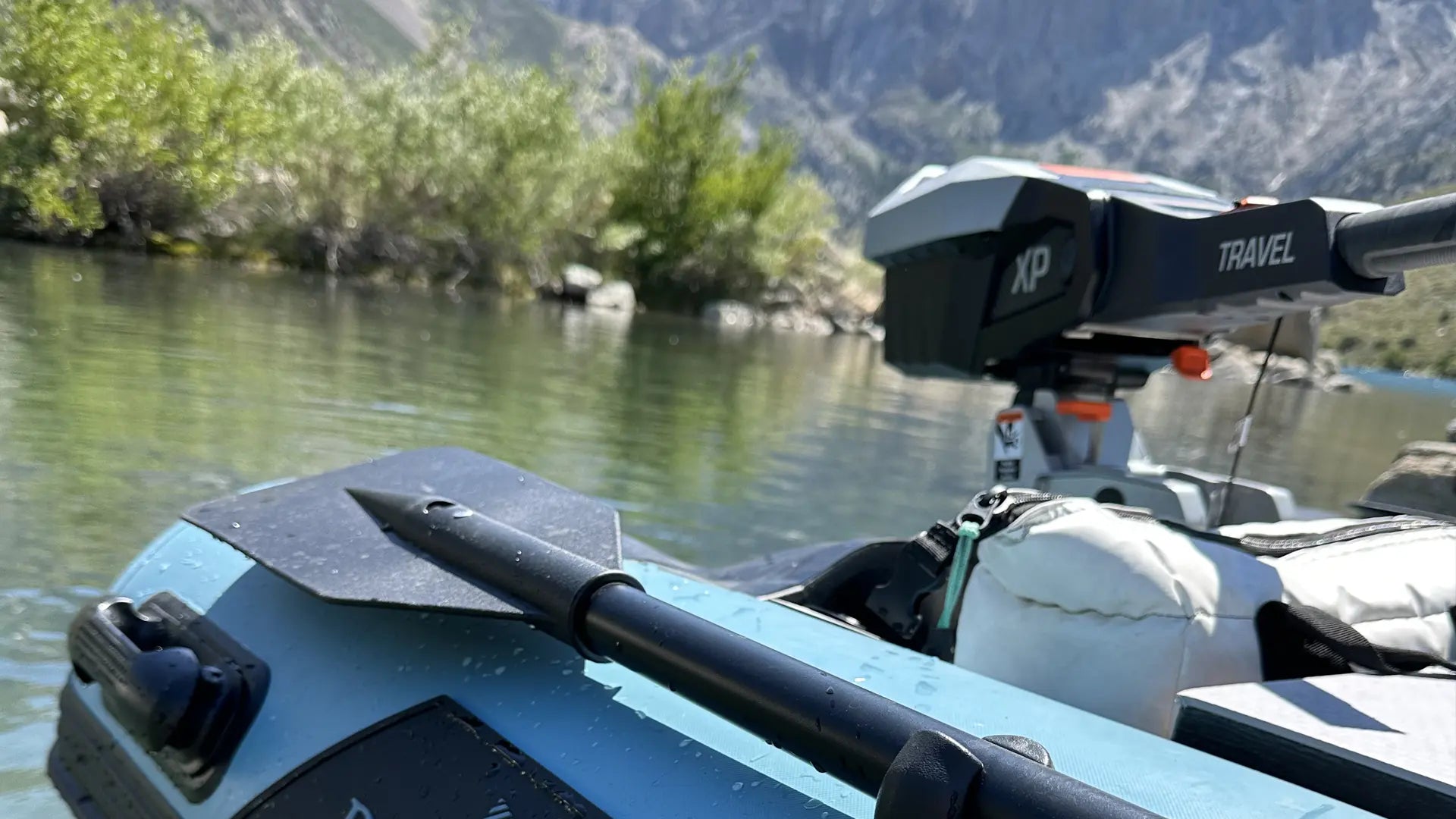
Picking an electric outboard for a Rover Marine inflatable is about matching thrust, battery capacity, and shaft length to the boat’s weight and intended use. Electric motors deliver direct torque, quiet operation, and low upkeep — ideal for trolling, calm cruising, and tender work. Brands like ePropulsion and Torqeedo are common recommendations because they offer modular batteries and integrated electronics that suit our high-pressure 10 psi drop‑stitch decks and transom mounts. The table below gives a quick comparison of the tradeoffs you’ll weigh.
| Motor Model / Brand | Attribute | Typical Value / Rover Marine Compatibility |
|---|---|---|
| ePropulsion Spirit 1.0 Plus | Integrated battery, modularity, quiet operation | Excellent for Rover Marine models, offering scalable runtime and easy mounting. |
| Torqeedo Travel 1103 S | High efficiency, integrated display, smart controllers | Ideal for Rover Marine models, aiding range planning and efficient cruising. |
| Electric Outboards (General) | Thrust / Shaft length | Match thrust to loaded weight; Rover Marine models are compatible with up to 6HP (8 ft), 10HP (10 ft), 20HP (12 ft) motors. |
| Battery packs (Wh) | Runtime / Weight tradeoff | Higher Wh extends runtime but adds weight; balance against payload for optimal performance. |
Use the table to balance runtime, weight, and electronics needs when selecting a motor for your Rover Marine inflatable.

Why ePropulsion and Torqeedo Are Common Choices
Both brands offer compact, efficient drive systems with battery options and electronics that make planning easier. Their motor and prop designs extract usable thrust from battery energy efficiently, which improves practical range on small craft. They also provide ecosystem options so you can keep things light for tender duty or add range for longer trips. For many buyers that translates to quieter, lower‑maintenance operation compared with gas outboards.
How Battery Life, Quiet Operation, and Low Maintenance Improve the Day on the Water
Longer battery life and quiet running mean more relaxed trips, less wildlife disturbance, and easier conversation on board. Electric drives push maintenance from engine tune‑ups to simple battery care and electrical checks, which most owners find easier and less frequent. In real terms that means quieter trolling for anglers, calmer family runs, and less fuss for tender duties. Keep a short maintenance checklist — battery storage and care, inspect electrical connections, and check the prop — and you’ll get reliable service with minimal time spent.
How Rover Marine’s Battle Boat and Battle Cat Stack Up
To show how choices affect value, we compare two Rover Marine models that prioritize exceptional value and durability: the Battle Boat and the Battle Cat. Both use our triple-layer reinforced military‑grade 1100D PVC, high-pressure 10 psi drop‑stitch floors, 3.5 psi air tubes, UV‑resistant materials, and V‑TEAK decking. The key differences are hull geometry and intended use: the single‑hull Battle Boat is a versatile all‑rounder; the Battle Cat’s twin tubes favor lateral stability and deck area. The table below summarizes the tradeoffs so you can see which one fits your needs, all backed by our 3-Year Warranty and 60-Day Rider’s Guarantee.
| Model | Key Features & Use | Motor Compatibility |
|---|---|---|
| Battle Boat | High-pressure 10 psi drop-stitch floor, 3–4 person capacity. Versatile all-rounder for tender, fishing, or family use. | Compatible with electric outboards up to 6HP (8 ft models), 10HP (10 ft models), 20HP (12 ft models). Fully compatible with ePropulsion Spirit 1.0 Plus and Torqeedo Travel 1103 S. |
| Battle Cat | High-pressure 10 psi drop-stitch or dual-chamber deck, 4–5 person capacity. Twin-tube design for superior lateral stability and quicker planing in choppy conditions. | Suited to electric outboards up to 6HP (8 ft models), 10HP (10 ft models), 20HP (12 ft models) for quicker planing and stability. Fully compatible with ePropulsion Spirit 1.0 Plus and Torqeedo Travel 1103 S. |
| Shared Rover Marine Advantages | Triple-layer reinforced military-grade 1100D PVC, 3.5 psi air tubes, UV-resistant materials, V-TEAK decking, 3-Year Warranty, 60-Day Rider’s Guarantee. |
What Makes the Battle Boat a Versatile, Exceptional Value Choice?
The Battle Boat pairs Rover Marine’s triple-layer reinforced military‑grade 1100D PVC with a high‑pressure 10 psi drop‑stitch floor and 3.5 psi air tubes to deliver a compact, durable platform for anglers, tenders, and family outings. It balances a usable deck and packed dimensions, supports electric motors up to 6HP (8 ft models), 10HP (10 ft models), or 20HP (12 ft models), and can be reconfigured for seats or cargo. If you want a durable, multi‑purpose inflatable with an exceptional value price point, the Battle Boat is built to answer that need.

Why the Battle Cat Is a Good Pick for Stability and Performance
The Battle Cat’s twin‑tube layout increases lateral stability, improves planing, and gives more usable deck area — all useful when you carry more people or gear, or operate in choppier water. That twin‑tube geometry spreads load and reduces roll, allowing electric outboards up to 6HP (8 ft models), 10HP (10 ft models), or 20HP (12 ft models) to plane earlier and cruise more efficiently. If stability, space, and passenger comfort are priorities, the Battle Cat offers a tangible upgrade without a huge price jump.
Which Use Cases Are Best Suited to Rover Marine High-Value Inflatable Boats?
Rover Marine high-value inflatables work well across common boating tasks because they combine stability, portability, and modular power options. For fishing you want a rigid 10 psi drop‑stitch floor, a stable hull form, and battery capacity for trolling; for family outings, non‑slip V‑TEAK decks and grab handles increase confidence; as a yacht tender, compact packing and a reinforced transom make repeated shuttle duty practical. The list below highlights the features to prioritize for each use case.
- Fishing: choose a rigid 10 psi drop-stitch floor, a stable hull, and battery capacity sized for trolling or cruising.
- Family recreation: emphasize non‑slip V-TEAK decking, grab handles, and seating for safe, comfortable outings.
- Yacht tending: prioritize compact packed size, quick inflation of 3.5 psi air tubes, and a strong transom for frequent launches.
These priorities translate directly into buying decisions — pick a 10 psi drop‑stitch floor and V‑TEAK for fishing and family use, or a compact tender with a reinforced transom for yacht duties — and then follow proper setup and safety checks before you go.
Key Features That Support Fishing on Rover Marine High-Value Inflatables
Fishing inflatables need a firm deck, stable hull, and suitable power for trolling or slow cruising. A 10 psi drop‑stitch floor gives a stable platform for casting; wider tubes or a catamaran form reduce roll when fighting fish. Useful extras include rod‑holder mounts, battery stowage for electric trolling, and a transom rated for your chosen outboard. With the right setup you’ll have a quiet, low‑maintenance rig that works well on lakes, protected bays, and nearshore waters.
Why These Boats Work for Family Recreation and Tendering
For family outings and tender duties, safety, fast deployment, and comfortable surfaces matter most. Non‑slip V‑TEAK decking, grab handles, and UV‑resistant materials increase confidence and longevity. Fast inflation of our 3.5 psi air tubes and compact packing make spontaneous launches and repeated tender runs practical. Combine those features with essential safety gear — PFDs, a pump, a repair kit, and signaling — and you have a reliable family boat or dependable tender that’s easy to maintain.
Frequently Asked Questions
What maintenance is required for Rover Marine high-value inflatable boats?
Regular, simple care keeps an inflatable working well for years. After each use rinse off salt and sand, check seams and valves for damage, and let the boat dry fully before storing. Inspect pumps and valve seals periodically and follow the electric outboard maker’s maintenance guidelines. A basic repair kit, a valve tool, and routine checks will prevent small issues from becoming big ones. All Rover Marine boats are backed by a 3-Year Warranty and 60-Day Rider’s Guarantee.
How do I choose the right electric outboard motor for my Rover Marine inflatable boat?
Match thrust and shaft length to your boat’s loaded weight and intended use. Rover Marine models are compatible with electric outboards up to 6HP (8 ft models), 10HP (10 ft models), or 20HP (12 ft models). Look at battery capacity (Wh) to estimate runtime — higher Wh gives more range but adds weight. Short‑shaft units often suit tenders and small inflatables; modular systems from brands like ePropulsion (e.g., Spirit 1.0 Plus) and Torqeedo (e.g., Travel 1103 S) make it easy to scale range or keep things light for short trips.
What safety features should I look for in a Rover Marine high-value inflatable boat?
Prioritize non‑slip V-TEAK decking, sturdy grab handles, reinforced seams, and clear buoyancy from our 3.5 psi air tubes. Make sure there’s a reliable transom if you’ll mount a motor, and always carry essential safety gear: correctly sized life jackets, a pump, a repair kit, and visual/aural signaling devices.
Can Rover Marine high-value inflatable boats be used in rough waters?
Some Rover Marine inflatables perform acceptably in choppy conditions — especially catamaran‑style hulls or models with reinforced builds — but every boat has limits. Follow the manufacturer’s guidance on conditions and weight limits, and avoid severe weather or high waves. When in doubt, err on the side of caution.
What are the advantages of using high-pressure 10 psi drop-stitch flooring in inflatable boats?
High-pressure 10 psi drop‑stitch floors create a rigid, flat deck that feels a lot like a hard floor but still packs down. That stability, combined with our 3.5 psi air tubes, improves handling, makes standing and casting easier, and increases load capacity. Because drop‑stitch floors are relatively light and compact when deflated, they’re a great fit for Rover Marine inflatables that need to balance performance and portability.
How do I properly store my inflatable boat to ensure its longevity?
Clean and dry the boat thoroughly before storing. Fold or roll loosely and keep it in a cool, dry, well‑ventilated place out of direct sunlight. A breathable cover adds protection from dust and debris. Avoid packing the boat while it’s wet or sandy to prevent mildew and fabric wear.
What are the best practices for inflating and deflating an inflatable boat?
Use the right pumps: a dual‑action or electric pump for the 3.5 psi air tubes and a high‑pressure pump for the 10 psi drop‑stitch floors. Inflate tubes to the recommended pressure and the floor to manufacturer specs. Deflate with valves open and roll from bow to transom to avoid trapping air and to minimize creasing. Store loosely and check valves for leaks before your next use.
Explore Models on RoverMarine.com
Ready to Explore Rover Marine?
Discover the full range of high-value, durable inflatable boats designed for your next adventure. Experience accessible premium quality and exceptional performance.