Rover Marine vs Traditional RIBs: The Drop-Stitch Revolution
The inflatable boat market in 2026 presents a clear choice: traditional Rigid Inflatable Boats (RIBs) with aluminum or fiberglass hulls costing $15,000-$50,000+, or Rover Marine's tactical drop-stitch inflatables delivering 90% of RIB performance at 10-20% of the cost. This comprehensive comparison analyzes how Rover Marine's Battle Boat and Battle Cat stack up against traditional RIBs from Highfield, Zodiac, and other premium brands—and why drop-stitch technology is eliminating Trailer Trauma for serious boaters.
Whether you're evaluating yacht tenders, fishing platforms, or dive boats, this expert analysis delivers the data you need to understand why Rover Marine's military-grade drop-stitch construction, color customization, and tactical design are redefining portable performance.

RIBs vs Drop-Stitch Inflatables: Understanding the Categories
What Are Traditional RIBs?
Rigid Inflatable Boats (RIBs) feature solid aluminum or fiberglass hulls with inflatable pontoon tubes. Brands like Highfield, Zodiac, and Avon dominate this category with vessels designed for commercial, rescue, and luxury yacht tender applications.
Traditional RIB Characteristics:
- Rigid Hull: Aluminum or fiberglass bottom (adds 200-400+ lbs)
- Inflatable Tubes: PVC or Hypalon pontoons for buoyancy
- Price Range: $15,000-$50,000+ for 10-12ft models
- Weight: 300-600+ lbs (requires trailer)
- Storage: Requires trailer, garage, or marina slip
- Deployment: Requires boat ramp or davit system
What Are Drop-Stitch Inflatables?
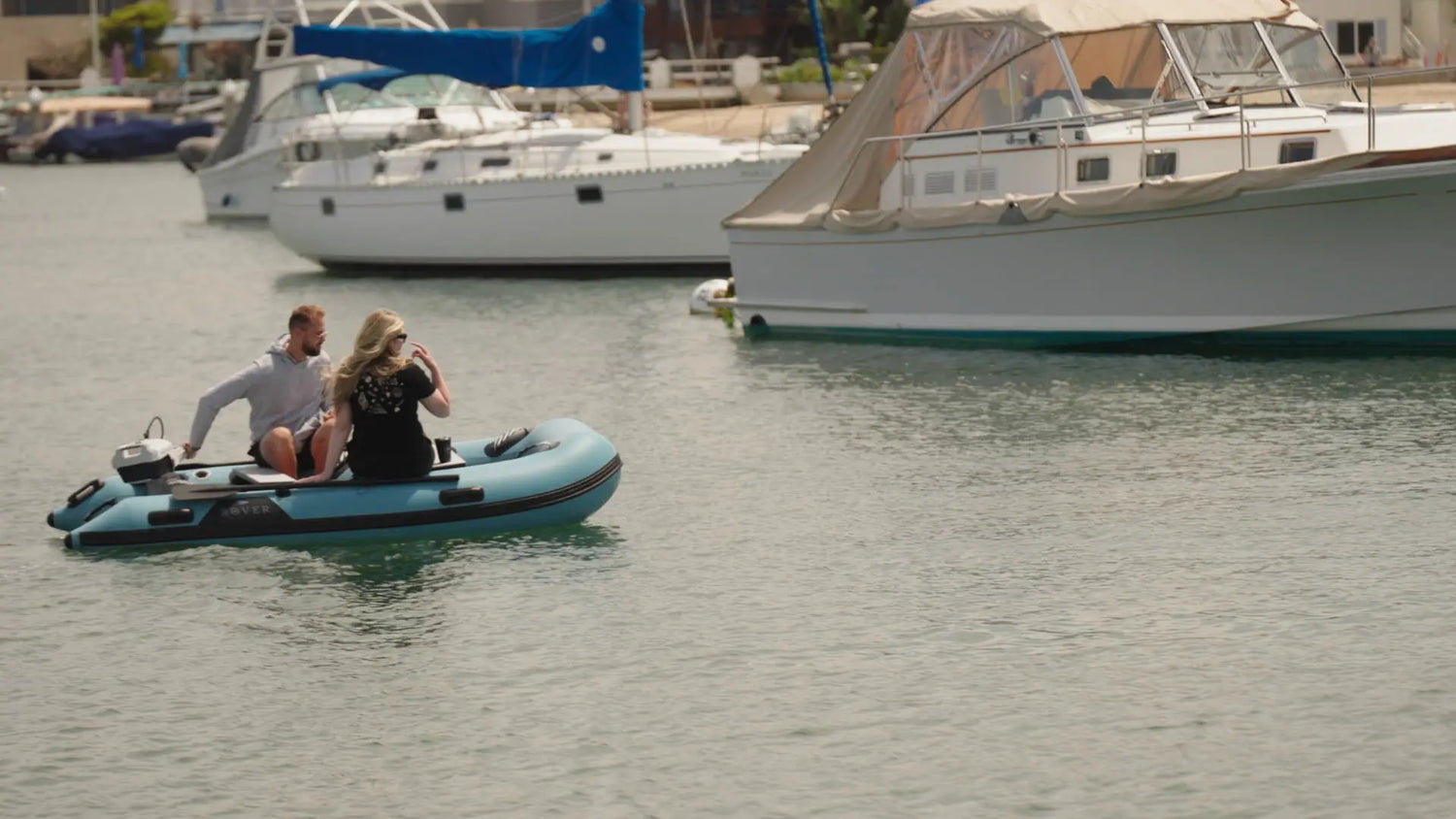
Drop-stitch inflatables like Rover Marine's Battle Boat and Battle Cat use high-pressure drop-stitch floors (up to 10 PSI) with thousands of internal threads to create rigid, load-bearing platforms—eliminating the need for heavy aluminum or fiberglass hulls. Pontoons inflate to 3 PSI for optimal buoyancy and performance.
Rover Marine Drop-Stitch Characteristics:
- Drop-Stitch Floor: High-pressure inflation (up to 10 PSI) creates rigid platform (no heavy hull)
- Pontoons: 3 PSI inflation for optimal buoyancy and handling
- Military-Grade PVC: UV-resistant, abrasion-resistant, saltwater-grade
- Price Range: $1,999-$2,749 for 8-12ft models
- Weight: 84-135 lbs (no trailer required)
- Storage: Deflates to duffel bag (closet, yacht locker, truck bed)
- Deployment: Inflate in 10-15 minutes, launch from anywhere
Inflatable Boat Design: Hydroelasticity & Performance in Waves
This paper investigates the design and performance of inflatable boats where the structural stiffness is supplied by the inflatable tubes and jointed composite sandwich panels which allow large deformations in the hull form. Anecdotal evidence has shown that this flexibility or hydroelasticity of an inflatable boat (IB) improves its performance, especially in waves. It is hoped that this hydroelasticity can be optimised to improve aspects of the performance, including reductions to the boat motion therefore minimising the human exposure to vibrations and added resistance in waves.
Design and performance of inflatable boats: flexibility and environmental considerations, PA Wilson, 2011
Rover Marine vs Traditional RIBs: Head-to-Head Comparison
| Feature | Rover Marine (Drop-Stitch) | Traditional RIBs (Highfield, Zodiac) | Rover Marine Advantage |
|---|---|---|---|
| Hull Construction | High-pressure drop-stitch floor (up to 10 PSI) | Aluminum or fiberglass rigid hull | 90% of rigidity at 20% of weight |
| Pontoon Pressure | 3 PSI (optimal buoyancy) | 2-3 PSI (standard inflatable tubes) | Comparable buoyancy, lighter weight |
| Weight (10ft model) | 98-100 lbs | 350-500 lbs | 70-80% lighter (no trailer needed) |
| Portability | Deflates to 45in x 28in x 18in | Requires trailer (10ft+ length) | Store in closet, yacht locker, truck bed |
| Deployment Time | 10-15 minutes (inflate + motor) | 30-60 minutes (trailer, ramp, launch) | 3-4x faster deployment |
| Launch Locations | Anywhere (beach, dock, yacht, bank) | Boat ramps or davit systems only | Unlimited access to remote waters |
| Storage Costs (Annual) | $0 (deflates) | $1,200-$2,400 (marina slip) | $6,000-$12,000 savings over 5 years |
| Price (10ft model) | $2,250-$2,499 | $18,000-$35,000 | $15,500-$32,500 savings |
| Color Options | Blue, Gray, Black (tactical aesthetics) | Limited (usually gray or white) | Customization + tactical design |
| Rough Water (2-3ft seas) | Excellent (hydroelastic flex absorbs impact) | Excellent (rigid hull cuts through) | Comparable performance, softer ride |
Rover Marine Battle Boat & Battle Cat: Complete Specifications
Battle Boat: Tactical Inflatable Dinghy
The Battle Boat delivers RIB-level performance with drop-stitch portability:
| Size | Weight | Capacity | Inflated Dimensions | Color Options | Price |
|---|---|---|---|---|---|
| 8ft | 86 lb | 2 people / 600 lb | 8ft x 4.5ft x 15in | Blue, Gray | $1,999 |
| 10ft | 100 lb | 4 people / 1000 lb | 10ft x 5ft x 18in | Blue, Gray | $2,250 |
| 12ft | 135 lb | 4 people / 1200 lb | 12ft x 5.5ft x 20in | Blue, Gray | $2,450 |
Battle Cat: Dual-Pontoon Catamaran
The Battle Cat delivers superior stability with catamaran design:
| Size | Weight | Capacity | Inflated Dimensions | Color Options | Price |
|---|---|---|---|---|---|
| 8ft | 84 lb | 2 people / 600 lb | 8ft x 4.danft x 15in | Blue, Black | $2,299 |
| 10ft | 98 lb | 4 people / 1000 lb | 10ft x 5ft x 18in | Blue, Black | $2,499 |
| 12ft | 130 lb | 4 people / 1200 lb | 12ft x 5.5ft x 20in | Blue, Black | $2,749 |
Why Rover Marine Dominates Budget Inflatables (Highfield CL Series)
Highfield's Budget Inflatable Problem
Highfield does offer budget inflatable models (CL series) to compete with drop-stitch boats, but they suffer from critical design flaws:
Highfield CL Series Weaknesses:
- Cheap Construction: Standard PVC (not military-grade) degrades quickly in UV and saltwater
- Soft Floors: Aluminum slat floors (not drop-stitch) create unstable, flexing platforms
- Poor Design: Generic aesthetics lack tactical styling and functional layout
- Limited Colors: Usually only gray—no customization options
- Heavier Weight: Aluminum floors add 30-50 lbs vs Rover Marine's drop-stitch
- Lower Capacity: Weaker construction limits payload vs Rover Marine's reinforced seams
Rover Marine's Tactical Advantages:
- Military-Grade PVC: UV-resistant, abrasion-resistant, saltwater-grade (7-10 year lifespan)
- Drop-Stitch Floors: Rigid, high-pressure platforms (up to 10 PSI) comparable to fiberglass
- Pontoons: 3 PSI inflation for optimal buoyancy and handling
- Tactical Design: Functional aesthetics with integrated mounting points and reinforced pontoons
- Color Customization: Blue, Gray, Black options for personalization
- Lighter Weight: 84-135 lbs (no heavy aluminum floors)
- Higher Capacity: 600-1200 lb ratings with reinforced construction
Electric Outboard Motor Compatibility
Both Rover Marine and traditional RIBs are compatible with modern electric outboard motors, but Rover Marine's lighter weight delivers superior performance:

ePropulsion Spirit 1.0 Plus vs Torqeedo Travel 1103 S
| Specification | ePropulsion Spirit 1.0 Plus | Torqeedo Travel 1103 S |
|---|---|---|
| Power Output | 1 kW (3 HP equivalent) | 1.1 kW (3.3 HP equivalent) |
| Total Weight | 42.6 lbs | ~35 lbs |
| Performance on Rover Marine | Excellent (light boat = better speed/range) | Excellent (light boat = better efficiency) |
| Performance on Traditional RIBs | Underpowered (heavy hull requires 5-15 HP) | Underpowered (heavy hull requires 5-15 HP) |
| Price | $2,999 | Varies by package |
The ePropulsion Spirit 1.0 Plus and Torqeedo Travel 1103 S deliver optimal performance on Rover Marine's lightweight platforms.
The American Boat & Yacht Council (ABYC) recognizes electric propulsion as a key advancement in sustainable marine recreation.
Total Cost of Ownership: 5-Year ROI Analysis
| Cost Category | Rover Marine Battle Boat 10ft | Highfield CL 310 (Budget Inflatable) | Zodiac Cadet RIB 10ft |
|---|---|---|---|
| Initial Purchase | $2,250 | $3,500-$4,500 | $18,000-$25,000 |
| Storage (5 years) | $0 (deflates) | $0 (deflates) | $6,000-$12,000 (marina/trailer) |
| Maintenance (5 years) | $500-$1,000 | $800-$1,500 | $2,000-$4,000 |
| Replacement Cycle | 7-10 years | 3-5 years (cheap PVC) | 10-15 years |
| 5-Year Total Cost | $2,750-$3,250 | $4,300-$6,000 | $26,000-$41,000 |
ROI Insights:
- Rover Marine vs Highfield Budget: Save $1,550-$2,750 over 5 years + superior durability and design
- Rover Marine vs Zodiac RIB: Save $23,250-$37,750 over 5 years while maintaining 90% of performance
Best Use Cases: Rover Marine vs Traditional RIBs
When Rover Marine Excels
Yacht Tenders: Deflates for compact yacht storage, deploys rapidly from swim platforms, silent electric motor boarding
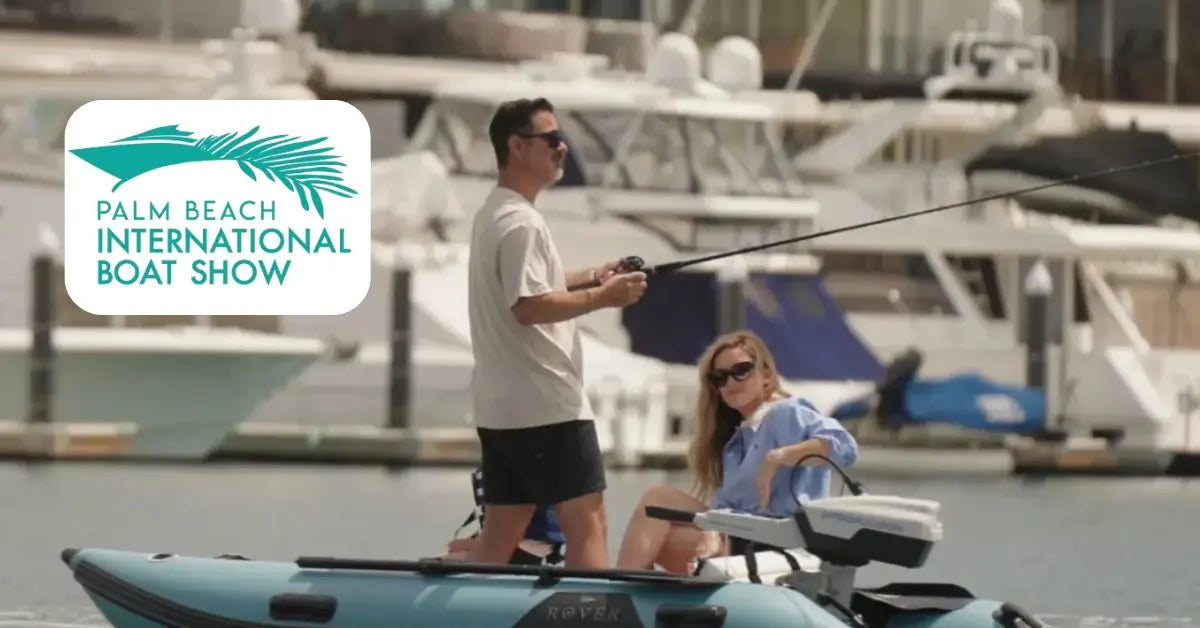
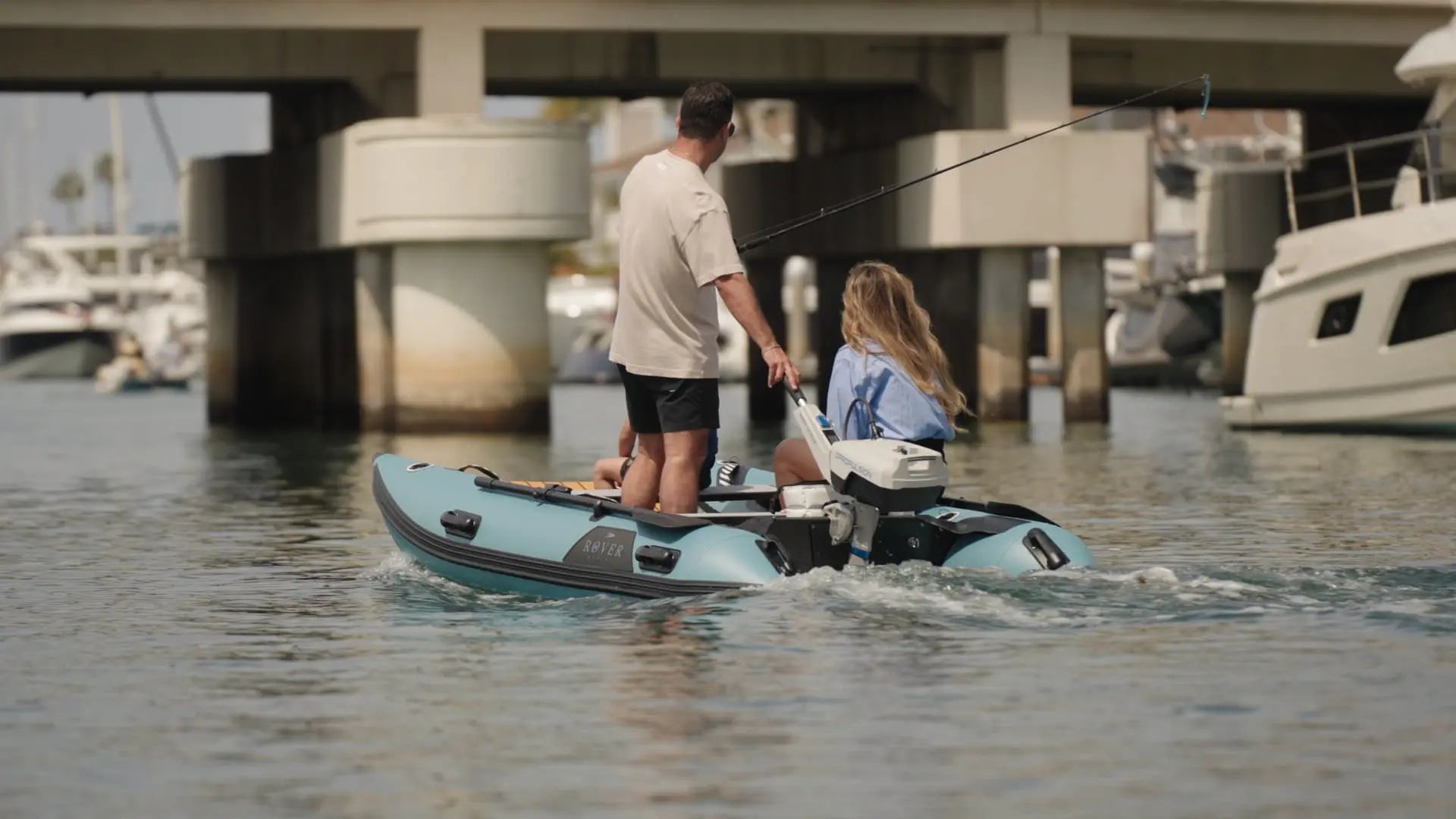
Fishing Platforms: Lightweight portability accesses remote fishing spots, standing stability for casting, tactical aesthetics
Dive Boats: Easy beach launches, stable platform for gear and divers, portable to remote dive sites
Multi-Location Boating: Transport deflated to different lakes, rivers, coastal zones—no trailer required
RV/Camper Travel: Store in RV compartment or truck bed, launch from any access point
When Traditional RIBs Excel
Commercial Operations: USCG certification requirements, heavy-duty commercial use, professional rescue operations
Extreme Offshore: 50+ mile offshore runs in 4-6ft seas (though Rover Marine handles 2-3ft seas excellently)
Permanent Dock Storage: If you have dedicated marina slip and never need portability
Safety & Regulatory Compliance
USCG Requirements
According to the U.S. Coast Guard, all motorized vessels must carry:
- USCG-Approved PFDs: One Type I, II, or III life jacket per person
- Sound-Producing Device: Whistle or horn (vessels under 39.4 feet)
- Visual Distress Signals: Flares or signal mirror (coastal/offshore ops)
- Fire Extinguisher: Required if equipped with enclosed fuel tanks
- Navigation Lights: Red/green bow + white stern for night operations
- Kill Switch Lanyard: Prevents runaway boat if operator falls overboard
Both Rover Marine and traditional RIBs meet USCG recreational vessel standards when properly equipped.
Frequently Asked Questions
How does Rover Marine compare to Highfield RIBs?
Highfield RIBs ($18,000-$50,000) feature aluminum hulls and are designed for commercial/luxury applications. Rover Marine drop-stitch inflatables ($1,999-$2,749) deliver 90% of RIB performance at 10-20% of the cost with superior portability. For recreational use, Rover Marine provides better value and tactical advantages.
Are Rover Marine boats better than Highfield's budget inflatables?
Yes. Highfield's budget CL series uses cheap PVC and aluminum slat floors that degrade quickly and create unstable platforms. Rover Marine uses military-grade PVC with drop-stitch floors (up to 10 PSI) and pontoons (3 PSI) for superior durability, rigidity, and lifespan (7-10 years vs 3-5 years). Rover Marine also offers color customization (Blue, Gray, Black) vs Highfield's generic gray.
Can Rover Marine boats handle rough water like RIBs?
Yes. Rover Marine boats are engineered to handle sea-state 3-5 conditions (2-3ft seas). The hydroelastic flex of drop-stitch construction actually absorbs wave impact better than rigid hulls, providing a softer ride. Traditional RIBs excel in extreme offshore conditions (4-6ft+ seas), but for most recreational use, Rover Marine delivers comparable performance.
What are the correct PSI ratings for Rover Marine boats?
Drop-stitch floor: Up to 10 PSI for rigid platform. Pontoons: 3 PSI for optimal buoyancy and handling. This combination creates a stable, rigid vessel that rivals fiberglass performance while maintaining the portability advantages of inflatable construction.
What color options does Rover Marine offer?
Battle Boat: Blue (#005BD3) and Gray (#808080). Battle Cat: Blue (#005BD3) and Black (#000000). These tactical color options provide customization and functional aesthetics that budget inflatables (usually only gray) cannot match.
Why choose Rover Marine over a traditional RIB?
Portability, cost savings, and tactical advantages. Rover Marine boats deflate to duffel bag size (no trailer), cost $2,000-$2,750 vs $18,000-$50,000 for RIBs, weigh 84-135 lbs vs 350-600 lbs, and deploy in 10-15 minutes vs 30-60 minutes. You save $23,000-$38,000 over 5 years while maintaining 90% of RIB performance for recreational use.
Can I use electric motors on Rover Marine boats?
Yes! Rover Marine's lightweight design (98-100 lbs for 10ft models) makes electric motors highly effective. The ePropulsion Spirit 1.0 Plus (1 kW / 3 HP) and Torqeedo Travel 1103 S (1.1 kW) deliver excellent performance. Traditional RIBs (350-500 lbs) require 5-15 HP motors, making electric propulsion less practical.
Where can I see Rover Marine boats in person?
Rover Marine will be exhibiting at the Atlantic City Boat Show, February 25 - March 1, 2026, Booth 448. Contact Rover Marine at 844-207-6837 (M-F, 10am-4pm PST) or visit the contact page for dealer locations and demo opportunities.
Deploy Your Rover Marine Battle Boat Today
The choice is clear: traditional RIBs deliver premium performance at premium prices ($18,000-$50,000+) with Trailer Trauma, while budget inflatables like Highfield's CL series offer cheap construction that degrades in 3-5 years. Rover Marine's Battle Boat and Battle Cat deliver the tactical middle ground: military-grade drop-stitch construction with floors up to 10 PSI and pontoons at 3 PSI, 90% of RIB performance, color customization, and zero Trailer Trauma—at $1,999-$2,749.
Whether you're running yacht tender operations, accessing remote fishing spots, or exploring coastal waters, Rover Marine's drop-stitch engineering saves $23,000-$38,000 over 5 years compared to traditional RIBs while outperforming budget inflatables in durability, design, and lifespan.
Ready to escape Trailer Trauma and dominate the water? Contact our team at 844-207-6837 (M-F, 10am-4pm PST) for personalized recommendations and to explore our Blue, Gray, and Black color options.
Deploy. Launch. Dominate. No trailer required.
See the Battle Boat and Battle Cat outperform traditional RIBs and budget inflatables on our YouTube channel—real comparisons, real performance, real results.

Leave a comment
This site is protected by hCaptcha and the hCaptcha Privacy Policy and Terms of Service apply.