
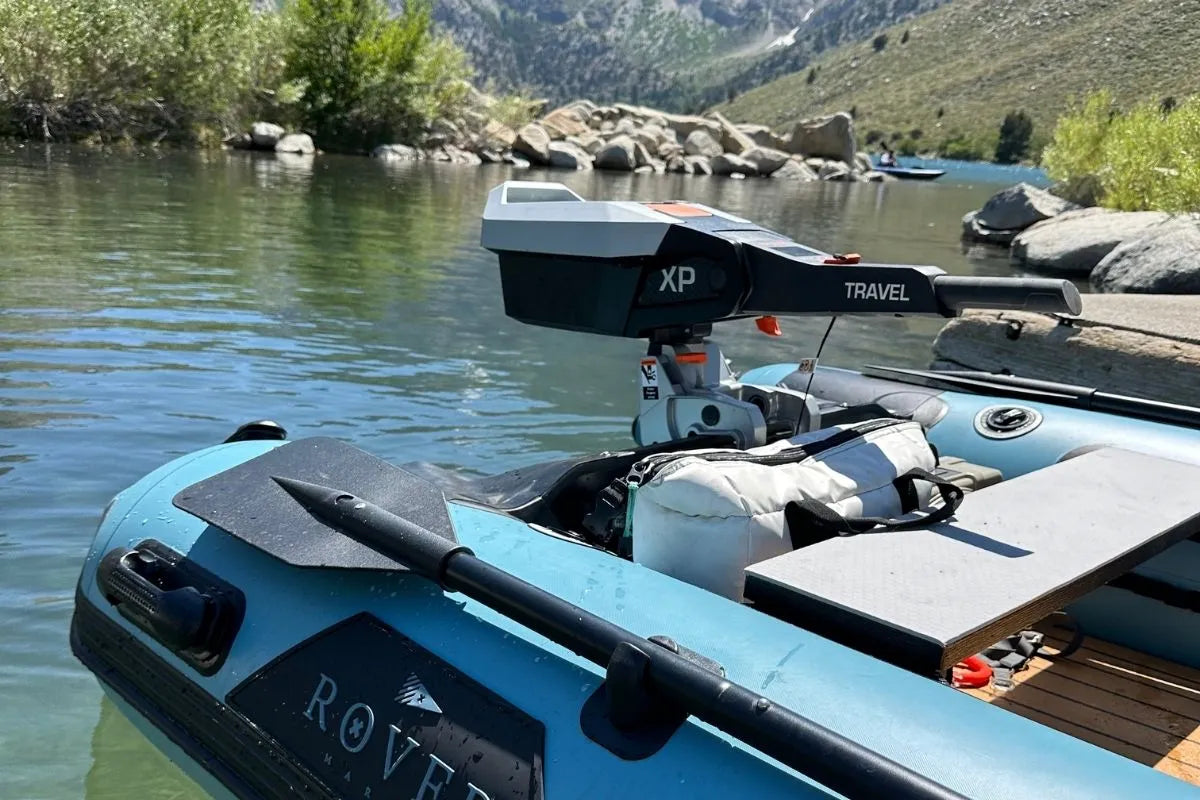
Every mission on the water demands the right gear. Whether you're running the Intracoastal Waterway in a Battle Boat, anchoring at a sandbar in a Battle Cat, or deploying as a yacht tender, marine safety equipment isn't optional—it's the difference between a successful mission and a mayday call. This comprehensive 2026 guide covers every piece of safety gear required by the U.S. Coast Guard, how Rover Marine's military-grade construction integrates with your safety setup, and the maintenance protocols that keep your vessel battle-ready season after season.
USCG-Required Safety Equipment: What Every Motorized Vessel Must Carry
According to the U.S. Coast Guard, all motorized recreational vessels must carry the following equipment at all times:
| Safety Item | Requirement | Notes |
|---|---|---|
| USCG-Approved PFDs | One per person on board | Type I, II, or III life jacket — must fit properly |
| Throwable Device | Required on vessels 16ft+ | Type IV ring buoy or cushion |
| Sound-Producing Device | Required on all vessels | Whistle or horn (vessels under 39.4ft) |
| Visual Distress Signals | Required for coastal/offshore ops | Flares or electronic signal mirror |
| Fire Extinguisher | Required with enclosed fuel tanks | USCG-approved B-1 type minimum |
| Navigation Lights | Required for night operations | Red/green bow + white stern |
| Kill Switch Lanyard | Required on most motorized vessels | Prevents runaway boat if operator falls overboard |
| Backfire Flame Arrestor | Required on gas inboard engines | Not required for outboard motors |
| Ventilation System | Required on enclosed engine spaces | Not applicable to most inflatables |
The American Boat & Yacht Council (ABYC) provides additional safety standards and best practices beyond USCG minimums, including specific guidelines for lithium battery installations on recreational vessels.
Rover Marine Safety Advantage: Military-Grade Construction as Your First Line of Defense
Before you even reach for your safety kit, Rover Marine's military-grade construction provides built-in protection that budget inflatables can't match:
Battle Boat: V-Hull Safety Features
The Battle Boat's V-hull inflatable design delivers inherent safety advantages:
- Multi-Chamber Design: Independent air chambers prevent total deflation if one chamber is punctured
- Military-Grade PVC: Puncture-resistant, UV-resistant, saltwater-grade construction
- Drop-Stitch Floor (up to 10 PSI): Rigid platform prevents flexing and instability underfoot
- Pontoons (3 PSI): Engineered pressure for optimal buoyancy and handling
- Reinforced Transoms: Tested for high-torque motor stress — no blowouts under power
- Natural Fender Protection: PVC hull protects mothership gel coat during tie-ups
- V-Hull Tracking: Cuts through chop predictably — no sudden yaw in rough water

Battle Cat: Catamaran Safety Features
The Battle Cat's dual-pontoon catamaran design adds additional safety layers:
- Dual-Pontoon Stability: 30-40% more lateral stability than mono-hull designs — resists roll from boat wakes
- Shallow Draft: Only inches of draft — reduces grounding risk in shallow water
- Wide Deck Platform: Stable standing surface for fishing, diving, and passenger movement
- Multi-Chamber Design: Multiple independent air chambers
- Low Center of Gravity: Twin-hull design lowers COG vs mono-hull for capsize resistance
Battle Boat vs Battle Cat: Safety Comparison
| Safety Feature | Battle Boat (V-Hull) | Battle Cat (Catamaran) |
|---|---|---|
| Hull Design | V-hull inflatable | Dual-pontoon catamaran |
| Lateral Stability | Excellent | Superior (30-40% more stable) |
| Rough Water (2-3ft seas) | Excellent (V-hull cuts through) | Excellent (wide stance absorbs wakes) |
| Floor PSI | Up to 10 PSI | Up to 10 PSI |
| Pontoon PSI | 3 PSI | 3 PSI |
| Air Chambers | Multiple independent chambers | Multiple independent chambers |
| Best Safety Use Case | ICW runs, yacht tender, speed ops | Sandbars, fishing, family outings |
| Capacity (10ft model) | 4 people / 1000 lb | 4 people / 1000 lb |
Complete Pre-Departure Safety Checklist
Run this checklist before every mission. No exceptions.
Vessel Inspection
- ☐ Inspect all air chambers — check for leaks, soft spots, valve integrity
- ☐ Verify floor PSI (up to 10 PSI) and pontoon PSI (3 PSI) with gauge
- ☐ Check transom integrity — no cracks, loose fittings, or motor mount damage
- ☐ Inspect seams and PVC for abrasions, UV damage, or delamination
- ☐ Verify all oar locks and attachment points are secure
- ☐ Check motor mount — bolts tight, kill switch lanyard attached
Safety Gear Verification
- ☐ USCG-approved PFD for every person on board (correct size and type)
- ☐ Throwable Type IV device (vessels 16ft+)
- ☐ Sound-producing device (whistle or horn)
- ☐ Visual distress signals (flares — check expiration dates)
- ☐ Fire extinguisher (check pressure gauge regardless of motor type)
- ☐ Navigation lights (if operating at night or low visibility)
- ☐ Kill switch lanyard attached to operator
- ☐ First aid kit (stocked and accessible)
- ☐ Emergency repair kit (patches, valve tool, pump)
- ☐ Anchor and line (appropriate for water depth)
Navigation & Communication
- ☐ Float plan filed with shore contact
- ☐ Charged VHF radio or cell phone in waterproof case
- ☐ GPS or chart plotter operational
- ☐ Weather check completed (NOAA forecast)
- ☐ Fuel or battery charge verified for planned range
Passenger Briefing
- ☐ All passengers briefed on PFD location and donning
- ☐ Emergency procedures reviewed (man overboard, distress signals)
- ☐ Weight distribution confirmed (stay within rated capacity)
- ☐ No-wake zones and navigation rules reviewed

Safety Equipment by Mission Type
Yacht Tender Operations (Battle Boat)
- Essential: PFDs, kill switch lanyard, navigation lights, VHF radio
- Recommended: Waterproof dry bag for electronics, fender lines, dock lines
- Rover Marine Advantage: Military-grade PVC acts as natural fender — protects mothership gel coat
Fishing (Battle Boat or Battle Cat)
- Essential: PFDs, anchor, first aid kit, emergency signaling devices
- Recommended: Rod holders, fish finder mount, tackle storage, sun protection
- Rover Marine Advantage: Drop-stitch floor (up to 10 PSI) provides stable standing platform for casting
Sandbar & Family Recreation (Battle Cat)
- Essential: PFDs for all (including children — Type II for non-swimmers), throwable device, first aid kit
- Recommended: Sun shade, cooler tie-downs, swim ladder, waterproof first aid kit
- Rover Marine Advantage: Catamaran stability prevents roll from passing boat wakes at anchor
Diving Operations (Battle Cat)
- Essential: PFDs, dive flag, anchor, first aid kit with oxygen kit
- Recommended: Gear storage bags, tank holders, dive ladder
- Rover Marine Advantage: Wide catamaran deck accommodates tanks, BCDs, and multiple divers
Electric Motor Safety: ePropulsion & Torqeedo
Rover Marine's electric outboard motors offer significant safety advantages over gas motors—but also require specific lithium battery safety practices:
| Safety Factor | ePropulsion / Torqeedo (Electric) | Gas Outboard Motor |
|---|---|---|
| Fuel Fire Risk | None — no gasoline or fuel vapors on board | High — fuel vapors accumulate in bilge |
| Carbon Monoxide | Zero CO emissions | High — CO poisoning risk at low speeds |
| Li-ion Battery Risk | Low but real — thermal runaway possible if battery is damaged, overcharged, or stored improperly | Not applicable |
| Fuel Spill Risk | None | Present — environmental and fire hazard |
| Noise | Whisper-quiet operation | Loud — hearing damage risk over time |
| Maintenance Risk | Minimal — no fuel system, carburetors, or spark plugs | Higher — fuel system failures common |
| Fire Extinguisher | Still recommended — Li-ion fires require Class D or dry chemical extinguisher | Required — USCG B-1 minimum |
Lithium Battery Safety: What Every Electric Motor Owner Must Know
Lithium-ion batteries power the ePropulsion Spirit 1.0 Plus and Torqeedo Travel 1103 S. While they eliminate gas fire and CO risks, lithium batteries carry their own safety considerations:
- Thermal Runaway Risk: Li-ion batteries can overheat and catch fire if physically damaged, overcharged, short-circuited, or stored in extreme heat — Li-ion fires burn extremely hot and are difficult to extinguish
- Never charge unattended: Always monitor charging and never leave batteries charging overnight on a vessel
- Inspect before every use: Check battery casing for cracks, swelling, or damage — do not use a damaged battery
- Store cool and dry: Avoid storing batteries in direct sun or hot compartments (bilge temps can exceed 120°F in Florida summers)
- Use manufacturer charger only: Third-party chargers can bypass Battery Management System (BMS) protections
- Keep a fire extinguisher aboard: Standard dry chemical extinguishers can suppress Li-ion fires; the ABYC recommends carrying one regardless of motor type
- Overall risk vs gas: Despite Li-ion considerations, electric motors are still significantly safer overall than gas motors due to elimination of fuel vapors, CO emissions, and fuel spill hazards
Inflatable Boat Maintenance: Keeping Your Vessel Battle-Ready
After Every Saltwater Mission
- Rinse entire vessel with freshwater (5-10 minutes minimum)
- Flush motor cooling system to prevent corrosion
- Wipe down all PVC surfaces to remove salt residue
- Inspect valves for sand or debris
- Dry completely before storage (prevents mildew)
Monthly Maintenance Protocol
- Check air pressure in all chambers (floor up to 10 PSI, pontoons 3 PSI)
- Inspect seams and pontoons for wear, abrasion, or UV damage
- Lubricate motor pivot points and transom fittings
- Test emergency repair kit — verify patches, adhesive, and valve tool
- Inspect and replace expired flares (check date stamps)
- Test fire extinguisher pressure gauge
- Verify PFD buoyancy — inflate manually to check integrity
- Inspect battery casing for swelling, cracks, or damage (electric motors)
Annual Safety Audit
- Full vessel inspection by qualified marine technician
- Replace all expired safety equipment (flares, first aid supplies)
- Re-certify fire extinguisher if required
- Update float plan contacts and emergency procedures
- Complete USCG-approved boating safety course refresher
Frequently Asked Questions
What safety equipment is required for inflatable boats?
All motorized inflatable boats must carry: USCG-approved PFDs (one per person), sound-producing device (whistle or horn), visual distress signals (flares for coastal use), fire extinguisher (recommended regardless of motor type), navigation lights (night operations), and kill switch lanyard. Vessels 16ft+ also require a throwable Type IV device. See full requirements at uscgboating.org.
Are electric outboard motors safer than gas motors?
Overall yes — but with nuance. Electric motors (ePropulsion Spirit 1.0 Plus, Torqeedo Travel 1103 S) eliminate fuel vapor fire risk, carbon monoxide poisoning, and fuel spill hazards. However, lithium-ion batteries carry their own risk: thermal runaway can occur if batteries are damaged, overcharged, or stored improperly. Best practice: inspect batteries before every use, never charge unattended, store cool and dry, and always carry a fire extinguisher regardless of motor type.
What are the correct PSI ratings for Rover Marine inflatable boats?
Drop-stitch floor: up to 10 PSI for maximum rigidity. Pontoons: 3 PSI for optimal buoyancy and handling. Always use a calibrated pressure gauge — never inflate by feel. Over-inflation above rated PSI can damage seams and chambers.
Is the Battle Boat or Battle Cat safer for family use?
The Battle Cat's dual-pontoon catamaran design provides 30-40% more lateral stability than the Battle Boat's V-hull, making it the safer choice for families, children, and sandbar anchoring. The Battle Boat's V-hull excels in rough water tracking and speed for yacht tender and solo operations.
Do I need a fire extinguisher with an electric motor?
Yes — the ABYC recommends carrying a fire extinguisher regardless of motor type. While electric motors eliminate gas fire risk, lithium-ion batteries can experience thermal runaway if damaged or overcharged. A standard dry chemical extinguisher can suppress Li-ion fires. Always carry one aboard.
How do I check if my inflatable boat has a leak?
Inflate all chambers to rated PSI (floor up to 10 PSI, pontoons 3 PSI). Apply soapy water solution to all seams, valves, and PVC surfaces. Bubbles indicate leak points. Mark with chalk, deflate, dry completely, and apply PVC repair patch from your emergency kit. Allow 24 hours cure time before re-inflation.
How often should I replace flares?
USCG-approved pyrotechnic flares expire 42 months from manufacture date (stamped on flare). Replace before expiration — expired flares are not USCG-compliant. Consider electronic visual distress signals (EVDS) as a non-expiring alternative for coastal operations.
What's the maximum capacity for Rover Marine inflatable boats?
8ft models: 2 people / 600 lb. 10ft models: 4 people / 1000 lb. 12ft models: 4 people / 1200 lb. Capacity includes passengers, motor, gear, and catch. Never exceed rated capacity — overloading is a leading cause of inflatable boat accidents.
Where can I get safety equipment recommendations for my Rover Marine boat?
Contact Rover Marine at 844-207-6837 (M-F, 10am-4pm PST) or visit the contact page for recommendations on safety gear packages, motor options, and accessories for your specific model and mission profile.
Deploy Battle-Ready. Stay Safe.
Marine safety isn't a box-checking exercise—it's mission-critical preparation. Rover Marine's Battle Boat and Battle Cat are engineered with military-grade construction, multi-chamber designs, and reinforced transoms that provide built-in safety advantages before you even load your gear. Pair that with USCG-compliant safety equipment, a disciplined pre-departure checklist, and proper lithium battery protocols, and you have a vessel that's ready for any mission the water throws at you.
Questions about safety gear, motor options, or which model fits your mission? Contact our team at 844-207-6837 (M-F, 10am-4pm PST) for expert guidance.
Deploy. Launch. Dominate. Stay safe out there.
See the Battle Boat and Battle Cat in real-world operations on our YouTube channel—real missions, real conditions, real safety in action.


Leave a comment
This site is protected by hCaptcha and the hCaptcha Privacy Policy and Terms of Service apply.