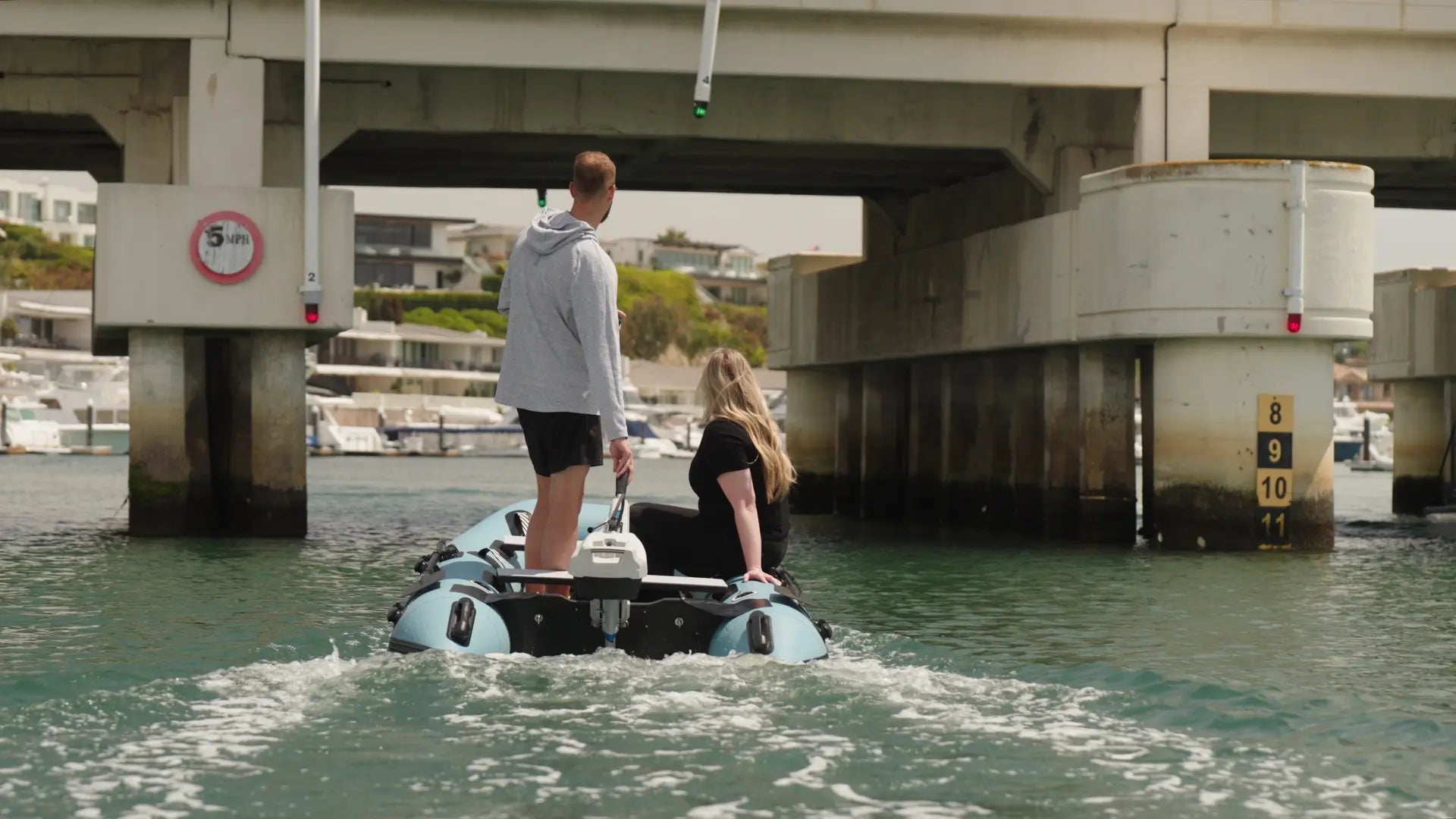
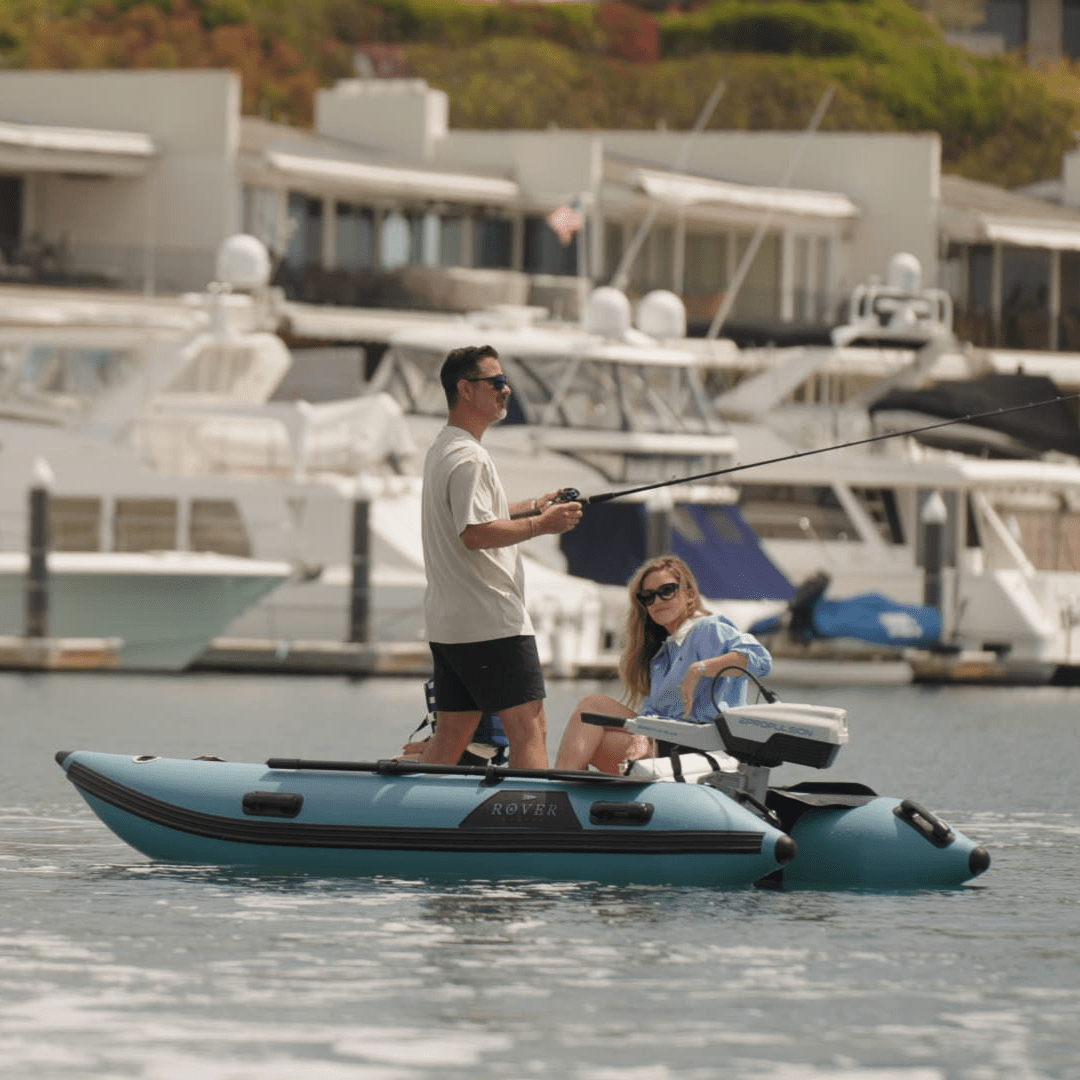
Find Your Perfect Fishing Dinghy: The Tactical Selection Guide
Choosing the right fishing dinghy determines whether you'll reach trophy fish in skinny water or watch from shore while others land limits. The Rover Battle Boat and Battle Cat deliver portable, high-performance fishing platforms that access water traditional skiffs can't touch—without the Trailer Trauma.
This comprehensive guide walks you through every decision point: size selection, motor compatibility, stability requirements, gear capacity, and budget considerations. Whether you're targeting bass in shallow coves, redfish on flats, or offshore structure, you'll know exactly which fishing dinghy matches your mission.
Step 1: Define Your Fishing Mission
Where Will You Fish?
Your primary fishing environment dictates critical dinghy specifications. Here's how different scenarios shape your selection:
Freshwater Lakes & Rivers:
- Calm water = prioritize speed and portability
- Shallow coves = need 4-6" draft capability
- Bank access = require lightweight, easy launch
- Recommended: Battle Boat 8-10ft with electric or small gas motor
Coastal Inshore (Bays, Marshes, Flats):
- Variable chop = need stability in 1-2ft seas
- Skinny water = require ultra-shallow draft
- Tidal currents = need adequate motor power
- Recommended: Battle Cat 10-12ft with 55-80 lbs thrust electric or 5-9.9 HP gas
Offshore/Coastal (Reefs, Islands, Structure):
- Open water = prioritize speed and range
- Rough seas = need superior stability (2-3ft capable)
- Distance runs = require fuel efficiency or battery capacity
- Recommended: Battle Cat 12ft with 9.9-15 HP gas motor
What's Your Target Species?
Different fish require different platform capabilities:
| Target Species | Critical Requirements | Recommended Setup |
|---|---|---|
| Bass (Largemouth/Smallmouth) | Shallow draft, tight maneuvering, standing stability | Battle Boat 10ft + electric motor |
| Redfish/Speckled Trout | Ultra-shallow draft, silent approach, standing platform | Battle Cat 10ft + 55-80 lbs electric |
| Snook/Tarpon | Stability for fighting fish, adequate freeboard | Battle Cat 12ft + 9.9 HP gas |
| Bonefish/Permit (Flats) | Stealth, shallow draft, sight fishing platform | Battle Cat 10ft + electric trolling motor |
| Offshore (Grouper/Snapper) | Speed, range, rough water capability | Battle Cat 12ft + 15 HP gas |
| Fly Fishing (Any Species) | Maximum standing stability, precise positioning | Battle Cat 10-12ft + electric motor |
Step 2: Size Selection Strategy
8ft Models: Solo Angler / Ultra-Portable
Best For: Single angler, backpack fishing trips, RV/camper transport, tight storage constraints
Specifications:
- Weight Capacity: 600-800 lbs (angler + gear + motor)
- Recommended Motor: 2.5-5 HP gas / 40-55 lbs thrust electric
- Typical Speed: 8-12 mph
- Draft (Loaded): 4-5 inches
- Deflated Storage: Large duffel bag (fits in car trunk)
- Setup Time: 10-15 minutes with electric pump
Pricing: Battle Boat 8ft: $1,999 | Battle Cat 8ft: $2,299
Ideal Scenarios:
- Solo bass fishing in small lakes
- Backpacking to remote alpine lakes
- RV travelers with limited storage
- Yacht tender for single-person shore trips
10ft Models: Solo/Duo Fishing Workhorse
Best For: 1-2 anglers, day trips, versatile fishing applications, best value-to-performance ratio
Specifications:
- Weight Capacity: 900-1,200 lbs (2 anglers + full gear + motor)
- Recommended Motor: 5-9.9 HP gas / 55-80 lbs thrust electric
- Typical Speed: 12-18 mph
- Draft (Loaded): 5-6 inches
- Deflated Storage: Truck bed or large SUV cargo area
- Setup Time: 12-18 minutes with electric pump
Pricing: Battle Boat 10ft: $2,250 | Battle Cat 10ft: $2,499
Ideal Scenarios:
- Coastal inshore fishing (redfish, trout, snook)
- Lake fishing with a partner
- Flats fishing with fly rods
- Island hopping (under 5 miles)
Why 10ft is the Sweet Spot: This size balances portability, performance, and capacity. It's small enough to deflate and transport easily but large enough for serious fishing with a partner. Most anglers find 10ft models deliver the best ROI.
12ft Models: Multi-Angler / Offshore Capable
Best For: 2-3 anglers, offshore runs, tournament fishing, maximum gear capacity
Specifications:
- Weight Capacity: 1,400-1,800 lbs (3 anglers + heavy gear + motor)
- Recommended Motor: 9.9-15 HP gas / 80+ lbs thrust electric
- Typical Speed: 15-22 mph
- Draft (Loaded): 6-7 inches
- Deflated Storage: Garage or large storage unit
- Setup Time: 15-20 minutes with electric pump
Pricing: Battle Boat 12ft: $2,450 | Battle Cat 12ft: $2,749
Ideal Scenarios:
- Offshore reef fishing (5-15 mile runs)
- Multi-angler tournament fishing
- Heavy gear operations (coolers, livewell, multiple rods)
- Rough water coastal fishing (2-3ft seas)
Step 3: Battle Boat vs. Battle Cat Decision Matrix
When to Choose the Battle Boat (Monohull)
Advantages:
- Higher Top Speed: Narrower hull cuts through water more efficiently
- Tighter Maneuvering: Better for navigating lily pads, mangroves, tight cover
- Shallower Draft: Accesses ultra-skinny water (4-5" loaded)
- Lower Price Point: $300 less per size compared to Battle Cat
- Lighter Weight: Easier solo setup and transport
Best For: Bass fishing, tight cover tactics, solo anglers, budget-conscious buyers, speed-priority missions
When to Choose the Battle Cat (Catamaran)
Advantages:
- Superior Stability: Dual pontoons provide 30-40% more lateral stability
- Wider Deck Space: Extra 12-18" of casting/working room
- Better Rough Water Handling: Stable in 2-3ft seas
- Standing Confidence: Ideal for fly fishing, sight casting, poling
- Gear Capacity: More room for coolers, tackle, livewell systems
Best For: Flats fishing, offshore runs, fly fishing, multi-angler trips, rough water conditions, maximum stability priority
Side-by-Side Comparison
| Feature | Battle Boat | Battle Cat |
|---|---|---|
| Hull Design | Single-hull monohull | Dual-pontoon catamaran |
| Standing Stability | Excellent | Superior (30-40% more stable) |
| Top Speed | 15-20 mph (size/motor dependent) | 12-18 mph (prioritizes stability) |
| Draft (Loaded) | 4-6 inches | 5-7 inches |
| Deck Width | Standard platform | 12-18" wider |
| Rough Water (2-3ft seas) | Good | Excellent |
| Tight Cover Maneuvering | Excellent | Good |
| Price (8ft) | $1,999 | $2,299 |
| Price (10ft) | $2,250 | $2,499 |
| Price (12ft) | $2,450 | $2,749 |
Step 4: Motor Selection Guide
Electric vs. Gas: The Decision Framework
Your motor choice impacts range, noise signature, maintenance, and operating costs. Browse our electric outboard motors for silent, emission-free fishing.
Choose Electric Outboards When:
- Fishing in no-gas zones or marine sanctuaries
- Targeting spooky fish (redfish, bonefish, permit)
- Operating within 5-10 miles of launch point
- Prioritizing zero maintenance and fuel costs
- Fishing from a yacht (no fuel storage required)
Choose Gas Outboards When:
- Running 10+ mile offshore trips
- Needing maximum speed (20+ mph)
- Operating in remote areas without charging infrastructure
- Requiring unlimited range with spare fuel cans
- Fishing in heavy current or wind conditions
Motor Power Recommendations by Size
| Dinghy Size | Electric Motor | Gas Motor | Expected Speed |
|---|---|---|---|
| 8ft Models | 40-55 lbs thrust | 2.5-5 HP | 8-12 mph |
| 10ft Models | 55-80 lbs thrust | 5-9.9 HP | 12-18 mph |
| 12ft Models | 80+ lbs thrust | 9.9-15 HP | 15-22 mph |
Note: Always verify your vessel's maximum HP rating on the capacity plate. Exceeding rated HP voids warranties and creates safety hazards.
Battery Runtime Expectations (Electric Motors)
Trolling Speed (20-30% throttle): 4-6 hours
Cruising Speed (50-70% throttle): 2-4 hours
Full Throttle: 1-2 hours
Pro Tip: Carry a spare battery for extended missions. Most electric outboards feature removable battery systems for quick swaps.
Step 5: Budget & Total Cost Analysis
Initial Investment Breakdown
| Component | Budget Setup | Mid-Range Setup | Premium Setup |
|---|---|---|---|
| Dinghy | Battle Boat 8ft: $1,999 | Battle Boat 10ft: $2,250 | Battle Cat 12ft: $2,749 |
| Motor | 40 lbs electric: $800-$1,200 | 55-80 lbs electric: $1,500-$2,500 | 15 HP gas: $2,500-$3,500 |
| Safety Gear | PFDs, whistle, anchor: $150 | + Flares, fire ext: $250 | + Nav lights, VHF: $400 |
| Accessories | Pump, repair kit: $100 | + Rod holders, cooler: $300 | + Fish finder, bimini: $800 |
| Total Investment | $3,049-$3,449 | $4,300-$5,300 | $6,449-$7,449 |
5-Year Cost Comparison: Inflatable vs. Fiberglass
| Cost Category | Inflatable Dinghy | Fiberglass Skiff | Savings |
|---|---|---|---|
| Initial Purchase | $2,250 (Battle Boat 10ft) | $12,000-$18,000 | $9,750-$15,750 |
| Storage (5 years) | $0 (closet/garage) | $6,000-$12,000 (marina) | $6,000-$12,000 |
| Maintenance (5 years) | $500-$1,000 | $4,000-$7,500 | $3,500-$6,500 |
| Insurance (5 years) | $750-$1,500 | $3,000-$6,000 | $2,250-$4,500 |
| Trailer | $0 | $1,500-$3,000 | $1,500-$3,000 |
| 5-Year Total | $3,500-$4,750 | $26,500-$46,500 | $23,000-$41,750 |
ROI Insight: The savings from choosing an inflatable dinghy over fiberglass ($23K-$42K over 5 years) could fund 10+ additional Battle Boats or cover years of fishing trips, tackle, and fuel.
Step 6: Essential Features Checklist
Must-Have Features for Fishing Dinghies
✅ Drop-Stitch Floor: 8-10 PSI rigid platform for standing stability
✅ Multi-Chamber Design: Independent air chambers prevent total deflation if punctured
✅ Reinforced Transom: Aluminum or marine plywood rated for motor torque
✅ UV-Resistant PVC: Extended lifespan in sun exposure
✅ Abrasion-Resistant Bottom: Kevlar or reinforced PVC for beach landings
✅ D-Ring Attachment Points: For anchors, rod holders, gear tie-downs
✅ High-Flow Valves: Fast inflation/deflation (10-15 minute setup)
✅ Capacity Plate: USCG-compliant rating for persons, weight, HP
Nice-to-Have Upgrades
- Integrated Rod Holders: Flush-mount or clamp-on for trolling
- Bimini Top: Sun protection for long days on the water
- Anchor Trolley System: Precise positioning in wind/current
- Fish Finder Mount: Portable units with suction-cup transducers
- Cooler/Livewell: Soft-sided coolers or portable livewell systems
- Navigation Lights: Required for night fishing (red/green bow, white stern)
Step 7: Safety & Regulatory Compliance
USCG Required Equipment
According to the U.S. Coast Guard, all motorized fishing dinghies must carry:
- USCG-Approved PFDs: One Type I, II, or III life jacket per person
- Sound-Producing Device: Whistle or horn (vessels under 39.4 feet)
- Visual Distress Signals: Flares or signal mirror (coastal/offshore operations)
- Fire Extinguisher: Required if equipped with enclosed fuel tanks
- Navigation Lights: Red/green bow + white stern for night operations
- Kill Switch Lanyard: Attach to PFD or belt loop (prevents runaway boat)
State Registration Requirements
Most U.S. states require vessel registration for motorized boats, regardless of size. Check your state's fish and wildlife department for specific requirements, fees, and renewal schedules.
Frequently Asked Questions (FAQ)
What size fishing dinghy do I need for solo fishing?
For solo anglers, an 8-10ft model provides the best balance of portability and performance. The 8ft is ideal for ultra-portable missions (backpacking, RV travel), while the 10ft offers more gear capacity and stability for all-day fishing trips.
Can I fish in saltwater with an inflatable dinghy?
Absolutely. Both the Battle Boat and Battle Cat are built with UV-resistant, saltwater-grade PVC. Critical maintenance: rinse with freshwater after every saltwater use, flush motor cooling systems, and apply UV protectant monthly. Proper care extends lifespan to 5-10 years in saltwater environments.
How much does a complete fishing dinghy setup cost?
Budget setups start around $3,000-$3,500 (8ft dinghy + basic electric motor + safety gear). Mid-range setups run $4,300-$5,300 (10ft dinghy + quality motor + accessories). Premium offshore setups reach $6,500-$7,500 (12ft dinghy + powerful gas motor + full electronics).
What's the best motor for flats fishing?
Electric outboards (55-80 lbs thrust) are ideal for flats fishing. They provide silent approaches to spooky fish (redfish, bonefish, permit) without the noise signature of gas motors. Runtime is typically 4-6 hours at trolling speed.
Can I stand and cast in an inflatable fishing dinghy?
Yes! Drop-stitch floors inflated to 8-10 PSI create rigid platforms comparable to fiberglass decks. The Battle Cat's dual-pontoon design provides superior lateral stability for standing casts, fly fishing, and sight fishing—even in 1-2ft chop.
How do I transport an inflatable fishing dinghy?
Deflate and roll into a storage bag. 8ft models fit in a car trunk, 10ft models fit in a truck bed or SUV, 12ft models require a larger vehicle. No trailer required—launch from beaches, docks, or bank access points.
Do inflatable dinghies require a lot of maintenance?
No. Basic maintenance includes rinsing with freshwater after use (especially saltwater), checking air pressure monthly, and applying UV protectant every 2-3 months. Total annual maintenance costs: $100-$200 compared to $800-$1,500 for fiberglass skiffs.
What's the lifespan of an inflatable fishing dinghy?
With proper care, drop-stitch PVC inflatables last 5-10 years in regular fishing use. UV exposure and saltwater are the primary degradation factors. Regular rinsing, UV protectant application, and proper storage (deflated, dry, out of direct sun) maximize lifespan.
Your Perfect Fishing Dinghy Awaits
Choosing the perfect fishing dinghy comes down to matching your fishing style, target species, and budget to the right platform. Whether you're a solo bass angler targeting shallow coves, a flats fisherman chasing redfish in skinny water, or an offshore enthusiast running to distant reefs, the Battle Boat and Battle Cat deliver tactical fishing performance without the Trailer Trauma.
Ready to find your perfect setup? Contact our fishing specialists at 844-207-6837 (M-F, 10am-4pm PST) for personalized recommendations based on your target species, fishing zones, and budget.
Deploy. Fish. Dominate. No trailer required.
See the Battle Boat and Battle Cat in real fishing action on our YouTube channel—real anglers, real catches, real performance.