Inflatable dinghies are small, flexible boats that serve as tenders, fishing platforms, and short-cruise craft. Picking the right outboard shapes safety, speed and range for every trip. This guide walks you through electric outboards, small gas outboards and trolling motors — how they work, how they perform on the water, and how to match propulsion to your dinghy’s size, load and intended use. Many owners wrestle with horsepower, shaft length, battery capacity and how to avoid cavitation or overloading the transom. We cut through that uncertainty with clear, practical guidance and simple decision tools. You’ll learn the main engine types, how to size horsepower and shaft length for common inflatable lengths and loads, which portable motors punch above their weight, and how electric and gas options compare on range, maintenance, noise and cost. We also include installation and maintenance checklists, three comparison tables, and concise compatibility notes for Rover Marine Battle Boat and Battle Cat owners—Rover Marine builds fully inflatable boats made from multi-layer reinforced PVC with high-pressure drop-stitch floors—so you can buy confidently and keep your engine running reliably.
What Are the Main Engine Types for Inflatable Dinghies?
Owners typically choose among three engine categories for inflatables: electric outboards, gas outboards, and small trolling or auxiliary motors. Each uses a different propulsion method and suits different missions — tendering, fishing, or short cruising. Electric outboards run on battery packs and electric motors for instant torque and quiet running, which is ideal where low noise or fuel restrictions matter. Gas outboards deliver sustained horsepower and longer range from a tank, which helps with planing under heavier loads or rougher conditions. Trolling motors and small auxiliary electrics give precise, low-speed control for fishing and tight maneuvers. The right choice depends on weight, storage, maintenance needs and local rules. Below are quick summaries of primary uses and trade-offs.
How the three types typically match boating needs:
- Electric outboards — best for quiet fishing, short tender runs, and waterways with fuel limits.
- Gas outboards — best for planing, longer distances and heavier-load work.
- Trolling motors — best for precise, low-speed control and battery-efficient fishing trips.
Those general differences lead into a closer look at the pros and cons of electric and gas power so you can weigh operational trade-offs before you choose.
What Are the Benefits and Drawbacks of Electric Outboard Motors?
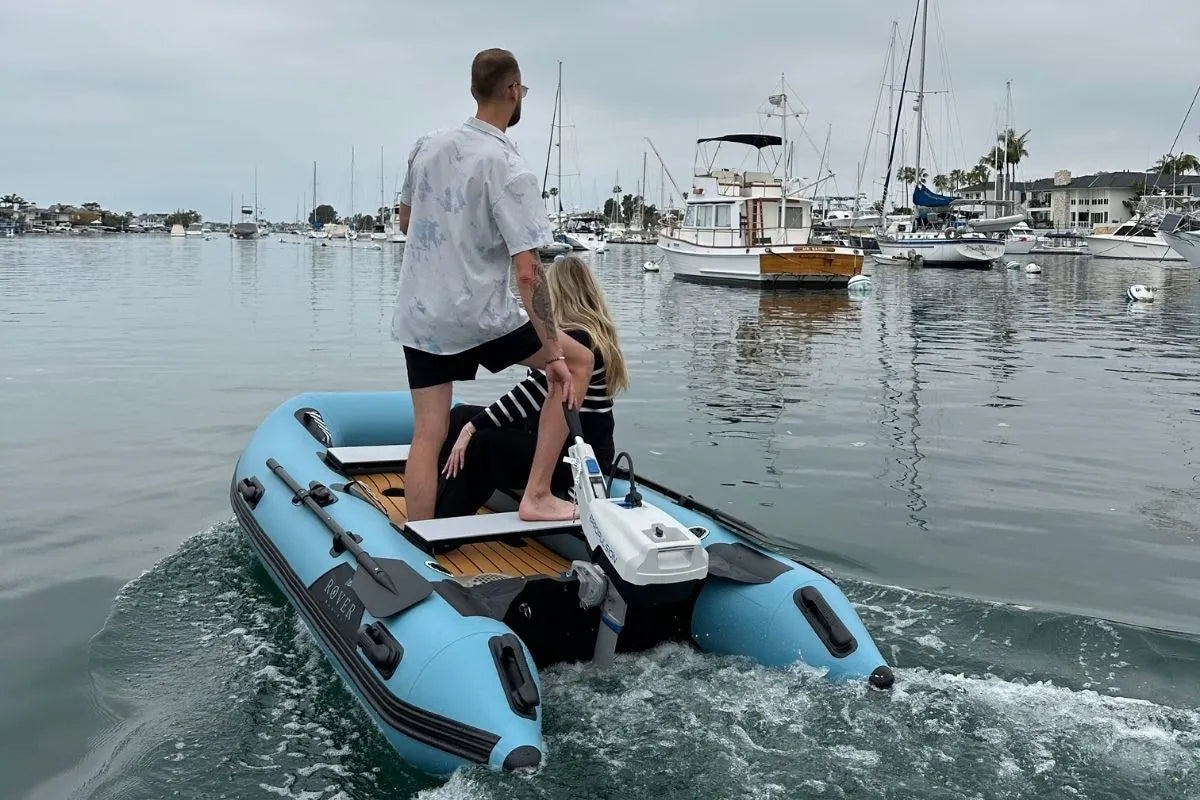
Electric outboards bring clear advantages for inflatables: instant torque for responsive acceleration, very low noise (great for fishing and neighbor-friendly operation), and near-zero on-water emissions that simplify use in regulated inland waters. Real-world range depends on battery capacity (Wh) and motor efficiency — lightweight systems are excellent for short trips and tender duty but aren’t built for long-distance cruising. Electric setups also require planning for battery charging, storage and weight placement — mounting batteries low and centered improves trim and handling. Fully inflatable hulls, including inflatable V-hull and inflatable catamaran designs, are more sensitive to motor weight and weight distribution than rigid hull boats, making careful placement crucial for optimal trim and handling. Expect to add secure mounts and proper ventilation where recommended. With those constraints understood, you can then compare how gas outboards trade simplicity for raw power and endurance.
How Do Gas Outboard Motors Compare in Power and Performance?
Gas outboards deliver sustained power over long periods, higher top speed and more reliable planing on larger or heavily loaded inflatables thanks to the energy density of fuel and larger available HP ratings. They require regular upkeep — oil checks, spark plug changes, carburetor care and winterization — which makes them more maintenance-intensive than electric units. In rough water or when towing, gas engines give a wider safety margin and longer range, but they bring more noise, vibration and emissions that may be restricted on certain waterways. Understanding these differences helps you match propulsion to your dinghy’s mission and guides the horsepower and shaft-length recommendations that follow.
How Much Horsepower and Shaft Length Do You Need for Your Inflatable Dinghy?
Choosing the right horsepower and shaft length for your dinghy ensures efficient performance, safe handling and proper propeller immersion. Horsepower influences planing and top speed; shaft length keeps the propeller submerged at normal trim. Too little power makes the boat sluggish; too much can overstress the hull or void manufacturer guidance — so follow sizing recommendations. Use the table below to line up dinghy length and typical loads with recommended horsepower bands and expected planing behavior. Shaft length is based on measured transom height (bottom of transom to waterline) and whether a short or long shaft gives the correct anti-ventilation clearance.
The table below maps dinghy length and typical load to recommended horsepower and a practical note on planing capability.

| Dinghy length & load | Recommended HP | Typical performance note |
|---|---|---|
| 8 ft, 1–2 people, light gear | 2.5–4 HP (Rover Marine 8 ft models are rated up to 6 HP) | Good for displacement cruising and slow trolling; unlikely to plane with a heavy load |
| 10 ft, 2–4 people, moderate gear | 4–8 HP (Rover Marine 10 ft models are rated up to 10 HP) | Often reaches plane with lighter payloads; a balanced choice for tenders and fishing |
| 12 ft, 3–5 people, full gear | 8–15 HP (Rover Marine 12 ft models are rated up to 20 HP) | Capable of consistent planing and higher speeds; suitable for short coastal runs and light towing |
This horsepower chart shows safe bands and realistic expectations so you can pick a motor that fits how you load and use the boat. Next, we’ll cover how to measure transom height and pick the right shaft length to avoid cavitation and ventilation problems.
What Horsepower Is Ideal for Different Dinghy Sizes and Uses?
Horsepower choice depends on dinghy length, passenger count and whether you want planing or steady displacement cruising. Small tenders typically work well with 2.5–4 HP for maneuvering and short transfers (Rover Marine 8 ft models are rated up to 6 HP). Larger inflatables used for fishing or short runs often need 8–15 HP to plane reliably under load (Rover Marine 10 ft models are rated up to 10 HP, and 12 ft models up to 20 HP). If you regularly carry heavier loads, step up one band for a safety margin to keep trim and responsiveness. Always obey regulatory and manufacturer limits — some inflatables list a maximum recommended HP; exceeding it risks damage and unsafe handling. Once horsepower is settled, choose a shaft length that keeps the prop in clean water for efficient thrust.
How to Choose the Right Shaft Length for Your Dinghy’s Transom?
Start by measuring transom height from the bottom of the transom to the waterline while the dinghy is unloaded on level ground. Correct shaft length keeps the prop fully submerged at operating trim and prevents ventilation. Short-shaft outboards suit transom heights around 15 inches and are common for small inflatables; long-shaft options suit taller transoms. The wrong shaft length causes cavitation, weak acceleration and prop ventilation. After mounting, verify prop clearance during a float trial with a typical load and adjust trim tabs or engine tilt to optimize stern immersion and speed. Proper shaft selection affects durability and real-world performance and will guide your portable motor choices.
Which Portable Outboard Motors Are Best for Small Inflatable Boats?
Portable outboards for small inflatables focus on low weight, easy storage and enough thrust to move the boat safely without overstressing the transom. Electric portable outboards shine for quiet, low-maintenance operation, while compact gas outboards give higher sustained power for planing. When comparing models, look at weight, available shaft lengths, equivalent horsepower, battery capacity or tank size, and how easy the motor is to mount, remove and stow. The table below lists representative models and specs that dinghy owners favor, concentrating on the attributes that matter most for inflatables and short tenders.
Use this comparison table to quickly evaluate weight-to-power and practical range for common portable motor choices.
| Motor model | Weight | Shaft length | Equivalent HP / Range |
|---|---|---|---|
| Electric model A (e.g., lightweight) | ~12–20 kg | Short-shaft option | ~1–3 HP equivalent; short trips (nm range depends on battery Wh) |
| Electric model B (higher capacity) | ~20–30 kg | Short-shaft option | ~3–5 HP equivalent; extended outings with larger battery packs |
| Small gas 4–6 HP portable | ~20–30 kg | Short-shaft option | 4–6 HP; long range per tank, faster planing with load |
After you review these specs, pick models that match your storage limits and how far and fast you need to go. Next, we highlight top lightweight electric outboards and compact gas models suited for inflatables.

What Are the Top Lightweight Electric Outboards for Dinghies?
Lightweight electric outboards are chosen for quiet operation, low upkeep and instant torque. Leading options balance portability and battery efficiency to deliver usable nautical miles under typical dinghy loads. Compact models produce 1–3 HP-equivalent thrust; larger electric units can reach 3–5 HP equivalent when paired with external batteries. Typical uses include short tender runs, stealthy fishing and areas that restrict gas engines. Pay attention to unit weight, battery placement and connector types: choose something you can mount and lift comfortably, and match battery Wh to your usual trip length. Once you select an electric motor, plan battery storage and placement to keep trim and balance predictable.
What Gas Outboard Models Offer Portability and Reliable Power?
Small gas outboards from about 2–15 HP remain the standard for planing and long range. Very small 2–4 HP units are lightweight and work well as tenders, while 8–15 HP engines deliver reliable planing and higher cruising speeds for larger inflatables. Gas models require fuel management — carry approved containers and follow safe fueling procedures — and accept the maintenance trade-offs of spark plugs, winterization and scheduled servicing. If portability is critical, choose a compact, short-shaft gas outboard with recoil start and a manageable weight for lift-in and lift-out storage. Compare operational costs and maintenance expectations to decide whether gas convenience outweighs electric simplicity for your routine.
How Do Electric and Gas Outboards Compare for Inflatable Dinghies?
Electric and gas outboards differ across range, weight, noise, maintenance and total cost. Electric motors win on quiet operation and low routine service, but range is limited by battery Wh. Gas outboards win on energy density, refueling convenience and continuous power, but require more maintenance and produce noise and emissions. The table below compares typical electric and gas examples to show practical values for dinghy owners weighing the two technologies.
This comparison table summarizes range, weight, maintenance and cost trade-offs for typical dinghy motor choices.
| Motor type / model | Typical range per cycle | Weight | Maintenance / Notes |
|---|---|---|---|
| ePropulsion Spirit 1.0 Plus (electric example) | Short to moderate (nm varies by battery Wh) | Light to moderate | Low routine maintenance, battery care required |
| Torqeedo Travel 1103 S (electric example) | Moderate with high-capacity battery | Moderate | High efficiency, integrated battery options, battery storage considerations |
| Small gas portable (typical 4–8 HP) | Long range per fuel tank | Moderate | Regular engine maintenance, fuel management needed |
In short: electric models reduce noise and routine upkeep while gas units maximize range and planing power. If you need both, consider hybrid approaches such as carrying a small gas auxiliary or a spare battery. For Rover Marine customers, whose fully inflatable boats are made from multi-layer reinforced PVC with high-pressure drop-stitch floors, seeking specific product guidance, the next section lists commonly compatible electric models and purchasing notes.
For Rover Marine owners of Battle Boat and Battle Cat inflatables, two electric units we commonly recommend are the ePropulsion Spirit 1.0 Plus and the Torqeedo Travel 1103 S. Both work well with short-shaft transom setups and are sized for tender duty. When comparing these electric options to gas outboards, weigh battery range against fuel range and plan practical charging or refueling strategies for your typical trips. Rover Marine also offers fitment advice and product guidance tailored to our inflatable models — including hands-on guidance for fitment and booking options for demos or charters.
What Are the Environmental and Maintenance Differences?
Electric outboards produce near-zero on-water emissions and much less noise, which reduces disturbance to wildlife and other boaters and makes them a strong choice on protected waters. Gas outboards emit exhaust and require regular mechanical maintenance — fuel stabilizers, carburetor care, spark plug checks and winterization — which increases service tasks and operating cost over time. Maintenance checklists differ by technology: electric systems focus on battery state-of-health, corrosion prevention at connectors and periodic motor inspections; gas systems need flushing after saltwater use, fuel filter checks and scheduled servicing. Knowing these differences helps you plan time and cost commitments and choose a propulsion system that fits your maintenance appetite.
How Do Range, Speed, and Cost Affect Your Choice?
Range and speed come down to energy density (fuel vs battery) and motor efficiency. A modest electric setup can deliver several nautical miles at displacement speeds, while a comparable gas outboard can sustain higher cruise speeds and go much farther between refuels. Electric outboards often have higher upfront cost once you include batteries, but lower routine maintenance and no fuel purchases can reduce lifetime operating cost. Gas engines usually cost less up front but have predictable fuel and service expenses. Use a simple decision matrix: choose electric if quiet, low-maintenance short trips matter most; choose gas if frequent long-range or planing performance is essential; if you need both, carry a compact auxiliary or a spare battery strategy. These trade-offs prepare you to evaluate model-specific compatibility with Rover Marine inflatables in the next section.
What Are the Best Engine Options for Rover Marine Inflatable Boats?
Rover Marine Battle Boat and Battle Cat inflatables, which are fully inflatable boats made from multi-layer reinforced PVC with high-pressure drop-stitch floors, have transom and payload characteristics that pair well with certain motors. For light tender use and quiet fishing, compact electric outboards are an excellent fit. For planing or heavier loads, a small gas outboard within the recommended horsepower band gives better speed and endurance. Below are short, practical product notes tailored to Rover Marine owners, plus how to reach our sales and support team for fitment questions or bookings.
Rover Marine–focused motor recommendations:
- ePropulsion Spirit 1.0 Plus — A lightweight electric option that fits short-shaft transoms on Battle Boat models; quiet, easy to maintain and ideal for tender duty.
- Torqeedo Travel 1103 S — A higher-efficiency electric choice that supports longer outings with the right battery plan while staying light enough for most Rover inflatables.
- Small gas 4–8 HP portable — Recommended when heavier loads or consistent planing are required; choose short-shaft variants and reinforce the transom if advised.
These suggestions balance technical advice with Rover Marine–specific fitment notes so owners can decide with confidence and contact Rover Marine for fitment help or to arrange a test/demo.
Which Electric Motors Are Compatible with Battle Boat and Battle Cat?
Both the ePropulsion Spirit 1.0 Plus and the Torqeedo Travel 1103 S are commonly compatible with Battle Boat and Battle Cat when mounted on a short-shaft transom with the correct hardware and thoughtful battery placement to protect trim. Key compatibility checks include matching transom height to the motor’s shaft length, ensuring the bracket clamps securely to the transom and positioning batteries centrally to avoid bow or stern trim issues. Those steps preserve steering response and reduce ventilation risk. If you’re unsure about fitment, Rover Marine can advise on brackets, battery layout and any recommended transom reinforcement or installation accessories, if explicitly required by motor manufacturers or for specific heavy-duty applications. When buying, include weight distribution checks and a sea trial with your typical load to confirm performance.
What Gas Outboard Horsepower Ranges Suit Rover Marine Dinghies?
For Battle Boat and Battle Cat models, which are fully inflatable boats made from multi-layer reinforced PVC with high-pressure drop-stitch floors, practical horsepower ranges typically start at 2.5–4 HP for light tender duties (Rover Marine 8 ft models are rated up to 6 HP) and go up to 8–15 HP for planing and short coastal runs (Rover Marine 10 ft models are rated up to 10 HP, and 12 ft models up to 20 HP), depending on the model and your expected load. Underpowering makes the boat sluggish and harder to control; overpowering can overstress the hull or transom and may void warranties — so follow the upper HP guidance in your boat documentation. If you plan to exceed standard recommendations, check with Rover Marine support first to confirm installation and warranty implications.
How Should You Install and Maintain Your Inflatable Dinghy Engine Safely?
Safe installation and steady maintenance keep engines dependable and protect your dinghy from avoidable damage. Proper transom mounting, correct shaft length, secure battery or fuel storage and pre-run checks are the basics. Installation steps include confirming transom strength, using the right mounting hardware, aligning the engine vertically and ensuring propeller clearance — these reduce vibration, prevent ventilation and preserve steering feel. Maintenance needs differ between electric and gas motors, but both demand regular inspections, corrosion prevention and a sea trial after installation to confirm trim and steering. The checklist below makes these tasks actionable whether you’re fitting a motor for the first time or servicing an existing installation.
Follow this installation checklist before your first run:
- Check transom rigidity and install reinforcement plates where the motor or boat manufacturer recommends them.
- Confirm shaft length by measuring transom height and matching it to the motor specifications before you mount the engine.
- Tighten mounting clamps to the torque recommended by the motor manufacturer and verify vertical alignment.
- Secure batteries or fuel containers and protect all electrical connections against corrosion.
After installation, run a short sea trial with a typical load to confirm prop immersion, trim and steering response, and to ensure no ventilation occurs at cruising RPM. Small adjustments to trim or battery placement usually fix minor issues and improve performance. The final section below outlines maintenance practices to keep electric and gas motors reliable season after season.
What Are the Key Installation Tips for Transom-Mounted Motors?
Start by assessing the transom: make sure the material is rated for the motor’s clamping force and add reinforcement if in doubt or if explicitly required by the motor or boat manufacturer — improper mounting can cause cracks or loosening under load. Align the motor so the anti-ventilation plate sits parallel to the hull bottom and set anti-ventilation clearance to avoid cavitation while delivering efficient thrust. Use stainless fasteners and apply corrosion protection to electrical connections. Do a static check with the motor clamped before each season to catch any loosening. These practical steps help you avoid common installation problems and set up sound maintenance routines.
What Maintenance Practices Keep Electric and Gas Motors Reliable?
Electric motor upkeep centers on battery care: store batteries at the recommended state-of-charge, protect them from extreme temperatures and inspect connectors for corrosion. Also perform periodic motor checks and lubricate moving parts as recommended. Gas motor maintenance focuses on flushing after saltwater use, checking and replacing spark plugs and fuel filters, using fuel stabilizer for storage and following service intervals for oil and lower-unit checks. Both systems benefit from a pre-season checklist and regular post-trip inspections to catch salt, water ingress or mounting issues early. Keep a simple maintenance log to track service history and spot recurring issues. If you want hands-on fitment help or to arrange demos that compare motors, Rover Marine offers product guidance and phone support.
Inflatable Boat Safety Standards: Construction, Loading, Powering, and Stability
This report documents data and procedures for construction, safe loading, powering, underway stability and human factors, and it proposes recommended standards and practices.
Inflatable Boat Standard Development, 1973
Frequently Asked Questions
What factors should I consider when choosing an outboard motor for my inflatable dinghy?
Start with the dinghy’s size, weight capacity and how you plan to use it. Decide whether you need planing performance or steady displacement cruising, then match horsepower to those goals and verify shaft length against your transom height. Choose between electric and gas based on noise tolerance, maintenance willingness and range needs, and don’t forget to check local regulations on emissions and noise.
How can I ensure my outboard motor is properly maintained?
Maintenance depends on the motor type. For electrics, monitor battery health, keep connections clean and protect against corrosion. For gas engines, check spark plugs and fuel filters, flush after saltwater use and follow seasonal winterization steps. Always follow the manufacturer’s service schedule and keep a maintenance log to track work and spot trends.
What are the advantages of using electric outboards over gas outboards?
Electric outboards are quieter, require less routine servicing and produce no on-water emissions, making them ideal for protected waters and stealthy fishing. They deliver instant torque and are often lighter, improving portability. Their main limitation is range — batteries set the practical distance you can travel compared with a filled fuel tank.
How do I determine the right horsepower for my dinghy?
Consider the boat’s length, weight capacity and intended use. Small dinghies (8–10 ft) typically need 2.5–8 HP, while larger inflatables (12 ft and up) often benefit from 8–15 HP for reliable planing. For Rover Marine models, 8 ft boats are rated up to 6 HP, 10 ft boats up to 10 HP, and 12 ft boats up to 20 HP. Avoid underpowering, which hurts handling, and over-powering, which risks structural damage. Always check the manufacturer’s recommended ranges for your specific model.
What should I know about the installation of my outboard motor?
Ensure the transom can support the motor, measure transom height for shaft length selection, and align the motor vertically to prevent cavitation. Use correct mounting hardware and torque settings, protect electrical connections from corrosion, and run a sea trial to confirm prop immersion and steering before heading out on a longer trip.
Are there specific electric motors recommended for Rover Marine inflatable boats?
Yes — for Battle Boat and Battle Cat models, which are fully inflatable boats made from multi-layer reinforced PVC with high-pressure drop-stitch floors, we commonly recommend the ePropulsion Spirit 1.0 Plus and the Torqeedo Travel 1103 S. Both match short-shaft transom setups and work well for tender use. Confirm battery placement and secure mounting, and contact Rover Marine for final fitment advice.
What are the environmental impacts of using electric versus gas outboards?
Electric outboards have a much lower environmental footprint on the water: zero emissions during operation and much lower noise, which reduces wildlife disturbance. Gas outboards produce exhaust and require more maintenance, which can increase environmental impact over time. Choosing electric supports cleaner, quieter boating and helps protect sensitive waterways.

Leave a comment
This site is protected by hCaptcha and the hCaptcha Privacy Policy and Terms of Service apply.